



Vintage Needlepoint Sampler
A vintage needlepoint sampler brings centuries of domestic handwork and stitched alphabets into a room, offering a tangible link to the children and women who worked them.
Vintage Needlepoint Sampler
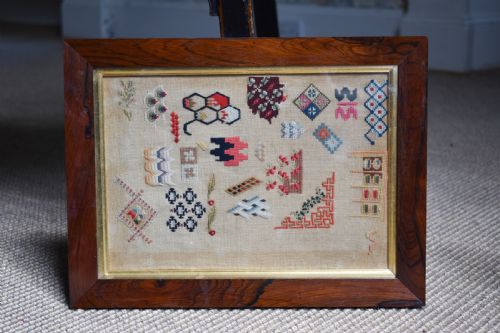
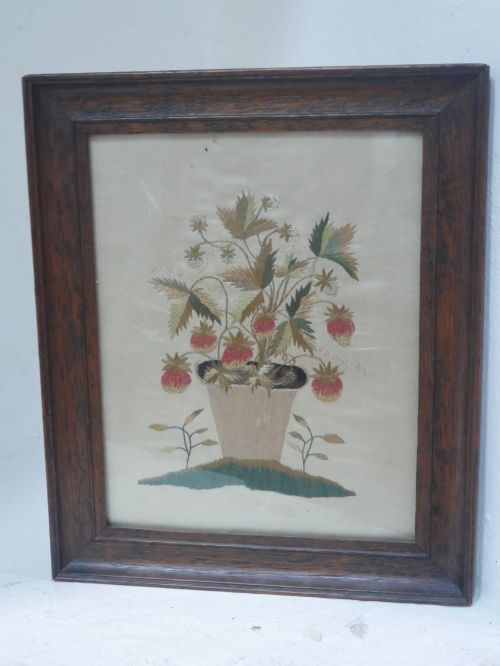
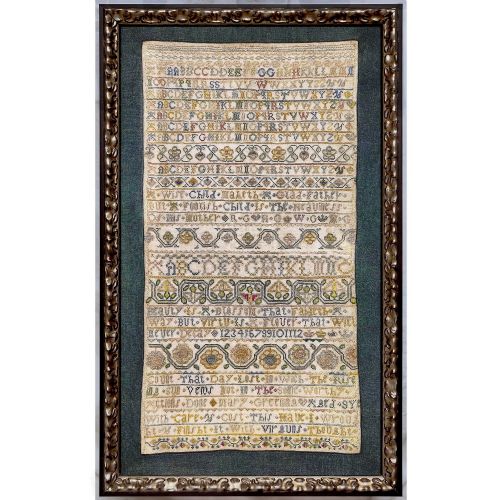
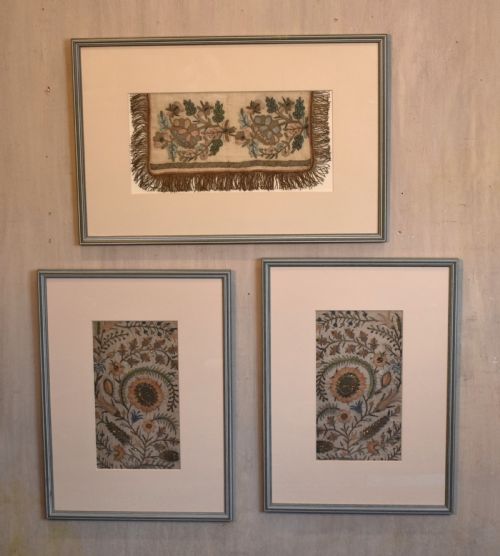
When you search for a vintage needlepoint sampler, you encounter textile pieces spanning the 18th century through to the 1930s. The selection ranges from early band samplers and map samplers to Victorian alphabet pieces and botanical pictures framed for display.
The version most commonly met on this page is the Victorian needlework sampler, frequently worked by young girls recording their age, alongside Georgian examples and earlier 18th century needlework pictures. These are typically mounted behind glass in wood frames, ready for wall hanging or integration into period interiors.
Materials and construction
These works are constructed using wool, silk, or silk thread stitched onto a linen ground. The density of the thread and the variety of the embroidery technique determine the texture and visual depth of each panel.
Framing materials commonly include period wood surrounds and glass to protect the delicate textiles from environmental wear. The combination of sturdy linen foundations and fine thread work allows these historic pieces to survive across centuries.
Listings span multiple eras from the 17th century through to the 1930s, incorporating linen, wool, silk, and wood framing.
Assessing quality and execution
Quality in a vintage needlepoint sampler rests upon the precision of the stitching, the complexity of the motifs, and the clarity of any alphabets, figures, or maps included by the maker. Finer execution shows in balanced proportions and tightly tensioned thread work.
The inclusion of specific maker details, such as a named child, a precise date, or an unusual subject like a map or a horse, elevates the historical interest of the textile. Preservation of the original linen ground and the condition of the threads further distinguish finer examples.
The Vintage Needlepoint Sampler Glossary
- Band sampler
- A long, narrow piece displaying rows of different embroidery stitches and patterns, historically used as a reference or portfolio for a needleworker.
- Map sampler
- An educational embroidery piece featuring a geographical map, often incorporating counties, countries, or cartographic details alongside traditional borders.
- Alphabet sampler
- A textile featuring rows of letters and numerals, traditionally worked by young learners to demonstrate mastery of lettering and basic stitches.
- Needlework picture
- A pictorial textile composition depicting scenes, figures, flora, or fauna, distinct from standard lettering samplers through its illustrative focus.
Vintage Needlepoint Sampler: Frequently Asked Questions
How should I hang my sampler?
Keep textile art out of direct sunlight to prevent the wool and silk threads from fading. Position them on interior walls where humidity and temperature remain stable.
Ensure the frame is properly sealed behind glass to protect the delicate linen and embroidery from dust and atmospheric pollutants.
What do the ages on samplers mean?
Many samplers include the stitched age of the maker, often a young girl between the ages of ten and fourteen. These numbers record the maker's progress in domestic education and needlework skills.
Coupled with a date or a family name, these figures provide a personal history that anchors the textile in a specific decade.
Can I clean an old sampler?
Historic textiles require specialist conservation rather than domestic cleaning methods. Surface dust should be addressed very gently by a professional conservator.
Water or standard cleaning products will damage the linen ground and cause ancient silk and wool threads to bleed or dissolve.
How do I identify a Georgian piece?
Georgian samplers often feature specific typographic styles, muted natural dye palettes, and characteristic motifs such as stylized trees, birds, and geometric borders. The linen used in this era tends to have a heavier, hand-woven texture.
Examining the reverse of the work, where possible without disturbing the framing, can also reveal the hand-spun threads typical of the period.