


Victorian Alphabet Sampler
A victorian alphabet sampler is a stitched textile record of letters and numbers, offering a charming glimpse into nineteenth-century domestic education and needlework skill.
Victorian Alphabet Sampler
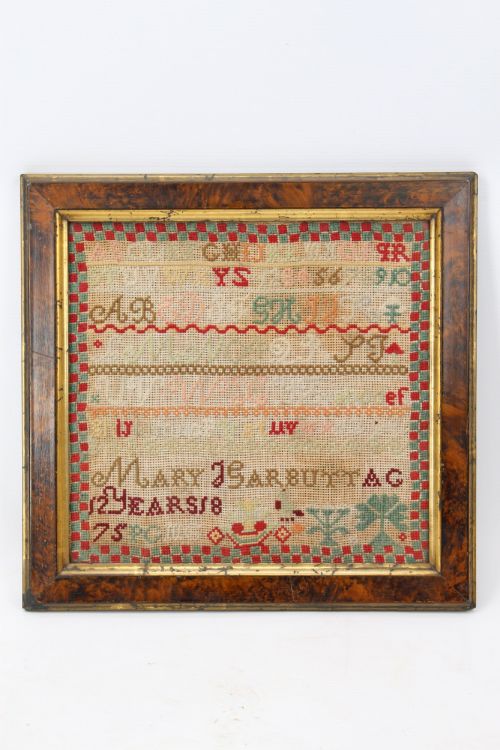
A victorian alphabet sampler takes the form of framed textile wall art, showcasing rows of stitched letters, numerals, and frequently the maker's name and age. These needlework samplers originate from the nineteenth century, with specific examples dated to years such as 1847, 1851, 1853, 1875, and 1880.
Makers recorded on these pieces include young girls such as Mary J Garbutt, Annabella Samon, Jane Wettmore, Louiss Elkins, Ann Hodson, Margaret Ann Blackow, Maggie Muir, Ann B Gilies, Emma and Hannah Barnes, and Jane Brand. The majority are presented as framed needlework, textile art, or embroidered panels.
The style spans Victorian folk art and standard Victorian or Georgian aesthetic traditions. Certain entries include miniature formats, pairs of samplers, or framed works containing multiple pieces by different makers.
Materials and Construction
These works are constructed using linen as the foundational fabric for the needlework. Crafters utilised thread, wool, and silk thread or silk Thread to stitch the alphabets and decorative motifs.
Frames incorporate wood and maple wood, often protected by glass. The embroidery techniques rely on needlepoint and cross stitch executed by hand.
Materials recorded in the archive include linen, glass, wood, wool, thread, silk thread, and maple wood.
Factors of Quality
The distinction in quality rests upon the neatness of the stitchwork and the complexity of the design layout. Pieces that include detailed lettering alongside named makers and precise dates demonstrate greater documentary interest.
Conservation affects the visual presentation, particularly the clarity of the linen ground and the preservation of the silk or wool threads beneath glass. Original framing in maple wood or period timber enhances the integrity of the textile wall art.
The Victorian Alphabet Sampler Glossary
- Sampler
- A piece of needlework produced to demonstrate proficiency in various stitches. Historically, young girls worked these to practise alphabets and numerals.
- Needlepoint
- A type of canvas work embroidery stitched with yarn or thread. It creates a dense, durable surface that covers the underlying linen or canvas ground.
- Cross stitch
- A form of counted thread embroidery in which X-shaped stitches form a picture or pattern. It is the primary stitch method found on these alphabet boards.
- Folk art
- Art produced from an indigenous culture or peasant society, typically by self-taught makers. In this context, it describes the unpretentious, traditional character of nineteenth-century schoolgirl needlework.
Victorian Alphabet Sampler: Frequently Asked Questions
What is a Victorian alphabet sampler?
A Victorian alphabet sampler is a piece of needlework created during the nineteenth century to practice and display lettering, numerals, and decorative motifs. Young girls typically worked these panels on linen using thread or wool.
These textiles frequently record the maker's name, age, and date, offering a personal connection to the past. Today they survive as framed textile wall art.
Who made these needlework samplers?
Young girls and school-aged children stitched these pieces as part of their domestic education in the nineteenth century. Makers often included their age and the date of completion alongside their names.
Examples from the period record makers such as Mary J Garbutt, Annabella Samon, and Jane Brand. Their work preserves historical names and stitching styles from the 1840s through to the 1880s.
How should I hang textile wall art?
Framed textiles require protection from direct sunlight to prevent the fading of linen grounds and coloured silk or wool threads. Keeping them away from moisture sources preserves the natural fibres.
Many of these samplers are glazed with glass inside wood or maple wood frames. Ensure the hanging hardware is secure to support the weight of the framed piece.
How do I identify the date?
Many samplers include embroidered dates alongside the maker's name and age, providing a direct record of their creation. Stylistic clues such as the choice of linen, thread types, and framing materials also help indicate the nineteenth-century origin.
Specific dates recorded on surviving examples include 1847, 1851, 1853, 1875, and 1880. These dated pieces serve as reliable benchmarks for comparing undated examples.
What materials were used?
The base fabric is typically linen, upon which makers stitched their designs using thread, wool, and silk thread. The resulting embroidery panels feature cross stitch and needlepoint techniques.
Finished works are usually mounted behind glass within wood or maple wood frames. This framing protects the delicate historical textiles from dust and handling.