

Vintage Music Storage
Vintage music storage pieces, from Edwardian cabinets to Regency canterburys, organise scores and sheet music while bringing period character to a room.
Vintage Music Storage
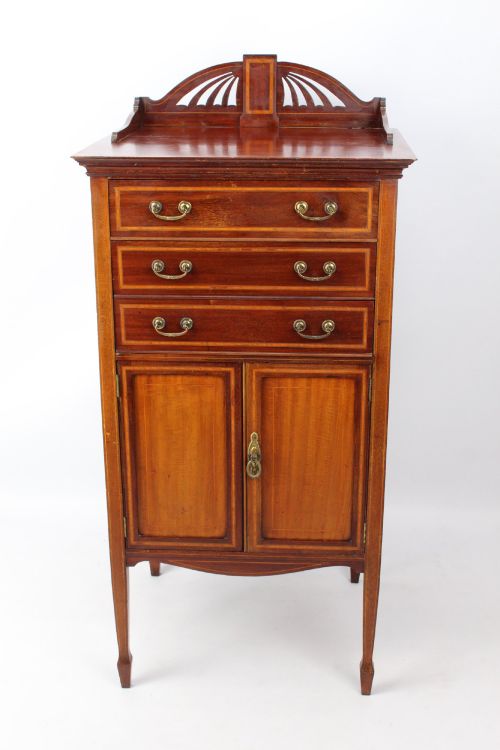
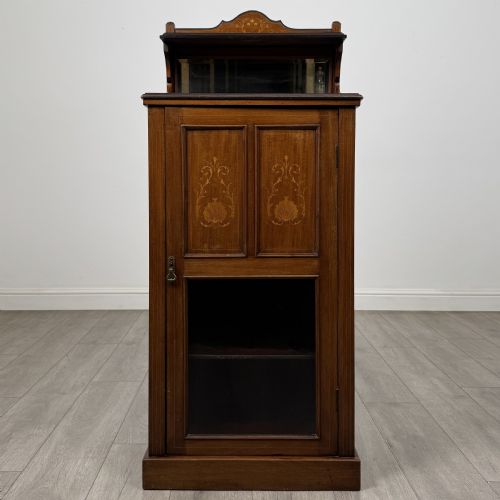
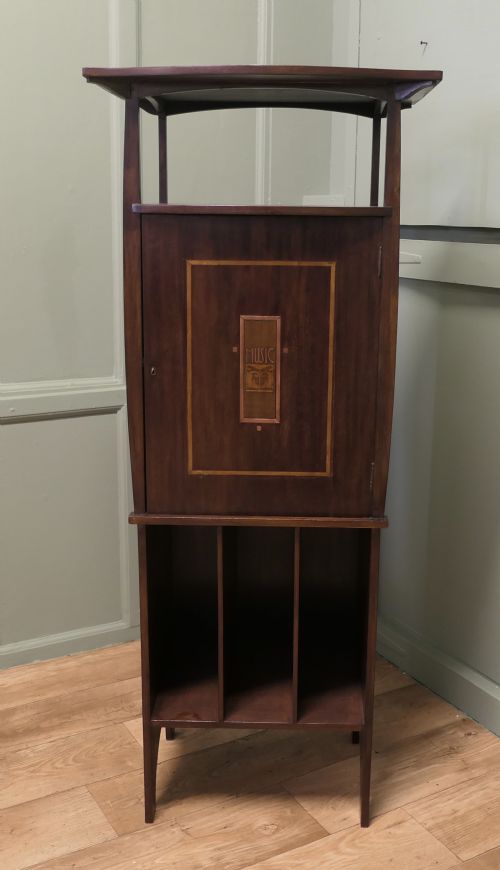
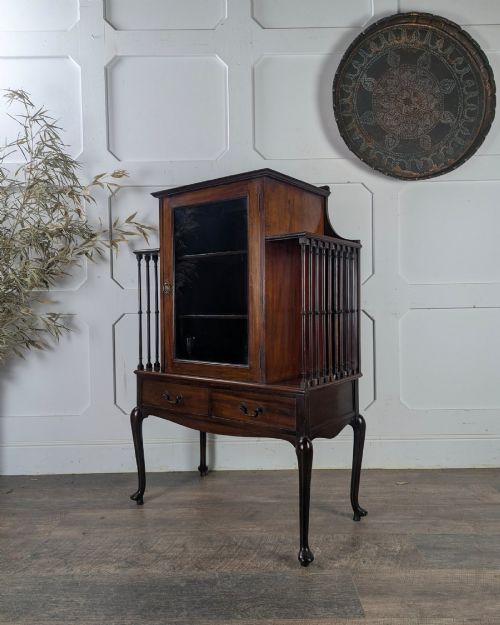
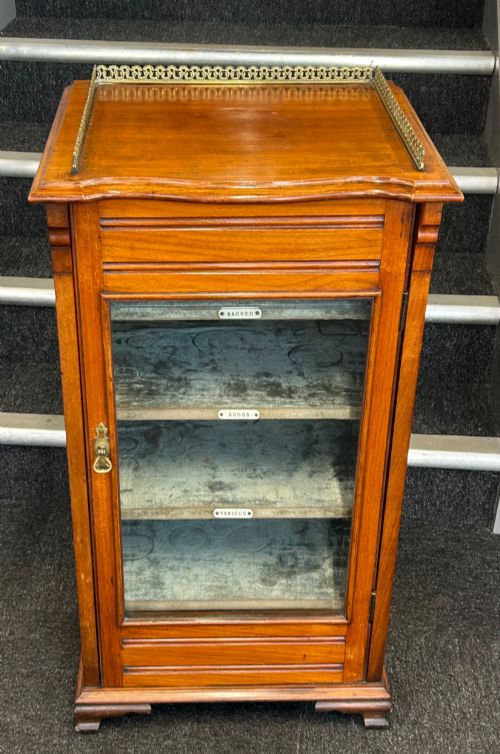
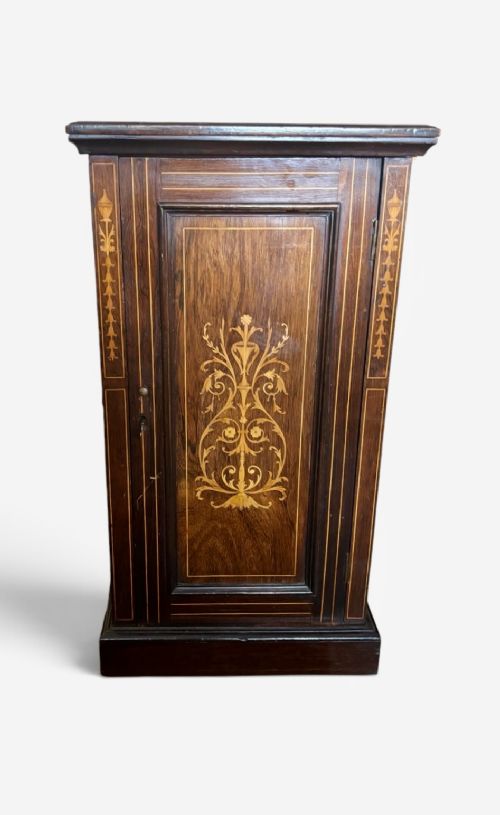
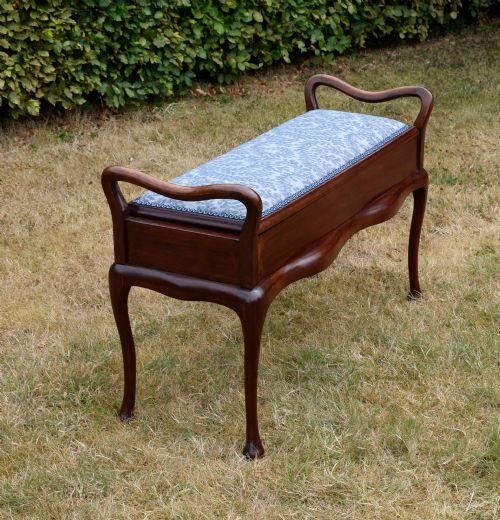
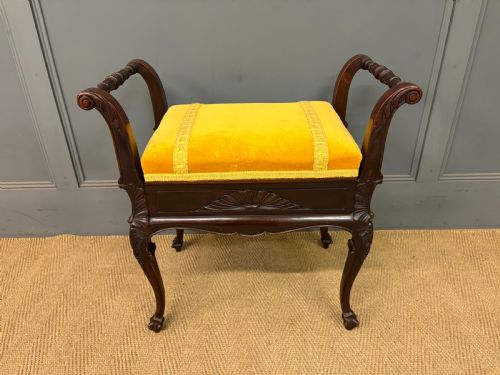
The most common form on this page is the Edwardian mahogany music cabinet, frequently featuring inlaid details and multiple shallow drawers. Alongside these stand piano stools with hinged seats and open canterburys built for newspapers and folios.
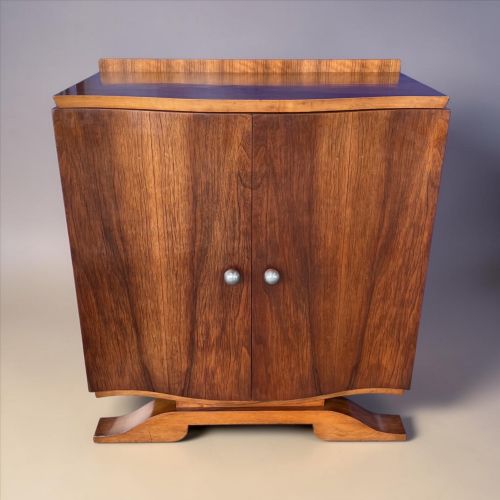
Pieces span several decades, reaching from Regency and George III designs through Victorian and Edwardian iterations up to Art Deco walnut models from the 1930s. Each era approached the organisation of domestic music differently, altering the internal capacity and exterior ornament.
Materials and construction
Cabinet makers relied heavily on hardwoods, particularly mahogany and walnut, frequently selecting satinwood, oak, or rosewood for contrasting inlay and marquetry. These timbers were chosen for structural stability and finished with polished surfaces that highlighted natural grain patterns.
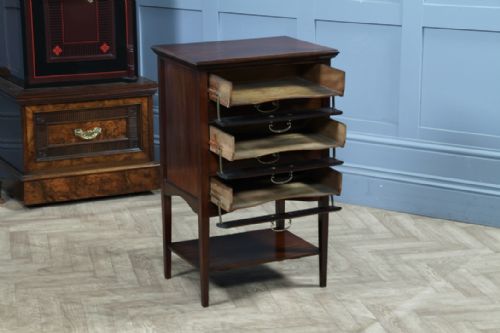
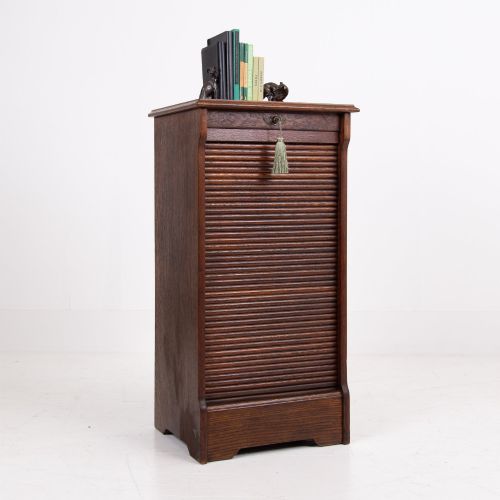
Specialised hardware such as brass handles, hinges, and tambour doors governed the movement of drop-front drawers and sliding shutters. Internal dividers were constructed from slender softwood or ply to separate individual sheets of music without adding excessive weight.
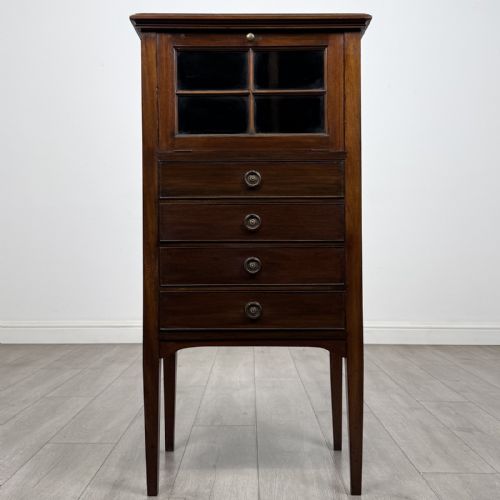
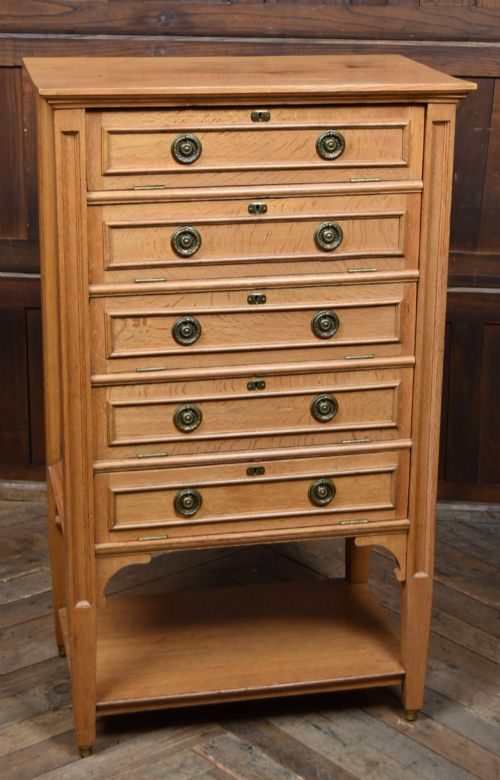
Early twentieth-century musicians clearly possessed an impressive quantity of sheet music, requiring dedicated four-drawer cabinetry just to keep up.
Distinctions in quality
Quality rests on the integrity of the internal mechanism, whether through smooth-running drawer runners, reliable drop-front hinges, or working tambour tracks. Superior examples maintain structural alignment across multiple shallow drawers designed to bear the weight of heavy paper.
Artisanal execution distinguishes standard production items from pieces bearing maker attributions or complex marquetry. Finer items integrate brass fittings and timber selection cohesively across the entire carcase, including concealed interior elements.
GM Elwood·JS Henry·Denby and Spinks·Keeble London
The Vintage Music Storage Glossary
- Canterbury
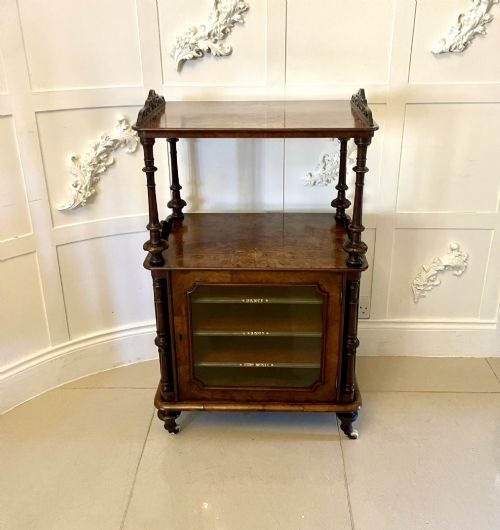
- A low stand featuring partitioned sections for holding sheet music, newspapers, or magazines. It often includes a single drawer below and small castors for mobility.
- Tambour
- A flexible door constructed from narrow strips of wood glued to a canvas backing, allowing it to slide smoothly around a curved track on a cabinet.
- Marquetry
- An elaborate decorative technique where pieces of coloured veneer are fitted together to form pictorial or geometric patterns on a wooden surface.
- Inlay
- A method of inserting contrasting strips of wood, brass, or shell into carved recesses on the surface of a furniture carcase to create linear borders.
- Fall front
- A hinged front panel that drops downward to open a compartment or desk space, commonly found on sheet music cabinets.
Vintage Music Storage: Frequently Asked Questions
What is a music cabinet?
A music cabinet is a specialised piece of furniture designed with shallow drawers or vertical compartments to store sheet music and scores safely.
Most examples date from the Victorian and Edwardian periods, offering neat domestic storage that kept paper clean and organised.
How do you use a canterbury?
A canterbury is used to hold current reading material, newspapers, or sheet music upright in its partitioned upper section.
Many designs incorporate a small drawer at the base for smaller accessories, and they sit on castors so you can move them easily beside a chair or piano.
What is the difference between a cabinet and a piano stool?
A music cabinet provides vertical drawer storage or a drop-front compartment enclosed within a tall wooden carcase.
A piano stool is a low seating option with a lift-up lid or internal compartment designed to hold the pieces currently being played.
How do I date an Edwardian music cabinet?
Edwardian music cabinets typically date between 1901 and 1910, often displaying light mahogany timbers with delicate satinwood inlay.
They generally feature multiple shallow drawers or glass display sections rather than the heavier, darker finishes associated with earlier Victorian pieces.