


Edwardian Sheet Music Storage
Edwardian sheet music storage pieces are dedicated timber cabinets and stools built to keep scores tidy, bringing refined period utility to a modern home.
Edwardian Sheet Music Storage
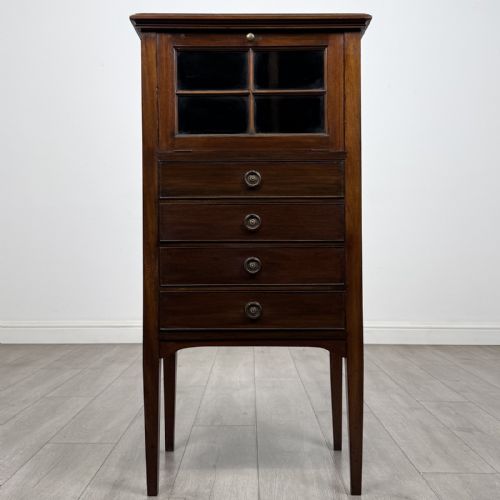
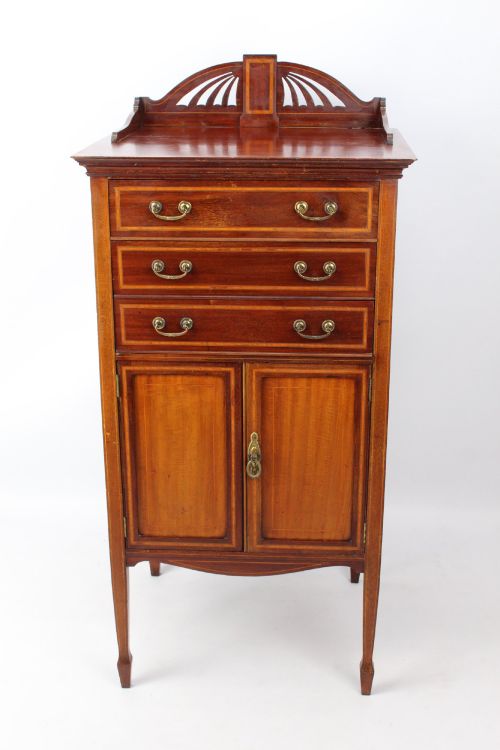
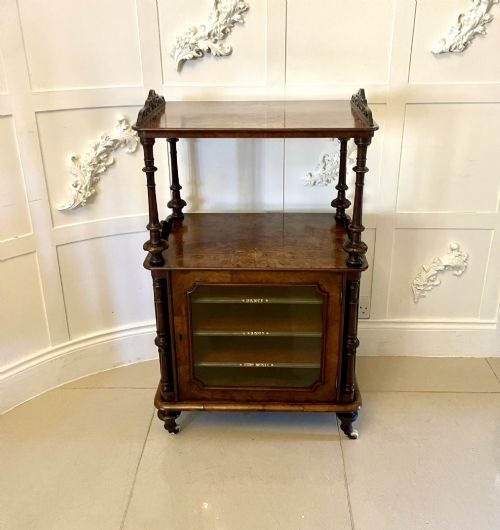
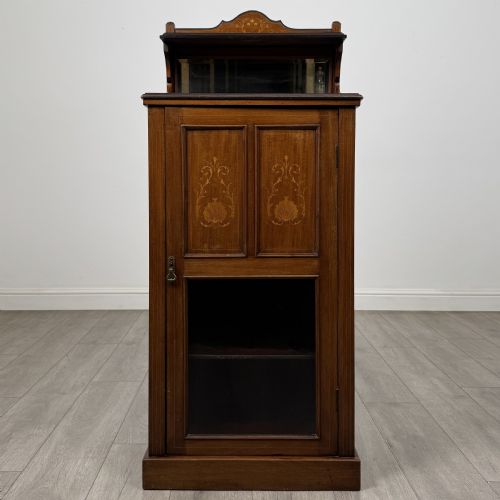
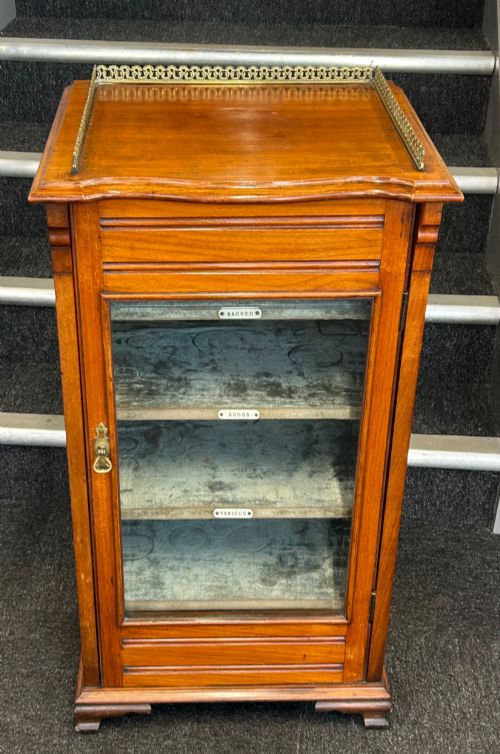
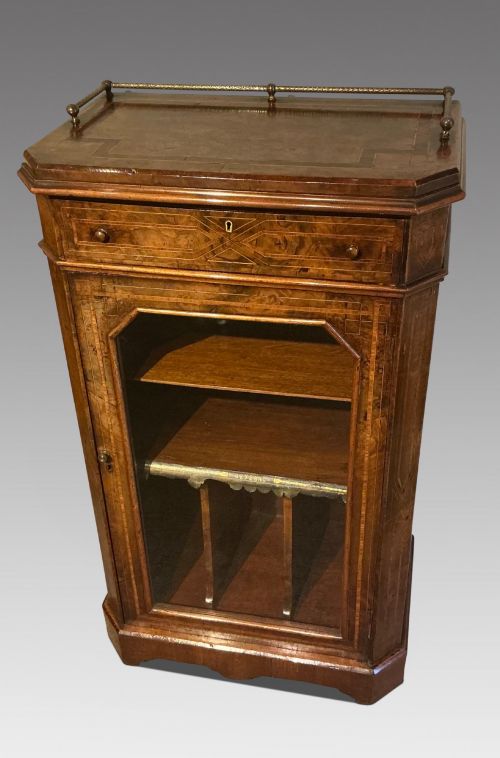
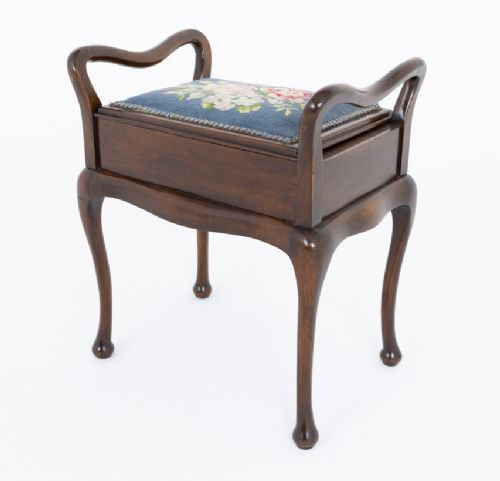
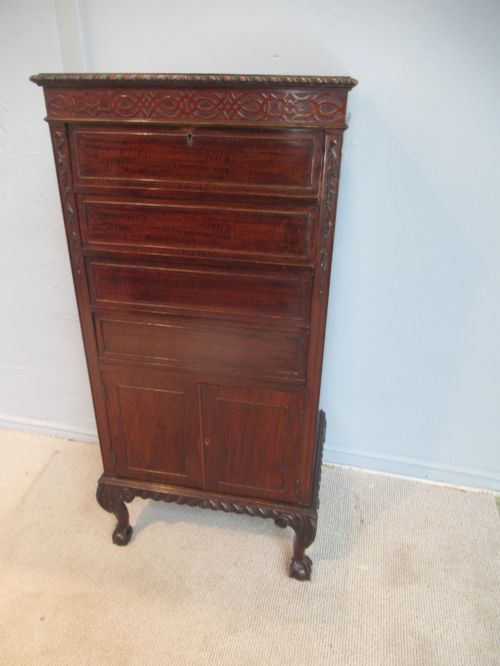
Edwardian sheet music storage pieces on this page appear primarily as dedicated music cabinets, music filing cabinets, and piano stools. The selection spans the Edwardian period, 1900, 1910, 1920, 1930, the Victorian era, late Victorian, 1880, and the 19th century.
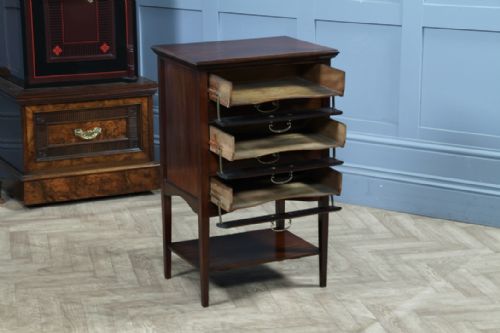
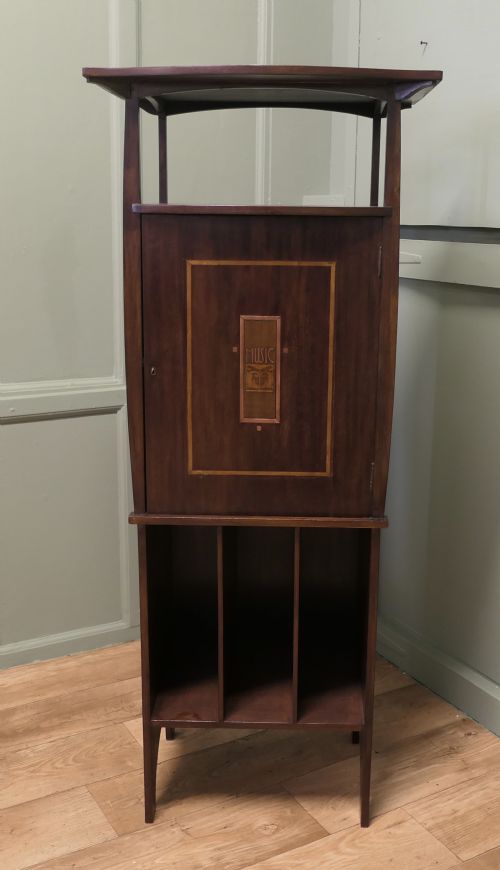
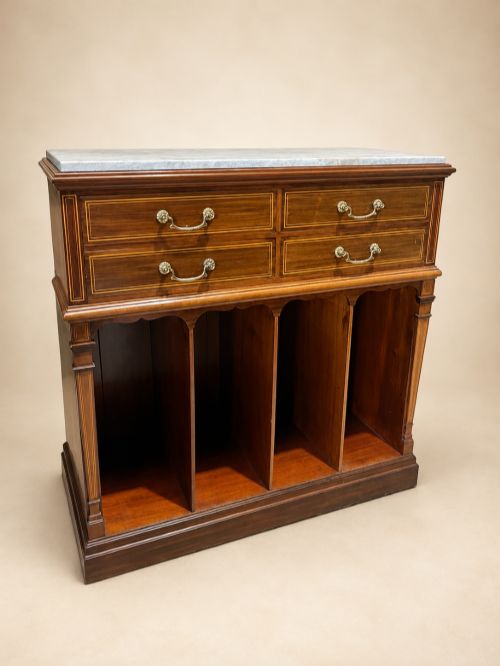
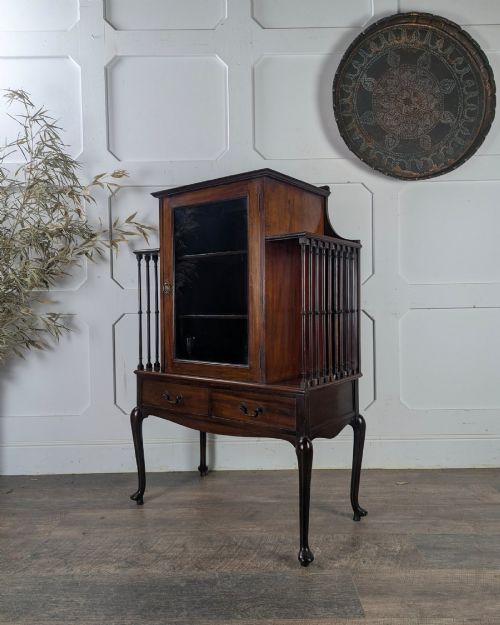
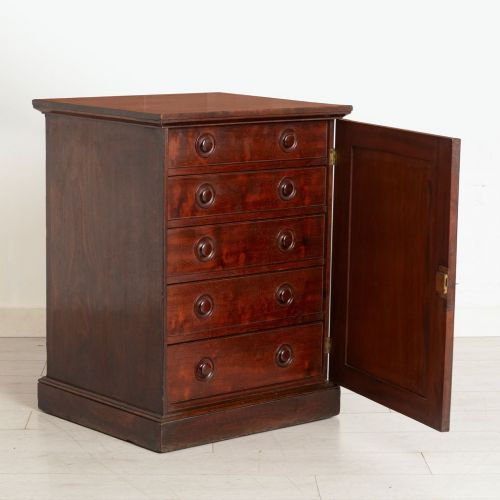
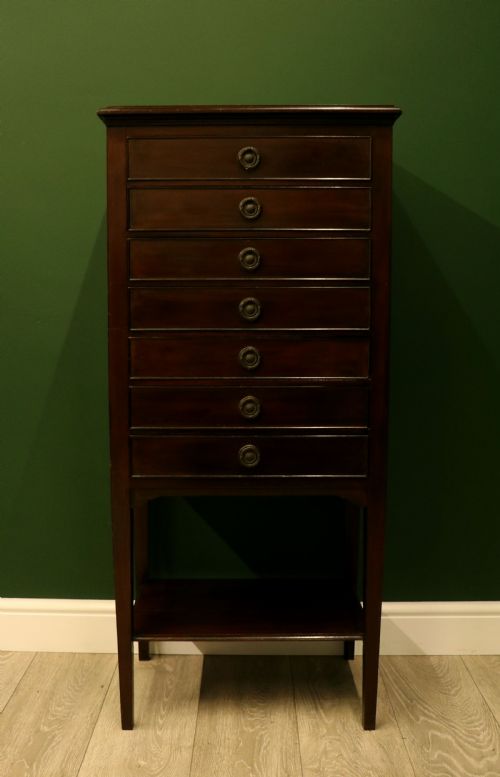
The physical forms include single door cabinets, multi-drawer drop-front cabinets, fall-front designs, tambour front filing units, and piano stools with upholstered seats. Many examples integrate internal shelving or sliding drawers specifically proportioned for standard folio-sized scores.
Makers and designers working in this category adopted varied regional British idioms, producing Arts and Crafts pieces alongside Sheraton Revival and Chippendale Revival mahogany variations.
Materials and Technique
Makers constructed these cabinets using dense cabinet timbers including mahogany, walnut, burr walnut, satinwood, oak, rosewood, and hardwood. Inlaid decoration frequently incorporates contrasting light and dark veneers to form geometric or floral banding along drawer fronts and door panels.
Structural hardware relies on cast brass handles, drop pulls, hinges, and occasional brass gallery rails or mounts. Glazed doors incorporate timber framework, while tambour doors utilise flexible wooden slats running in recessed tracks.
Listings feature music storage pieces executed in mahogany, walnut, burr walnut, oak, satinwood, rosewood, brass, glass, and fabric.
Design and Execution
Quality separates along the ambition of the design and the precision of timber selection. Pieces bearing named makers or distinct regional Arts and Crafts workshops demonstrate superior jointing, balanced veneer matching, and thoughtful internal compartment organisation compared to generic factory output.
The presence of crisp marquetry inlay, substantial solid brass hardware, and secondary woods like mahogany rather than deal for interior drawer linings distinguishes finer examples from standard commercial production.
GM Elwood for JS Henry·Denby & Spinks·Keeble London
The Edwardian Sheet Music Storage Glossary
- Fall Front
- A hinged front panel that drops down to provide access to interior storage compartments or writing surfaces. This mechanism is frequently found on music cabinets designed for quick retrieval of scores.
- Tambour Front
- A door constructed from narrow vertical strips of wood glued to a canvas or leather backing, allowing the door to slide smoothly around a curved track. It provides concealed storage in tight spaces.
- Marquetry
- The art of applying decorative pieces of veneer to a structural structure to form pictorial or geometric designs. Craftsmen utilised varied timber tones to create contrast without paint.
- Inlay
- A technique where small sections of contrasting timber, shell, or brass are fitted into carved recesses flush with the surrounding surface. Edwardian makers applied stringing lines to accentuate drawer outlines.
- Sheraton Revival
- A late 19th and early 20th century design style drawing inspiration from late 18th century neoclassical furniture. Pieces in this style utilise light mahogany, satinwood, and delicate painted or inlaid motifs.
Edwardian Sheet Music Storage: Frequently Asked Questions
What were music cabinets used for?
Music cabinets provided dedicated domestic storage for sheet music folios, songbooks, and piano rolls before recorded sound became common in homes.
Their shallow drawers and drop-front compartments kept large paper scores flat, organised, and protected from bending or dust.
How do I tell Edwardian from Victorian cabinets?
Edwardian cabinets generally display lighter timbers such as satinwood and brighter mahogany, often with restrained neoclassical or Sheraton Revival inlay.
Victorian pieces lean towards darker, heavier rosewood or walnut veneers, deeper mouldings, and more exuberant marquetry or carving.
Can these cabinets hold modern sheet music?
Most standard sheet music cabinets feature internal drawers or shelves sized for traditional Victorian and Edwardian folio dimensions.
Standard modern sheet music and modern songbooks will fit flat inside the drawers or behind the drop-front doors of these cabinets.
Where should I place a music cabinet?
These compact timber cabinets suit living rooms, studies, or hallways where floor space is limited yet elegant surface display is desired.
They function effectively as side tables, bedside units, or filing cabinets while retaining their original period character.