
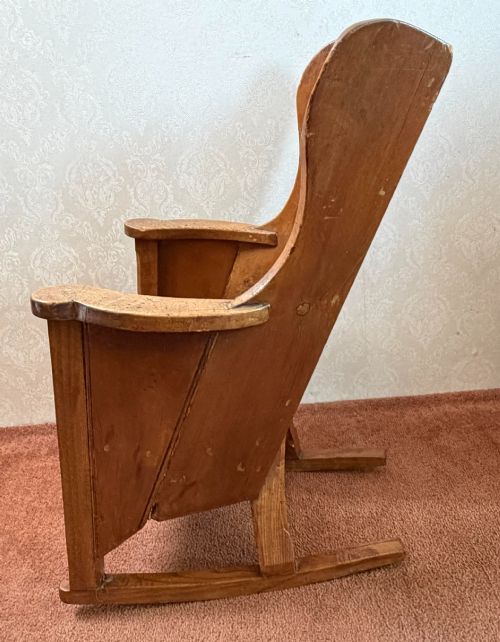
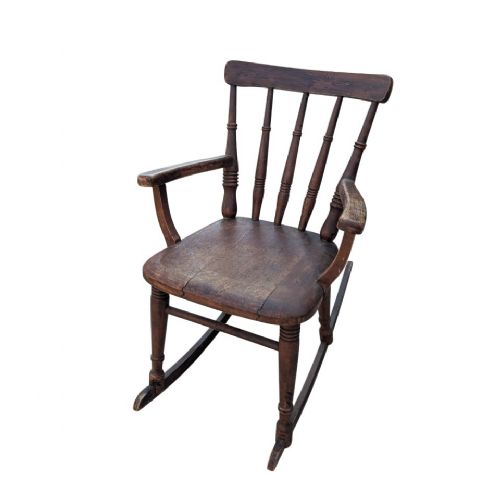

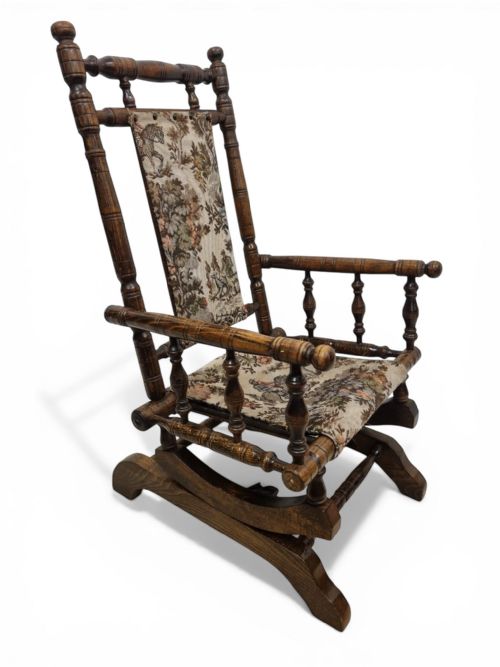


Vintage Miniature Rocking Chair
These vintage miniature rocking chair examples are small-scale seats built for children or dolls, prized for their charm and domestic history.
Vintage Miniature Rocking Chair
When you search for a vintage miniature rocking chair, you encounter small seating forms designed for children or dolls spanning several centuries. These pieces appear in vernacular country styles and formal Victorian designs, reflecting domestic life from past eras.
The versions most commonly met on this page originate from the nineteenth century and the early twentieth century. They take the form of child rockers and doll chairs, utilising traditional formats like windsor and bentwood construction.
Makers produced these chairs in various regional traditions, including English country, Scandinavian country, and American vernacular. Each piece demonstrates the specific scale and proportion required for small occupants.
How they were made
Cabinet makers and bodgers utilised solid timber such as oak, beech, birch, fruitwood, and elm to build these small frames. They shaped spindles and turned legs using lathes, joining components with traditional peg and dowel methods.
Seats often incorporated woven cane, rush, or solid wood planks, while some examples featured tapestry upholstery. Workers applied wood stain to finish the surfaces, highlighting the natural grain of the timber.
One tiny nineteenth-century rocker was built strictly for a doll, proving that children were not the only ones who needed to recline.
What varies in quality
The standard of timber selection and joinery separates basic utilitarian work from finer craftsmanship. Pieces displaying carefully turned spindles and integrated structural bracing demonstrate superior construction.
Original surface finishes and intact woven seats elevate a piece above examples that have undergone heavy structural intervention or modern replacement of materials.
Thonet
The Vintage Miniature Rocking Chair Glossary
- Bentwood
- A technique involving the steaming of timber to make it pliable for bending into curved shapes. This method created light, strong frames popular in the late nineteenth century.
- Windsor
- A chair style characterised by wooden seats into which stick legs and back spindles are directly inserted. This construction method provided sturdy seating in country vernacular pieces.
- Rush
- Marsh plants twisted into cords and used for seating material. Traditional chair makers wove rush into durable, patterned seats.
- Cane
- Strips of rattan palm woven into open mesh patterns for chair seats and backs. This material added lightness and flexibility to small furniture.
- Vernacular
- Architecture and furniture built by local craftsmen following regional traditions rather than high-style academic designs. These pieces used locally available materials and fulfilled everyday domestic needs.
Vintage Miniature Rocking Chair: Frequently Asked Questions
Were these chairs made for children or dolls?
Makers constructed these small rocking chairs for actual children to use in the nursery or parlour. Some surviving examples match the precise scale required for large display dolls.
Evidence from nineteenth-century titles indicates production primarily for young children, while later Victorian variations accommodated both nursery use and doll display.
How do I identify a nineteenth-century piece?
Nineteenth-century pieces typically display hand-turned spindles, traditional joinery methods, and patinated timber surfaces. Makers utilised solid woods such as oak, beech, and fruitwood during this era.
Examining the underside and joint construction reveals the handmade nature of these earlier chairs compared to twentieth-century production.
What is bentwood construction?
Bentwood involves steaming solid timber until it becomes flexible enough to bend into smooth, continuous curves. This technique produced strong, lightweight frames without requiring complex joinery.
Manufactories in the nineteenth century utilised this method to create graceful curved backs and arms on small rocking chairs.
How should I care for a rush seat?
Rush seats require a stable indoor environment with moderate humidity to prevent the natural plant fibres from becoming brittle. Regular dusting with a soft brush keeps the weave clean without damaging the material.
Avoid placing these chairs in direct sunlight or near heat sources that might dry out the historic timber and rush.