




Antique Caned Rocker
An antique caned rocker brings motion and lightness into a room, offering sprung cane seats and bentwood frames built for long hours.
Antique Caned Rocker
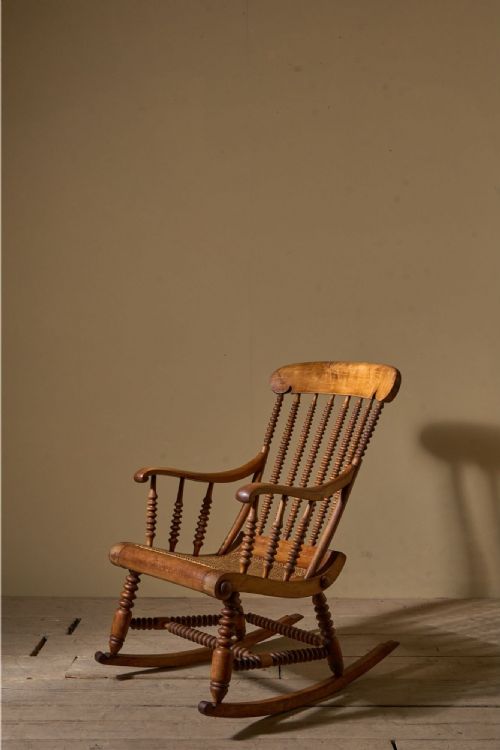
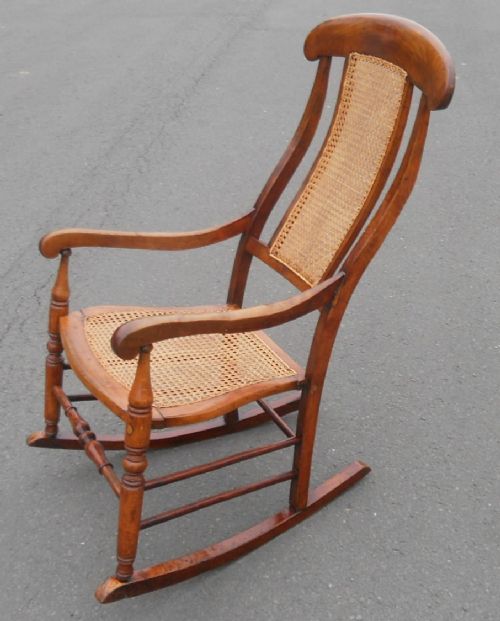
An antique caned rocker combines a traditional timber rocking base with a flexible, woven seating surface designed to give slightly under the body. When you search for an antique caned rocker, you meet pieces ranging from sturdy nineteenth-century spindle backs to steam-bent chairs.
Most examples found here date from the Victorian and Edwardian eras, spanning from the mid-nineteenth century through to the early twentieth century. You encounter both full-sized armchairs and smaller children's versions intended for dolls or nurseries.
Makers utilised native hardwoods alongside imported rattan, shaping frames in English country styles as well as continental bentwood workshops. The union of rigid wood and pliable cane creates an object that looks both solid and airy.
How they were made
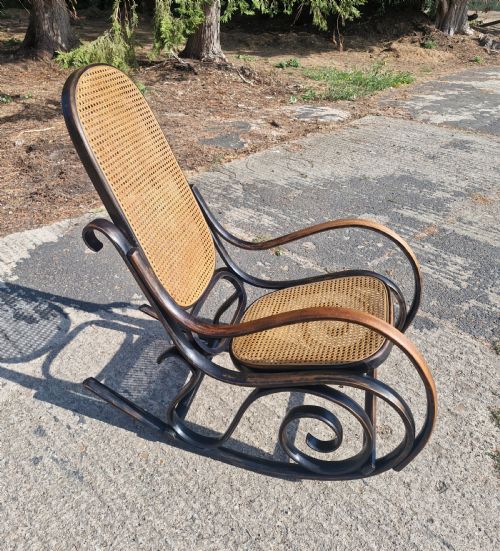
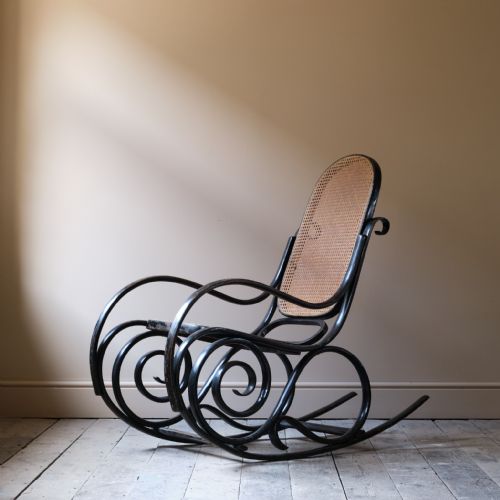
Frames rely on beech, oak, and other seasoned hardwoods shaped either through traditional turning and spindle work or through the industrial process of steam-bending. Steam allows straight lengths of timber to form continuous, flowing curves without structural joints.
Seats and backs incorporate woven cane and rattan panels threaded by hand through drilled perimeters or channeled frames. This technique distributes weight evenly across the open weave while keeping the chair light in weight.
Some nineteenth-century makers scaled down their full-sized bentwood designs to create miniature rockers intended specifically for children and their dolls.
What varies in quality
The distinction between ordinary and exceptional work lies in the tightness of the timber joints and the regularity of the hand-woven cane panels. Superior pieces maintain crisp turnings and smooth, unbroken curves along the bentwood arms and runners.
Proportion and balance dictate how well the chair rocks and sits on a flat floor. Better examples demonstrate careful matching of wood grains and balanced weight distribution that prevents the chair from pitching too far forward or backward.
Thonet
The Antique Caned Rocker Glossary
- Bentwood
- Wood shaped by exposure to steam and pressure, allowing makers to form sweeping curves. This technique defines many nineteenth-century rocking chair designs.
- Caned
- Woven from rattan peel or split cane to form a porous, supportive surface. It provides flexibility and breathability for seats and backs.
- Spindle back
- A chair back constructed from multiple turned wooden rods secured into top and bottom rails. It offers lightweight vertical support.
- Bobbin turned
- Timber shaped on a lathe to resemble a string of rounded beads or spools. This decorative turning style appears frequently on nineteenth-century frames.
Antique Caned Rocker: Frequently Asked Questions
What is an antique caned rocker?
An antique caned rocker is a nineteenth or early twentieth-century rocking chair featuring a woven cane seat or back panel. These chairs combine timber frames with flexible rattan weaving.
They emerged from various traditions, including English country workshops and continental bentwood factories. Their primary characteristic is the combination of rocking mobility and an open, woven seating area.
How do I care for a caned seat?
Caned seating requires gentle cleaning with a damp cloth to keep the rattan pliable. Avoid soaking the cane, as excessive moisture can weaken the natural fibres.
Occasional light conditioning helps prevent the rattan from drying out and snapping. Keeping the chair away from direct heat sources preserves the longevity of the weave.
How do I date an antique rocker?
Dating relies on examining construction methods, wood types, and stylistic details such as turning or steam-bending. Mid-nineteenth-century chairs often feature heavier spindle or bobbin-turned frames.
Later Victorian and Edwardian examples frequently incorporate bentwood techniques pioneered by major continental manufacturers. Comparing the assembly methods to documented period pieces clarifies the chronology.
Were these chairs used outdoors?
Antique caned rockers were intended primarily for interior domestic use in parlours, bedrooms, and nurseries. The natural rattan and unsealed wood are vulnerable to dampness and weather damage.
Using them inside protects the delicate cane mesh from rotting or stretching under outdoor conditions. They were built to provide comfortable indoor seating with a gentle rocking motion.