


Vintage Military Oil Portrait
A vintage military oil portrait captures the gravitas, uniforms, and service of historical figures through painted canvas.
Vintage Military Oil Portrait
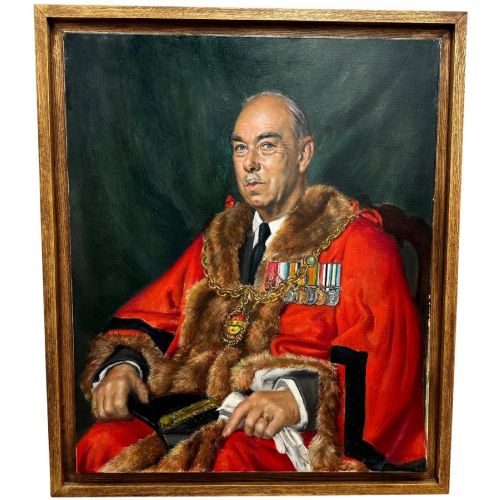
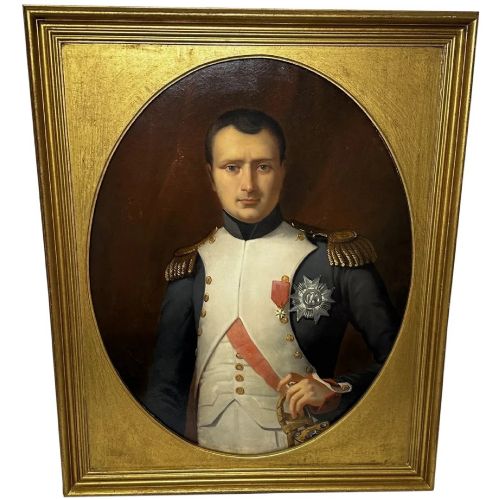
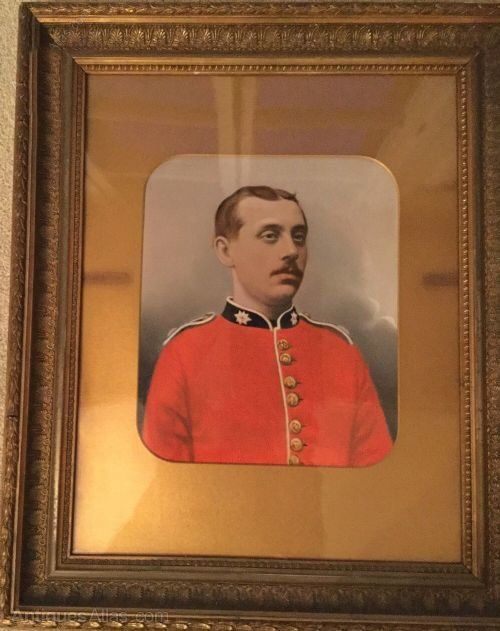
A vintage military oil portrait depicts officers, guardsmen, generals, and monarchs set against specific historical backdrops. These works document individuals who served in various conflicts, from the First World War to mid-century engagements.
The selections span diverse eras including the 19th Century, Edwardian period, and the 1940s and 1950s. Subjects range from Coldstream Guardsmen and Hussars to naval officers and high-ranking commanders.
Compositions vary from formal half-length studies to narrative scenes of service and command. Such paintings provide direct visual records of military attire, decorations, and personal likenesses.
Materials and construction methods
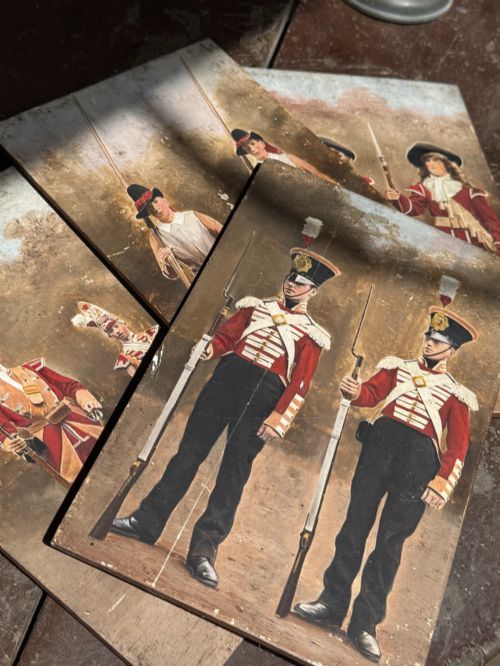
Painters applied oil paint directly onto stretched canvas, wood panels, or boards to build up rich tones and fine details. This medium allowed artists to render fabric textures, polished metal insignia, and skin tones with depth and durability.
Many works retain their original wood frames, occasionally featuring gilded finishes or stepped oak mouldings. These enclosures frequently include presentation plaques that record the identity of the sitter or the commissioning body.
The collection includes oil portraits spanning the 18th, 19th, and 20th centuries, rendered on canvas, wood, and panel.
Distinctions in execution and provenance
The strength of a portrait often lies in the skill of the handling, particularly in the rendering of facial expression and the precise detailing of uniform regalia and medals. Recognised artists bring distinct technical execution to the canvas, elevating a mere record to a compelling study.
Provenance and documentation heavily influence the standing of a piece. Works bearing signatures, inscriptions, or contemporary presentation plaques offer clearer historical context regarding the sitter and the circumstances of the commission.
Bernard Hailstone·Baruch Shalom Oskotsky·Francis Russell Flint·Eugen Rosenfeld·Sidney Riesenberg·Frank Thomas Copnall·John Laviers Wheatley·Maurice Codner·Richard Hall
The Vintage Military Oil Portrait Glossary
- Canvas
- A heavy woven fabric stretched across a wooden frame to form the foundation for oil paintings. It provides a flexible and durable surface that holds pigment securely over centuries.
- Gilded wood
- Wood treated with a thin layer of gold leaf or metallic powder to create a decorative, reflective surface. This finish frequently appears on frames designed to complement formal portraiture.
- Oil paint
- A slow-drying medium consisting of pigments suspended in a drying oil, typically linseed oil. This formulation permits smooth blending of colours and deep tonal variations.
- Panel
- A flat piece of wood used as a rigid support for painting instead of fabric. Panels were often utilised for smaller works or specific regional painting traditions.
- Provenance
- The documented history of ownership and origin for an artwork. Clear provenance establishes authenticity and connects the piece to its historical context.
Vintage Military Oil Portrait: Frequently Asked Questions
What periods do these portraits date from?
The available works cover a broad chronological span, reaching from mid-eighteenth-century examples through nineteenth-century Victorian pieces up to mid-twentieth-century commissions.
Many examples date from the interwar years and the 1940s, reflecting subjects connected to major conflicts and military leadership of those eras.
How can I identify the military rank of the sitter?
Uniform details, cap badges, lapel insignia, and specific medals offer direct clues to the branch of service and the rank held. Presentation plaques on the frames often supply the exact name and title of the individual portrayed.
Naval uniforms, army tunics, and aristocratic dress provide distinct visual markers that separate admirals, generals, and monarchs.
Are these works signed by the artists?
Several pieces feature artist signatures, inscriptions, or dates, often placed discreetly in the lower corners of the canvas. Signed works provide a direct link to known painters working within specific regional schools.
Unsigned pieces remain common, often attributed through stylistic analysis, school characteristics, or accompanying archival documentation.
How should I care for an oil painting on canvas?
Keep paintings away from direct sunlight, high humidity, and extreme temperature fluctuations to protect the canvas and the oil pigment. Gentle dusting with a soft, dry brush helps maintain the surface without disturbing the paint.
Avoid using liquid cleaners or abrasive materials on the painted surface or the accompanying wood frame.