


19th Century Battle Artwork
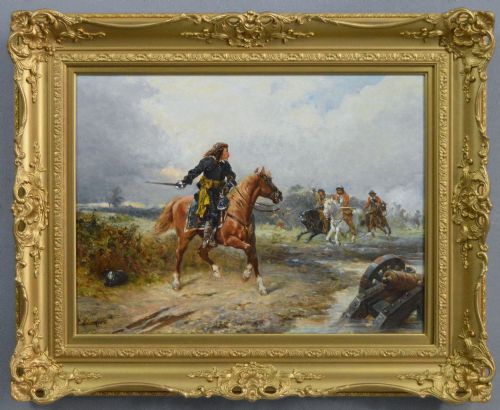
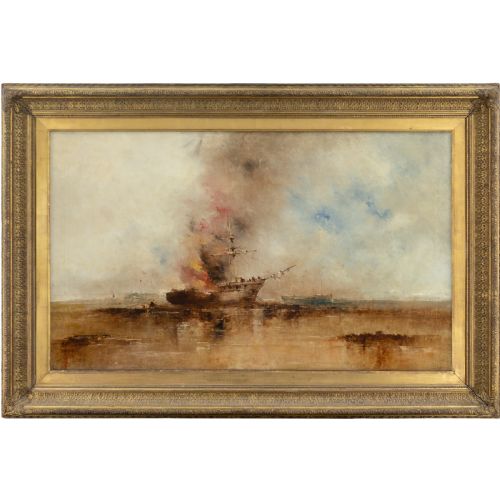
Nineteenth century battle artwork captures historic military conflicts through detailed oil paintings, watercolours and period prints that bring dramatic historical moments into any room.
19th Century Battle Artwork
When you search for 19th century battle artwork, you encounter a focused selection of historical conflict imagery spanning oil paintings, watercolours, pen and ink drawings and period prints. These pieces record naval engagements, military formations and famous historic actions from eras such as the Regency, Victorian and Napoleonic periods.
The most common examples on this page include detailed watercolours and oil paintings depicting dramatic maritime battles, troop manoeuvres and dramatic aftermath scenes. Artists of the period utilised varied mediums on paper and canvas to document military history with striking visual intensity.
Subjects range from grand naval conflagrations involving burning ships to intimate combat studies of cavalry regiments in action. Each work reflects the prevailing artistic styles of nineteenth century military and marine realism.
Materials and methods
These works rely on traditional supports of paper and canvas, framed in wood and giltwood to preserve and present the imagery. Artists applied oil on canvas for rich, layered depictions of smoke and sea, while watercolour, ink and pen captured finer illustrative details on paper.
Framed prints employ period printing techniques to reproduce military formations and portraits of commanders for a broader audience. Gilt wood framing complements the traditional aesthetic of these nineteenth century military and marine works.
Napoleon watches silently from massive Victorian prints while wooden frames hold centuries of gunpowder smoke frozen in oil paint.
Assessing quality and execution
Quality rests upon the precision of the draughtsmanship and the artist's ability to render complex troop movements and maritime chaos convincingly. Works by recorded painters display superior handling of light, shadow and atmospheric conditions compared to anonymous prints.
The condition of the paper or canvas, alongside the integrity of the original framing, influences the visual impact of the piece. Superior examples maintain clear details in ink, watercolour or oil without heavy restoration obscuring the original brushwork.
William McAlpine·Richard Brydges Beechey·Francis Russell Flint·George Cattermole·James Hardy
The 19th Century Battle Artwork Glossary
- Regency
- A period in British history spanning the early nineteenth century known for distinctive neoclassical art styles and military developments. Pieces from this era often reflect the conflicts of the Napoleonic Wars.
- Victorian
- Spanning the reign of Queen Victoria, this period produced vast quantities of narrative realism in painting. Military art from this time frequently dramatises imperial campaigns and naval supremacy.
- Giltwood
- Wood carved and coated with gold leaf or a gold-coloured finish. This material is standard for framing nineteenth century fine art paintings and prints.
- Watercolour
- A painting method in which the paints are made of pigments suspended in a water-based solution. It allows for delicate washes and precise illustrative line work on paper supports.
19th Century Battle Artwork: Frequently Asked Questions
What subjects appear in these works?
The selections depict naval battles, burning ships, military formations and specific historical engagements like Waterloo. Artists also focused on cavalry combat and aftermath scenes following major conflicts.
These subjects offer a visual record of nineteenth century military history, capturing both grand tactical movements and individual soldier experiences.
How should I hang these pieces?
Protect works on paper and watercolour from direct sunlight to prevent fading of the pigments and discolouration of the backing. Ensure they hang on stable interior walls away from excessive moisture.
Pairing oil paintings and framed prints with traditional wooden or giltwood frames enhances their historical character within a room.
How do I identify the period?
Examine the materials, framing style and subject matter for clues regarding the date of creation. References to specific conflicts like the Napoleonic Wars or the 2nd Afghan War provide precise historical brackets.
Signatures, artist attributions and nineteenth century framing techniques further help confirm the age and origin of the artwork.
Are these works original paintings?
The inventory includes a mix of unique oil paintings, original watercolours, ink drawings and period prints. Each listing specifies the exact medium used by the artist or publisher.
Hand-painted works on canvas or paper offer unique brushwork, whereas period prints provide multiple impressions of historic military subjects.