




Vintage Militaria Display
Vintage militaria display pieces bring centuries of tactical heritage indoors, offering collectors tangible fragments of military history.
Vintage Militaria Display
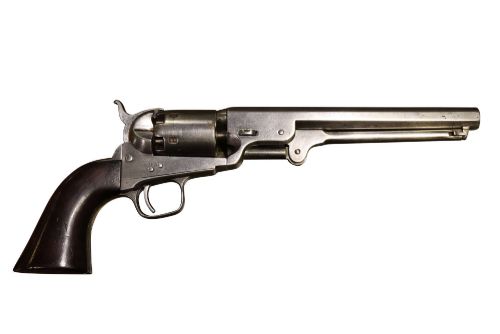
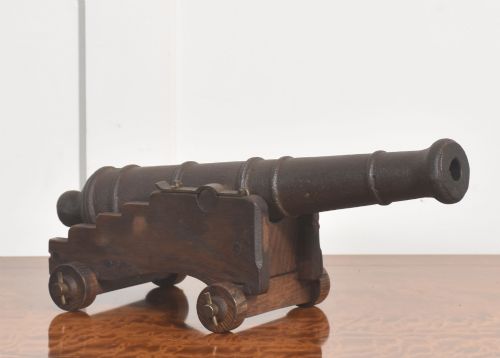
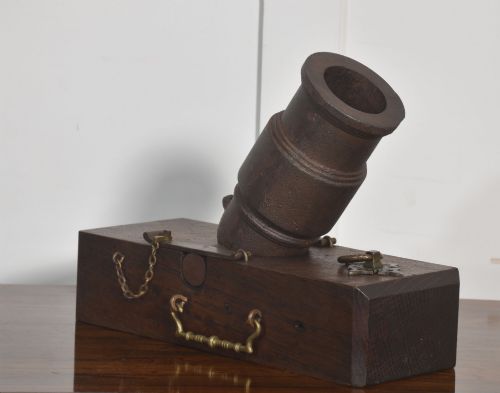
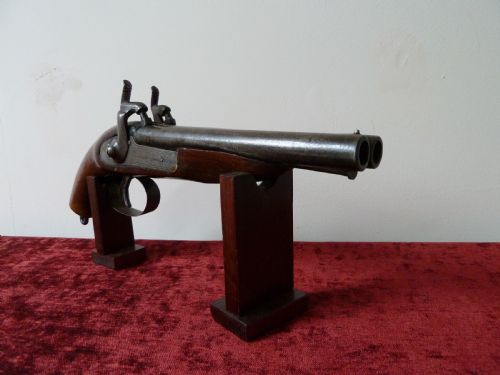
A vintage militaria display gathers historical weaponry and models spanning the eighteenth and nineteenth centuries, including flintlock pistols, percussion revolvers, and cast iron signal cannons. These objects served military and defensive functions in American, Ottoman, and British contexts before transitioning into collector displays.
The pieces on this page lean heavily towards functional sidearms and artillery models from the Georgian and Victorian eras. Buyers encounter flintlock blunderbusses, pocket pistols, and miniature regimental snare drums alongside heavy cavalry and dragoon service firearms.
Originating from diverse workshops and makers such as Thomas Anelli and Wilson, these items reflect the shifting mechanics of defence across the 18th century, 19th century, and early 20th century. Each object carries the specific material footprint of its manufacturing period, from walnut stocks to cast iron carriages.
How they were made
Makers utilised robust metals like steel, brass, iron, and bronze for barrels, locks, and cannons to withstand the pressures of black powder ignition. These metal components often feature cast, forged, or embossed finishes, particularly visible on brass-clad Ottoman and Balkan mechanisms.
Stocks and carriages rely on dense timbers such as oak, walnut, and general hardwoods to absorb recoil and support heavy metal barrels. Tinplate and painted brass appear in smaller scale models like the miniature regimental snare drum.
Vintage Militaria Display Retail Price Guide 2026
Typical asking prices for vintage militaria display among the pieces listed under this phrase on Sellingantiques today, from the lower quarter to the upper quarter. They describe what is for sale here now, not the wider market.
What varies in quality
Quality rests in the crispness of metal engraving, the integrity of matching numbers on components, and the structural stability of timber stocks and carriages. Superior examples retain original mechanics and clear maker signatures rather than later replacement parts.
Finer items demonstrate precise hand-assembly and durable finishing materials, such as embossed brass cladding or well-fitted oak mounts, distinguishing standard issue arms from master maker output.
Thomas Anelli·Wilson·Potter
The Vintage Militaria Display Glossary
- Flintlock
- An ignition mechanism utilising a flint struck against a steel frizzen to create sparks that ignite gunpowder. This system dominated military firearms through the eighteenth century.
- Percussion
- A later ignition system using a hammer striking a percussion cap containing priming compound. It replaced the flintlock method during the nineteenth century.
- Signal cannon
- A small ordnance piece utilised for firing blank charges to signal times, ships, or events rather than discharging projectiles. They typically sit upon dedicated wooden carriages.
Vintage Militaria Display: Frequently Asked Questions
What periods do these pieces cover?
The selection spans the eighteenth and nineteenth centuries, stretching from mid-eighteenth century flintlocks up to early twentieth century military scale models.
Items reflect specific eras including the Georgian period, Victorian era, and early nineteenth century military developments.
How were signal cannons used?
Signal cannons served to communicate across distances using sound and smoke rather than acting as combat artillery. They often rested on oak carriages for stability during discharge.
Marites, forts, and estates utilised them for timekeeping, warnings, and salutes.
What materials predominate in these displays?
Metals such as steel, brass, iron, and bronze form the barrels, mechanisms, and decorative mounts. Timber species like oak and walnut provide the foundations for stocks and carriages.
Smaller decorative items incorporate tinplate and painted brass details.
How do flintlock and percussion pistols differ?
Flintlock pistols rely on a flint striking steel to generate sparks for gunpowder ignition. They represent earlier eighteenth and early nineteenth century technology.
Pistols using percussion systems employ a hammer striking a cap, marking the mid-nineteenth century technological shift toward more reliable firing.