


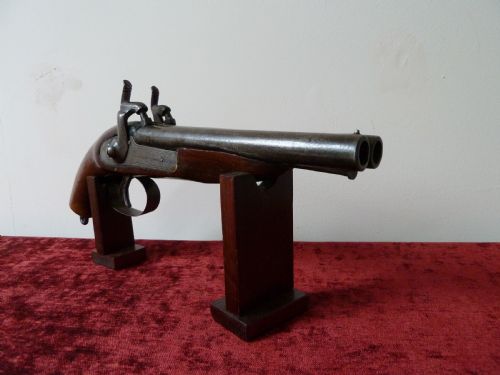
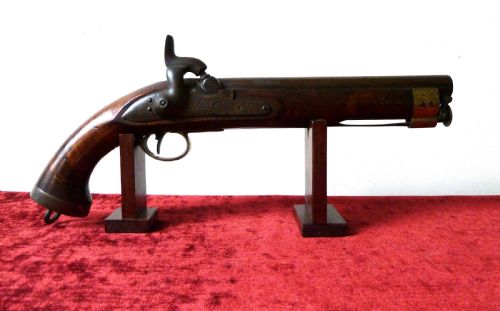

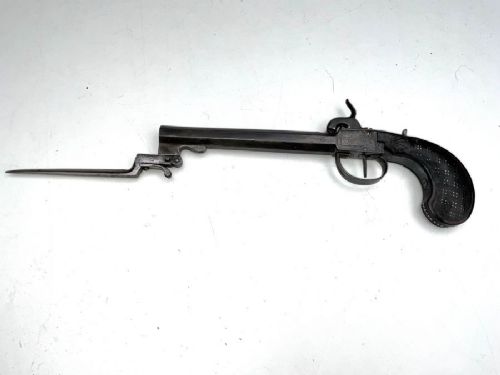


Antique Black Powder Firearm
An antique black powder firearm brings the mechanical ingenuity of past centuries directly to your hands.
Antique Black Powder Firearm
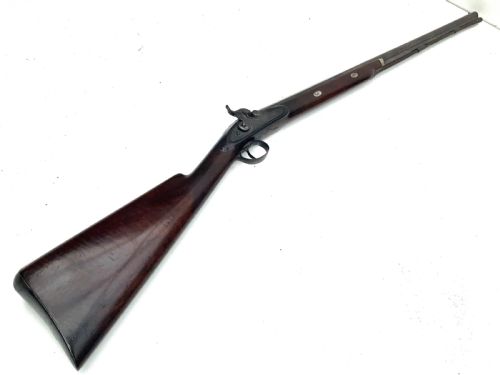
When searching for an antique black powder firearm, collectors encounter pieces spanning the eighteenth and nineteenth centuries, encompassing military service arms, duelling pistols, and sporting pieces. The selection on this page relies heavily on nineteenth-century percussion systems and eighteenth-century flintlocks.
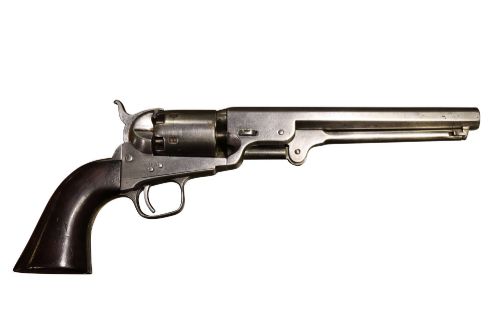
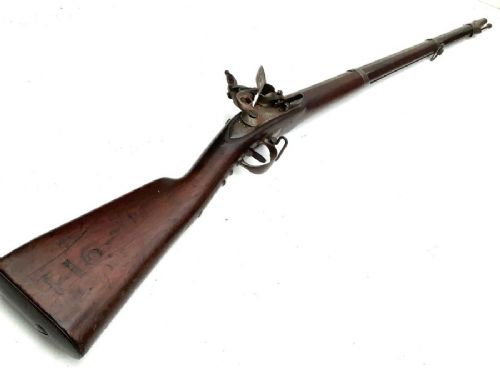
Military muskets, pocket pistols, and martial revolvers form the core of the available types. Pieces range from British service arms bearing Tower markings to American percussion revolvers and European flintlock holster pistols.
The materials reflect the functional demands of early weaponry, combining durable metals with traditional hardwoods. Walnut stocks and brass furniture appear frequently alongside steel barrels and iron locks.
How they were made
Makers shaped barrels from forged steel or brass, often pairing them with seasoned walnut or other dense hardwoods for the stocks. Metal components required precise hand-fitting to ensure the lock mechanisms operated reliably under spring tension.
Ignition systems evolved from matchlock and flintlock mechanisms to percussion caps during the nineteenth century. Lock plates and barrels frequently carry proof marks, workshop signatures, or government ownership stamps.
Listings feature 19th Century, 18th Century, Georgian, and Victorian periods across steel, walnut, brass, iron, velvet, oak, mahogany, and paper materials.
What varies in quality
The standard of execution depends on the original intended user, separating standard military contract arms from bespoke officers' private purchase pieces. Finer specimens display superior metal engraving, crisp lock markings, and more refined wood-to-metal fit.
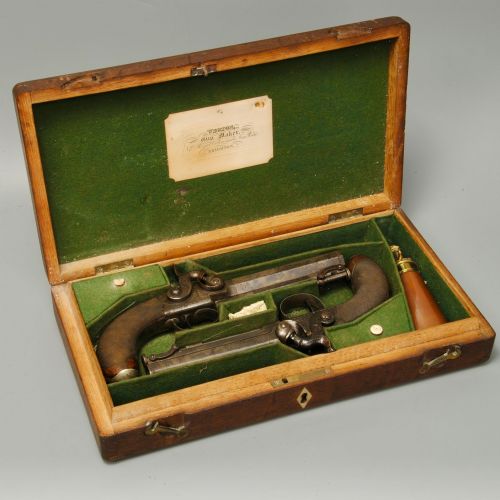
Completeness and originality dictate the standing of a piece within its category. Matching serial numbers on revolvers and original accessories like boxed sets or powder flasks elevate the overall integrity of the item.
John Manton & Son·Sargant & Son·Barber of Newark
The Antique Black Powder Firearm Glossary
- Flintlock
- An ignition mechanism utilising a piece of flint held in a cock to strike a steel frizzen, creating sparks to ignite the powder charge. This system dominated military and civilian arms from the seventeenth through the early nineteenth century.
- Percussion cap
- A small metal cup containing a detonating compound placed on a nipple, which explodes when struck by the hammer to ignite the main charge. This mid-nineteenth-century innovation largely replaced the flintlock.
- Smoothbore
- A barrel lacking internal rifling grooves, designed to fire spherical lead balls or shot. Such barrels were standard for muskets and many early pistols before rifling became widespread.
- Matchlock
- An early firearm action where a burning slow match is lowered into a pan of priming powder by means of a lever. It represents one of the earliest mechanical ignition systems.
- Bore
- The interior cavity of the barrel through which the projectile travels. Measurements are frequently expressed in gauge or calibre terms depending on the period.
Antique Black Powder Firearm: Frequently Asked Questions
What is an antique black powder firearm?
These are historical weapons designed to utilise loose gunpowder and lead projectiles before the invention of modern self-contained metallic cartridges. They encompass systems ignited by match, flint, or percussion cap.
Such pieces include military muskets, cavalry pistols, duelling arms, and revolving handguns produced primarily during the eighteenth and nineteenth centuries.
How do flintlock and percussion systems differ?
A flintlock uses a piece of flint striking steel to generate sparks that ignite priming powder in an external pan. This technology was standard throughout the Napoleonic era.
A percussion system employs a self-contained cap placed on a hollow nipple, struck directly by the hammer to fire the charge. This later method offered much greater reliability in wet weather.
Were these guns used in military service?
Many surviving examples served active military roles, ranging from British Tower muskets to American Civil War revolvers. Government inspection marks and ordnance stamps often verify this official use.
Other pieces were privately purchased by officers or manufactured for civilian self-defence, sport, and duelling.
How should I display an antique firearm?
Displaying these pieces requires a stable environment away from high humidity and direct sunlight to protect wooden stocks and iron components. Secure wall mounts or dedicated glass cabinets are standard choices for collectors.
Metal parts benefit from a very light application of preservative oil, while wooden stocks are best maintained with appropriate furniture wax.