



Antique Caplock Handgun
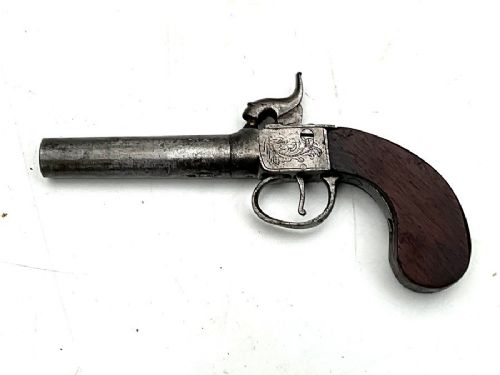
These antique caplock handgun examples span the nineteenth century, offering collectors steel, iron and walnut construction with brass and baize details.
Antique Caplock Handgun
An antique caplock handgun represents the evolution of nineteenth century firearms technology, replacing earlier flintlock mechanisms with reliable percussion systems. Buyers hunting for an antique caplock handgun encounter pocket pistols, military issues, belt pistols and revolvers from the Victorian, Regency and Georgian eras.
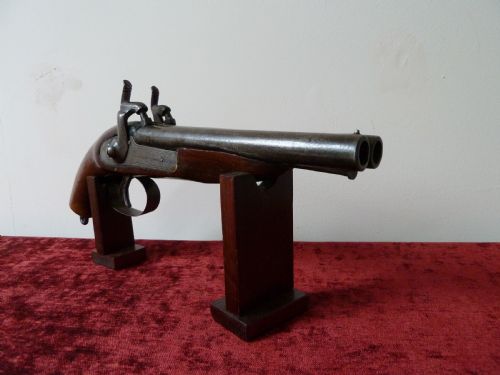
The most common formats on this page include single and double barrel percussion pistols alongside boxlock variations fitted with flick bayonets. Makers from London, Liège and Tower production centres shaped these arms in steel and iron, mounting them in walnut stocks.
How they were made
Gunsmiths forged barrels from steel and iron, shaping them into round or multi-barrel configurations designed for pocket carriage or military service. Actions relied on the percussion cap system, which ignited gunpowder reliably when struck by the hammer.
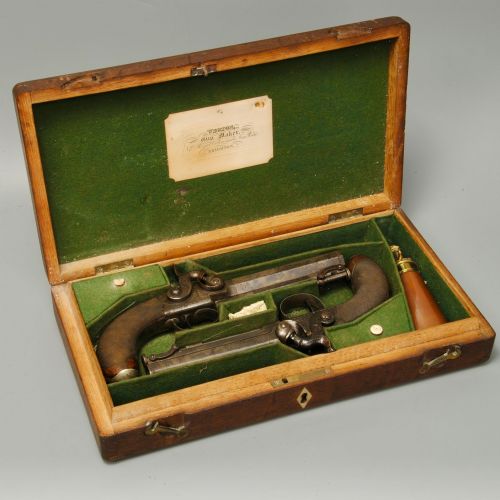
Stocks were carved from walnut, sometimes incorporating brass fittings, trigger guards and compartment linings made of baize. Fine pairs often received checkering and engraved metal surfaces to satisfy civilian officers and discerning purchasers.
Listings feature nineteenth century pieces incorporating steel, iron, walnut, brass and baize across Victorian, Regency and Georgian styles.
What varies in quality
Execution and finish distinguish the maker's hand, where London proof marks and signed lockplates elevate a utilitarian tool into a work of gunsmithing art. Plain belt pistols serve different collector interests compared to matched pairs of boxlock pocket pistols.
Mortimer·Deane, Adams and Deane·Auguste Francotte
The Antique Caplock Handgun Glossary
- Caplock
- A firearm ignition mechanism using a percussion cap placed on a nipple, struck by the hammer to fire the charge. This mid-nineteenth century development superseded the flintlock.
- Boxlock
- A pistol design where the frame and breech are forged as a single unit with the lock mechanism enclosed within. This layout creates a compact profile popular for pocket defence.
- Flick bayonet
- A spring-loaded blade attached beneath the barrel that releases forward when a catch is pressed. It provided a close-quarters defence option on percussion pocket pistols.
- Belt pistol
- A sidearm sized for carrying tucked into a belt or sash, commonly utilised by military officers and civilians during the nineteenth century.
Antique Caplock Handgun: Frequently Asked Questions
What is an antique caplock handgun?
An antique caplock handgun is a nineteenth century firearm that uses a percussion cap ignition system rather than a flintlock mechanism. These pieces include pocket pistols, belt pistols and revolvers made of steel and walnut.
They emerged during the nineteenth century and reflect the manufacturing standards of makers in London and Liège.
Were these pistols used by the military?
Military percussion pistols were standard issue for armed forces, particularly during the mid-nineteenth century. Pieces marked by Tower production centres represent official government contracts.
Officers also purchased private purchase belt pistols and revolvers from makers like Deane, Adams and Deane for personal service.
How should I store an antique caplock handgun?
Store these pieces in a dry, temperature-controlled environment to protect the steel, iron and walnut components from moisture. Using fitted wooden boxes lined with baize helps prevent surface friction and damage.
Maintaining a stable climate prevents rust formation on the metal parts and preserves the wood finish.