


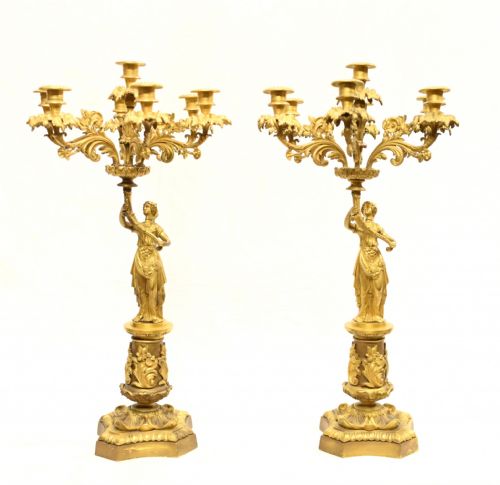

Vintage Metal Candle Stands
These vintage metal candle stands bring light and weight to a room, spanning periods from the eighteenth century through the art deco era.
Vintage Metal Candle Stands
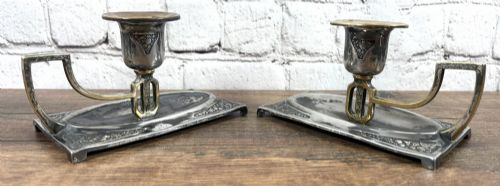
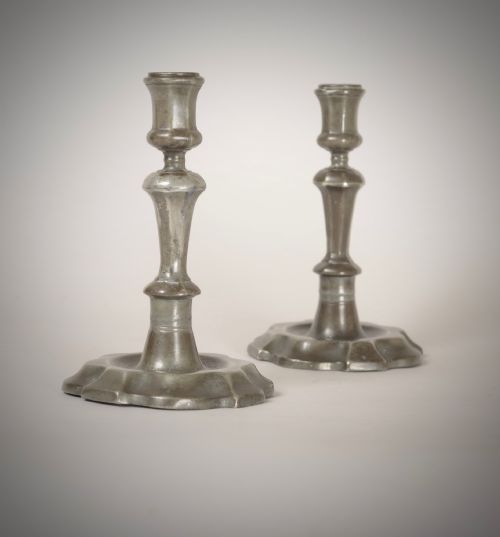
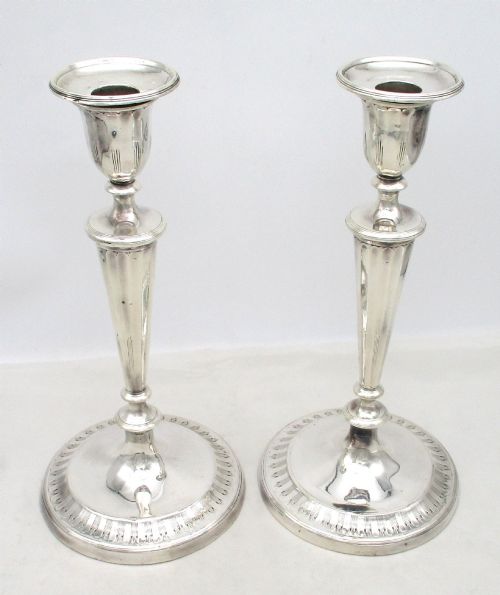
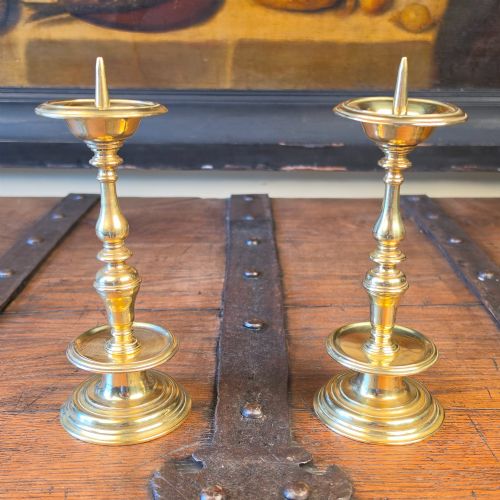
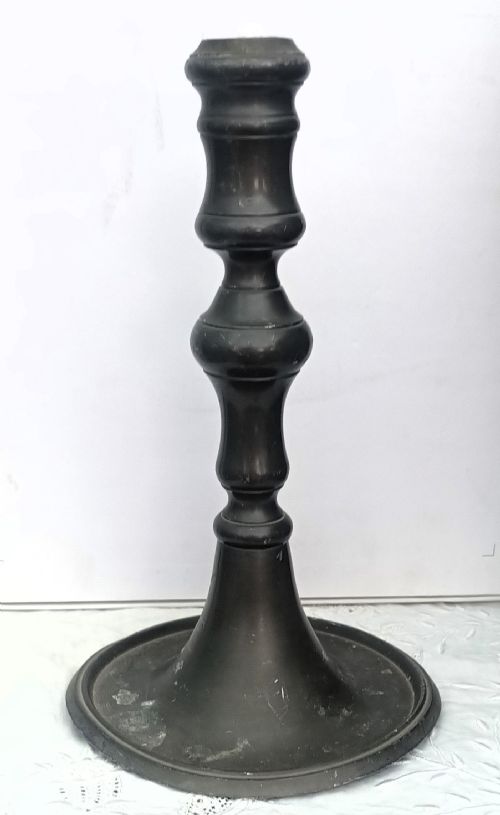
Vintage metal candle stands encompass everything from tall floor candelabras and multi-armed table lights down to small desk candlesticks. Brass and pewter dominate the selection, often appearing alongside silver plate, bronze, copper and wrought iron.
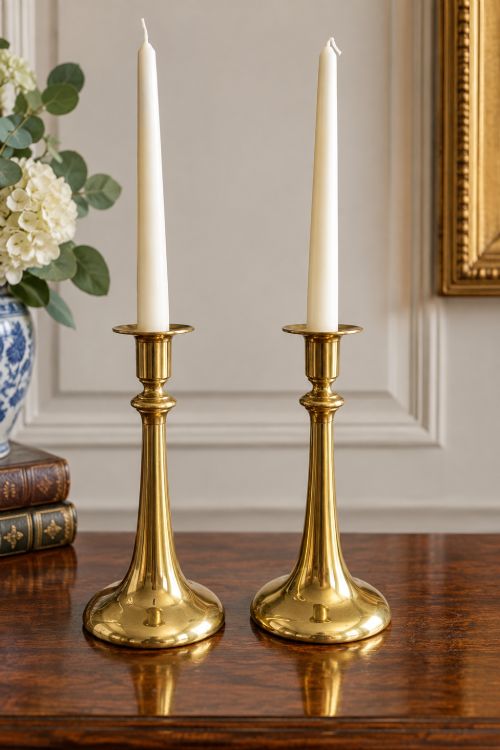
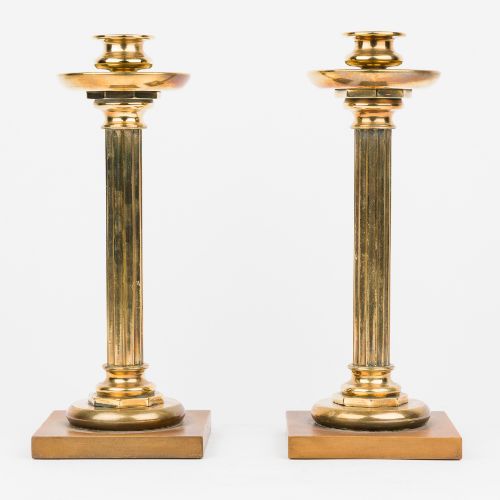
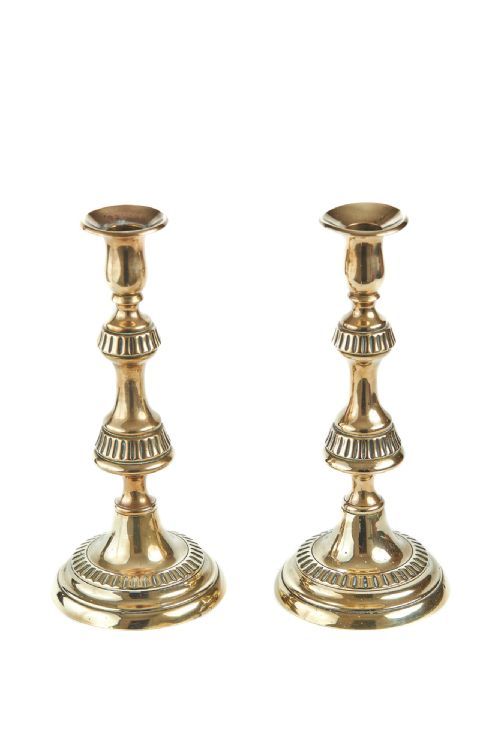
Pairs form the backbone of the selection, stretching across Georgian, Victorian, Edwardian and Art Deco designs. Buyers meet regular domestic candlesticks alongside bolder architectural floor pieces and figural candelabras.
How they were made
Foundry work relied heavily on casting, producing solid brass, bronze and cast metal bodies that often utilised seamed construction methods. Makers shaped copper and sheet metals through panel beating and soldering, while ironworkers forged wrought iron components by hand.
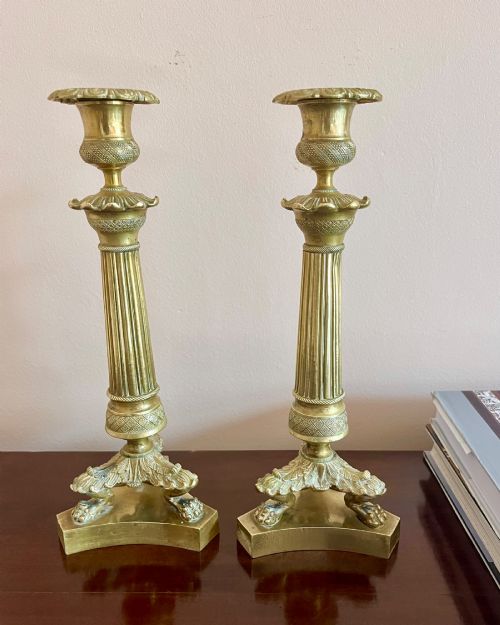
Surface finishing brought distinct character through silver plating, ormolu gilding and patination. Artisans also combined base metals with materials like tortoiseshell and marble to elevate domestic pieces.
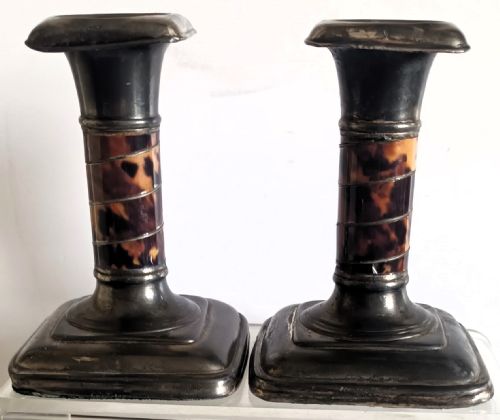
Tortoiseshell panels tucked into pewter candlesticks prove that Victorians loved putting unexpected textures together.
What varies in quality
Weight and metal thickness distinguish superior examples from lighter production runs. Sturdier castings hold cleaner lines and support multi-armed branches securely without tilting.
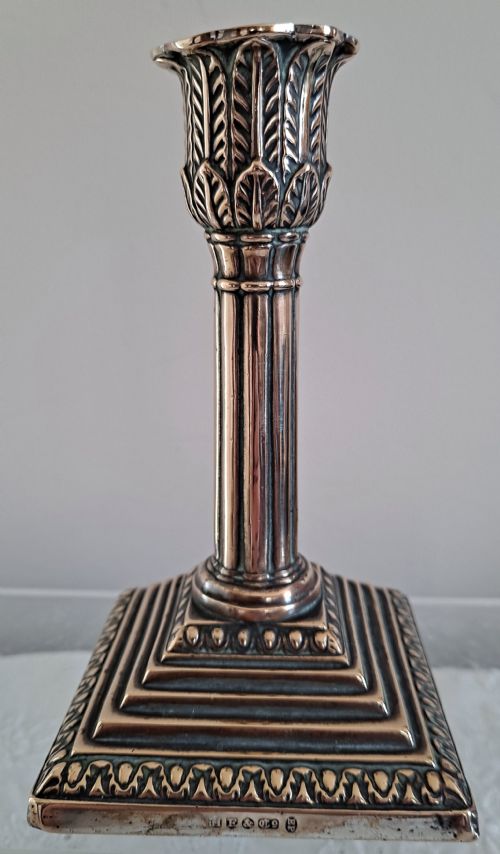
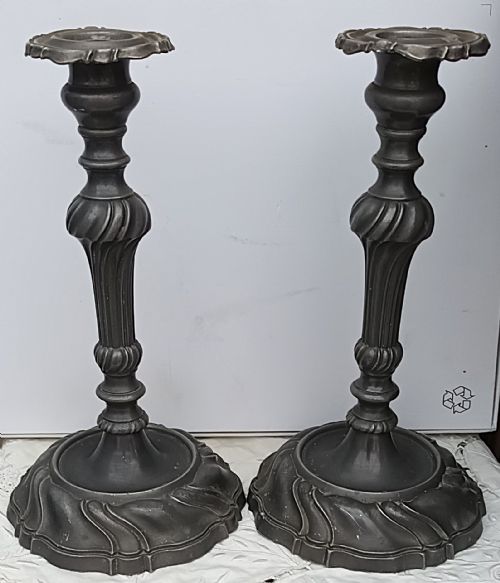
Detailing separates standard wares from exceptional items. Crisp chasing on ormolu, well-defined rococo scrolls and stamped maker details on brass bases indicate superior workshop standards.
James Clews
The Vintage Metal Candle Stands Glossary
- Candelabra
- A branched candleholder designed to hold multiple tapers at once. These multi-arm stands often feature central columns rising from heavy decorative bases.
- Ormolu
- Gilded bronze produced by applying a mercury and gold amalgam to cast bronze. This technique creates a rich golden surface finish seen on decorative nineteenth-century pieces.
- Seamed
- A method of joining sheet metal edges together during manufacture. Seamed construction appears frequently on eighteenth and nineteenth-century brass ejector candlesticks.
- Torchere
- A tall ornamental stand originally built to carry a light source. These floor-standing pieces serve as strong architectural statements in a room.
- Trench art
- Objects manufactured by soldiers or civilians from war debris and metal scraps. These pieces often date from the early twentieth century and utilise spent shell cases.
Vintage Metal Candle Stands: Frequently Asked Questions
How do I date metal candle stands?
Dating relies on combining stylistic clues with manufacturing techniques. Georgian and Victorian pieces show distinct casting methods and decorative motifs that differ from later art deco designs.
Examine the base and construction seams for clues. Lighter spun metals and geometric art deco lines point to the twentieth century, while heavier cast brass and hand-finished details suggest earlier periods.
Can I use antique candlesticks daily?
Most antique metal candle stands remain structurally robust for regular use. Solid brass, bronze and pewter models handle daily lighting provided you keep them stable.
Ensure tapers fit snugly in the sockets to prevent leaning. Clean wax drips carefully with warm water rather than scraping the metal surface.
How should I clean antique brass and pewter?
Cleaning requires a gentle approach to preserve the historical patina. Wash surfaces with mild soap and warm water, drying them thoroughly with a soft cloth to avoid water spots.
Avoid harsh chemical dips or abrasive metal polishes that strip away age and character. Natural oxidation adds depth to antique copper, brass and pewter.