


Vintage Marquetry Clock
A vintage marquetry clock brings patterned wood inlay and mechanical timekeeping into a room, joining decorative artistry with practical function.
Vintage Marquetry Clock
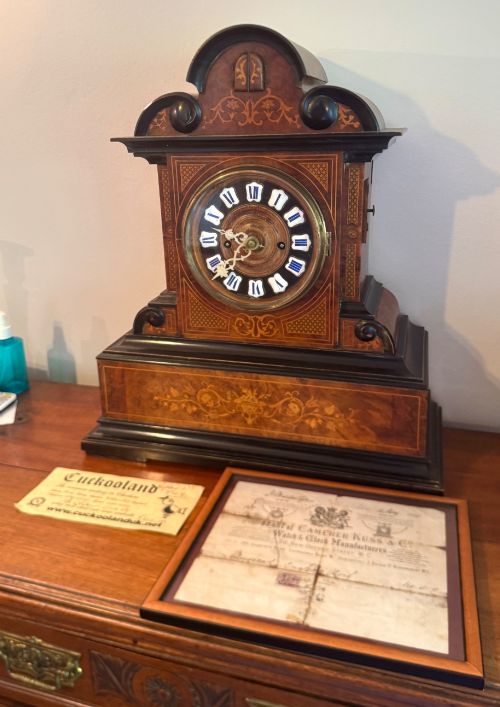
A vintage marquetry clock typically appears as a mantel clock, a wall clock, or a taller longcase clock. These timepieces originate from periods spanning the seventeenth century through the Edwardian era, with many examples emerging from Victorian and early twentieth-century workshops.
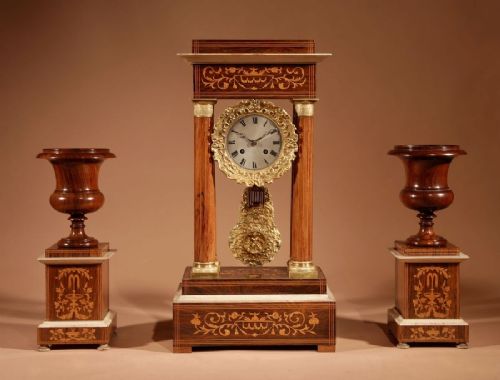
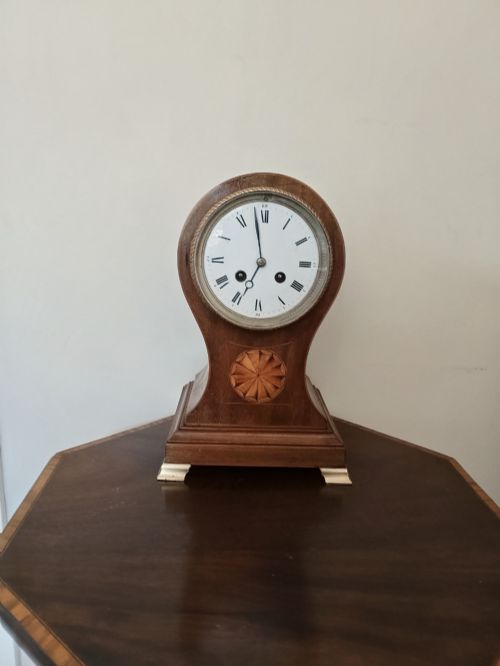
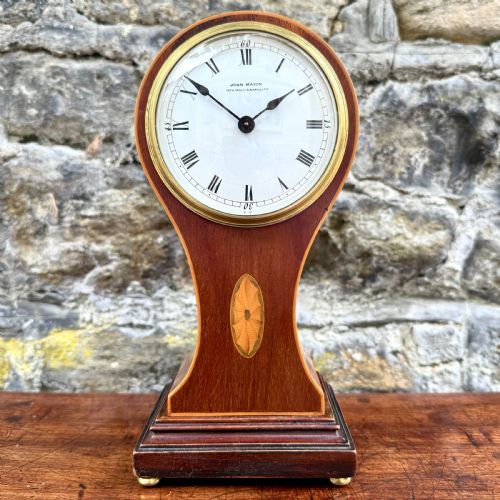
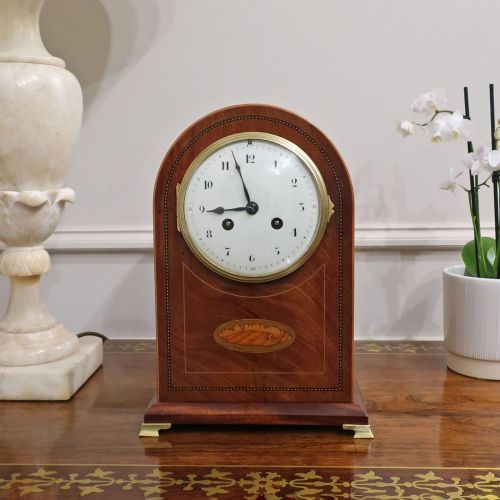
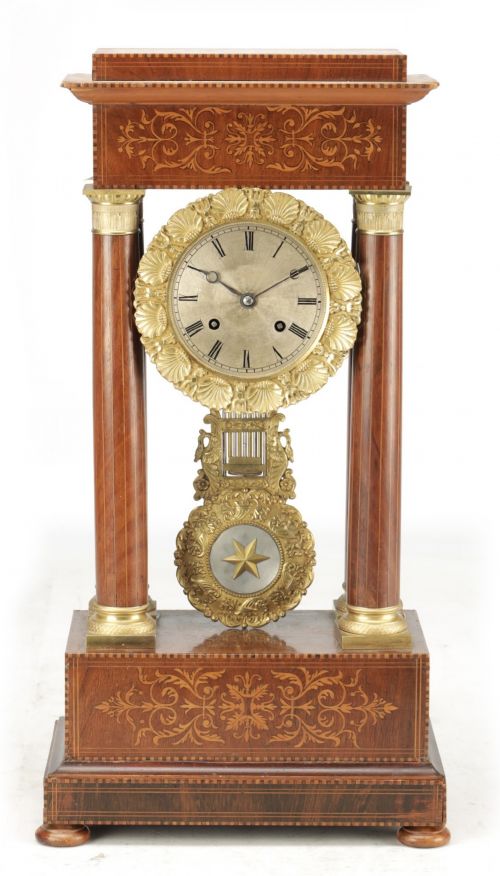
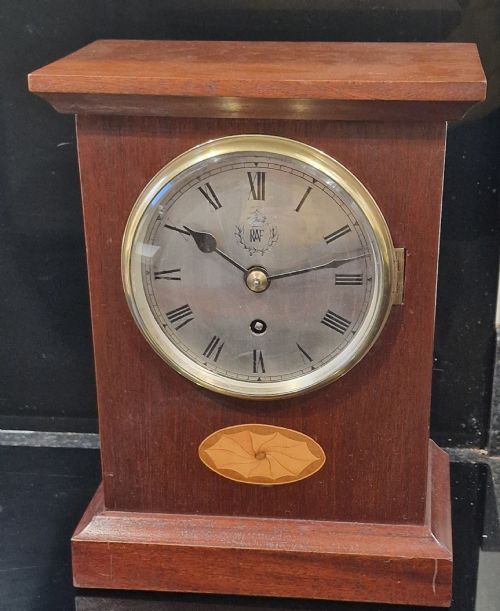
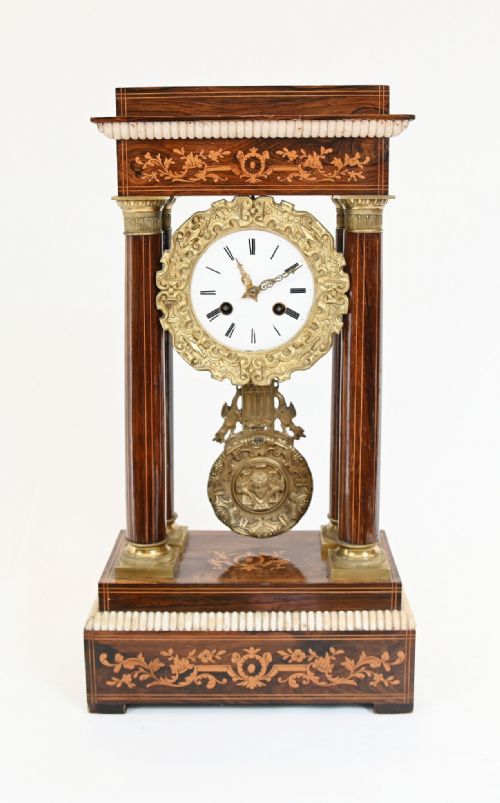
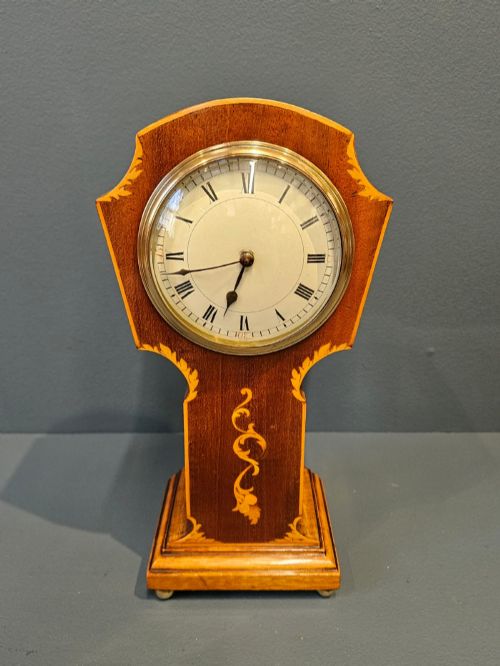
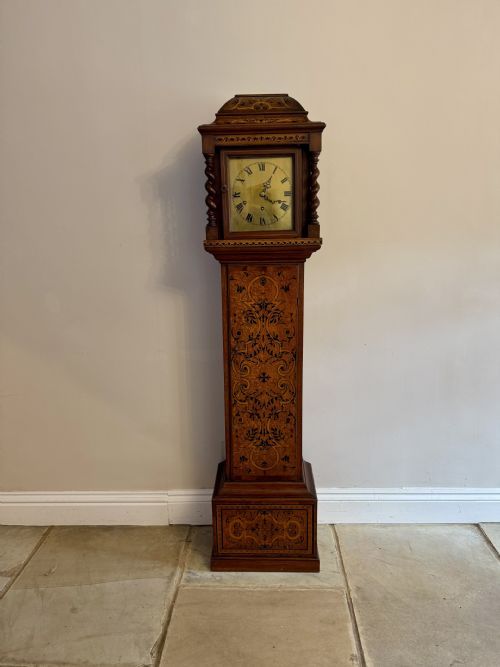
Buyers seeking a vintage marquetry clock frequently encounter Edwardian mahogany balloon-shaped mantel pieces and taller grandfather clocks. French workshops also contribute rosewood and portico variants, while domestic makers produce inlaid dial and wall formats.
The selection ranges from compact mantel pieces suitable for a shelf to grand longcase clocks designed for hallway placement. Each style reflects the prevailing cabinet-making traditions of its specific period of production.
Materials and Technique
Craftsmen construct the primary carcase using timbers such as mahogany, walnut, rosewood, and satinwood. Fine contrasting woods including boxwood are then sliced and fitted into precise recesses to create floral or geometric surface patterns.
Dial construction involves brass, silvered metal, or enamel components, often paired with protective glass bezels. Movements incorporate mechanical gear trains driven by weights or single fusee springs, housing brass plates and delicate escapements.
Listings feature mahogany, walnut, rosewood, and satinwood alongside brass and enamel components across Edwardian, Victorian, and earlier periods.
Craftsmanship and Proportion
Superior examples demonstrate absolute precision in the execution of the wood inlay, where contrasting timbers meet without gaps or filler. The sharpness of the botanical or geometric motifs distinguishes master cabinet-making from simpler production.
Case proportion and timber selection also divide the range, with figured walnut, burr veneers, and rich mahogany creating greater visual depth. The integration of the dial with the wooden case reveals the original maker's attention to detail.
Henry Massy·W. Burton·Henry Marc·Edward East
The Vintage Marquetry Clock Glossary
- Marquetry
- The decorative technique of applying thin veneers of wood to a structure to form intricate pictures or patterns. It differs from inlay by assembling the entire design on a backing before gluing it to the carcase.
- Fusee
- A conical pulley used in mechanical clocks to maintain an even pull on the gear train as the mainspring unwinds. This mechanism improves timekeeping accuracy across the power reserve.
- Grandfather clock
- A tall, free-standing weight-driven clock featuring a pendulum swinging inside a long wooden case. These floor-standing pieces are also known as longcase clocks.
- Mantel clock
- A portable clock designed to sit on a fireplace mantel or shelf. They frequently feature decorative wooden cases styled in balloon or bracket shapes.
Vintage Marquetry Clock: Frequently Asked Questions
How do I wind a vintage clock?
Mechanical clocks require a key to turn the arbors located on the dial face. Care must be taken not to overwind the mainspring.
Consult the specific movement type, whether fusee or spring-driven, to determine the correct winding interval.
Where should I place a longcase clock?
Longcase clocks need a stable, dry interior wall away from direct sunlight and temperature fluctuations. Placing them on an even floor ensures the pendulum swings evenly.
Securing the tall wooden trunk to the wall adds stability and protects the mechanism.
How do I identify an Edwardian clock?
Edwardian timepieces often feature light mahogany cases with delicate boxwood stringing and floral marquetry motifs. These pieces typically date from the first decade of the twentieth century.
Dial styles from this period frequently utilise Arabic numerals and brass bezels under glass.
What maintenance do these clocks need?
Routine care involves professional cleaning and oiling of the brass gear trains every few years. Keeping the glass and wooden surfaces dusted preserves the exterior finish.
Avoid using harsh chemical polishes on antique wood veneers or delicate dial faces.