
Vintage Marquetry Cabinet
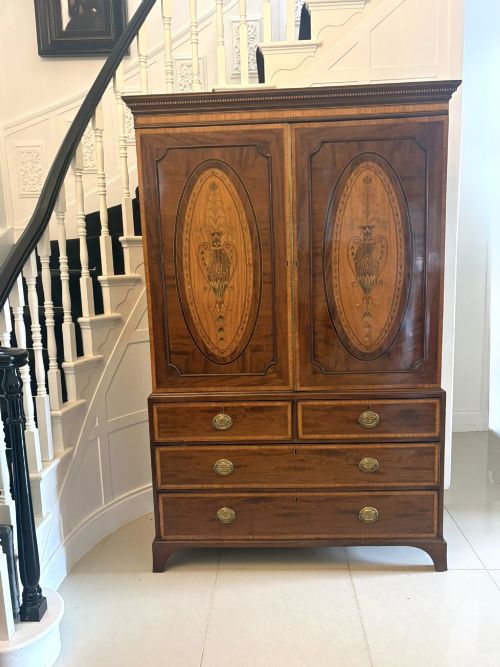
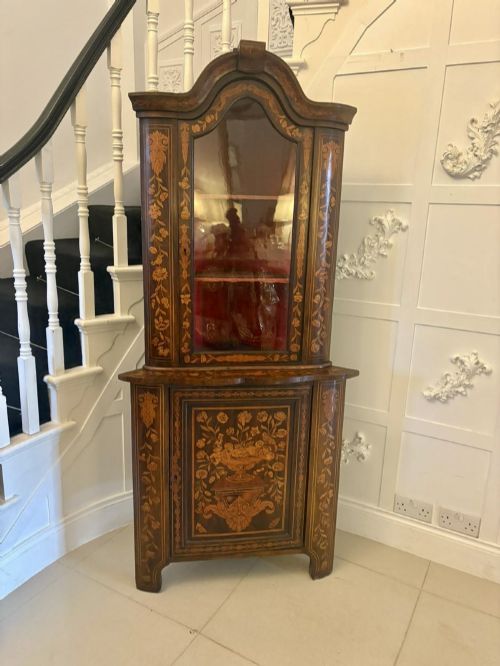
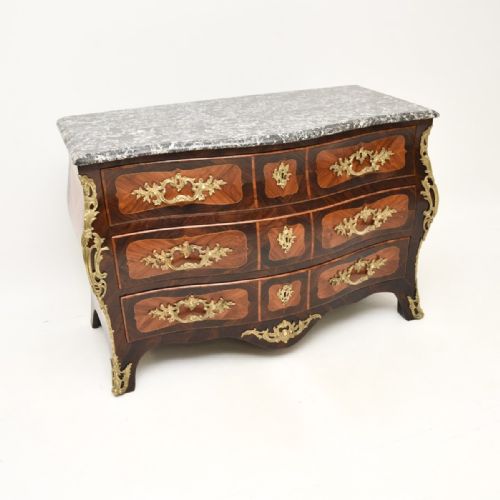
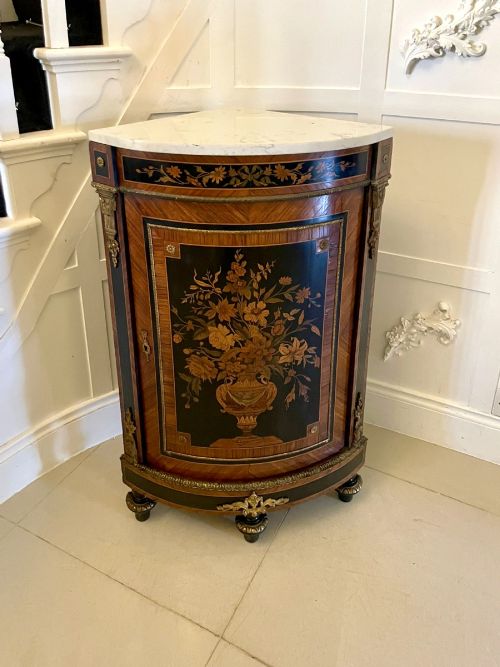
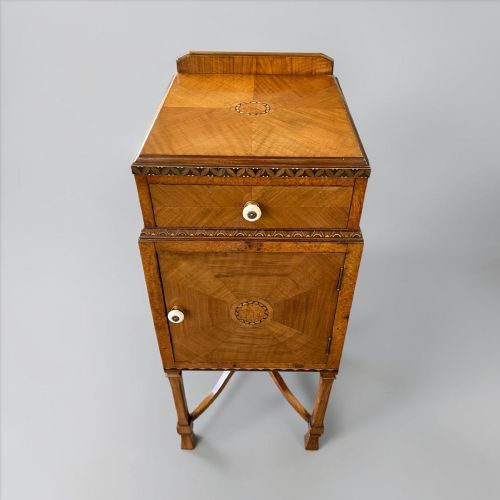
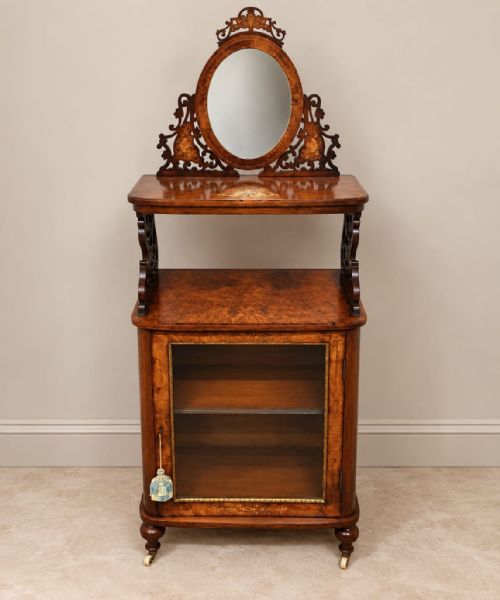
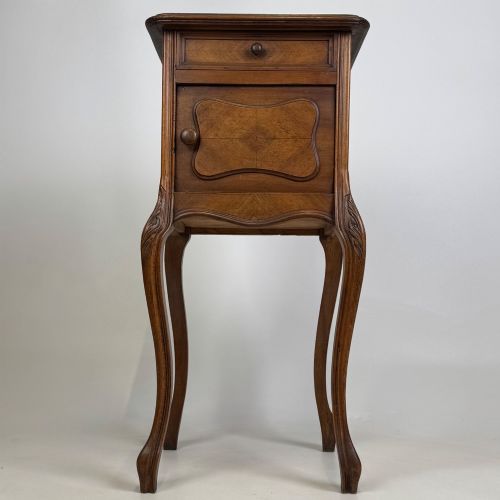
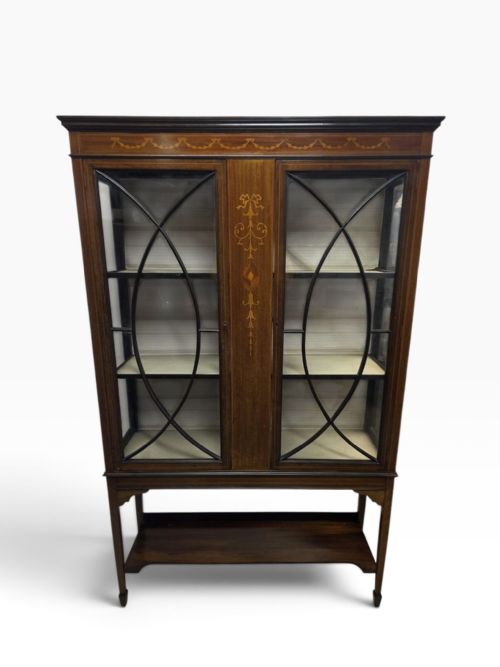
A vintage marquetry cabinet brings detailed wood inlay and French revival styling into a room, offering both display space and storage.
Vintage Marquetry Cabinet
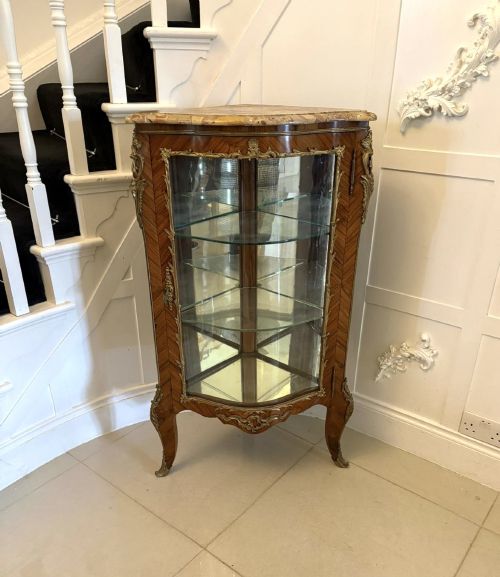
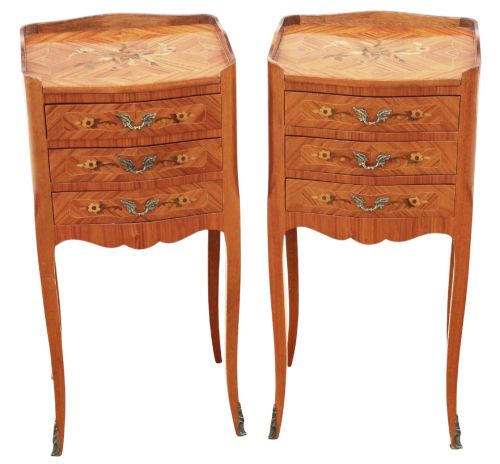
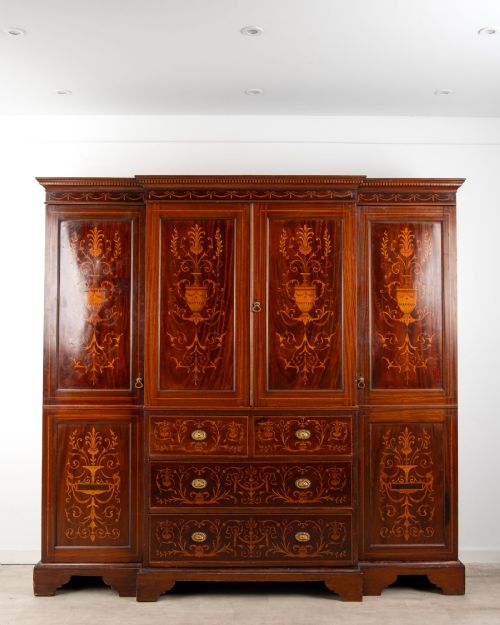
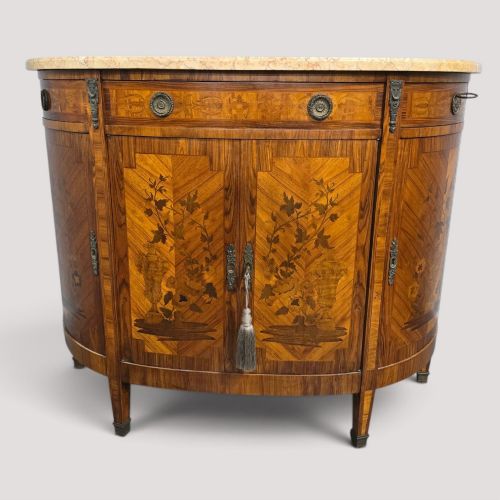
A vintage marquetry cabinet covers a range of storage and display furniture, from bedside tables and nightstands to larger commodes, corner cabinets, and display cabinets. These pieces often draw on French Louis styles, Edwardian craftsmanship, and 20th-century revivals.
How they were made
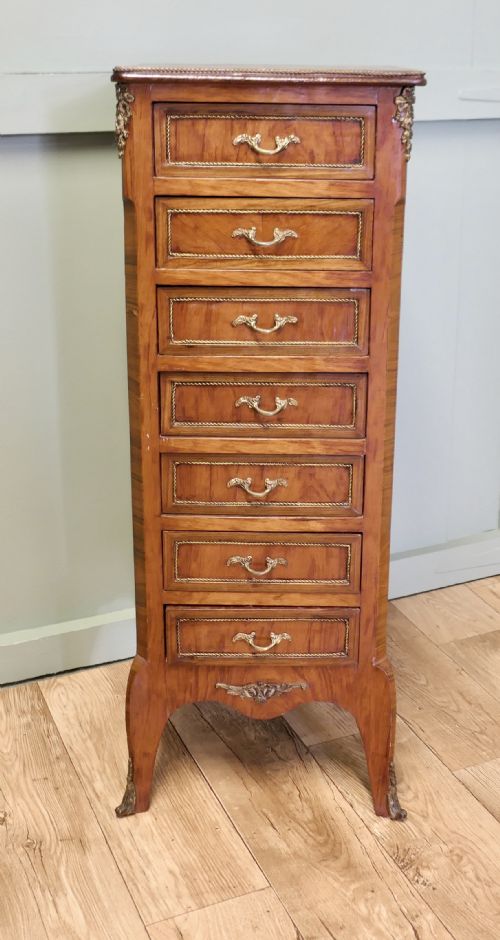
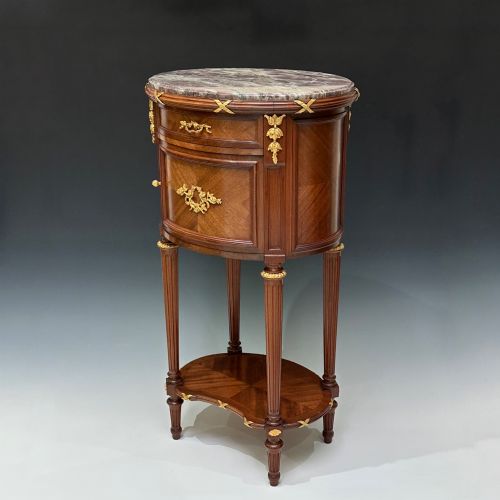
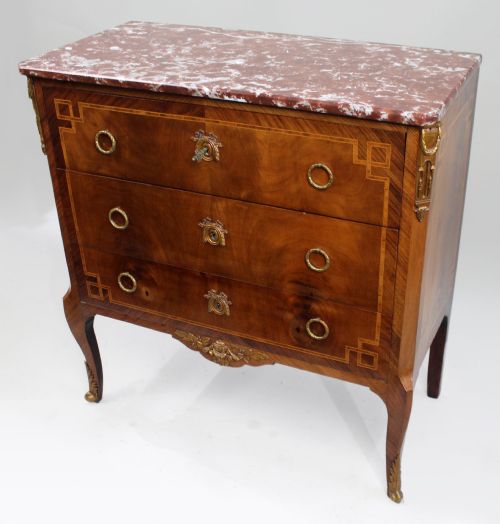
Cabinet makers utilised a foundation of solid timbers like mahogany, walnut, and rosewood, applying contrasting veneers of satinwood and kingwood to create intricate pictorial or geometric marquetry patterns. Brass handles, ormolu mounts, and rouge or white marble tops completed the construction of these refined storage pieces.
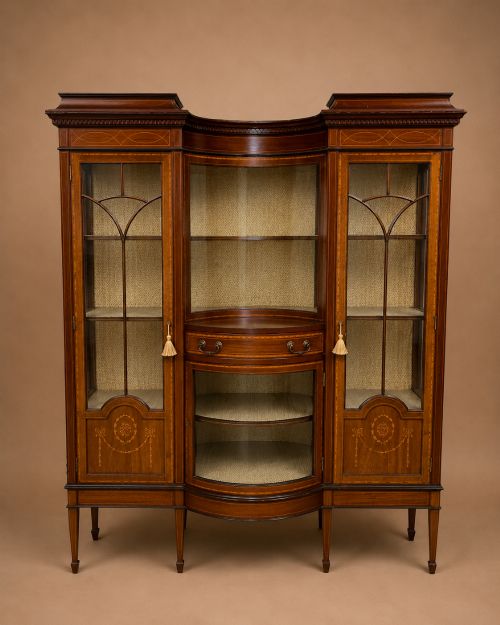
Makers shaped these cabinets into bow front, demi lune, and straight-sided forms, employing precise woodworking techniques to inlay different wood species across doors, drawer fronts, and side panels.
Design influences on this page stretch from 1800 through Victorian, Edwardian, and Art Deco periods up to 1930.
What varies in quality
The standard of a vintage marquetry cabinet rests upon the intricacy of the wood inlay and the precision with which contrasting timbers are fitted into the surface. Finer examples display subtle shading in the floral or pictorial motifs rather than simple geometric repetitions.
Secondary materials also separate the tiers of manufacture, seen in the weight and polish of the marble tops, the cast detail of the ormolu mounts, and the choice of primary carcase timbers such as kingwood or burr walnut.
Jacques Bircklé·François Linke·Maple & Co.
The Vintage Marquetry Cabinet Glossary
- Marquetry
- Decorative veneer work arranged in pictorial or geometric patterns using various coloured and textured woods. This technique forms the primary visual element across these cabinets.
- Ormolu
- Gilded bronze mounts applied to furniture edges, feet, and corners for ornamentation. It appears frequently on French revival pieces from the nineteenth and twentieth centuries.
- Commode
- A low chest of drawers or cabinet, often fitted with a marble top. These pieces originated in France and serve as decorative storage furniture.
- Demi lune
- Half-moon shape in furniture design, typically describing cabinets or tables with a curved front and flat back designed to sit against a wall.
- Compactum
- A large fitted wardrobe or multi-compartment storage cabinet designed to hold a variety of garments in an organised manner.
Vintage Marquetry Cabinet: Frequently Asked Questions
Where should I place a bedside cabinet?
These small cabinets suit positions beside a bed to hold lamps and books, though smaller lamp tables also function well next to living room seating.
Their decorative marquetry surfaces and marble tops allow them to stand independently against walls in hallways or studies.
How do I clean marble top cabinets?
Marble surfaces require gentle wiping with a damp cloth and mild soap, avoiding acidic cleaning products that can etch the stone. Regular dusting keeps the polished surface protected.
For the wooden marquetry body, a soft dry cloth maintains the finish without introducing excessive moisture.
What periods do these cabinets span?
The selection includes pieces from the nineteenth century through the Edwardian era and into the 1930s. Victorian and Edwardian examples sit alongside French Louis revival pieces from the early twentieth century.
Stylistic influences range from eighteenth-century French court designs to Art Deco and Sheraton revivals.
How do I distinguish French styles?
Louis XV pieces often feature curved serpentine lines, cabriole legs, and elaborate floral marquetry, while Louis XVI styles lean towards straighter lines, symmetry, and neoclassical geometric inlay.
Ormolu mounts and marble tops accompany both styles across various nineteenth and twentieth-century interpretations.