



Floral Inlay Dresser
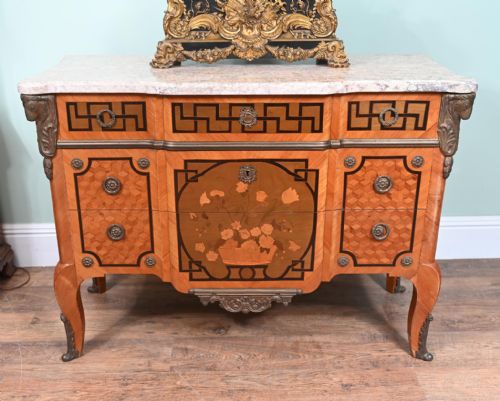
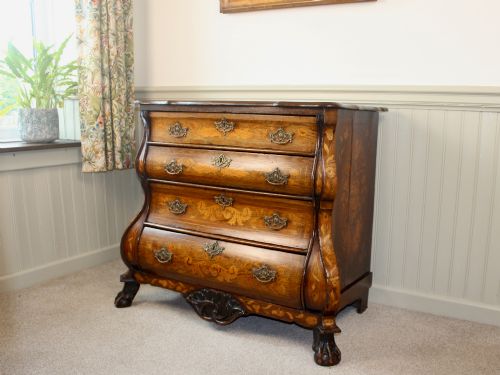
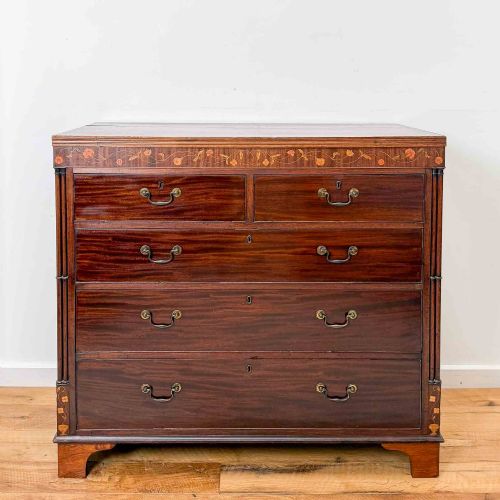
A floral inlay dresser brings together timber and botanical marquetry, offering practical storage with detailed craft.
Floral Inlay Dresser
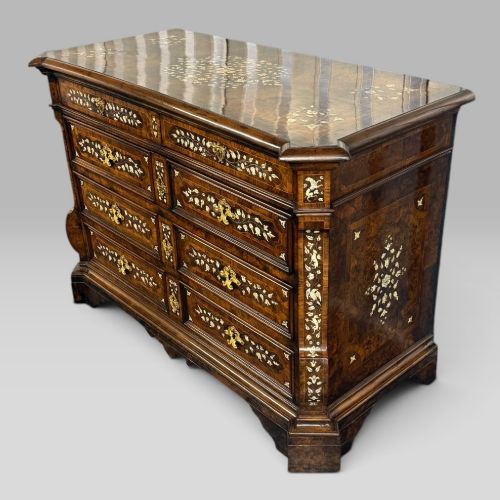
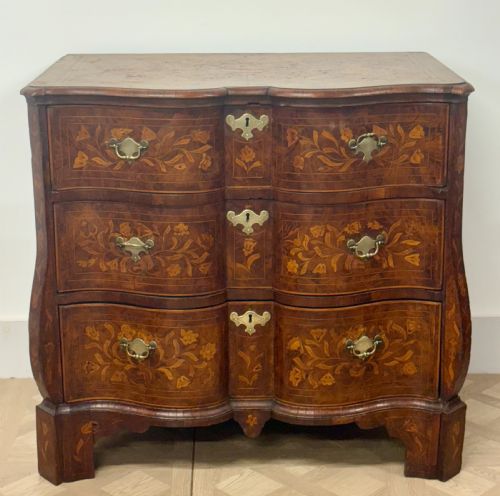
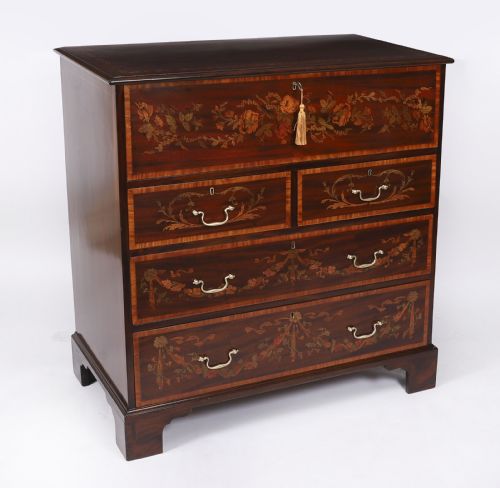
A floral inlay dresser encompasses chests of drawers, commodes, and sideboards adorned with marquetry and floral details. Buyers search this phrase to find storage pieces decorated with botanical motifs.
The pieces appearing here span the 17th century through the early 20th century, drawing from English, Dutch, and Italian origins. Walnut, mahogany, and oak form the foundation for these historic designs.
Most examples lean towards chest of drawers and commode forms rather than kitchen dressers. Marquetry panels dominate the surfaces across the selection.
Materials and construction
Cabinet makers utilised solid woods and veneers of walnut, mahogany, oak, and fruitwood to build the carcases. Fruitwood inlay and marquetry create the contrasting floral patterns across the drawer fronts and tops.
Brass handles, escutcheons, and ormolu mounts provide functional and decorative hardware details. Skilled artisans assembled these items using period joinery before applying complex wood inlay techniques.
Floral Inlay Dresser Retail Price Guide 2026
Typical asking prices for floral inlay dresser among the pieces listed under this phrase on Sellingantiques today, from the lower quarter to the upper quarter. They describe what is for sale here now, not the wider market.
Materials documented across the pieces include brass, walnut, mahogany, fruitwood, oak, ormolu, and marquetry inlay.
Judging quality in floral marquetry
The crispness of the floral inlay and the tightness of the marquetry fit distinguish finer examples from simpler work. The choice of primary timbers, such as burr walnut or figured mahogany, elevates the visual depth.
The integration of the botanical design with the overall proportions of the chest or commode dictates the success of the piece. Subtle variations in fruitwood shading give life to the floral motifs on higher grade items.
Grand Ducal Workshops·Ollivant and Botsford
The Floral Inlay Dresser Glossary
- Marquetry
- Decorative veneer work arranged in pictorial patterns. Artisans cut different coloured woods to form floral and geometric designs.
- Bombé
- A swelling or bulging curved outward shape characteristic of certain commodes. This baroque outline requires advanced shaping of the timber.
- Commode
- A low chest of drawers or cabinet originating in France. These pieces often feature marble tops and elaborate marquetry.
- Ormolu
- Gilded bronze mounts applied to furniture for decoration. This material accents the corners and feet of revival pieces.
- Serpentine
- A front line or top curving outward at the centre and inward at the sides. This contour adds movement to chest of drawers designs.
Floral Inlay Dresser: Frequently Asked Questions
What is a floral inlay dresser?
A floral inlay dresser refers to historic storage furniture decorated with botanical marquetry. The term covers chests of drawers and commodes built across several centuries.
These pieces use woods like walnut and mahogany as a base for intricate wood floral details. They combine utility with ornamental surface design.
How do I date a marquetry chest?
Dating relies on timber choice, construction methods, and the style of the floral inlay. Earlier pieces from the seventeenth century often show walnut and distinct marquetry layouts.
Later Victorian and revival interpretations adopt different woods and serpentine shapes. Comparing the carcase construction helps establish the period.
Where were these pieces made?
The listings feature pieces from English, Dutch, and Italian workshops. Dutch makers achieved particular renown for floral marquetry across chests and commodes.
Regional preferences shaped the choice of primary woods like oak and walnut alongside exotic veneers. Each origin brought distinct proportions to the furniture.
How do I care for antique marquetry?
Care involves keeping the wood away from direct sunlight and sudden temperature changes. Gentle dusting preserves the delicate fruitwood inlay without wearing the surface.
Occasional wax maintenance keeps the timber nourished and protects the historical finish. Avoid harsh chemical cleaners on the brass and ormolu mounts.