
Antique Floral Commode
An antique floral commode brings together elaborate marquetry and practical storage, offering a striking centrepiece for a traditional room.
Antique Floral Commode
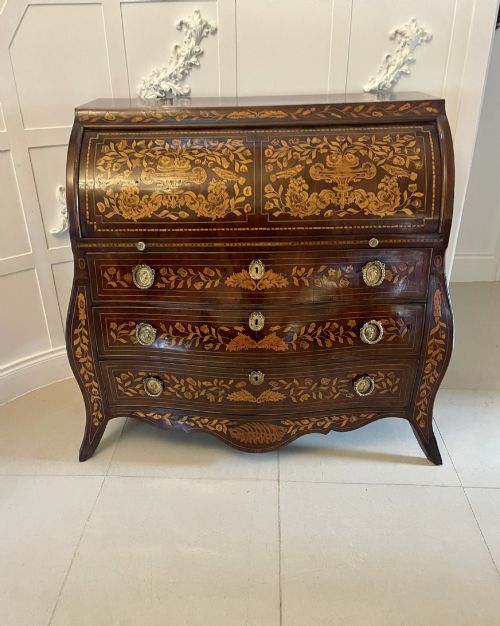
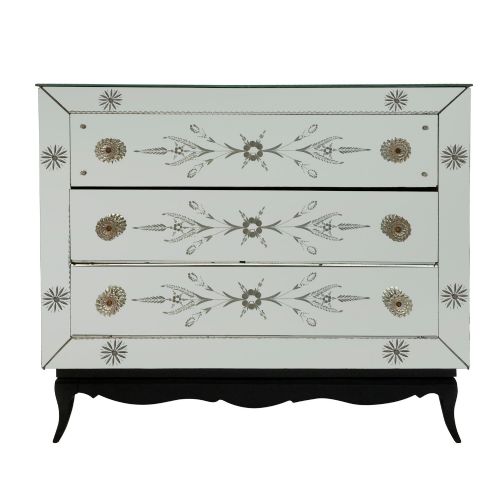
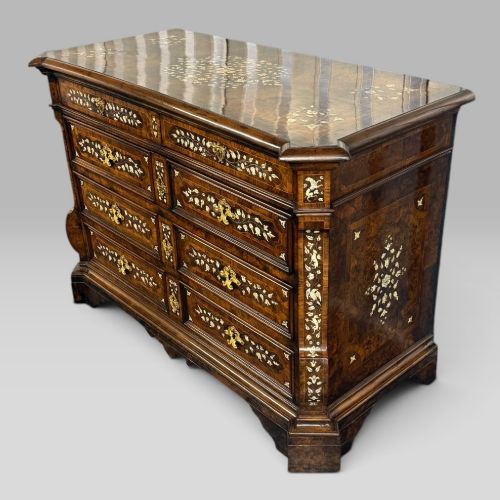
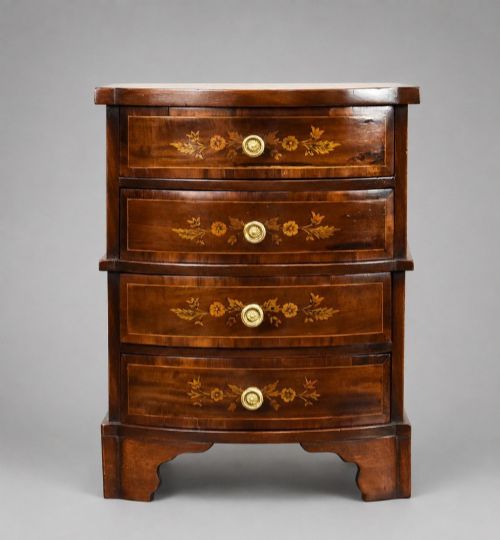
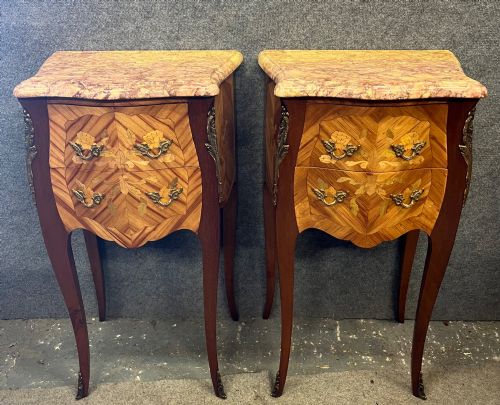
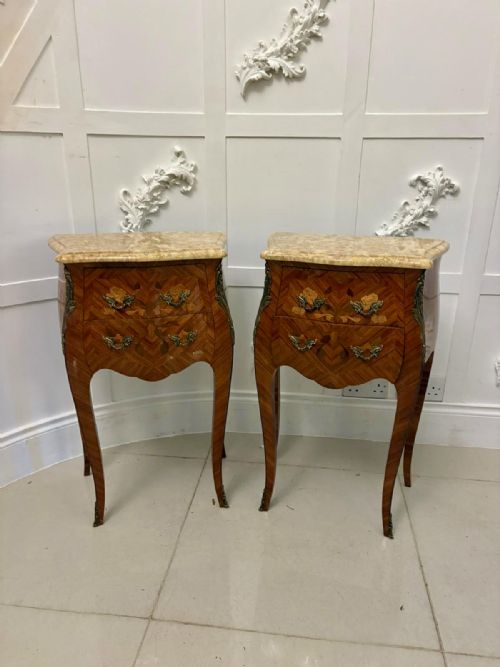
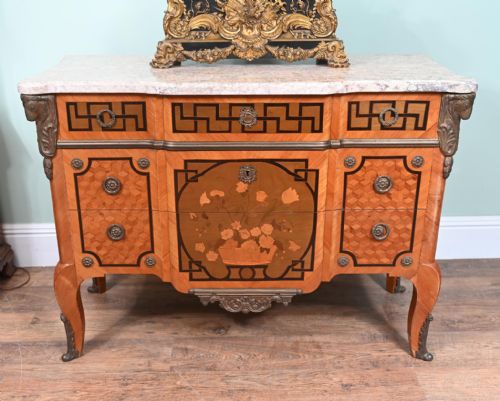
When searching for an antique floral commode, you encounter decorative storage pieces designed with detailed marquetry flower motifs, often taking the form of chests of drawers, side cabinets, or bedside tables. These items originate from periods spanning the seventeenth century through to the early twentieth century, reflecting diverse European cabinet-making traditions.
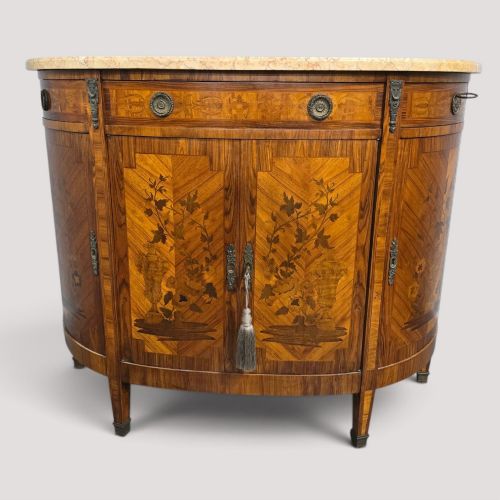
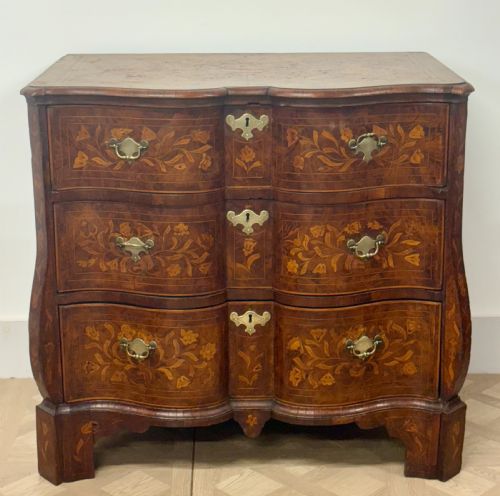
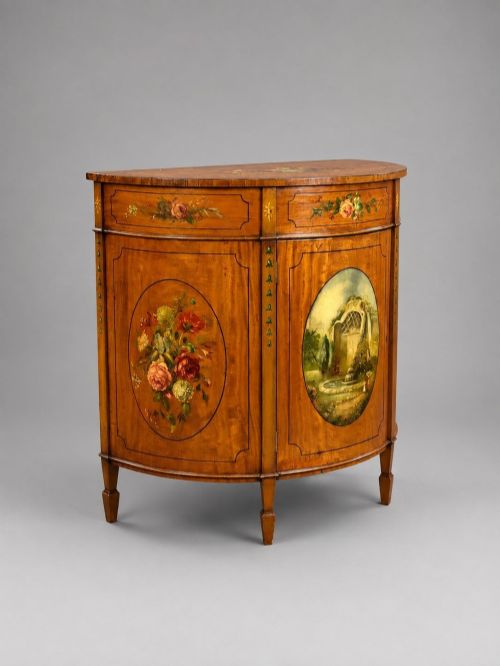
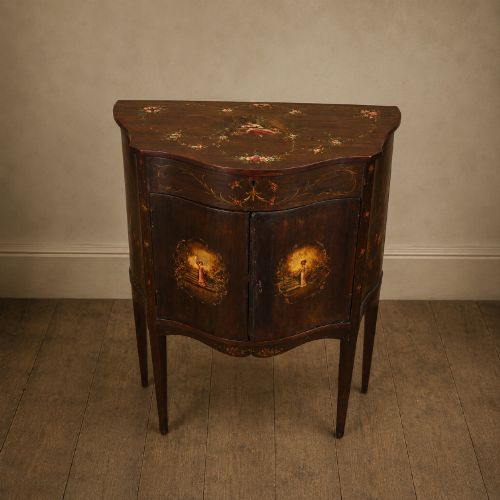
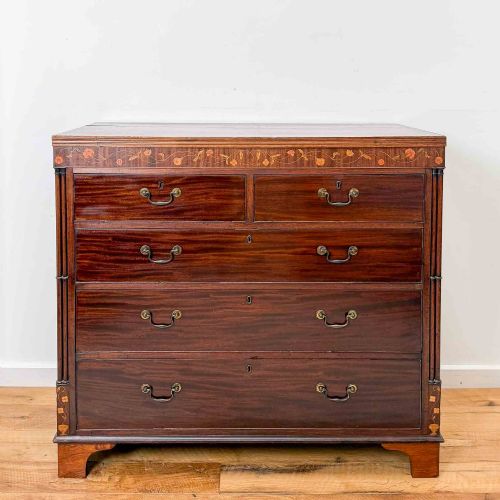
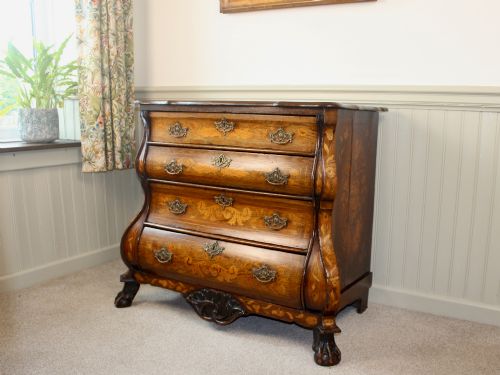
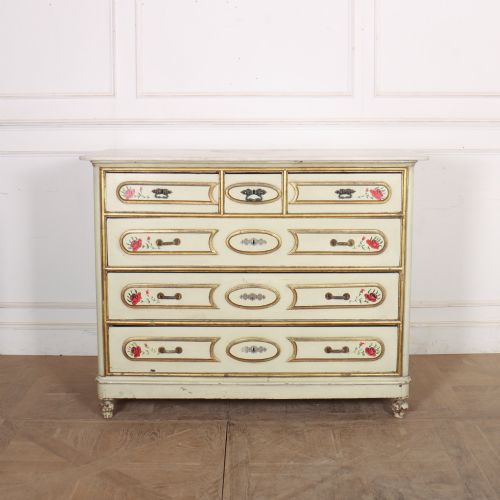
The most common examples on this page are French and Dutch pieces incorporating elaborate wood inlay, alongside English Sheraton Revival interpretations and Edwardian painted satinwood items. Forms range from bombe chests and serpentine cabinets to marble-topped console tables and demi-lune shapes.
Materials and construction methods
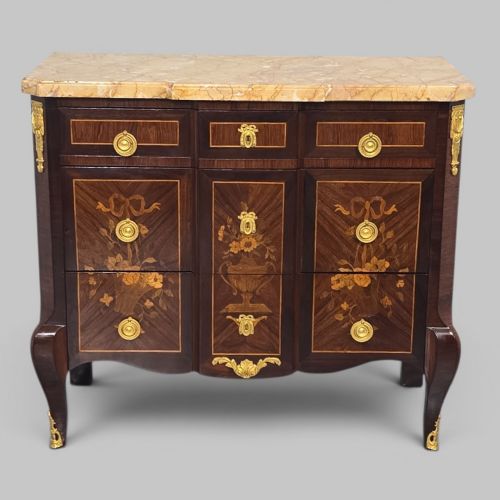
These items rely on timber carcasses constructed from walnut, mahogany, oak, or kingwood, which provide structural stability for the decorative surfaces. Cabinet-makers applied contrastingveneers of fruitwood, satinwood, and walnut to create intricate floral marquetry patterns across the drawer fronts and panels.
Many examples incorporate cast or chased ormolu mounts to accent corners and handles, while several designs integrate fitted marble tops in shades of white or variegated stone. Hand-painted details appear on specific satinwood and earthenware variations alongside traditional dovetail joinery.
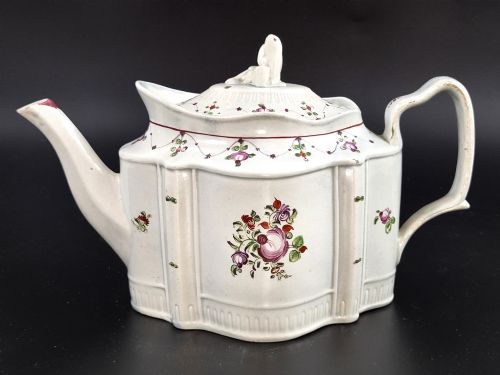
An unexpected ceramic tea-pot shaped like a commode proves that nineteenth-century potters possessed a distinctly dry sense of humour.
Distinctions in craftsmanship
Quality rests upon the precision of the floral marquetry and the variety of woods utilised to render petals and stems with naturalistic shading. Pieces featuring finely cut contrasting veneers display a higher degree of artisan skill than simpler painted or stenciled alternatives.
The choice of secondary materials further separates standard items from exceptional ones, particularly the inclusion of heavy slab marble tops, fire-gilt ormolu mounts, and robust secondary timbers like oak within the drawer construction.
Edwards and Roberts·Paul Sormani
The Antique Floral Commode Glossary
- Marquetry
- Decorative patterns formed by fitting together small pieces of wood veneer onto a structural carcass. This technique allows makers to depict complex floral sprays and foliage across curved and flat surfaces.
- Ormolu
- Gilded bronze mounts applied to furniture for decorative and protective purposes. These cast metal ornaments frequently accent the corners and apron of French commodes.
- Bombe
- A swelling, outward-curved contour found on the sides and fronts of specific cabinet furniture. This undulating shape demands advanced woodworking skill to match the veneer accurately.
- Demi-lune
- A half-moon shape characteristic of console tables and specific cabinets designed to stand flush against a wall. Such pieces often feature curved drawers and painted satinwood decoration.
- Serpentine
- A curved line that is convex in the middle and concave at the sides, creating an undulating front edge. This profile appears frequently on eighteenth and nineteenth century chests of drawers.
Antique Floral Commode: Frequently Asked Questions
What is a floral commode?
A floral commode is a decorative cabinet or chest of drawers adorned with inlaid or painted flower designs. These pieces combine functional storage with elaborate surface decoration.
Originating largely from continental and English workshops, they serve as ornamental storage furniture in bedrooms and reception rooms.
How do I style a commode?
These items work well as focal points in hallways, bedrooms, or living spaces where their marquetry can be appreciated. Placing lamps or decorative objects on top enhances their function.
Keep surrounding furniture complementary to let the detailed wood veneers stand out without visual competition.
What is the difference between Louis styles?
Louis XV furniture favours asymmetrical curves, floral marquetry, and undulating serpentine or bombe shapes. Ormolu mounts on these pieces often display organic, rococo forms.
Louis XVI design shifts towards a more restrained classical geometry with straight tapered legs and symmetrical marquetry panels.