




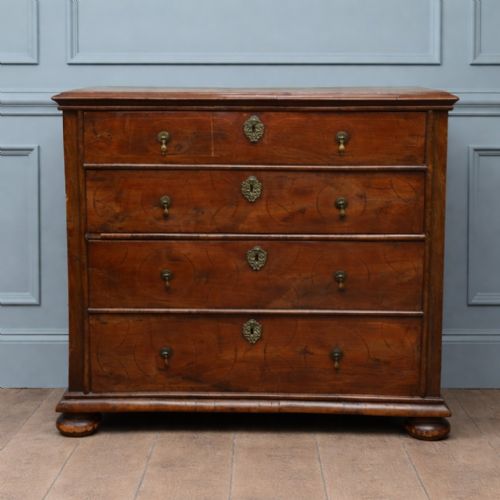


Marquetry Chest Bun Feet
These marquetry chest bun feet pieces are substantial 17th-century and William and Mary storage furniture offering rich patterned veneers and traditional supports.
Marquetry Chest Bun Feet
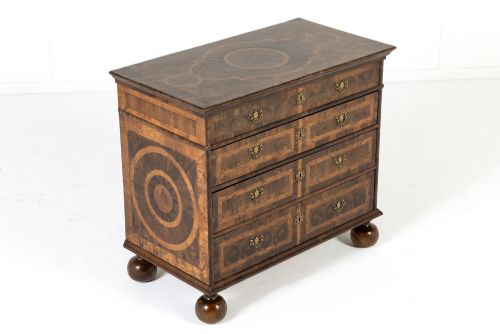
A marquetry chest bun feet search reveals seventeenth-century and William and Mary period case furniture, specifically chests of drawers and cabinets on chests. These pieces display elaborate timber work and raised spherical feet, standing among the most decorative storage forms of their era.
How they were made
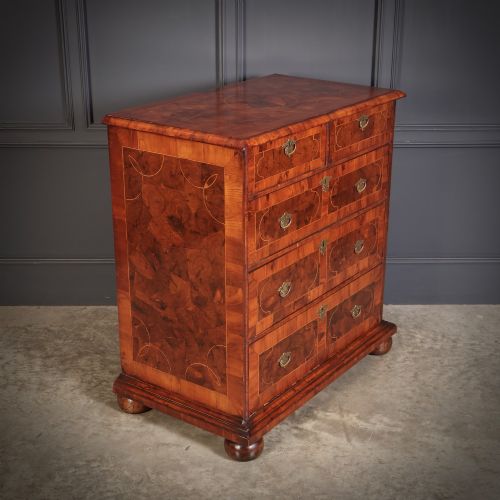
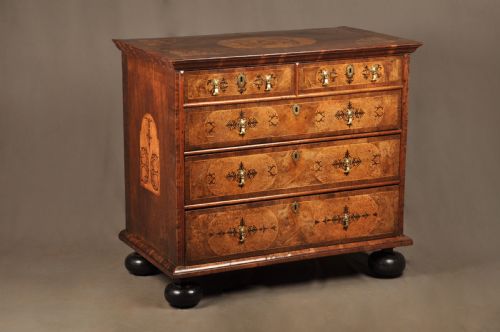
Craftsmen built these carcases primarily using oak and walnut, applying intricate marquetry inlay, floral designs, and arabesque motifs across the surfaces. Specialised cutting techniques produced distinct circular veneer patterns known as oyster pieces.
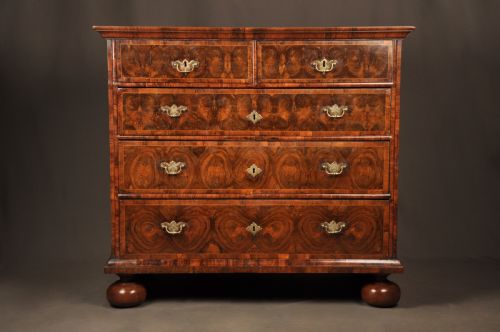
Makers integrated contrasting woods such as boxwood, fruitwood, and olivewood to build up multi-coloured decorative panels. Brass hardware, including drop handles and escutcheons, was fitted to complement the dark figured timbers and substantial bun feet.
Marquetry Chest Bun Feet Retail Price Guide 2026
Typical asking prices for marquetry chest bun feet among the pieces listed under this phrase on Sellingantiques today, from the lower quarter to the upper quarter. They describe what is for sale here now, not the wider market.
The inventory records pieces from the William and Mary era incorporating burr walnut, amboyna, and olivewood veneers.
What varies in quality
The complexity of the surface ornamentation dictates the distinction between standard and superior pieces, with elaborate floral and arabesque marquetry demanding greater skill than simple veneering. The choice of timber also sets pieces apart, where burr walnut, laburnum, and amboyna achieve a more striking visual depth than plain walnut or oak.
The survival of original surface finishes and native timber mounts influences the character of each cabinet or chest. Uniformity in the oyster veneer arrangement and crispness in the inlaid borders indicate higher workshop competence.
The Marquetry Chest Bun Feet Glossary
- Marquetry inlay
- Decorative patterns formed by fitting contrasting veneers into a prepared wooden ground. This technique creates detailed floral and geometric imagery across the drawer fronts and top panels.
- Oyster veneer
- Transverse slices of small branches or roots laid down to form repeating circular patterns resembling oyster shells. Cabinetmakers utilised olive, walnut, and laburnum for this distinctive figuring.
- Bun feet
- Spherical or slightly flattened wooden feet turned on a lathe to support heavy case furniture. They lift the carcase off the floor while adding visual stability to the design.
- Arabesque marquetry
- Symmetrical scrollwork and foliage designs executed in contrasting woods. This ornate style draws inspiration from classical and continental decorative art.
- Cabinet on chest
- A two-part storage form featuring an upper cabinet set upon a lower chest base. These large pieces combine display or enclosed shelving with practical drawer storage.
Marquetry Chest Bun Feet: Frequently Asked Questions
What periods do these chests come from?
The pieces listed belong to the seventeenth century and the William and Mary period, spanning roughly from 1680 to 1700. This era is known for pioneering complex veneering and marquetry techniques in English furniture.
Craftsmen of this time favored rich native and imported timbers, creating durable case furniture designed to display wealth and sophisticated taste.
How are oyster veneers created?
Oyster veneering involves cutting small branches or roots diagonally across the grain to produce circular or oval sections resembling oyster shells. These pieces are then arranged closely together to cover large surfaces in repeating patterns.
Makers frequently used walnut, olive, and laburnum for this method, as the annual growth rings create natural decorative contrast.
What is the difference between a chest and a cabinet on chest?
A standard chest of drawers provides stacked horizontal storage drawers within a single carcase raised on bun feet. A cabinet on chest combines two separate sections, placing an enclosed upper cabinet directly onto a lower chest base.
Both forms utilise sophisticated marquetry and oyster veneering, but the cabinet on chest offers taller, more architectural proportions.
How should I care for historic veneered furniture?
Historic marquetry and veneered surfaces require stable indoor humidity and protection from direct sunlight to prevent timber movement and fading. Dusting gently with a dry, soft cloth maintains the finish without introducing moisture.
Avoiding abrasive polishes ensures the delicate boxwood lines and contrasting fruitwood inlays remain secure within the walnut ground.