
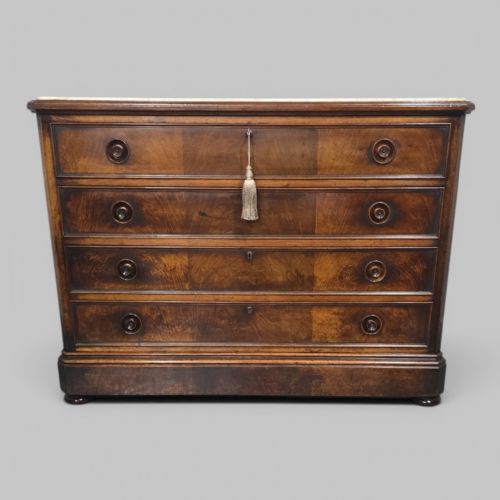
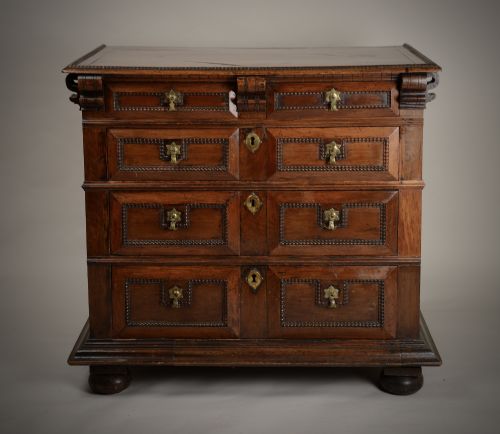
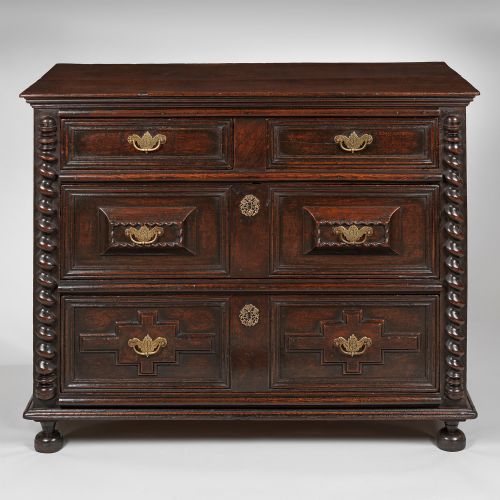

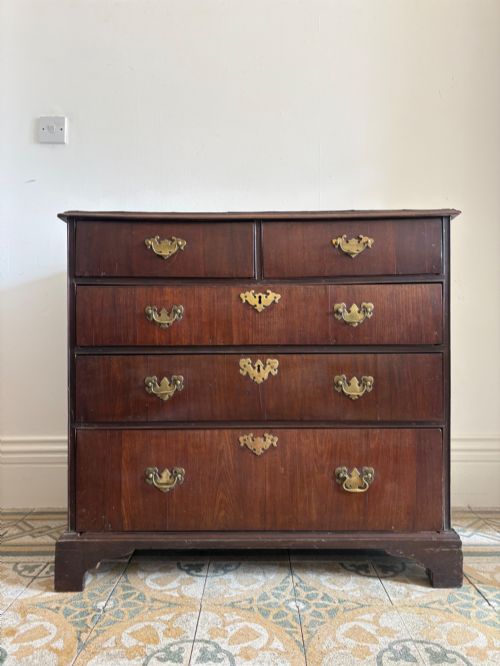


Dark Walnut Dresser
A dark walnut dresser brings substantial storage and deep timber figure into a room.
Dark Walnut Dresser
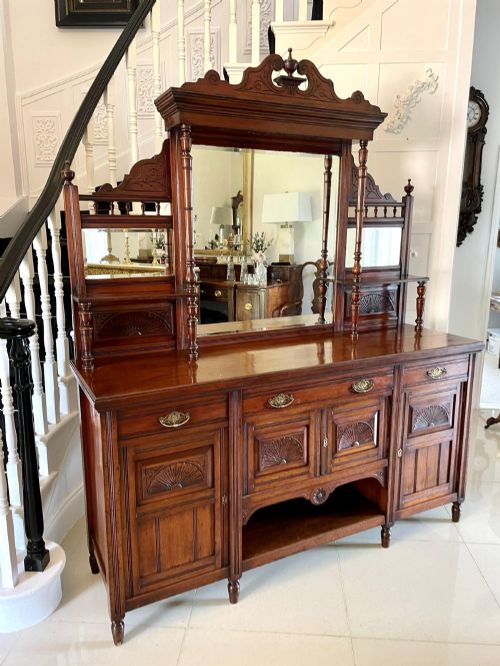
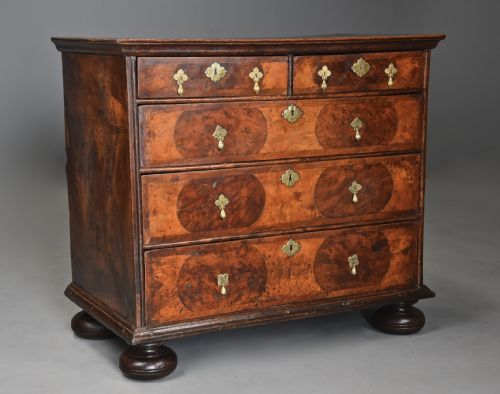
A dark walnut dresser encompasses chests of drawers, sideboards, commodes and cabinets built from rich timber across several centuries. When searching for a dark walnut dresser, buyers encounter pieces ranging from 17th century William and Mary chests to Victorian sideboards and later cabinets.
The selection on this page leans heavily toward substantial chests of drawers and cabinets spanning the 17th, 18th and 19th centuries. Makers utilised deep-toned woods, often combining walnut with oak, fruitwood or yew.
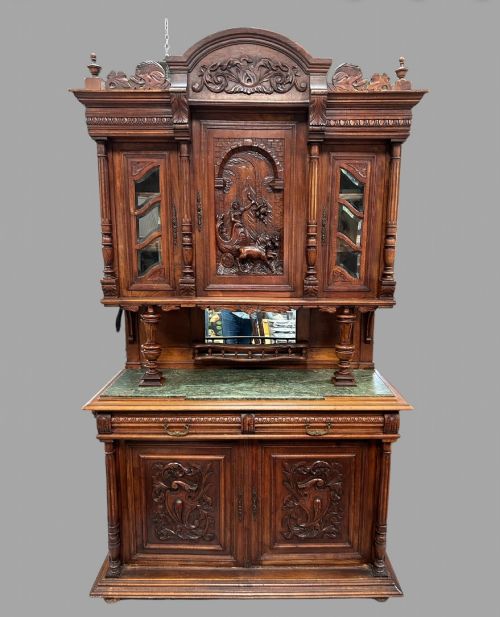
Forms vary from simple provincial commodes to elaborately carved Renaissance Revival and French provincial sideboards. Buyers find both British examples and continental pieces from Italy, France and the Netherlands.
Materials and Construction
Cabinet makers built these pieces using solid walnut, burr walnut and red walnut, frequently incorporating secondary timbers such as oak and fruitwood for drawer linings and internal framing. Brass handles, escutcheons and sometimes mother-of-pearl inlay punctuate the dark timber surfaces.
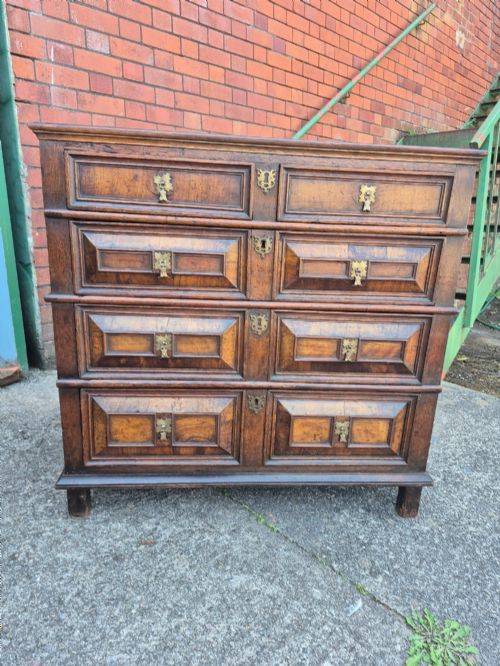
Construction techniques include geometric mouldings, floral marquetry and two-part carcases designed for easier transport. Carved details, serpentine fronts and mirror backs appear on later Victorian and continental iterations.
Styles range from Charles II and William & Mary through George II, French Provincial, Renaissance Revival and Art Nouveau.
Assessing Quality
Quality rests upon the depth of the timber's grain, the crispness of any carving or marquetry, and the integrity of the original construction. Pieces with superior patination and carefully matched veneer work sit naturally at the upper end of the scale.
The choice of secondary woods and the subtlety of brass hardware further distinguish workshop standards. Finer examples retain their original proportions and timber tones without heavy modern intervention.
The Dark Walnut Dresser Glossary
- Marquetry
- Decorative patterns formed by inserting small pieces of wood veneer into a fitted background. This technique creates floral or geometric designs across drawer fronts and top surfaces.
- Commode
- A low cabinet or chest of drawers, often of French or Italian origin. These pieces frequently feature serpentine fronts and decorative brass hardware.
- Burr walnut
- Timber taken from a tree growth where the grain has grown in a deformed, swirling manner. It produces highly figured, mottled patterns prized for cabinet fronts.
- Red walnut
- A descriptor used by makers and dealers for specific American or European walnut variants with warm reddish undertones. It appears frequently in mid-18th century pieces.
- Two-part chest
- A large chest of drawers constructed in two separate stacked sections to facilitate movement. This form is common in seventeenth-century English joinery.
Dark Walnut Dresser: Frequently Asked Questions
What periods do these pieces cover?
The selection spans from the late 17th century through the Georgian and Victorian eras up to the early 20th century.
Earlier examples often display simple geometric mouldings or marquetry, whilst later 19th-century pieces introduce carved mirror backs and American walnut finishes.
How do I identify a 17th-century piece?
Seventeenth-century pieces typically feature oak secondary woods, hand-cut dovetails, and geometric panelling or two-part carcase construction.
They often utilise fruitwood or yew alongside walnut, displaying deep patination built up over centuries of use.
Are these pieces purely British?
While many originate in Britain, a significant portion of the selection comes from continental workshops in France, Italy and the Netherlands.
Continental pieces often take the form of commodes and cabinets, frequently featuring serpentine fronts and intricate floral marquetry.
How were these cabinets used originally?
These items served primarily for storing clothing, linens and household valuables in domestic bedchambers and formal reception rooms.
Sideboards and buffets functioned in dining spaces for serving food and storing silverware or glassware.