




Vintage Marine Landscape Art
Vintage marine landscape art captures coastal views, harbours and open waters through the eyes of artists working from the nineteenth century into the mid-twentieth century.
Vintage Marine Landscape Art
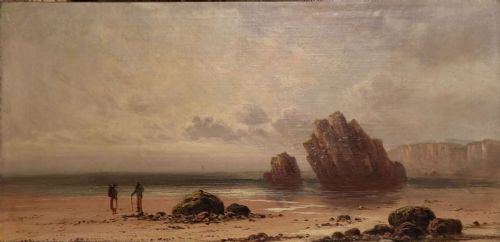
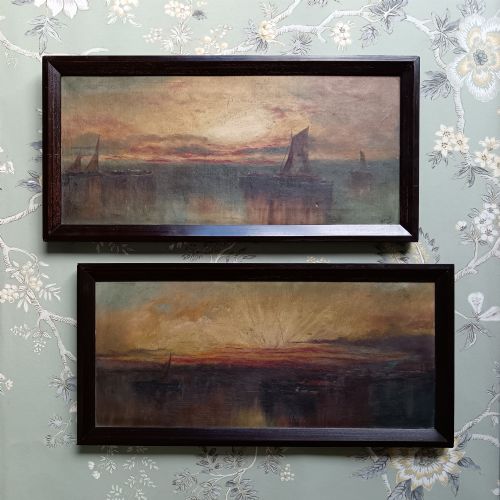
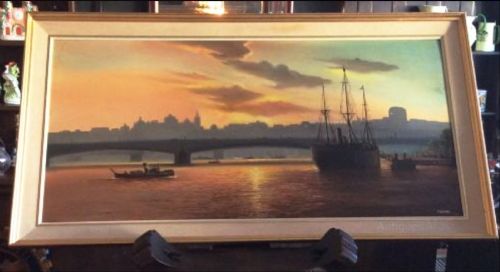
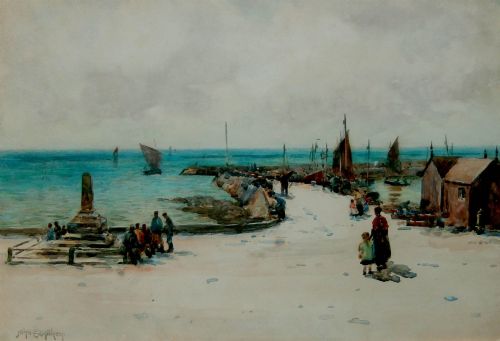
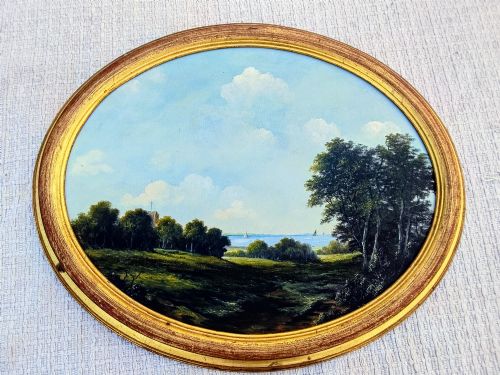
When you search for vintage marine landscape art, you encounter a focused selection of oil paintings, watercolours and works on board depicting coastal scenes, tidal rivers and busy harbours. These works span the Victorian and Edwardian eras through to the mid-century period, capturing both British shores and continental European waters.
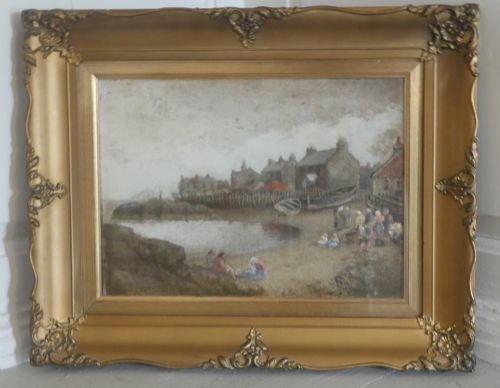
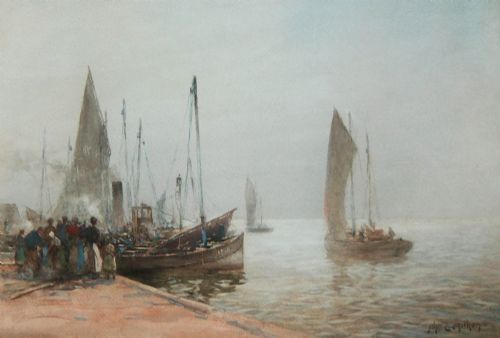
The most common formats on this page are framed oil paintings and watercolours created by named and regional artists from the late nineteenth century onwards. Subjects range from quiet Cornish coves and bustling Yorkshire fishing ports to dramatic open seascapes under varying light conditions.
How they were made
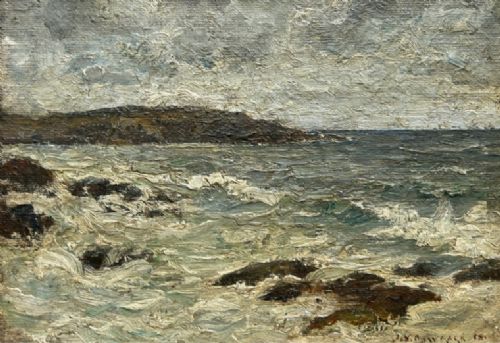
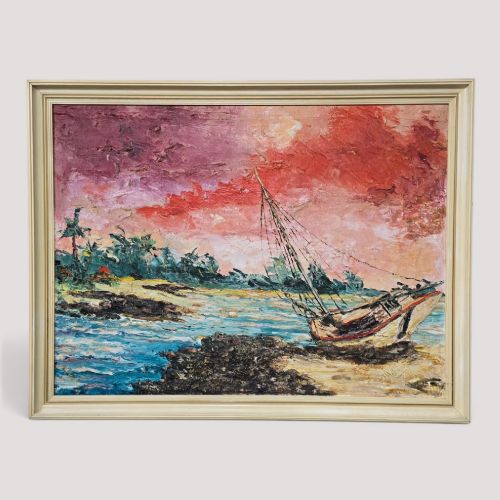
Artists working in this genre relied primarily on oil paint applied to canvas, board or panel, as well as watercolour on paper. Oil pieces often utilise rich impasto and en plein air techniques to capture the shifting movement of water and atmospheric coastal light.
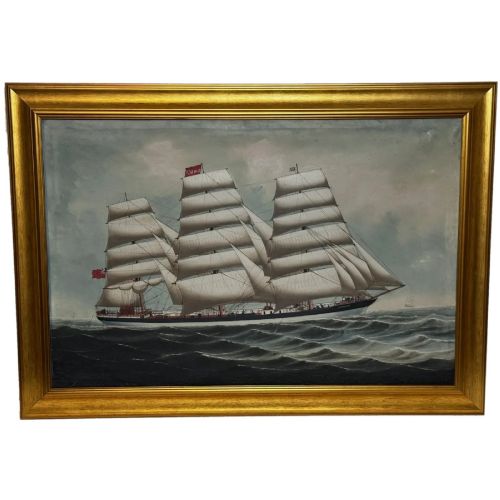
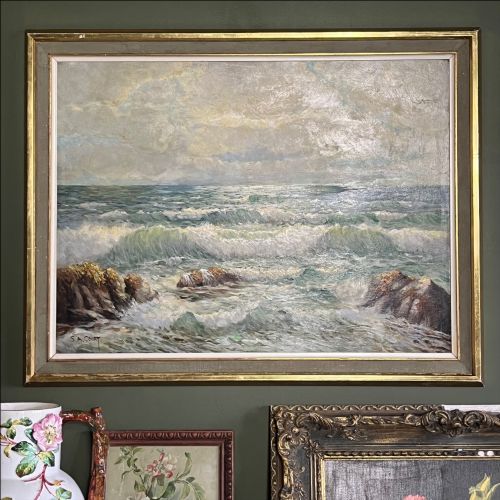
Many of these works are housed in their original gilt wood frames, which complement the maritime subject matter. Support materials range from traditional stretched canvas to wooden boards suited for outdoor sketching.
Several artists captured the exact moment workers unloaded salt fish and seaweed along windswept European shores.
What varies in quality
Quality in these coastal works rests upon the artist's ability to render light, atmosphere and the fluid movement of the sea convincingly. Stronger examples display confident brushwork and a clear sense of space, whether capturing a calm harbour or a turbulent rocky shore.
The sensitivity of the palette and the fidelity of the composition distinguish finer works from standard topographical records. Original framing and good preservation of the pigment layer further elevate the standing of an individual piece.
Kenneth Cozens·Clifford Hanney·Reginald Arthur Borstel·Sidney A Court·B Nash·Edward Mills·James E Aitken·John E Aitken·William Banks Fortescue·Clive Browne·Peter Brannan·Paul Bret·Bernard Benedict Hemy·Willem Bos·William Henry Williamson·Robert Leslie Howey·John Holland·George Stanfield Walters·Frank Kelsey·Walter Goodin·F A Roylance·William Frederick Settle·Alfred George Morgan·Lionel Horsnell·John Bedloe Goddard
The Vintage Marine Landscape Art Glossary
- En plein air
- Painting outdoors in direct natural light to capture immediate atmospheric conditions. This method was widely adopted by nineteenth and twentieth-century landscape artists.
- Impasto
- The application of thick paint that stands out from the surface, creating a tangible texture. This technique gives weight and movement to crashing waves and rocky cliffs.
- Watercolour
- A paint consisting of water-soluble pigments used on paper supports. It is frequently employed for luminous, transparent coastal views.
- Maritime
- Pertaining to the sea, shipping, harbours and coastal life. It forms the primary subject matter of this artistic genre.
Vintage Marine Landscape Art: Frequently Asked Questions
What periods do these marine paintings cover?
The selection spans from the nineteenth century through the Edwardian period and into the mid-twentieth century. You will find works reflecting Victorian maritime traditions alongside later mid-century interpretations.
Each era brings distinct approaches to colour and coastal subject matter, ranging from detailed harbour docks to impressionistic seascapes.
Are these works original paintings?
The listings feature original hand-painted oils and watercolours rather than modern reproductions. Artists created these pieces directly on canvas, board or paper.
Many bear the original signature of the artist, and several retain historical framing from the period of creation.
How should I display coastal art at home?
These maritime scenes suit spaces that benefit from natural light and traditional or eclectic decor schemes. Matching the tone of the original gilt wood frame to your interior helps integrate the piece.
Positioning paintings away from direct sunlight protects the pigments on both canvas and paper over time.
How do I identify a watercolour from an oil painting?
Watercolours are painted on paper and typically displayed under glass with a mount, showing translucent washes of pigment. Oil paintings use thicker paint applied to canvas or wooden board with visible brush texture.
Oils generally do not require glass protection, allowing the direct surface of the paint to remain visible.