

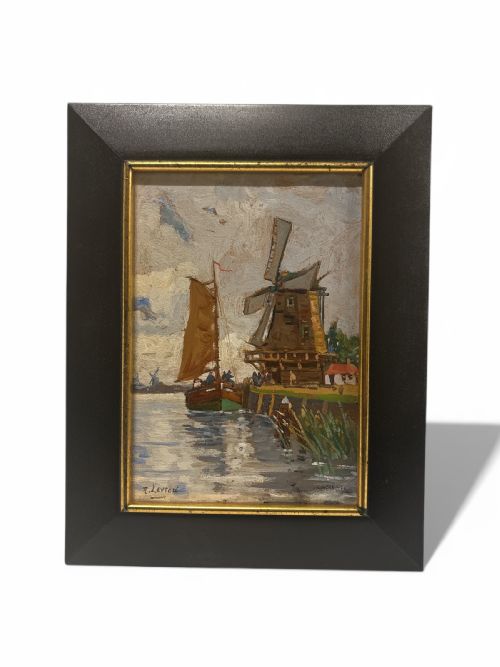
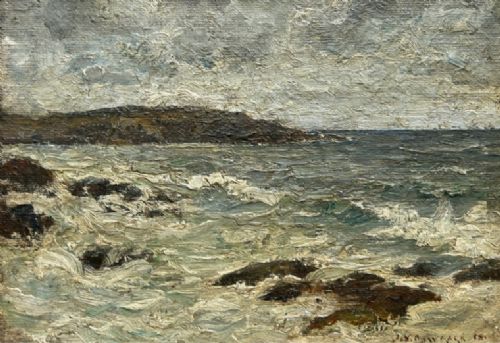
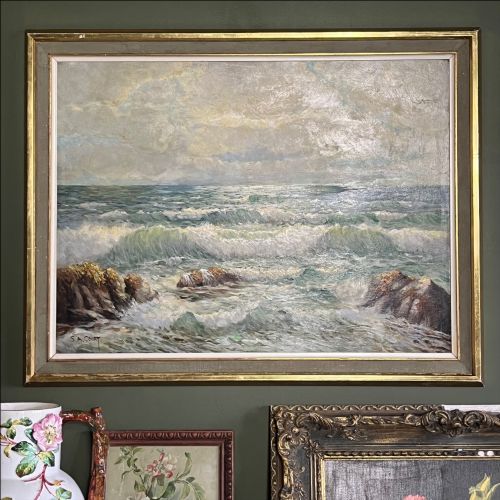
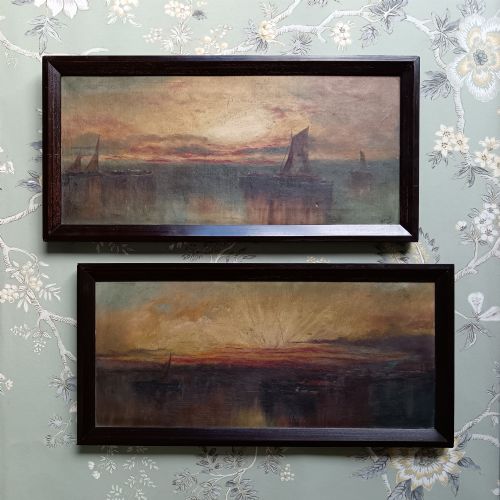



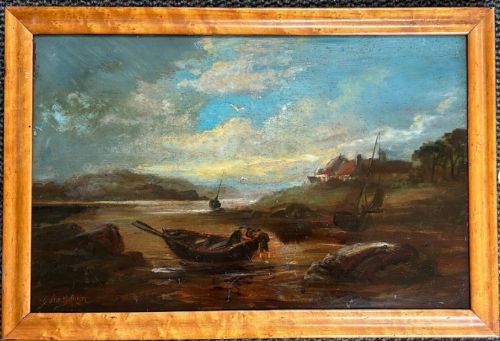
Signed Coastal Oil Painting
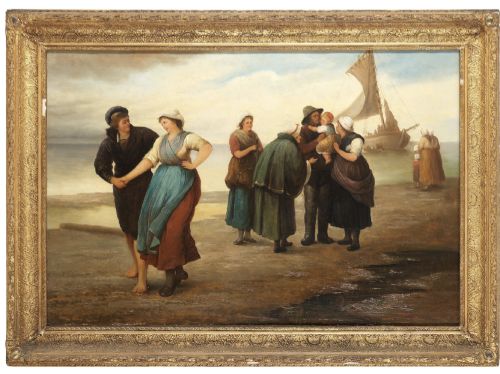
When you search for a signed coastal oil painting, you are looking at maritime views recorded by artists from the nineteenth century to the mid-twentieth century.
Signed Coastal Oil Painting
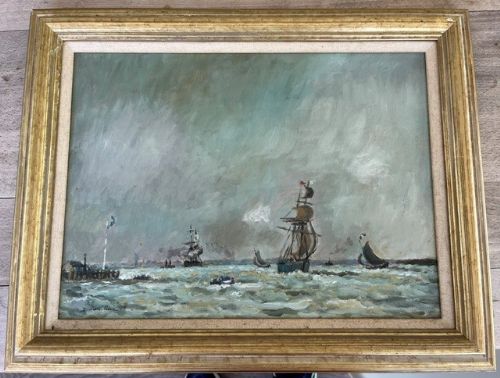
A signed coastal oil painting captures harbours, estuaries, and open seas across various periods including the Edwardian era, the nineteenth century, and the mid-twentieth century. The selection ranges from en plein air Cornish views to industrial river scenes and French coastal landscapes.
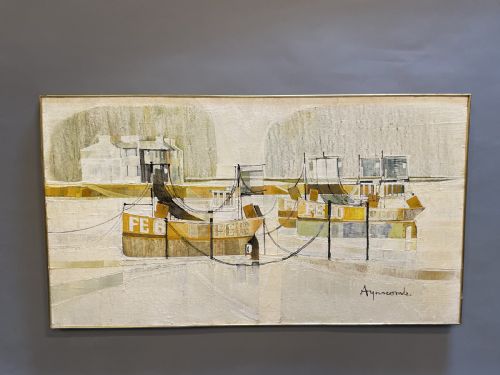
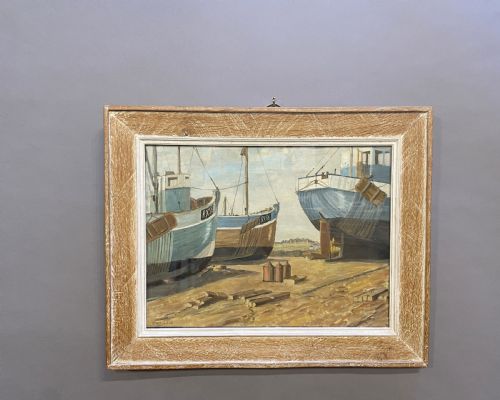
Most pieces on this page are executed on board, canvas, or wood panels, representing British Impressionism, Modern British, and nineteenth-century French schools. Collectors encounter works by named artists alongside pieces bearing initials or indistinct signatures.
The subjects span from fishing boats in choppy seas and quiet sunrise or sunset harbours to rocky coastal cliffs and Mediterranean scenes. Each work reflects the specific light and atmosphere of its coastal location through the hand of an individual painter.
Materials and technique
Artists utilise oil paint applied to prepared canvas, wooden panels, or rigid board, often finished with gilt framing. The medium allows for both smooth blending and thick impasto texture.
Many works are painted en plein air directly on location by the sea, capturing changing coastal weather and light conditions quickly. Others are composed in the studio using earlier sketches of harbours, vessels, and shorelines.
Several artists packed their boards and oil paints against unpredictable sea spray, capturing salty air and wandering seagulls forever.
What separates the work
Quality rests in the handling of light, water, and atmosphere, where an artist's confident brushwork brings movement to waves and sails. Strong composition and a convincing sense of place distinguish superior canvases from routine topographical records.
The relationship between the artist's signature, the stability of the support, and the preservation of the original paint surface determines the standing of each piece.
Kenneth Cozens·R Leyton·Sidney A Court·B Nash·Bernard Benedict Hemy·Fernando Del Basso·T S Wallis·John Bell·Sam Bough·William Langley·J Wilson·Donald Wood·Markey Robinson·E Elliot·Alastair Flatterly·R E Richardson·Maurice Sijs·William Burns·F Legge·Emily Ledbrook·Frank Hider·Robert Ernest Roe·William Daniel Penny·A D Bell·Wilfred Knox
The Signed Coastal Oil Painting Glossary
- Impasto
- Paint applied thickly to a canvas or board, leaving visible brush or palette knife marks. This technique adds tactile relief and catches light to suggest the texture of water or rock.
- En plein air
- The practice of painting outdoors to capture direct observations of natural light and weather. It is frequently associated with coastal scenes where conditions change rapidly.
- Stretcher
- The wooden frame upon which a canvas is stretched taut before painting. Antique stretchers often show tool marks and ageing consistent with the period of the artwork.
- Board
- A rigid flat panel utilised as a painting support instead of woven canvas. These range from heavy card to wooden composition boards popular in the twentieth century.
Signed Coastal Oil Painting: Frequently Asked Questions
How do I date a coastal oil painting?
Dating relies on stylistic evidence, costume details of figures on the shore, the type of watercraft depicted, and the physical materials of the canvas or board. Framing and handwritten inscriptions on the reverse also provide helpful chronological clues.
Comparisons with dated works by the same artist or regional school narrow the timeframe further. Scientific analysis of pigments is rarely necessary when style and materials align with a known period.
What is the difference between canvas and board?
Canvas is a woven fabric stretched over a wooden frame, offering slight give and a textured surface. Board is a rigid flat support made from wood or thick card that resists punctures and provides a firm foundation for rapid brushwork.
Artists often chose board for smaller en plein air studies painted outdoors. Canvas was typically reserved for larger studio works intended for formal exhibition.
How should I display a marine oil painting?
Position the painting away from direct sunlight, high humidity, and heat sources such as radiators. Stable indoor temperatures prevent the paint layer and wooden support from expanding and contracting.
Ensure the artwork hangs securely from appropriate fixings suited to the weight of the frame and support. Adequate wall space allows the composition to breathe without competing with adjacent pieces.
Why are some coastal paintings signed indistinctly?
Many nineteenth and twentieth-century painters signed work with monograms, initials, or signatures that faded or wore down over time. Artists working quickly outdoors often used fluid paint that dried into an ambiguous mark.
Despite an unclear signature, the quality of brushwork, subject matter, and period materials frequently reveal the origin of the painting. Archival records and stylistic traits help attribute these works to specific schools or makers.