


Post Impressionist Maritime Painting
Post impressionist maritime painting brings together coastal light, harbour scenes and open water through expressive brushwork and colour.
Post Impressionist Maritime Painting
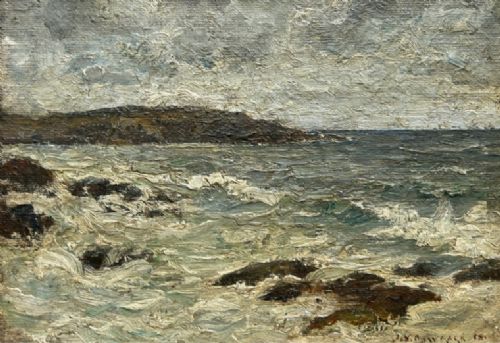
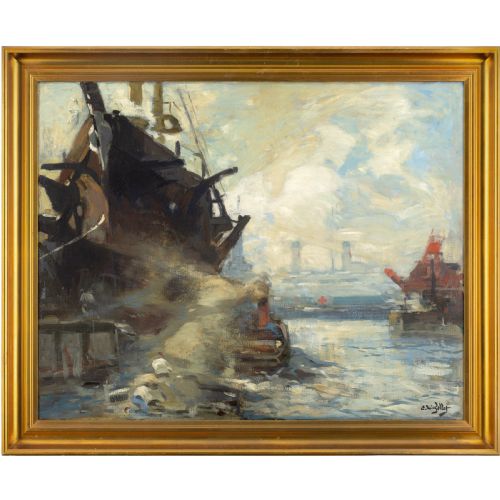
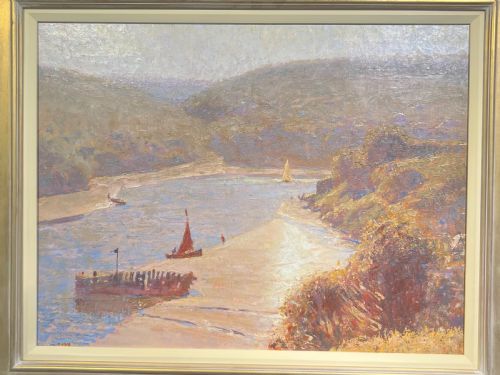
A post impressionist maritime painting captures coastal scenes, harbours, and waterways through the lens of Post-Impressionism, Impressionism, and Modern British styles. You will frequently encounter works executed on canvas or board, depicting locations ranging from French ports and Breton coastlines to British harbours.
The works date primarily from the early twentieth century, spanning decades such as the 1910s, 1920s, 1930s, and 1940s, alongside some mid-century and later examples. Common subjects include fishing boats, coastal seascapes, barges on canals, and bustling ports rendered with visible texture and atmospheric light.
How they were made
Artists built these maritime compositions using oil paint applied to canvas, wood, or board, occasionally employing pastel on paper for softer atmospheric effects. The application often incorporates impasto techniques, where thick layers of pigment create physical texture and tactile depth across the surface of the work.
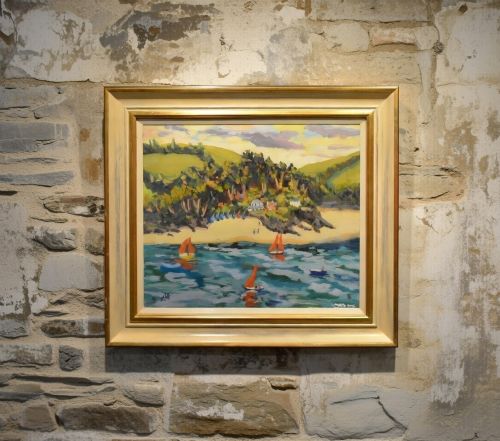
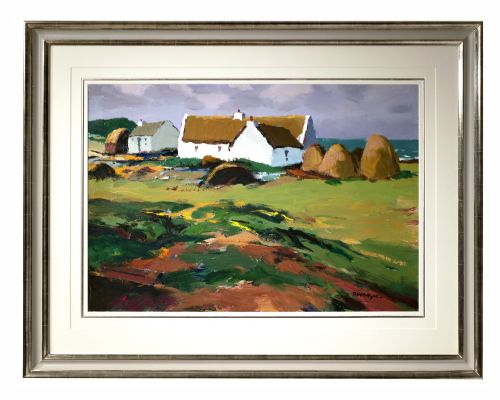
Framing frequently involves gilt or wooden mouldings that complement the coastal subject matter and protect the painted edges. The handling of the medium relies on expressive brushstrokes rather than rigid academic precision, prioritising the overall impression of light and water.
Regional British and French coastal views dominate the selection, highlighting active fishing ports and quiet canals.
What varies in quality
The strength of a post impressionist maritime painting rests upon the artist's command of light, colour harmony, and atmospheric depth within the coastal setting. Stronger examples demonstrate confident brushwork and a distinct personal vision in capturing water and sky, whereas lesser works may rely on formulaic repetition.
Provenance and documentation also distinguish the pieces, with recorded exhibition histories or identifiable signatures by known practitioners adding historical weight. The integrity of the canvas or board and the preservation of the original paint surface remain central to the overall standing of each painting.
Eugène-Louis Gillot·Donald McIntyre·Cecil Allan Mould·Louis Suire·Jean-Baptiste Olive·Edward Seago·Armand Guillaumin·Hendrik Yan Wolter·Henri Ottman·Maurice Sijs
The Post Impressionist Maritime Painting Glossary
- Impasto
- Paint applied thickly to a canvas or board, leaving prominent brush or knife marks that stand proud of the surface.
- Newlyn School
- An artist colony based in Cornwall focusing on naturalistic plein air painting of coastal life and local fishermen.
- Board
- A rigid wooden or composition panel used as a primary support for oil paintings instead of stretched fabric.
- Gesso
- A traditional primer mixture applied to canvas or board to prepare a smooth, stable surface for oil paint.
- Provenance
- The documented history of ownership and exhibition attached to an artwork over time.
Post Impressionist Maritime Painting: Frequently Asked Questions
What subjects appear in these paintings?
The works primarily depict coastal seascapes, harbour scenes, fishing ports, and barges navigating rivers or canals. Locations span British shores and French coastal regions including Brittany and the French Riviera.
Compositions often focus on moored boats, red sails, coastal village architecture, and studies of changing light on the water.
How do I care for an oil painting on canvas?
Keep the artwork away from direct sunlight, high humidity, and rapid temperature fluctuations to protect the canvas and oil pigments. Display the painting on a stable interior wall away from direct heat sources.
Dust the surface very gently with a dry, soft brush when necessary, and avoid using liquid cleaners or damp cloths on the paint layer.
How can I tell the period of a maritime painting?
Dating relies on stylistic markers such as the loose brushwork characteristic of early twentieth-century post-impressionism and modern British movements. Material supports like wooden boards or stretched canvas, along with artist signatures and exhibition labels, also help establish the date.
Many pieces carry specific dates within their titles or archives, pointing to active periods between nineteen-ten and nineteen-fifty.
Where were these coastal scenes painted?
The paintings document various maritime locations across Britain and France, reflecting the travels of artists working plein air. Common settings include Cornish fishing ports like St Ives and Polperro, as well as French harbours in Normandy, Brittany, and Marseille.
Each location offered distinct qualities of light and tidal movement that suited the expressive goals of post-impressionist painters.