

Vintage Marble Top Cupboard
A vintage marble top cupboard brings solid stone utility and decorative warmth to a room, offering sturdy bedside or corner storage.
Vintage Marble Top Cupboard
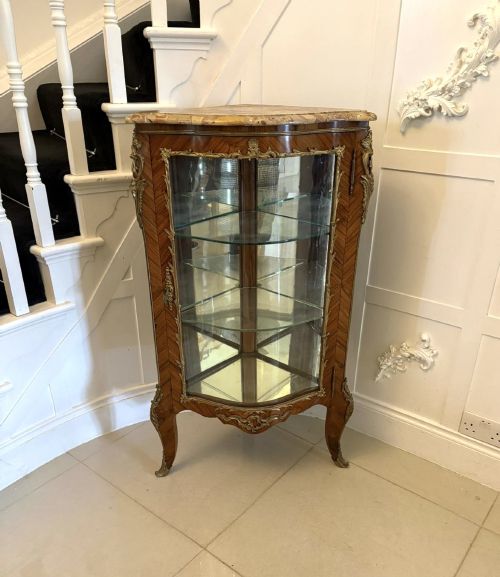
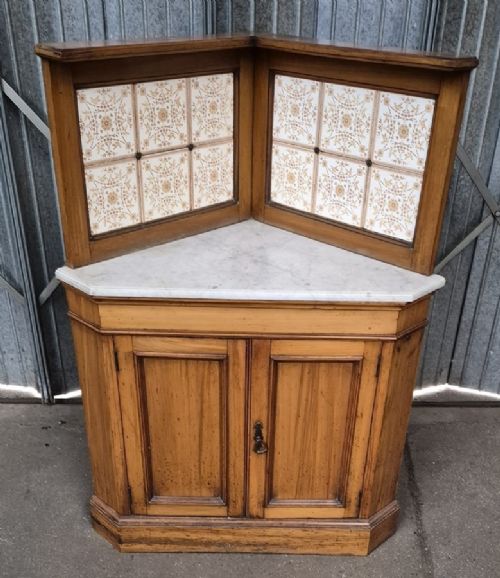
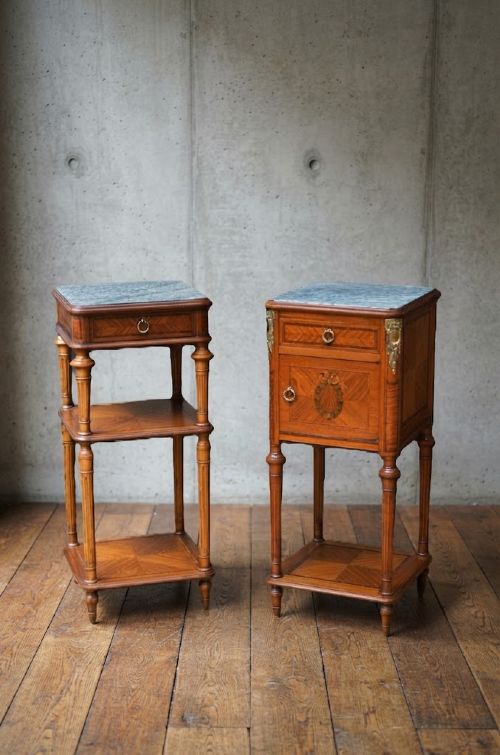
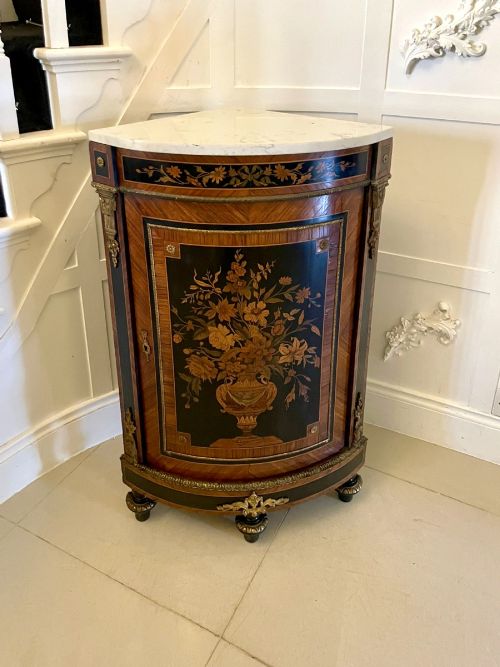
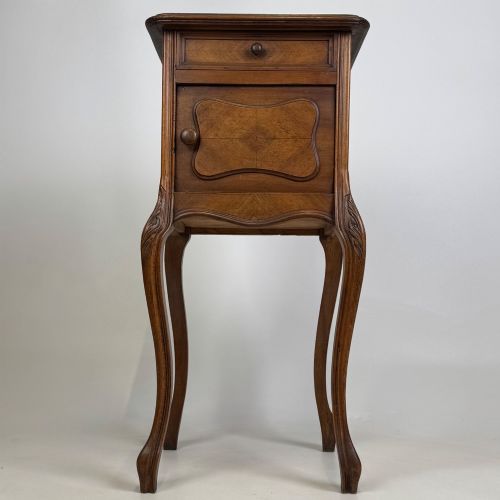
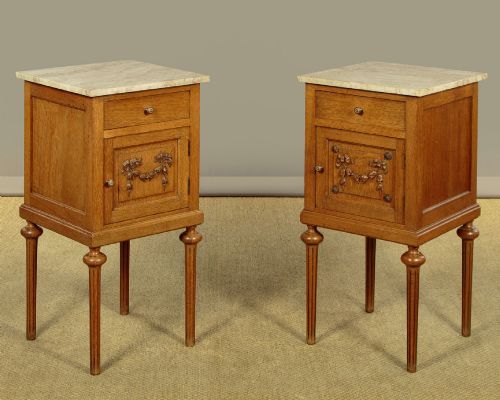
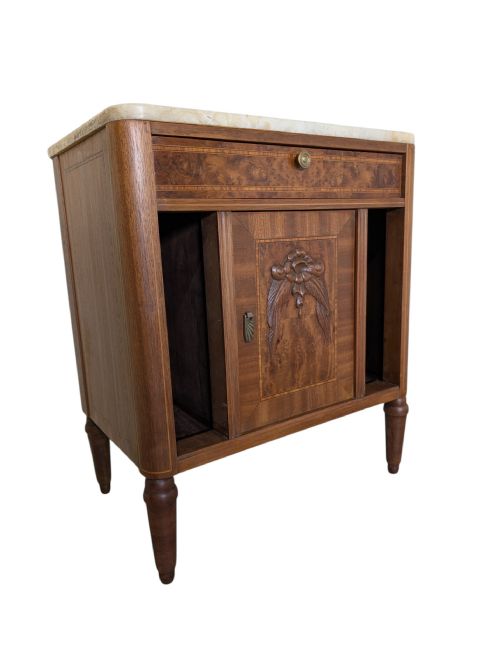
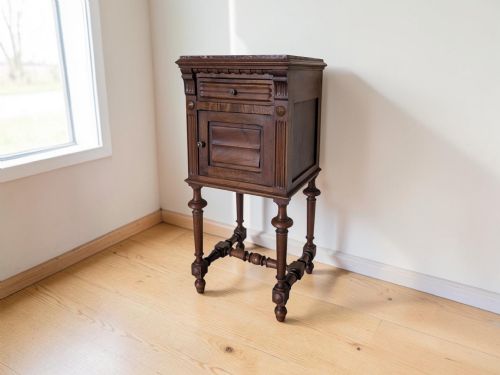
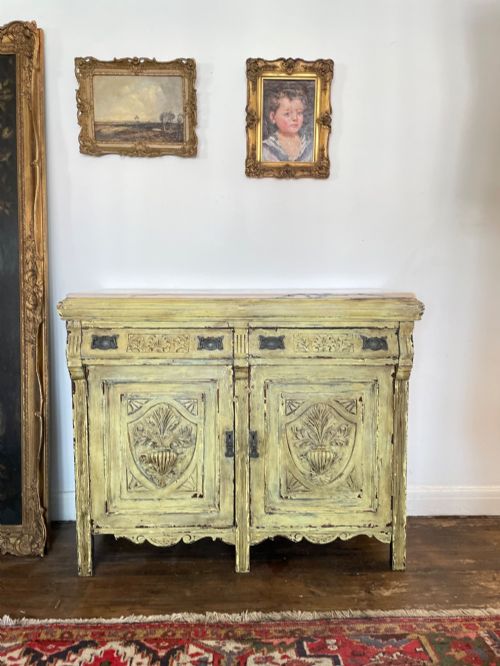
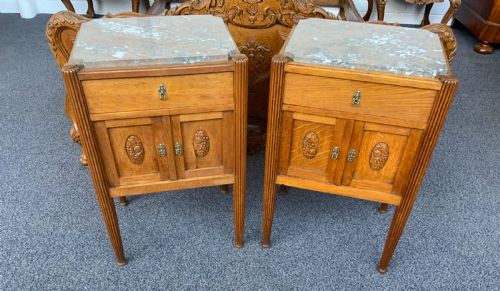
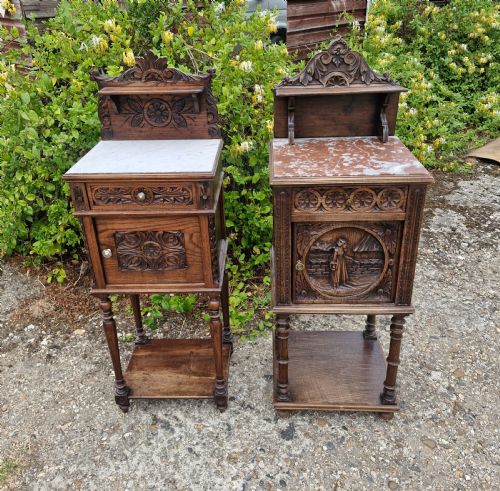
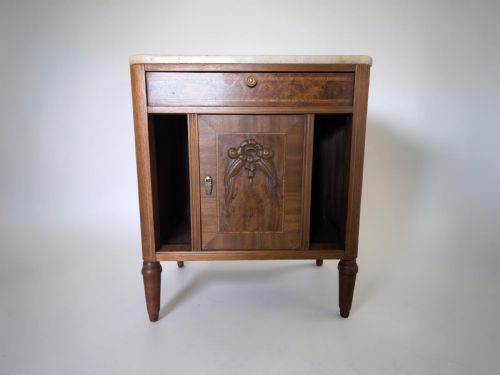
A vintage marble top cupboard combines enclosed timber storage with a cool stone slab surface, appearing frequently as compact bedside cabinets, corner washstands, and lamp tables. These pieces span from the nineteenth century through the Art Deco era, with a strong representation of French regional and revival designs.
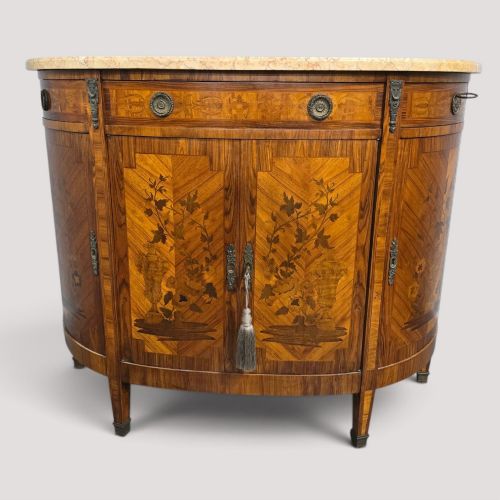
The form ranges from cylindrical Victorian bedside pedestals to serpentine corner display cabinets and inlaid commodes. Oak, walnut, and kingwood carcasses predominate, often paired with contrasting marble tops in white, pink, or dark Belgian varieties.
How they were made
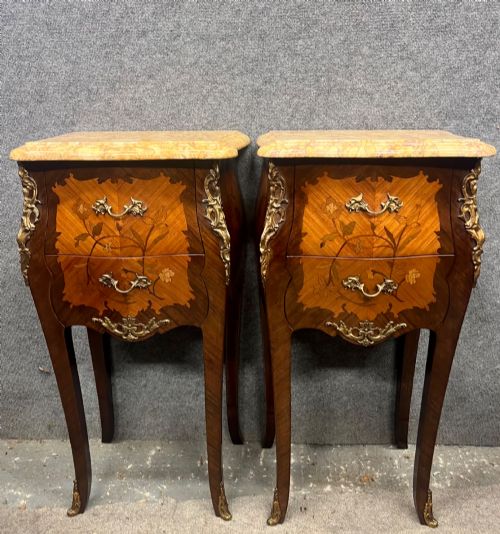
Cabinet makers constructed the timber frames using traditional joinery, applying decorative veneers like kingwood, burr walnut, and fruitwood alongside intricate marquetry inlay. Oak and mahogany serve as structural timbers for the carcasses and interior shelving.
Heavy stone slabs were shaped and polished to fit precisely onto the wooden tops, acting as durable, water-resistant surfaces for washing or bedside use. Brass and ormolu mounts, handles, and gallery rails were then fixed to enhance the decorative finish of French chateau and revival pieces.
Listings feature pieces spanning the Victorian era, the Edwardian period, and the 1920s and 1930s Art Deco movements.
What varies in quality
The refinement of the timber marquetry and the richness of the wood veneers set finer examples apart from utilitarian workshop pieces. Crispness in the cast ormolu mounts and the thickness and geological figuring of the marble slab further distinguish higher grades.
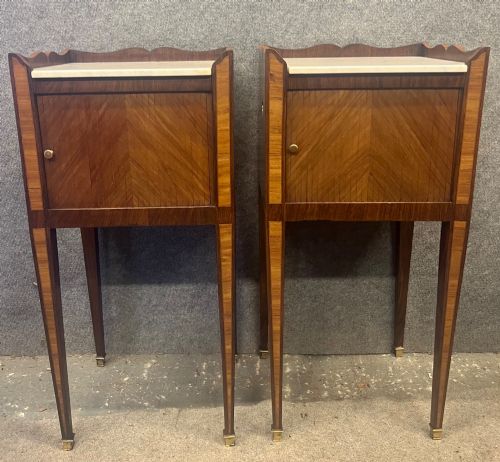
Proportion and symmetry elevate pairs, especially when matched as handed bedside cabinets with mirrored veneer patterns. The integrity of the original stone surface and the precision of the door and drawer fit indicate superior craftsmanship.
Walker And Sons
The Vintage Marble Top Cupboard Glossary
- Ormolu
- Gilded bronze mounts used extensively on French furniture for decorative corner pieces, feet, and escutcheons. This technique adds metallic contrast to dark woods like walnut and kingwood.
- Marquetry
- The art of applying small pieces of veneer to a structure to form decorative patterns and pictorial designs. Cabinet makers utilise contrasting timbers such as satinwood, walnut, and fruitwood.
- Commode
- A low French cabinet or chest of drawers designed with a flat top, frequently fitted with marble in this period. The form evolved from grand salon pieces to more intimate bedroom furniture.
- Serpentine
- A curved line of furniture fronting that sweeps inward and outward in a continuous wave. This undulating profile requires skilled carpentry to fit timber and marble tops accurately.
- Vernis Martin
- A type of simulated Japanese lacquer developed in France, used to adorn fine cabinets and commodes with painted pastoral scenes. It provides a glossy, polished finish to the wooden surface.
Vintage Marble Top Cupboard: Frequently Asked Questions
What rooms suit a marble top cupboard?
These compact cabinets fit naturally beside a bed as sturdy bedside tables where the stone surface resists water and heat. They also serve as useful lamp tables or small side cupboards in living spaces and hallways.
The enclosed lower shelving keeps books and small items out of sight while maintaining a tidy surface above. Their compact footprints allow them to occupy awkward corners or narrow wall spaces effectively.
How do I care for the marble top?
Wipe the stone regularly with a damp cloth and mild, neutral soap to remove dust and prevent staining from spills. Avoid acidic cleaners, vinegar, or citrus solutions which etch the polished surface of the marble over time.
Applying a specialist stone sealer periodically helps protect the porous surface from moisture and oil marks. Placing felt pads under heavy objects prevents scratching the polished stone.
Are bedside cabinets usually sold as pairs?
Many French and English bedside cabinets survive as matched pairs, particularly those dating from the late nineteenth and early twentieth centuries. Single cabinets also appear frequently, often originating from larger bedroom suites or washstands.
Pairs sometimes feature handed designs where the door hinges or marquetry patterns mirror each other across the bed. Single cabinets work well independently as accent pieces or lamp tables.
How do I distinguish Victorian from Art Deco pieces?
Victorian cabinets typically show heavier timber construction, turned legs, and elaborate carvings or cylindrical forms in mahogany, walnut, and oak. They reflect traditional revival styles and heavier proportions.
Art Deco examples lean towards geometric simplicity, streamlined burr walnut veneers, and minimalist ormolu accents typical of the interwar period. The lines become sharper and ornamentation is sparser.