


French Inlay Storage Cabinet
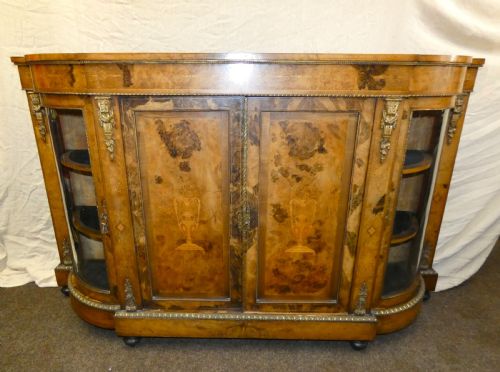
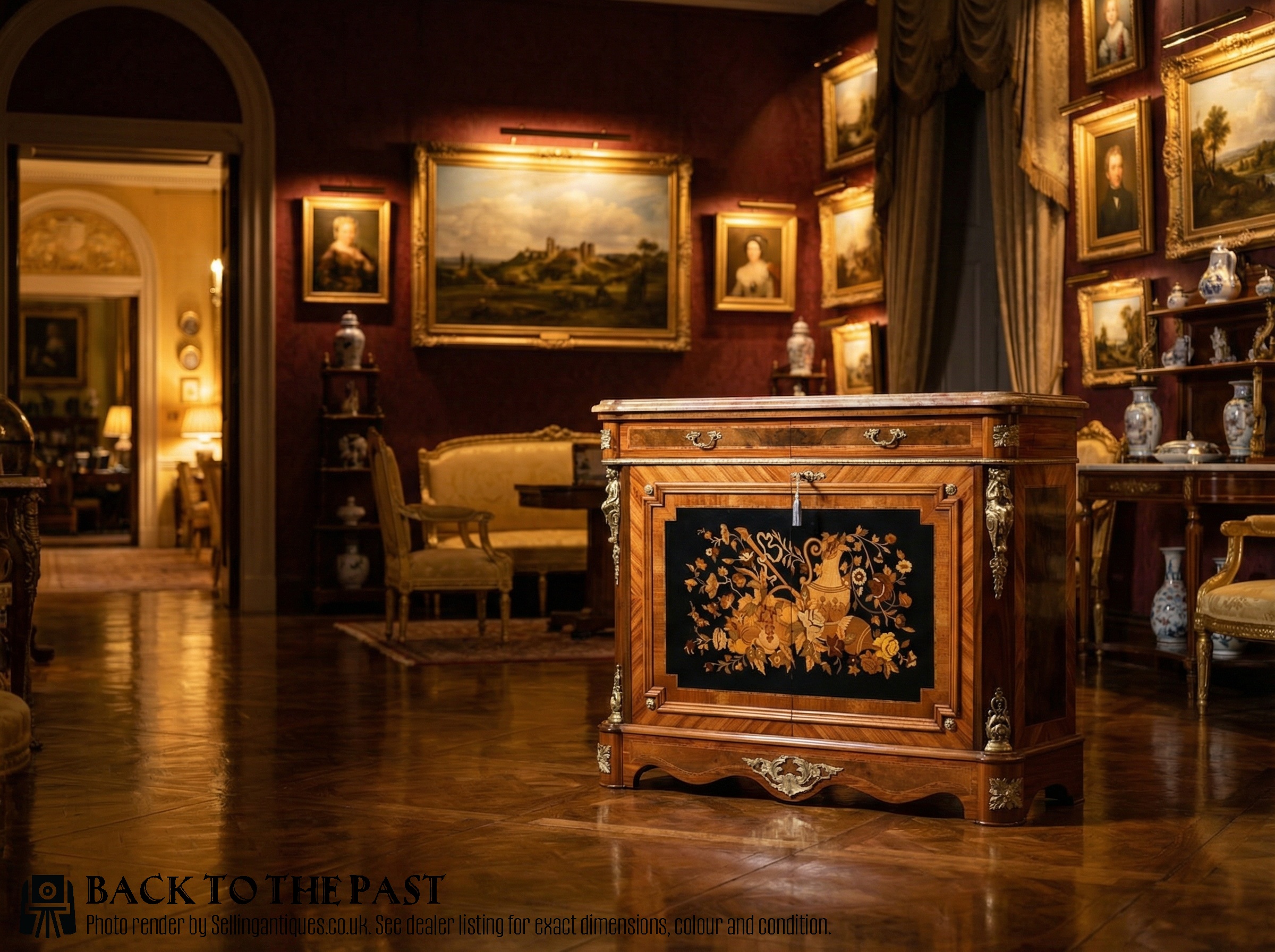
A french inlay storage cabinet brings together walnut, ormolu, and meticulous marquetry to anchor a room.
French Inlay Storage Cabinet
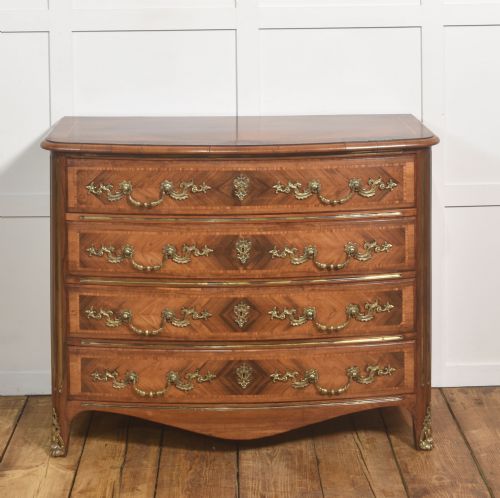
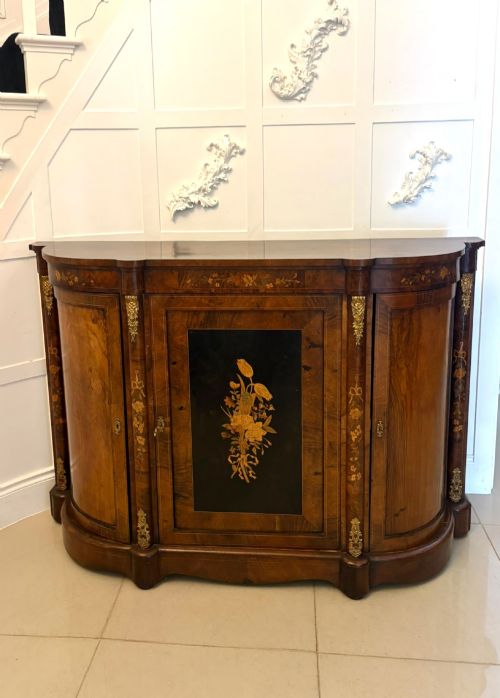
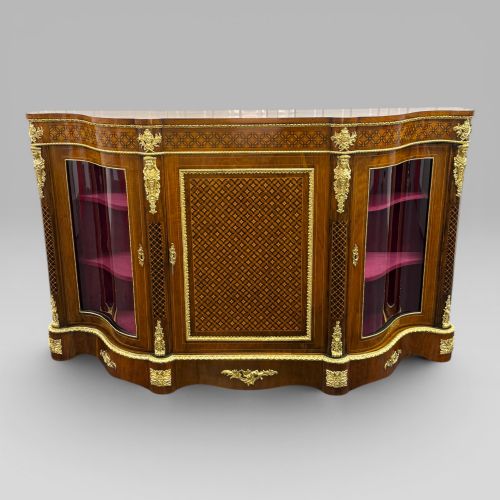
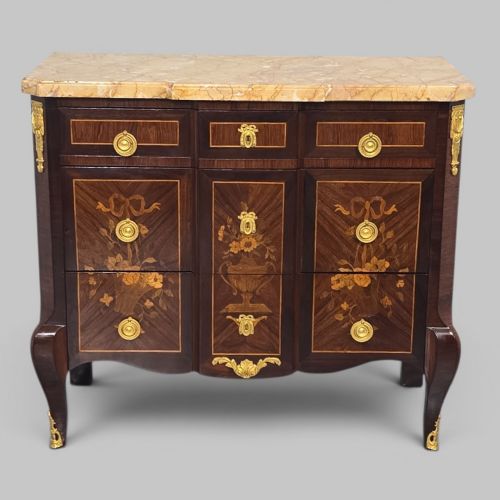
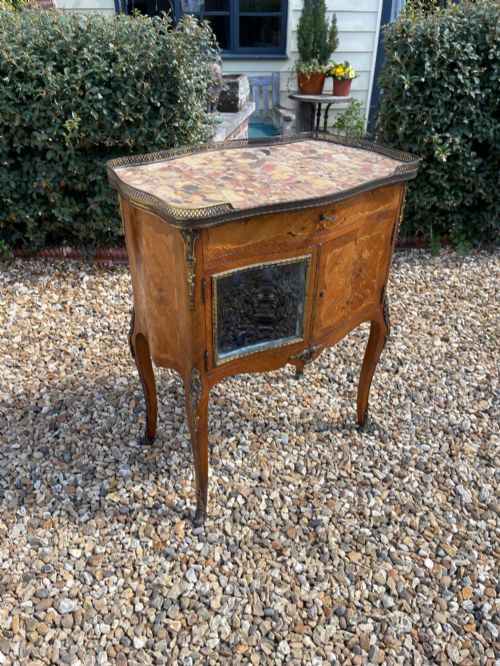
A french inlay storage cabinet encompasses commodes, side cabinets, credenzas, and chests of drawers originating largely from the nineteenth century into the twentieth century. These pieces combine practical storage with decorative woodwork, frequently taking serpentine, bombe, or demi-lune forms.
The aesthetic leans heavily on Louis XV and Louis XVI revivals, alongside Victorian interpretations, showcasing floral and geometric marquetry. Such items serve as functional furniture while displaying distinct continental design traditions.
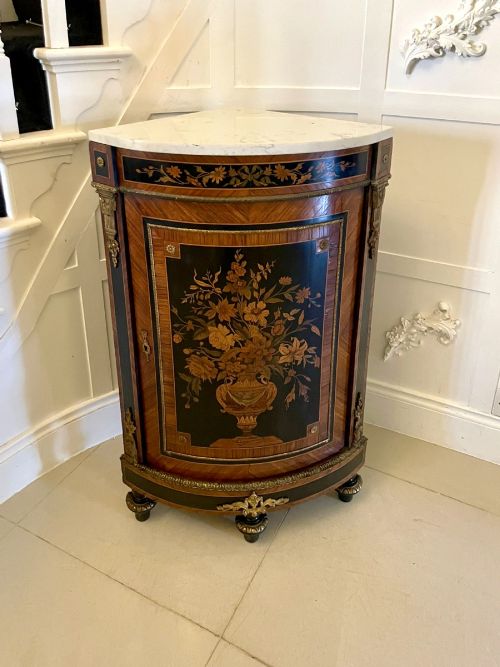
Buyers will encounter sideboards, corner cabinets, and vitrines featuring timber surfaces designed to display objects or conceal items behind doors and drawers.
Materials and construction methods
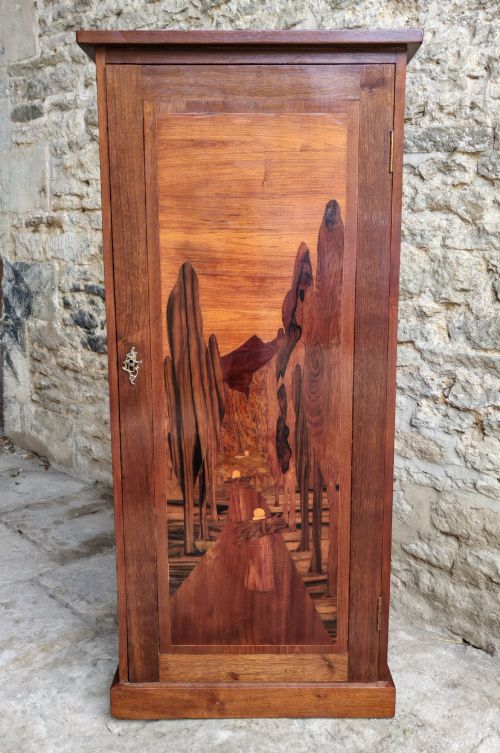
Cabinet makers utilised structural timbers like mahogany, walnut, and burr walnut, overlaid with decorative veneers such as kingwood, tulipwood, satinwood, and rosewood. Detailed marquetry patterns were cut and fitted by hand into the primary surfaces.
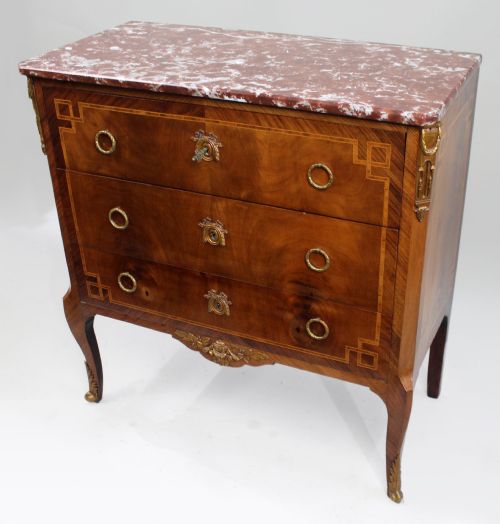
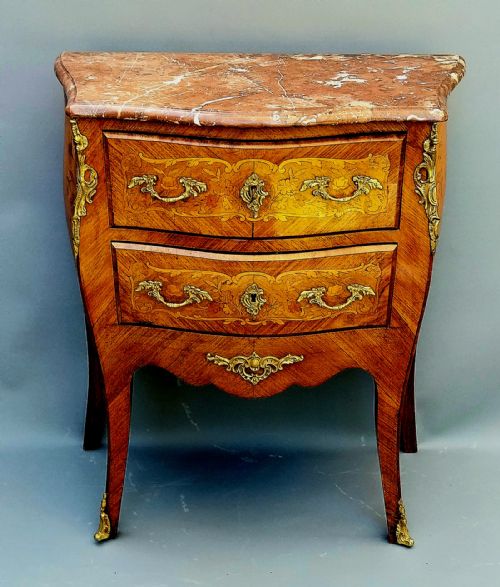
Many examples are finished with polished marble slabs on top, predominantly rouge or white variants like Carrara. Cast ormolu mounts and brass details provide structural framing and decorative accents around corners, feet, and key escutcheons.
Listings feature marble tops in white and rouge variants paired with walnut, mahogany, and kingwood veneers.
Assessing craftsmanship and finish
The distinction between standard production and exceptional quality lies in the precision of the marquetry cut and the selection of veneer grains. Superior examples demonstrate tight joints, crisp brass or ormolu mounts, and harmonious grain matching across curved serpentine and bombe fronts.
Heavier reliance on moulded composition or loose joints separates utilitarian pieces from finer workshop productions that retain balanced proportions and heavy marble tops fitted securely to the carcass.
Maison Gagneau·Galle
The French Inlay Storage Cabinet Glossary
- Marquetry
- Decorative patterns formed by fitting together small pieces of wood veneer onto a structural carcass. This technique allows for complex floral and pictorial designs across flat and curved surfaces.
- Ormolu
- Gilded bronze mounts applied to furniture for decorative effect and edge protection. These metallic elements highlight the contours of commodes and side cabinets.
- Bombe
- An outward-swelling convex shape characteristic of continental case furniture. This curved profile requires specialised shaping of both timber and matching marble tops.
- Credenza
- A sideboard or display cabinet originating from nineteenth-century forms used for storage and surface placement. These often incorporate glass doors or central cupboards flanked by curved shelves.
French Inlay Storage Cabinet: Frequently Asked Questions
What periods do these cabinets come from?
The selection spans from the eighteenth century through the Victorian era and into the early twentieth century. Most visible examples date from the nineteenth century and the decades around 1900.
Revival styles dominate, particularly referencing Louis XV and Louis XVI designs alongside Victorian cabinet-making traditions.
How were marble tops fitted?
Marble slabs rest directly on top of the wooden carcass, shaped to follow the serpentine, bombe, or straight lines of the furniture beneath. Their weight keeps them stable without permanent fixings.
Types range from white Carrara to reddish marble, selected to complement the specific wood veneers used on the body.
Where should a credenza be placed?
A credenza suits dining rooms, living areas, or hallways where wall space allows for a wide, low profile. Their enclosed cupboards and surface tops offer practical display and storage.
Due to their decorative marquetry and ormolu mounts, they function well as standalone focal points within a room.
How do I care for marble and veneer?
Keep wooden surfaces dusted with a soft cloth and avoid excessive moisture or direct sunlight that might affect the delicate veneers. Use coasters on the top surface to protect the polish.
Marble tops require simple wiping with a damp cloth and mild soap, avoiding acidic cleaners that etch the polished stone.