

Vintage Marble Bedside Tables
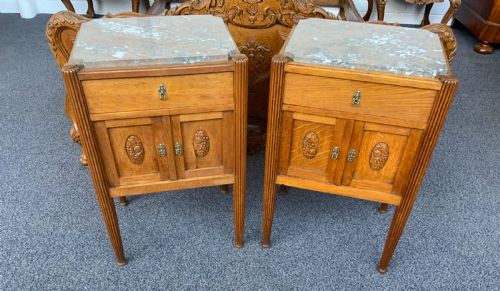
These vintage marble bedside tables bring stone-topped utility to the bedroom, combining robust surfaces with period woodwork.
Vintage Marble Bedside Tables
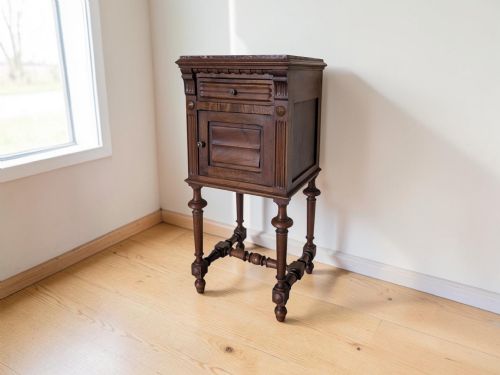
Vintage marble bedside tables serve as functional surface furniture alongside a bed, frequently taking the form of enclosed cabinets or open tables topped with stone. Buyers selecting vintage marble bedside tables look for practical bedside storage topped with durable, decorative mineral slabs that resist liquid and heat.
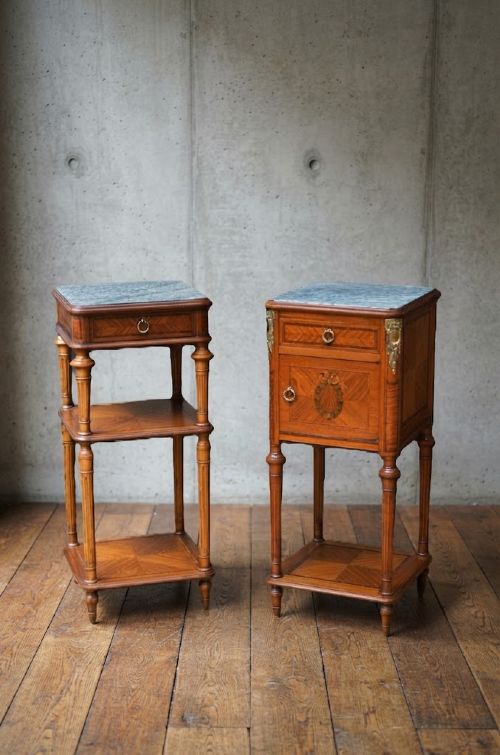
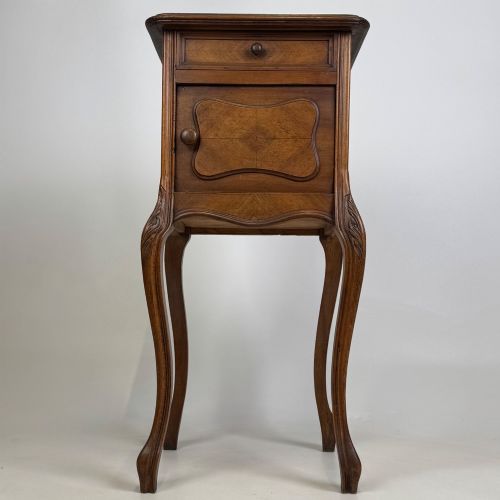
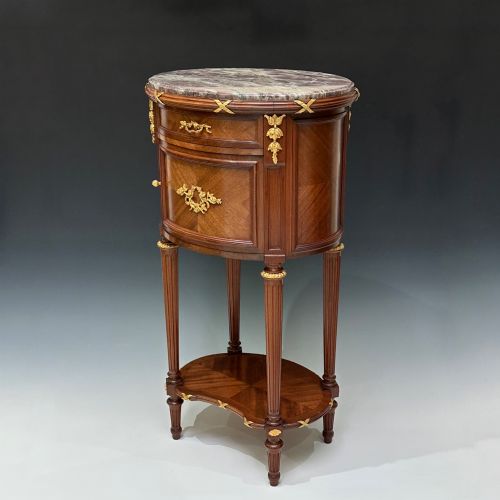
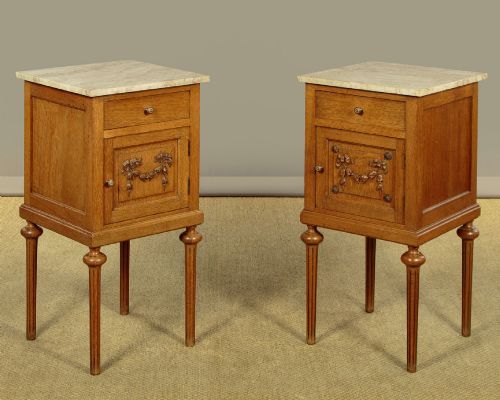
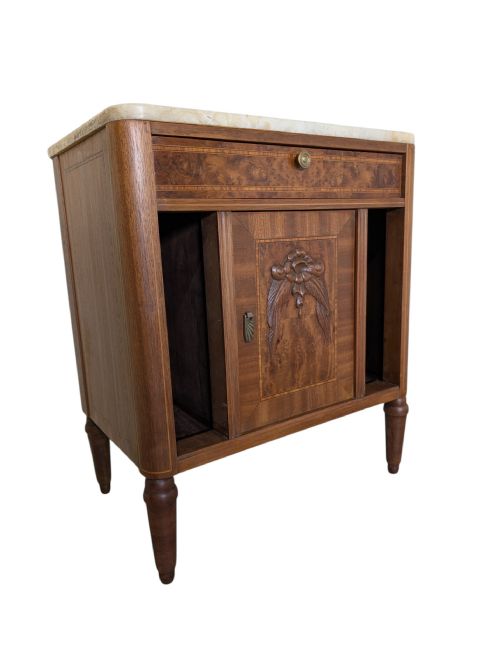
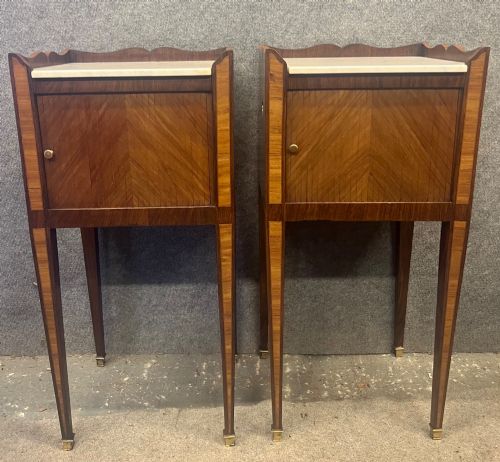
The pieces appearing on this page span the Victorian and Edwardian eras into the Art Deco period, with French regional designs and Louis XVI revival styles appearing frequently. Walnut, oak, satinwood, and kingwood carcasses provide the wooden support beneath the stone tops, often configured as pairs or matching handed sets.
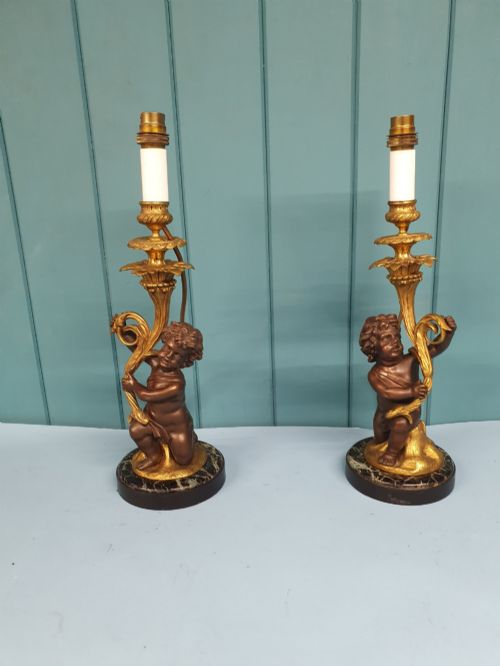
Alongside standard bedside cabinets, related forms such as small chests of drawers and lamp tables appear within the selection. These variations offer similar proportions and stone surfaces suited to holding small lamps and nighttime items.
How they were made
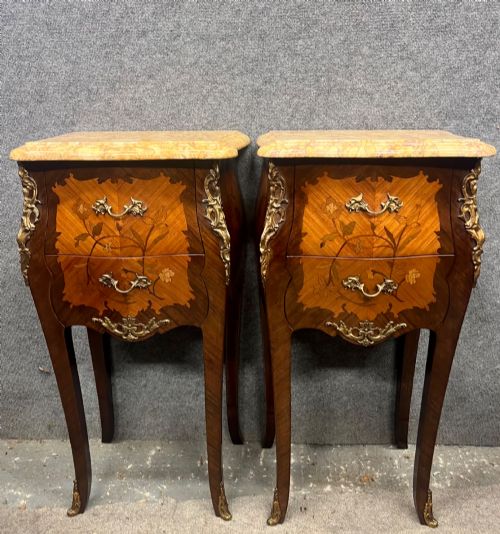
Cabinet makers constructed the bodies of these tables using dense timbers such as walnut, oak, mahogany, and fruitwood, frequently applying decorative veneers like kingwood and satinwood. Marquetry inlay and parquetry patterns appear across many surfaces, combining contrasting wood tones within geometric or floral designs.
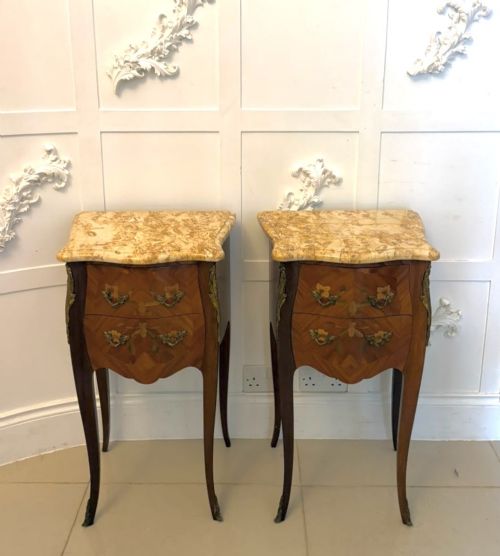
Marble slabs were cut, ground, and polished to fit the upper contours of each cabinet, showing variations from white to green verde and deep rouge. Ormolu, gilt metal, and brass mounts were cast and affixed to corners, legs, and handles, particularly on French pieces influenced by neoclassical styles.
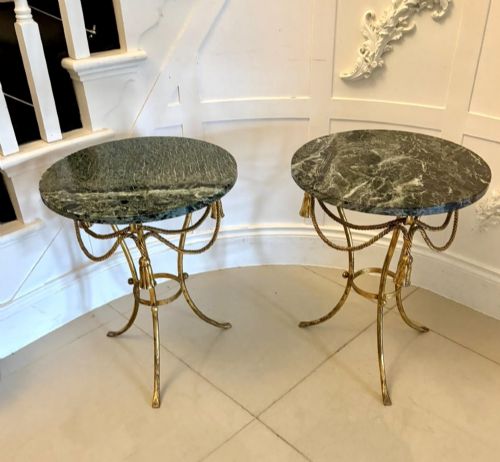
Listings feature marble tops in white, rouge, and green verde variants, supported by walnut, oak, satinwood, and kingwood cabinetry.
What varies in quality
Quality reveals itself in the integration between the stone top and the wooden carcass, where precise stone-cutting and fitted rebates distinguish finer workshops from simpler production. The selection and matching of wood veneers, particularly in marquetry panels and burr walnut surfaces, indicate the level of craftsmanship invested in the piece.
Fittings such as cast ormolu mounts, bronze trims, and brass hardware show varying degrees of chiselling and weight, with superior examples displaying crisp detail rather than soft casting. The structural integrity of the timber joinery and the retention of original stone slabs govern the overall standard of each cabinet.
François Linke
The Vintage Marble Bedside Tables Glossary
- Ormolu
- Gilded bronze mounts applied to furniture for decorative effect. This technique was widely utilised in French cabinet making during the nineteenth century.
- Marquetry
- The art of applying pieces of veneer to a structure to form decorative patterns. Craftsmen used various coloured woods to build pictorial or geometric designs.
- Kingwood
- A dense, heavy wood with dark violet-brown tones and distinctive figuring. Cabinet makers favoured it for decorative banding and fine veneer work.
Vintage Marble Bedside Tables: Frequently Asked Questions
How do I clean marble tops safely?
Wipe the stone surface using a soft cloth dampened with warm water and mild, pH-neutral soap. Avoid acidic cleaners, vinegar, or harsh chemicals that etch the polish of the marble.
Dry the surface thoroughly after washing to prevent water spotting. Regular dusting keeps abrasive particles from scratching the polished stone over time.
Are these tables usually sold as pairs?
Many bedside cabinets and tables from this era are found and sold as matched pairs or handed sets. These pairs were originally manufactured together to flank a double bed symmetrically.
Single tables also appear frequently among the listings. Buyers seeking a matching pair should check the descriptions for specific mentions of handed construction.
How do I distinguish Art Deco from Victorian pieces?
Victorian and Edwardian pieces lean towards traditional revival styles, featuring turned legs, marquetry inlay, and carved woodwork. They often reflect French neoclassical or Louis XVI influences.
Art Deco examples utilise streamlined geometric forms, burr walnut veneers, and simpler silhouettes without historical ornament. The choice of hardware and overall proportions help identify the period.
Will a heavy marble top lift off?
Most marble tops on these cabinets rest loose upon the wooden frame rather than being permanently fixed. This design allows the stone to be removed for safer transport and easier moving.
Because the stone is heavy, it stays securely in place under its own weight during normal use. Lifting the marble requires care and usually two people to avoid chipping the edges.