
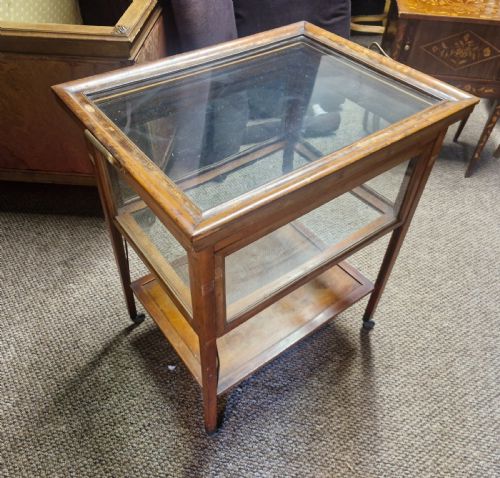


Vintage Mahogany Trolley
A vintage mahogany trolley is a practical serving piece built to move food, drink or books, shaped by decades of dining traditions.
Vintage Mahogany Trolley
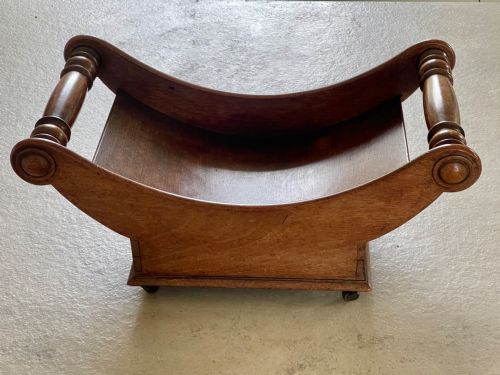
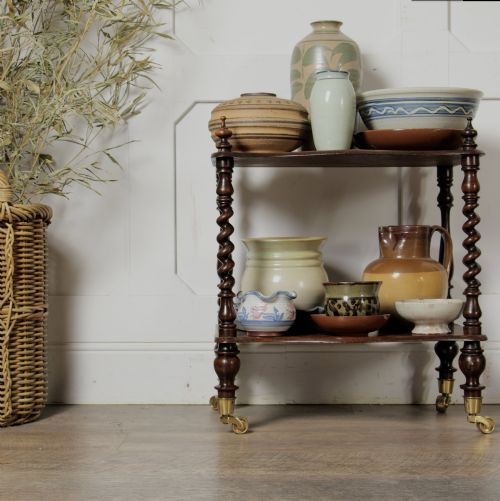
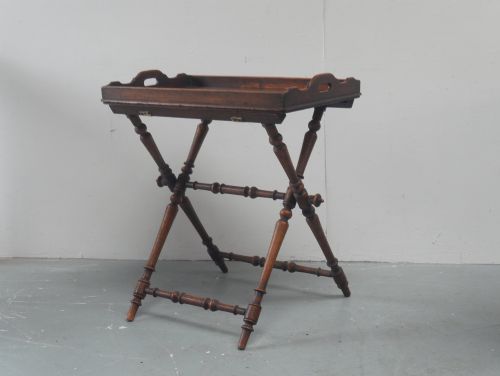
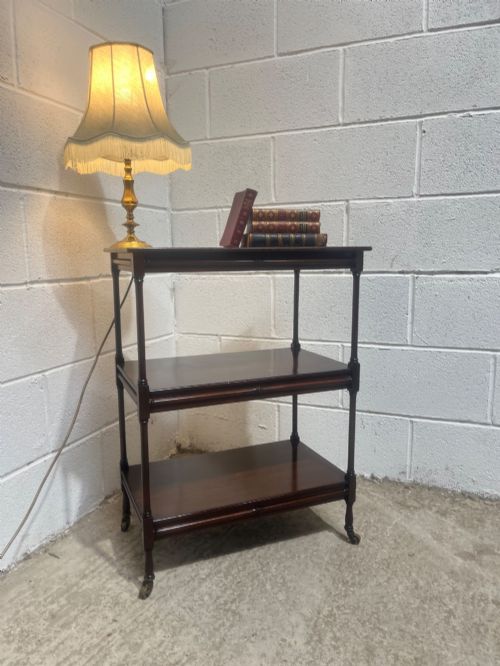
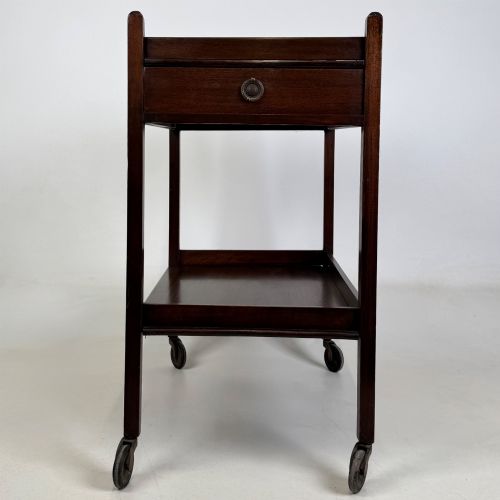
A vintage mahogany trolley brings mobile utility to the dining room or sitting room, originating in forms like tea trolleys, dumb waiters, and butler's trays on stands.
The pieces appearing on this page stretch across multiple eras, drawing from Georgian, Victorian, Edwardian, and later twentieth-century workshops.
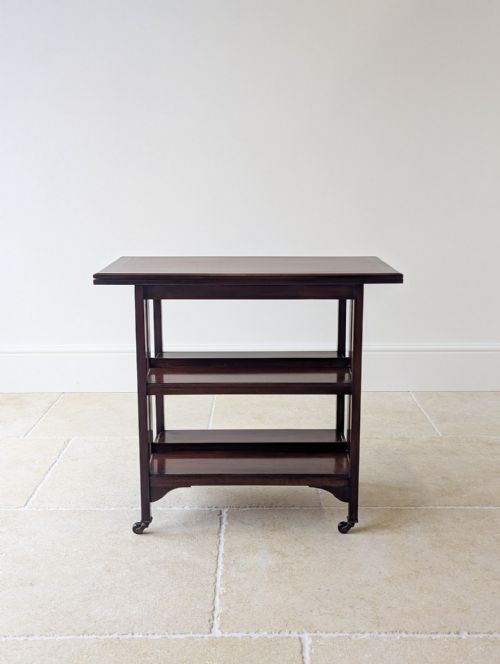
Makers fashioned these utilitarian items with drop sides, tiered shelves, and removable serving trays to suit the shifting demands of domestic entertaining.
Judging the work
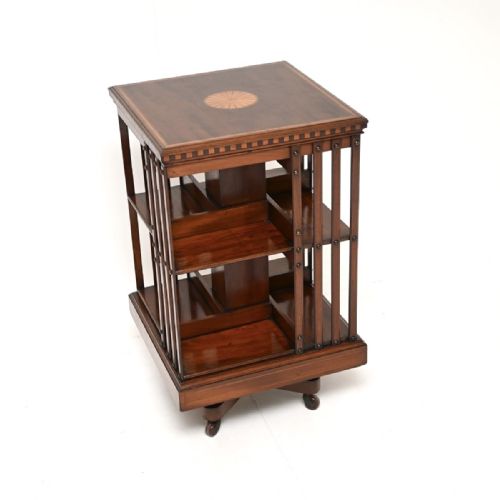
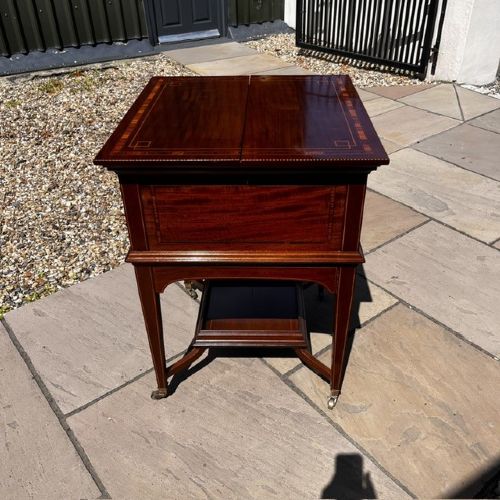
Quality rests in the precision of the timber selection, the crispness of any inlay work, and the structural integrity of the moving joints.
Superior examples maintain smooth mobility on their castors while preserving the rich grain and polished finish of the primary wood.
Some trolleys arrive with removable trays that double as lap tables for unexpected sofa dining.
Gillows
The Vintage Mahogany Trolley Glossary
- Mahogany
- A durable tropical hardwood prized for its deep reddish-brown colour and stable grain. It forms the primary structural material for these serving pieces.
- Dumb waiter
- A tiered piece of furniture designed to hold dishes or drinks without requiring a servant at the table. These frequently feature multiple rotating or stationary trays.
- Butler's tray
- A removable shallow tray resting upon a folding wooden stand. It allowed servants to carry provisions before mounting them securely on the frame.
- Drop side
- A hinged leaf attached to the main surface that folds down to save space. It provides extended surface area when raised during tea or dinner service.
- Castor
- A small wheel attached to the base of the legs to allow smooth rolling across floors. Brass mounts often secure these wheels to the wooden feet.
Vintage Mahogany Trolley: Frequently Asked Questions
How were vintage mahogany trolleys used?
These pieces served as mobile storage and transport for afternoon tea, cakes, and alcoholic drinks during formal entertaining in the home.
They allowed hosts to move refreshments between rooms easily without constant trips to the kitchen.
How do I care for a mahogany trolley?
Keep the wood away from direct heat sources and strong sunlight to prevent the polished finish from fading or drying out over time.
Dust the surface regularly with a soft cloth and apply a quality beeswax occasionally to nourish the timber.
Can I use a tea trolley as a drinks cabinet?
Many of these pieces feature tiered shelves or removable trays well-suited for holding bottles, glassware, and decanters.
Certain specialised forms incorporate dedicated cabinet spaces or drop leaves specifically designed for serving cocktails.
How do I distinguish Edwardian trolleys from Georgian ones?
Edwardian examples frequently display delicate satinwood inlay work and lighter framing influenced by revival styles.
Georgian and Regency pieces tend to rely on heavier structural timber, rich plain grain, and functional tiered designs.