
Vintage Mahogany Swing Mirror
A vintage mahogany swing mirror brings warmth and adjustable reflection to a dressing table, taking many forms from compact table top boxes to tall cheval frames.
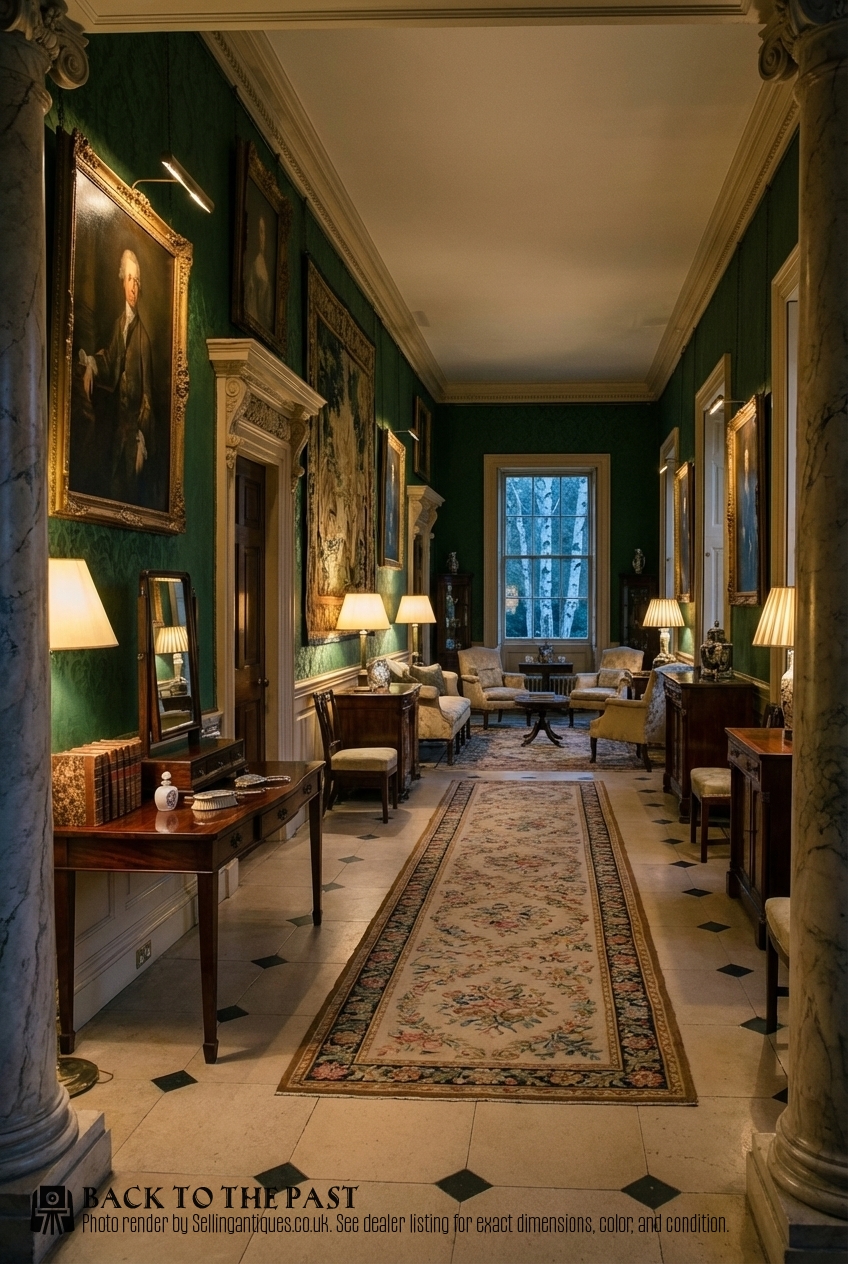
Vintage Mahogany Swing Mirror
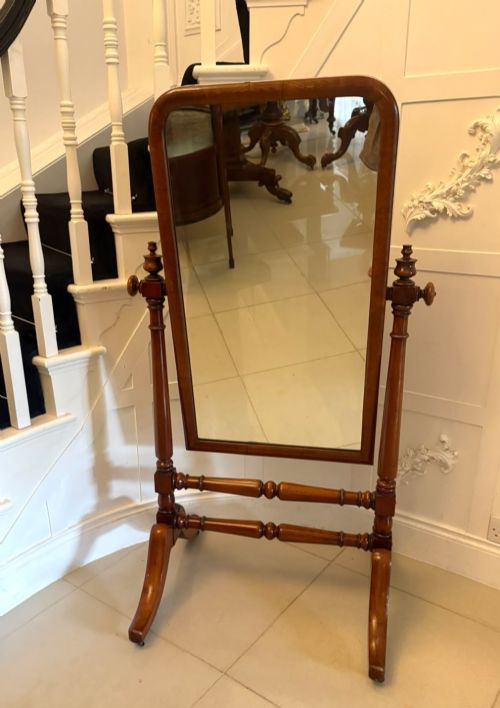
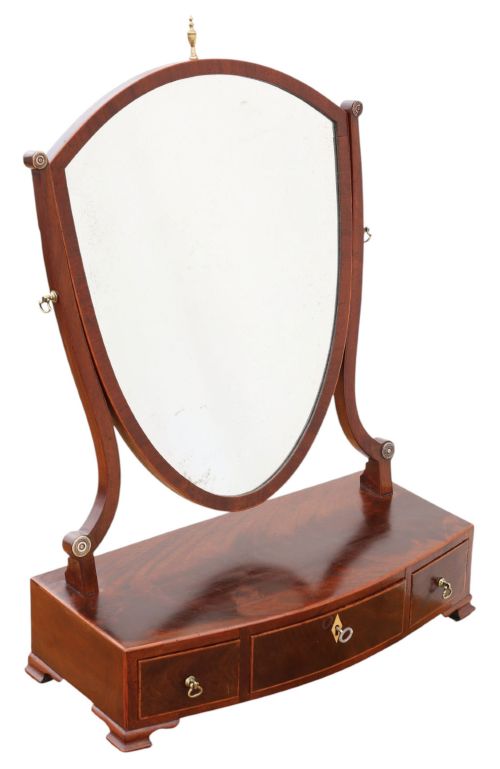
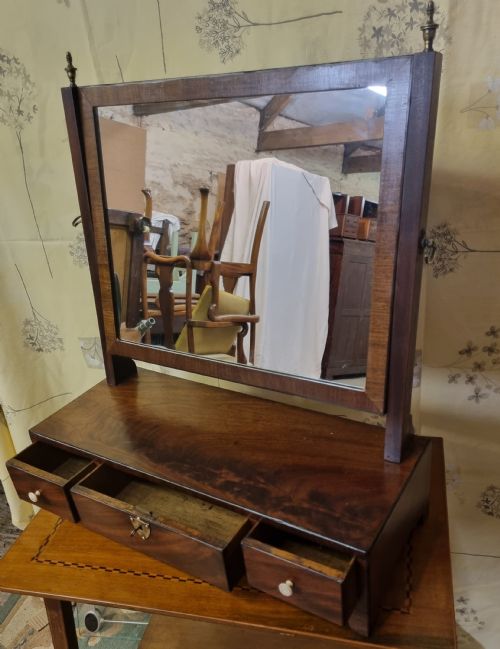
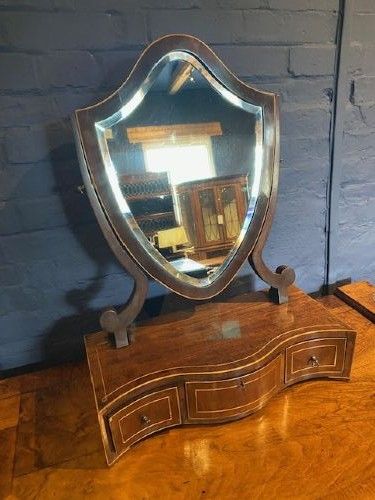
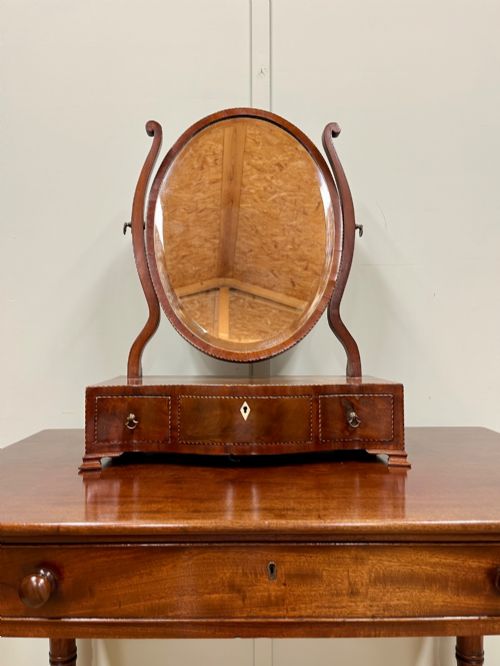
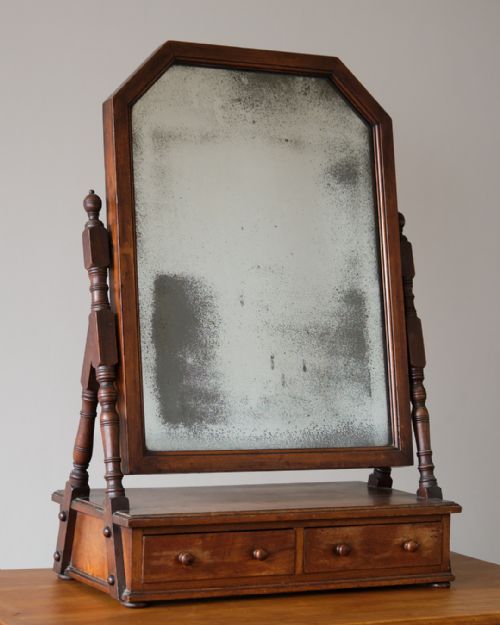
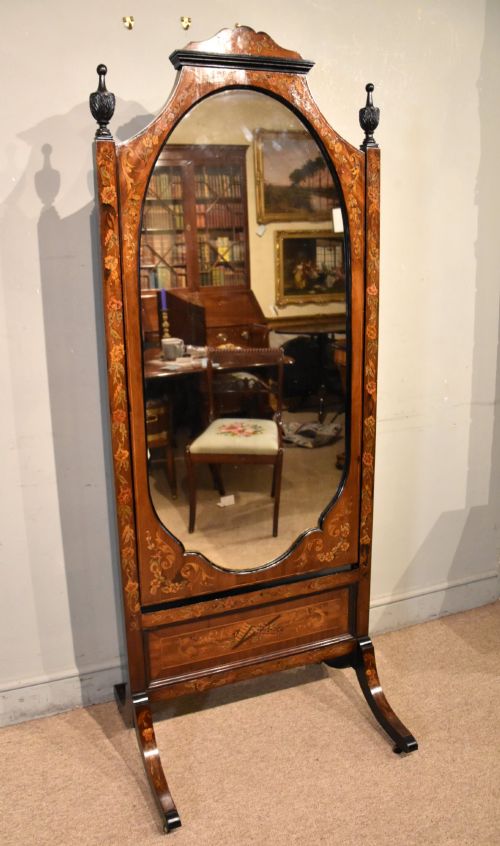
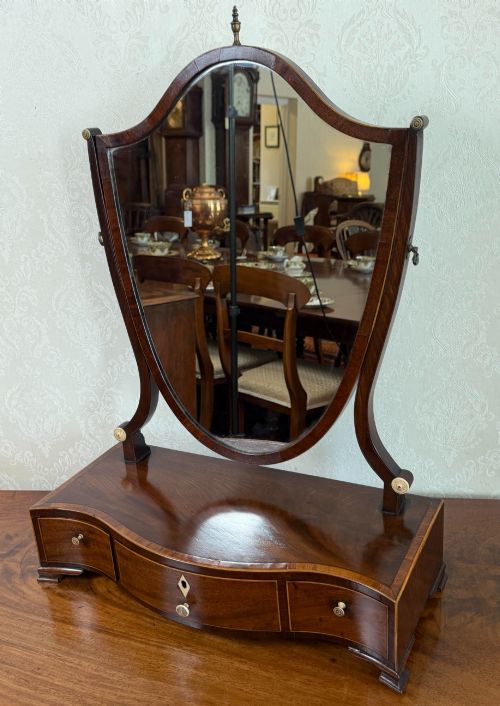
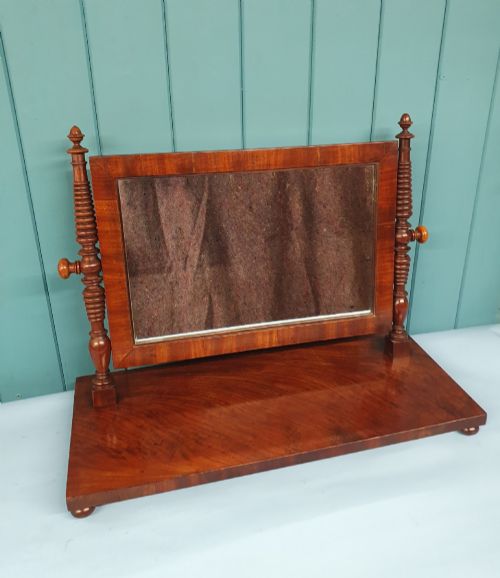
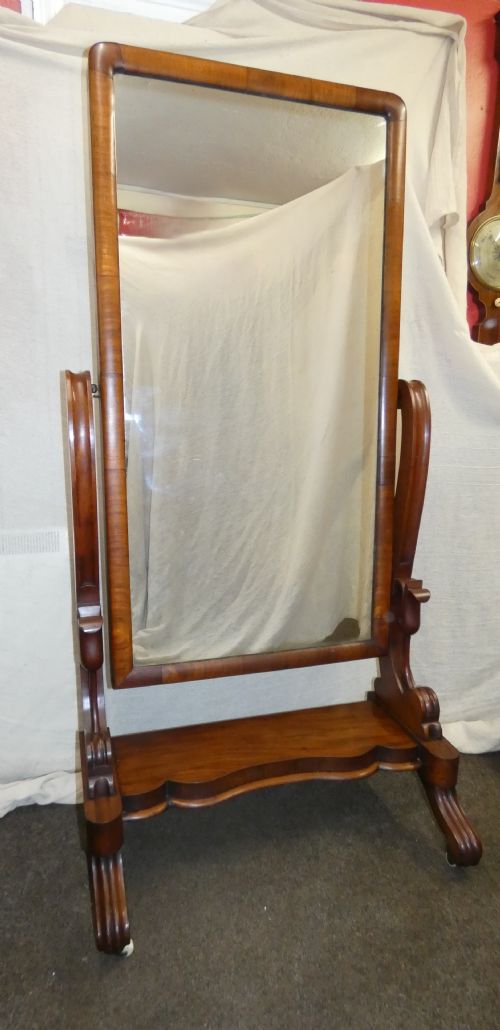
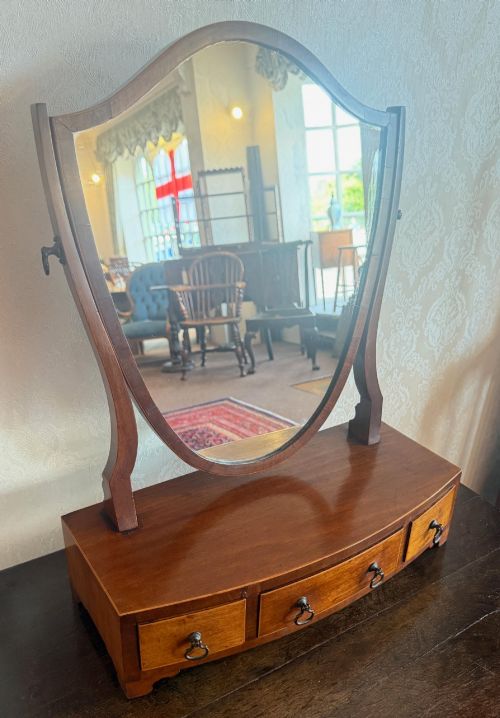
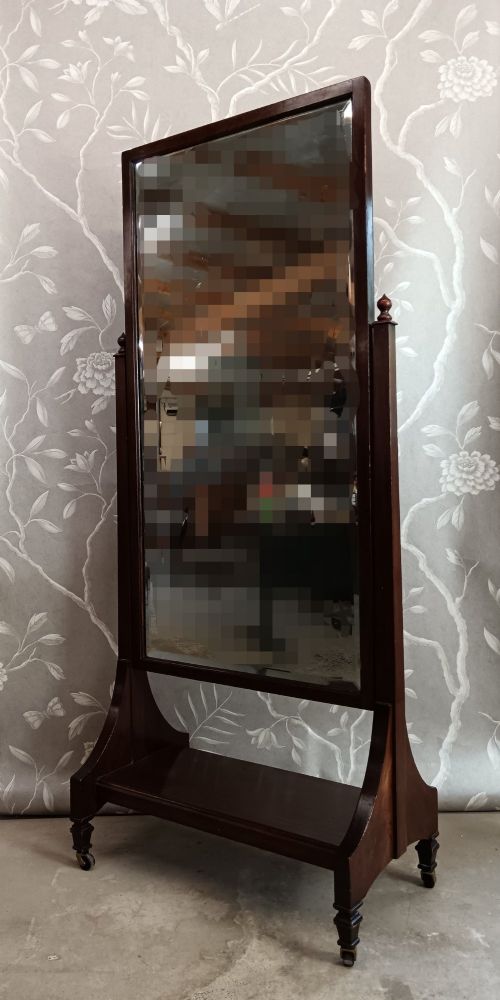
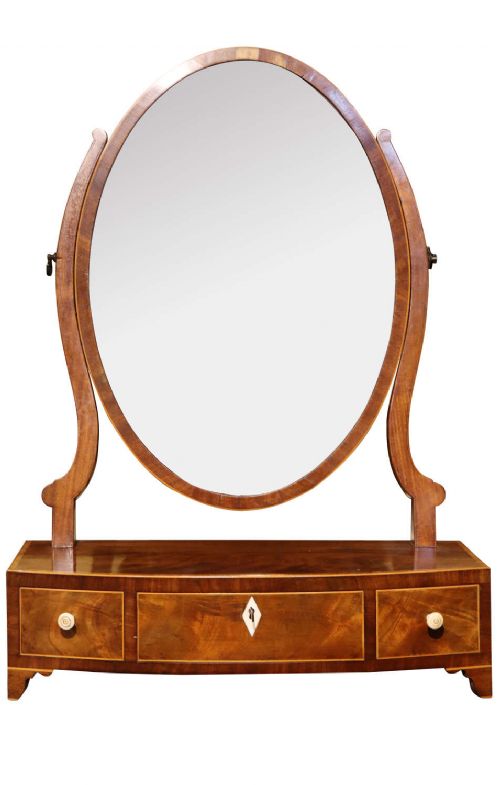
A vintage mahogany swing mirror encompasses several distinct forms designed for personal grooming and interior decoration, spanning the eighteenth, nineteenth, and early twentieth centuries. These objects appear as small table top boxes with fitted drawers, larger toilet mirrors, and full length freestanding cheval mirrors.
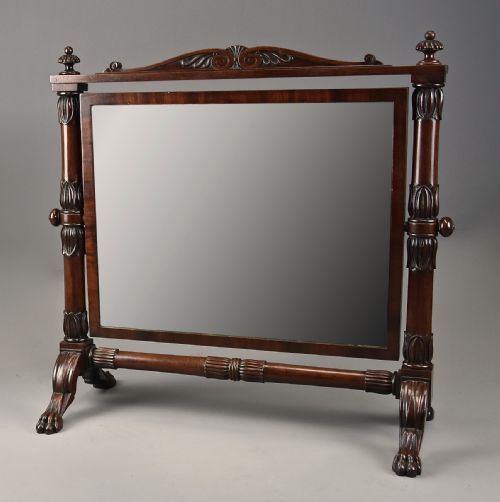
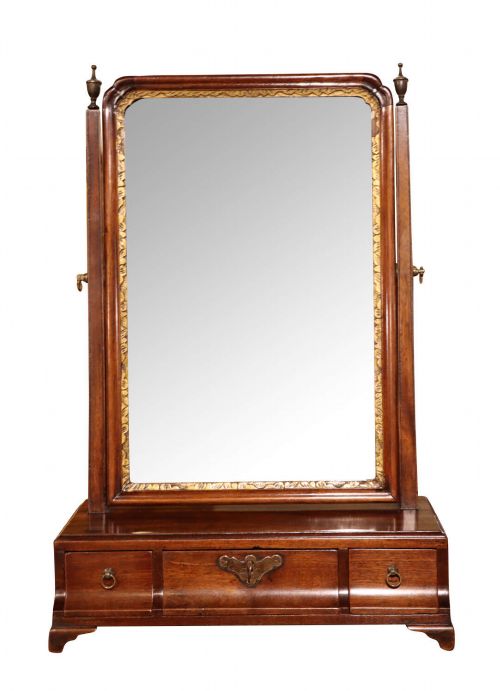
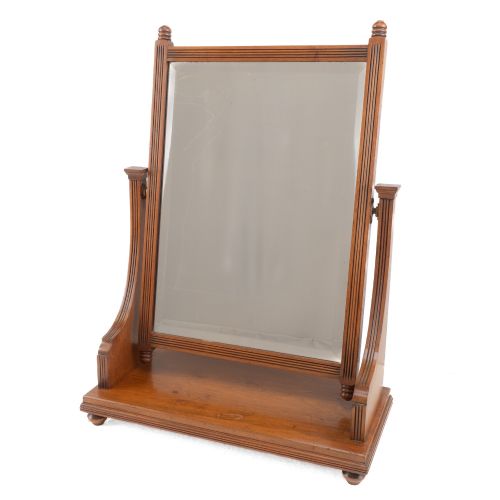
The versions most frequently met on this page range from compact Georgian and Victorian table top examples to larger swivel cheval mirrors originating from the Regency and Victorian eras. Many incorporate small compartment bases or tiers of drawers beneath the pivoting glass frame.
Makers and workshops across Britain and continental Europe produced these pieces in styles including Sheraton, Victorian Gothic Revival, and George II, utilising rich timbers suited to domestic bedrooms and dressing rooms.
How they were made
Cabinet makers constructed these mirrors using solid mahogany and figured veneers, frequently mounting the pivoting plates within sturdy upright arms attached to a base or chassis. Workshops also selected Cuban mahogany and flame mahogany for prominent surfaces to accentuate grain patterns.
Construction details often include brass pivot screws, side arms, and occasional bone escutcheons or marquetry inlay to drawer fronts and crossbanded borders. Mirror plates are set within wooden frames, sometimes featuring parcel gilt details or curved shield and oval contours.
Listings feature 19th Century, Georgian, Victorian, and Regency periods alongside Edwardian examples.
What varies in quality
The quality of a vintage mahogany swing mirror is determined by the selection of timber and the precision of the cabinet work, particularly around the drawer joints and pivot mechanism. Superior examples display dense, well figured mahogany and finely dovetailed box construction rather than plain secondary woods.
Proportion and decorative restraint set finer pieces apart from standard workshop output, with restrained crossbanding, delicate inlay, and well balanced support frames distinguishing superior productions.
P and MA Nicholson·Heal and Sons
The Vintage Mahogany Swing Mirror Glossary
- Cheval mirror
- A full length mirror mounted on a freestanding swivel frame that allows the glass to tilt fully. These large pieces stand directly on the floor.
- Toilet mirror
- A smaller dressing mirror designed to sit atop a table, chest, or dressing surface. They generally feature an attached base containing one or more small drawers.
- Crossbanding
- A decorative border technique where thin strips of veneer are laid across the grain of the main surface. This frames the primary timber of the mirror surround or base.
- Parcel gilt
- Partially gilded with gold leaf to highlight specific carved details or mouldings. This technique appears on certain Georgian and revival frames.
- Satinwood
- A pale, dense exotic wood used for contrasting inlay and stringing on mahogany furniture. Cabinet makers employed it to create decorative borders and panels.
Vintage Mahogany Swing Mirror: Frequently Asked Questions
What is the difference between a toilet mirror and a cheval mirror?
A toilet mirror is designed to rest upon a table or chest of drawers, usually incorporating a small base with compartments or drawers for personal items.
A cheval mirror is a much larger, freestanding floor model supported by four legs and vertical side posts, allowing the user to view their entire outfit.
How do I distinguish a Georgian swing mirror from a Victorian one?
Georgian mirrors tend to feature lighter proportions, finer mahogany grains, ogee bracket feet, and simple horn shaped or shield shaped glass frames.
Victorian examples often display heavier timber construction, deeper mouldings, more robust drawer configurations, and occasionally Gothic revival details or applied carving.
Were these mirrors originally used on dressing tables?
Many of the smaller box mirrors were placed directly onto plain tables or chests before dedicated dressing tables with fixed mirrors became common in later periods.
They provided a portable reflective surface that could be moved around bedrooms depending on natural light availability.
What does crossbanding mean on a mahogany mirror?
Crossbanding involves applying thin strips of veneer with the grain running perpendicular to the surrounding wood to form a neat border around the edge.
This technique adds visual contrast and demonstrates careful cabinet making, particularly on drawer fronts and mirror surrounds.
How do I care for a vintage mahogany swing mirror?
Keep the wood conditioned with appropriate furniture wax and avoid placing the mirror in direct sunlight or near heat sources to prevent timber splitting.
Check the brass pivot screws periodically to ensure they support the weight of the glass without straining the wooden side arms.