
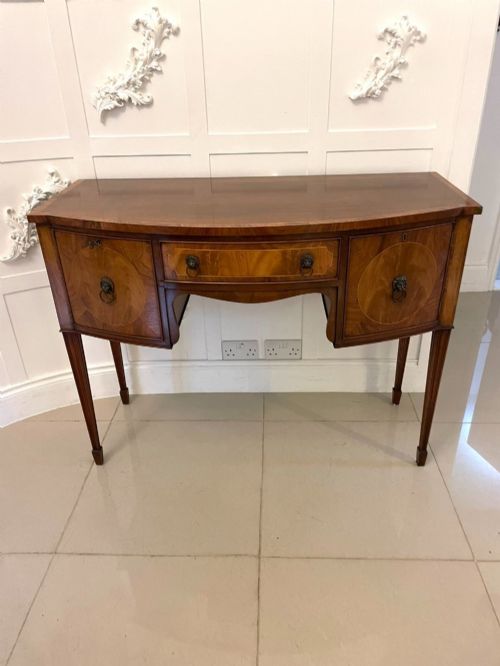
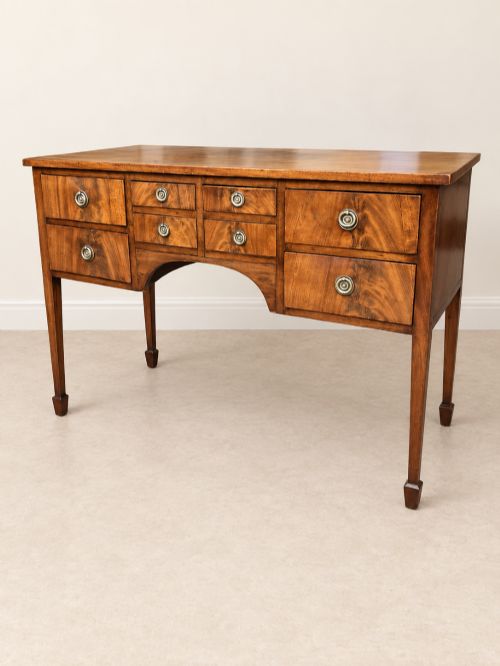
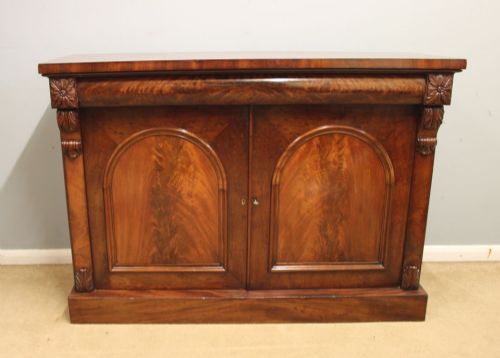
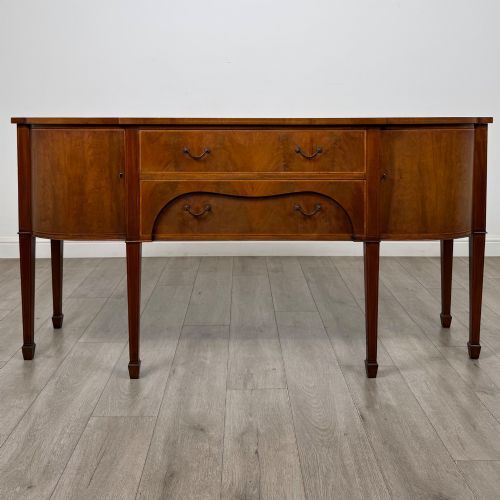
Vintage Mahogany Sideboard Server
These vintage mahogany sideboard server designs combine deep timber and practical storage, anchoring dining rooms with traditional British presence.
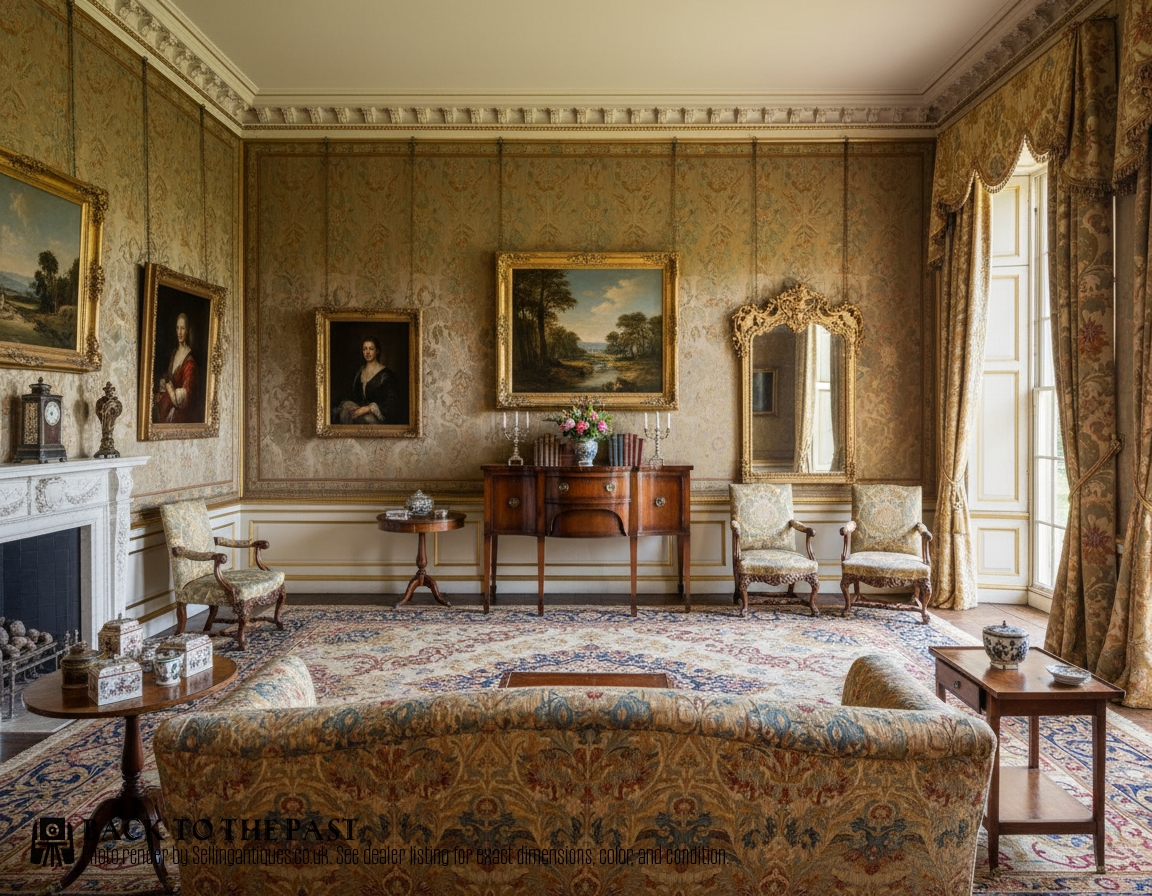
Vintage Mahogany Sideboard Server
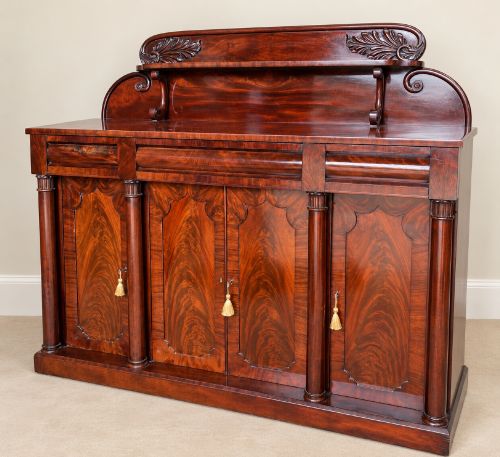
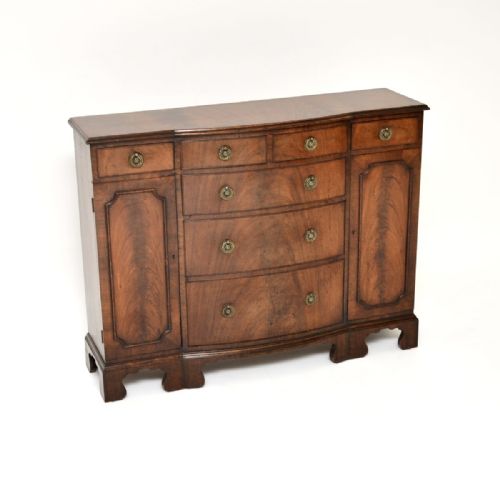
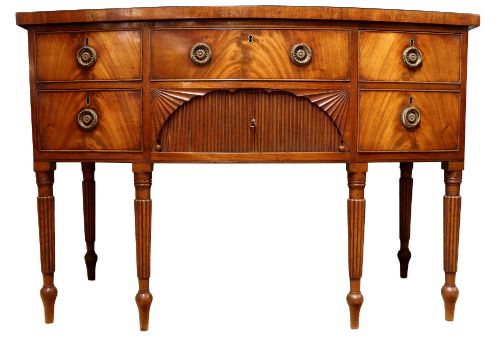
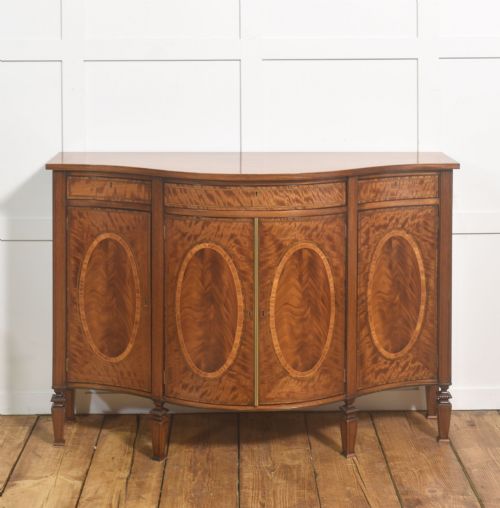
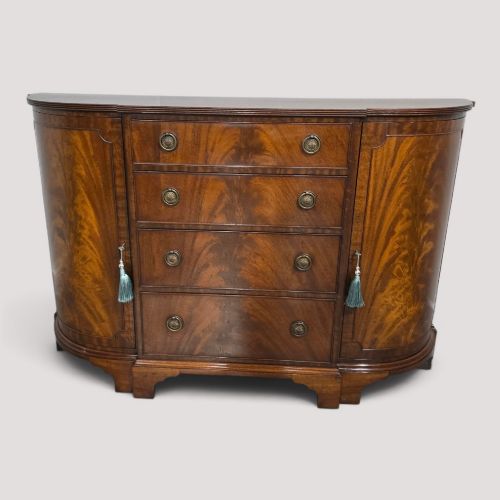
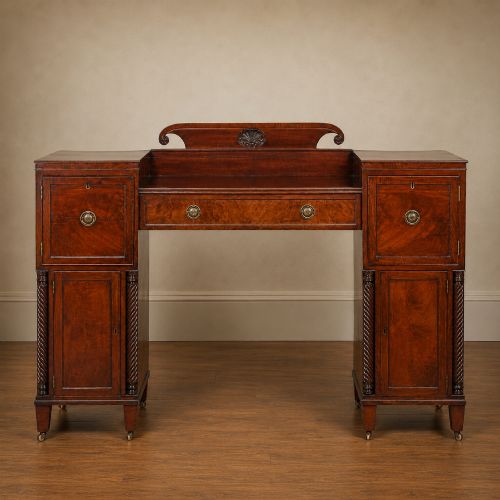
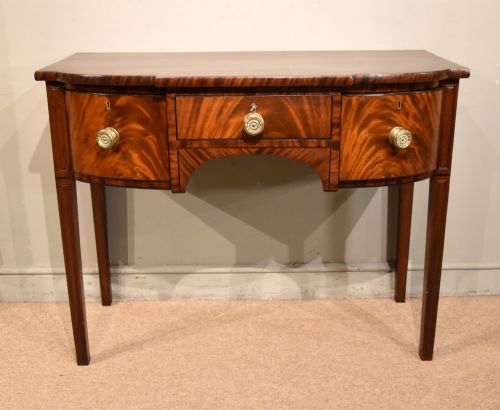
A vintage mahogany sideboard server is a substantial dining room furnishing built to hold tableware, linen, and serving dishes. The selections gathered here encompass formal pedestal layouts, bow-fronted servers, and breakfront cabinets spanning Georgian, Victorian, and Edwardian periods.
Buyers will encounter various incarnations, from robust 19th-century bow-front examples to lighter Sheraton Revival pieces produced around 1910. These items function equally well as servers during meals and as decorative side storage cabinets in domestic interiors.
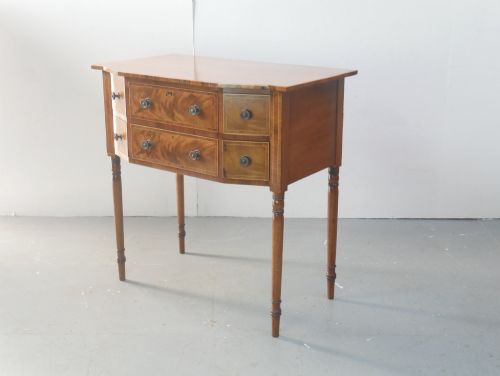
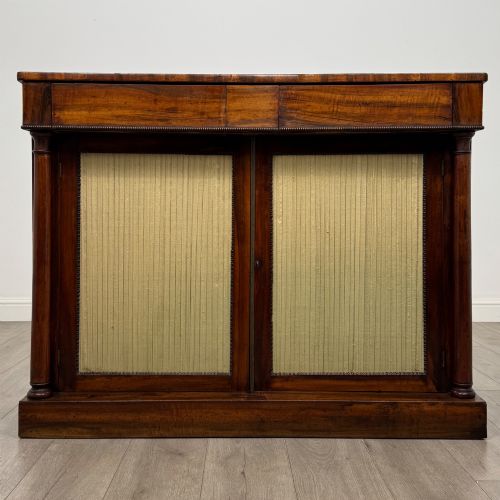
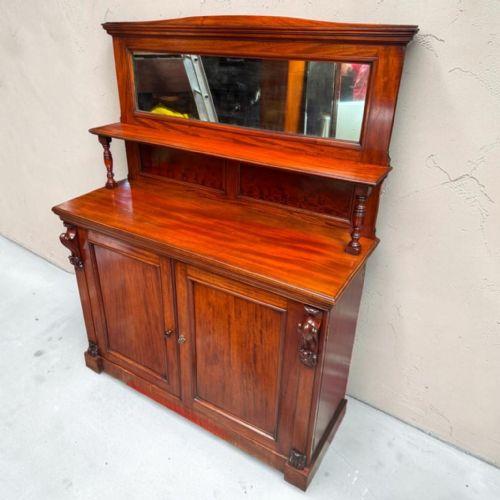
The assortment includes related forms such as chiffoniers, small side cabinets, and demi-lune tables that share the same fundamental timber vocabulary. Each iteration serves the practical requirement of surface display combined with enclosed cupboard space.
Materials and construction
Makers relied on solid mahogany and flame mahogany veneers applied over secondary carcase timbers to achieve rich grain movement across wide drawer fronts and cupboard doors. Contrasting stringing in satinwood and boxwood frequently outlines the edges and panels, adding linear definition to the dark red-brown body.
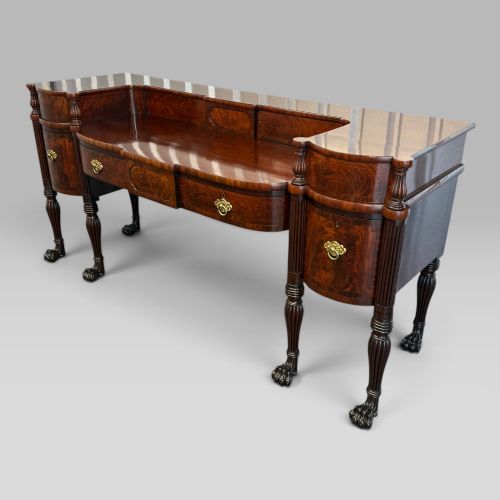
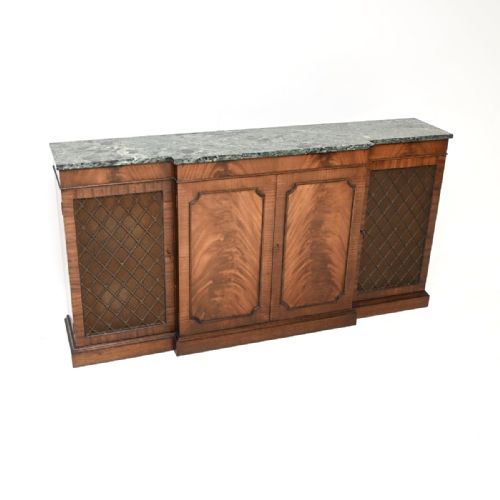
Brass fittings, including drop handles, backplates, and lion paw feet, provide structural accents that punctuate the polished timber surfaces. Specialised variants incorporate inset marble tops and glazed or grill-front cupboard doors to lighten the visual weight of the heavy wooden carcase.
Listings feature mahogany, satinwood, and boxwood combined with marble inserts and brass hardware across multiple historical eras.
Assessing craftsmanship
Quality rests upon the selection of the timber, particularly where figured flame mahogany veneer matches symmetrically across central drawer tiers and door panels. Superior examples display restrained, precise marquetry inlay rather than mechanical ornamentation.
Construction integrity shows in the dovetail joinery of the internal drawers and the crispness of carved details such as bracket feet or lion paw mounts. The balance of proportions between the top surface and the supporting carcase defines the visual success of the piece.
M. D. Miller & Sons
The Vintage Mahogany Sideboard Server Glossary
- Flame mahogany
- A veneer cut from the fork of the mahogany tree where the branch joins the trunk. It yields a distinctive flickering grain pattern resembling flames.
- Breakfront
- A cabinet design where the central section projects forward from the flanking outer cupboards. This configuration adds architectural depth to large dining room servers.
- Chiffonier
- A compact low sideboard or cupboard originating in the 19th century. These often feature raised mirror backs or small shelving tiers above the main surface.
Vintage Mahogany Sideboard Server: Frequently Asked Questions
Where should I place a mahogany server?
These servers fit naturally against dining room walls to hold serving platters and tableware during meals. They also function effectively in hallways or large living spaces for general storage.
The long, low profile provides a useful surface for lamps, books, or decorative objects without dominating the room's proportions.
How do I clean mahogany furniture?
Dust the timber regularly with a soft, dry cloth to prevent grit accumulation on the polished surface. Avoid silicone-based sprays that can build up a cloudy residue over time.
Apply a traditional beeswax polish occasionally to nourish the wood and maintain the natural lustre of the mahogany grain.
What is the difference between a sideboard and a server?
Sideboards traditionally feature extensive cupboard and drawer space intended for storing heavy dining room inventory. Servers tend to be slightly lighter in scale, designed primarily for presenting food during meals.
In antique terminology, the terms often overlap, as many smaller sideboards were utilised for serving purposes.
How do I identify a Regency period piece?
Regency items typically display classical restraint inspired by ancient Greek and Roman designs, dating from the early 19th century. Look for brass lion paw feet, bold mahogany veneers, and restrained inlay patterns.
Proportions during this era remain clean and architectural, avoiding the heavier carving associated with later Victorian revivals.