


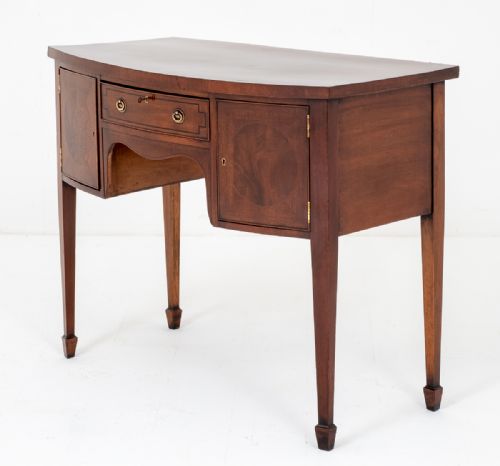
Regency Style Server Cabinet
A regency style server cabinet provides substantial serving space and classic proportions, combining rich timbers with refined brass detailing for formal dining rooms.
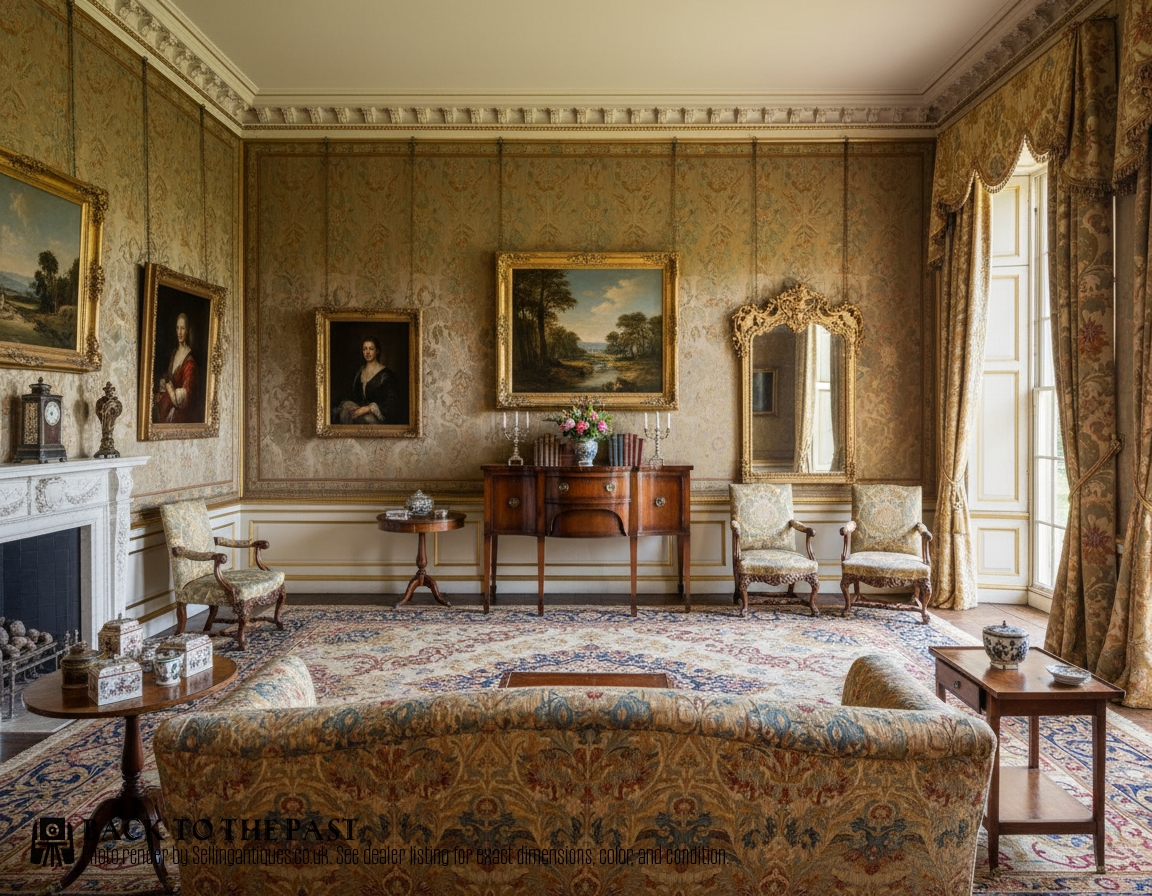
Regency Style Server Cabinet
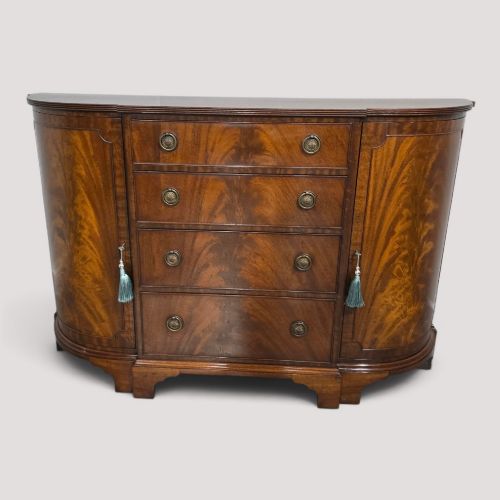
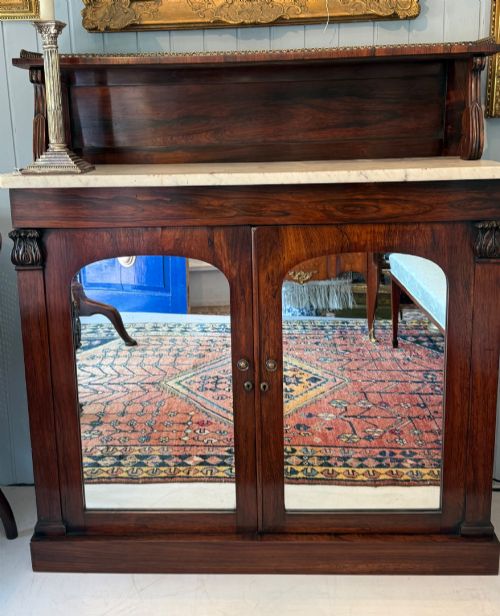
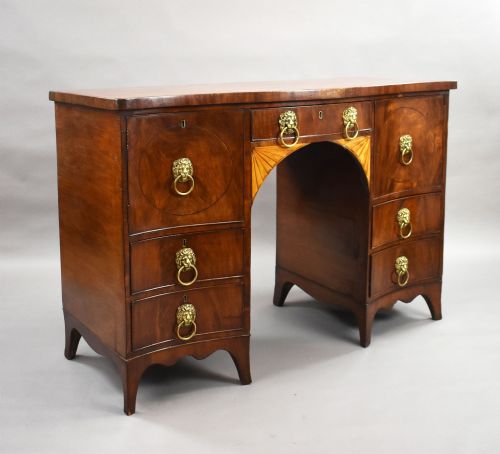
A regency style server cabinet typically takes the form of a mahogany or rosewood sideboard, chiffonier, or credenza designed for the dining room. These pieces provide functional storage for glassware, linens, and dining accessories while anchoring the room with formal architectural presence.
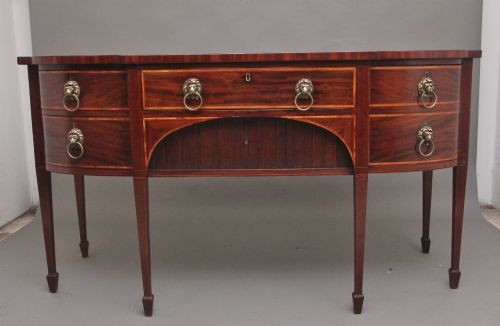
The selection ranges from genuine 19th century and William IV originals to later revivals from the Victorian era and 1920. Buyers frequently encounter bowfront sideboards and rosewood chiffoniers featuring brass inlays, boxwood stringing, and flame mahogany veneers.
Makers and cabinet makers of the period utilised substantial timbers including pollard oak, mahogany, and rosewood, occasionally incorporating marble tops and mirror glass backs. Forms span from breakfront sideboards to japanned side cabinets and smaller sideboards dating back to the early 19th century.
What varies in quality
The grading of quality rests primarily in the selection of timber figures, where rich flame mahogany and rosewood grain patterns elevate the visual impact of the piece. Superior examples display precise boxwood inlay and crisp brass mounts that integrate harmoniously with the primary wood.
Construction methods also dictate worth, distinguishing robust breakfront sideboards with thick marble tops from lighter revival pieces. Well-executed curved bowfronts and finely figured mahogany denote superior cabinet work compared to plainer construction.
Some sideboards hide deep drawers specifically engineered to keep your vintage wine bottles cool and horizontal.
Gillows
The Regency Style Server Cabinet Glossary
- Bowfront
- A convex curved cabinet front that projects outward in a smooth arc. This shape became particularly popular on sideboards during the 19th century to soften room angles.
- Chiffonier
- A compact low sideboard or cabinet featuring shelves or enclosed cupboards below. These pieces often include mirror glass panels and marble tops.
- Credenza
- A large side cabinet or sideboard originally used for serving food and displaying plate. Examples appear in heavy timbers like pollard oak and mahogany.
- Japanned
- A European imitation of East Asian lacquer work applied to furniture surfaces. This decorative technique creates a dark glossy finish with metallic motifs.
- Stringing
- Thin inlay lines of contrasting wood such as boxwood embedded into furniture surfaces. It serves to outline panels, drawers, and borders.
Regency Style Server Cabinet: Frequently Asked Questions
What is a regency style server cabinet used for?
These cabinets serve primarily as dining room sideboards for storing porcelain, silver, and table linen. The top surface provides ample space for serving dishes during meals.
Historically, they formed the central station for managing dining service before being brought to the table. Today, they function equally well as living room storage and display surfaces.
How do I identify a 19th century piece?
Examine the timber construction, dovetail joints, and backing boards for signs of age and hand tooling. Older pieces utilise dense solid mahogany or rosewood with hand-cut joints rather than modern fasteners.
Check for secondary woods and traditional polish finishes that differ from 20th century production methods. Subtle irregularities in brass inlays and hand-carved details also point to earlier manufacturing.
Where should I place a large sideboard?
Position the cabinet against a primary dining room wall where its length and proportion can anchor the space. Ensure adequate clearance for opening drawers and cabinet doors without obstruction.
Avoid placing timber pieces in direct sunlight or near heat sources to prevent veneer warping. Marble-topped versions benefit from placement where the stone surface remains safe from heavy impact.
What is the difference between a chiffonier and a sideboard?
A chiffonier is typically smaller than a full sideboard and frequently incorporates a raised superstructure with shelves or a mirror. They were designed for smaller spaces and often feature marble tops.
Sideboards offer greater length and multiple storage compartments including deep cellaret drawers for bottles. Both forms share similar 19th century mahogany and rosewood construction materials.