



Vintage Mahogany Shelf Clock
A vintage mahogany shelf clock brings rich timber grain and classic timekeeping to a mantel or desk.
Vintage Mahogany Shelf Clock
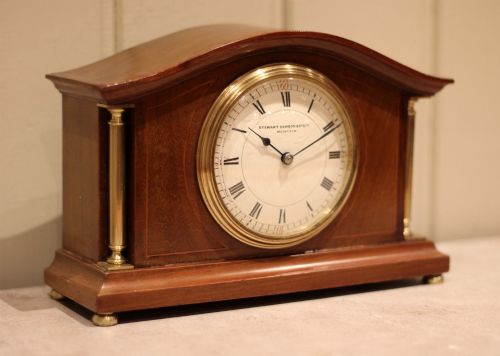
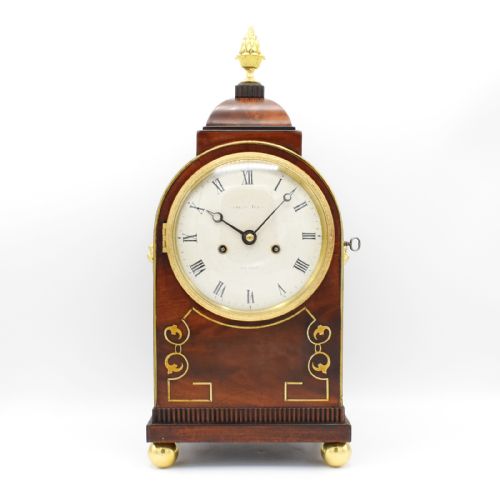
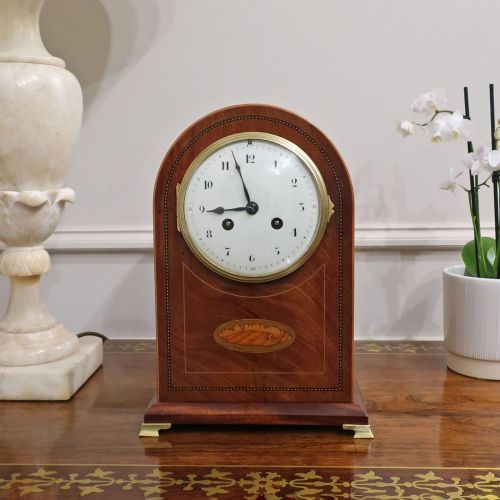
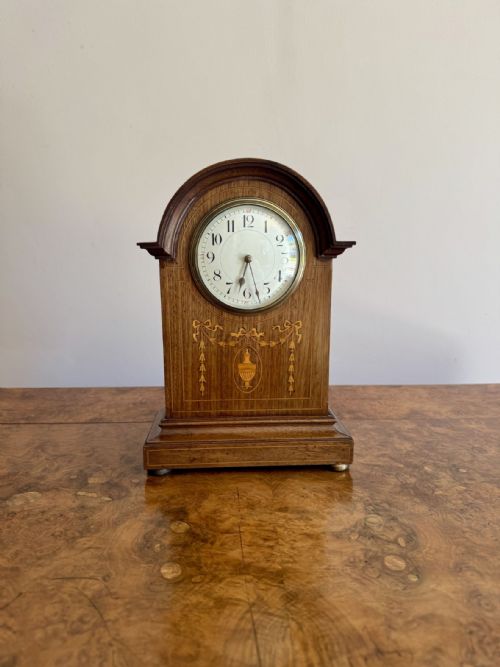
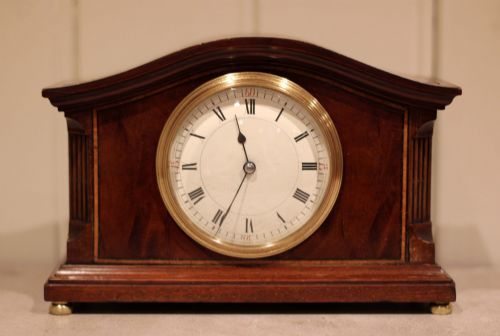
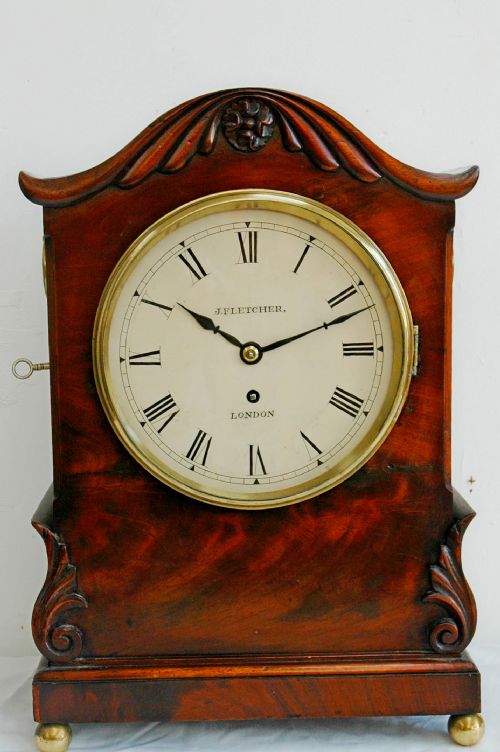
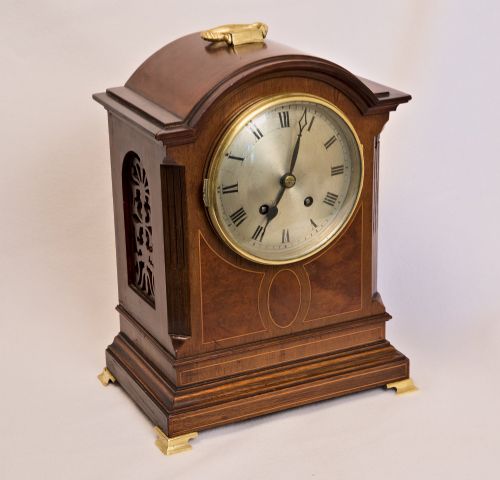
A vintage mahogany shelf clock is a compact timekeeper designed to sit on a mantelpiece, bracket, or shelf, frequently taking the form of a mantel clock, bracket clock, or table clock. When searching this phrase, buyers encounter a strong representation of Edwardian and Victorian pieces alongside Regency, 19th Century, and early 20th century examples.
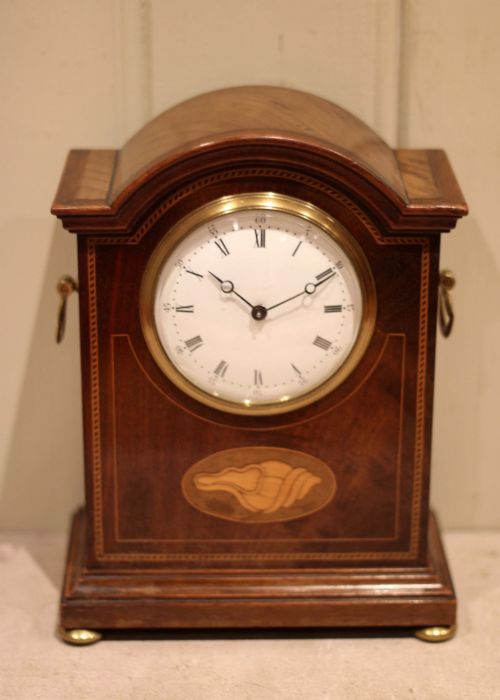
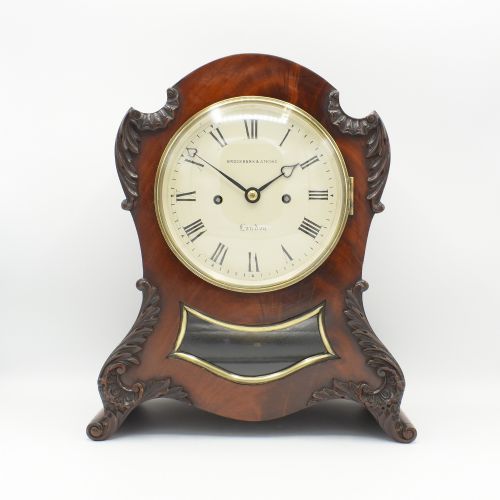
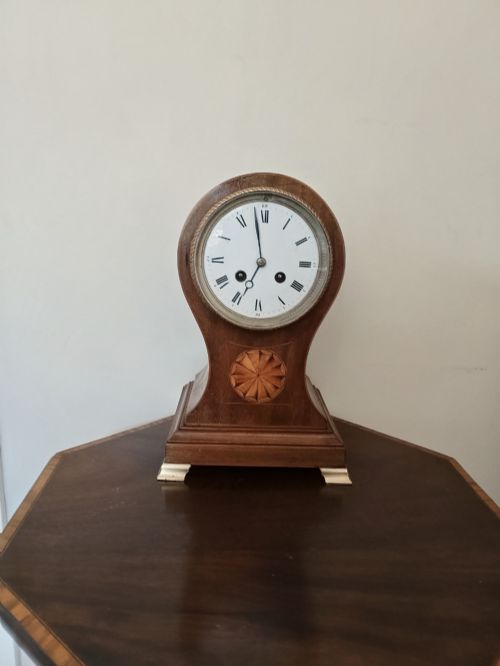
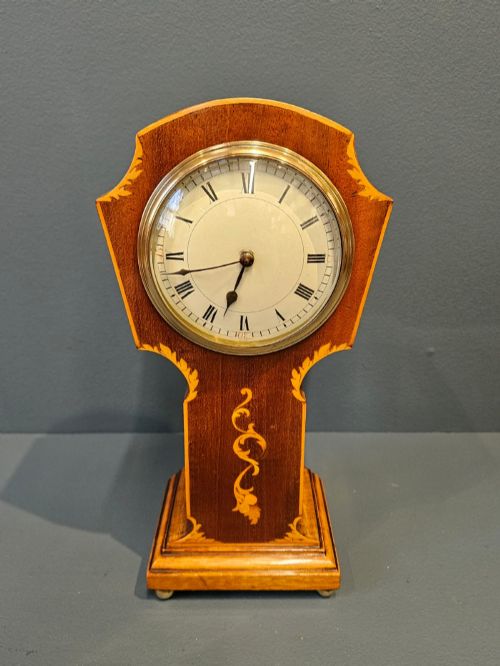
The physical shapes vary noticeably across the selection, ranging from balloon silhouettes and chamfer tops to traditional upright architectural cases and wall clocks. Many of these pieces incorporate decorative touches such as painted panels, enamel dials, and glass viewing doors.
Origins span English traditional workshops, French makers, and German firms, with Edwardian inlaid designs appearing frequently. The selection bridges formal bracket clocks and domestic mantel timepieces intended for everyday household use.
How they were made
Cabinetmakers utilised solid mahogany and mahogany veneers over secondary timbers, often embellishing the cases with satinwood, boxwood, and intricate marquetry or wood inlay. Brass mounts, bezels, and pendulum fittings added structural contrast and decorative weight to the timber bodies.
Dial construction typically involved white enamel with painted numerals, protected behind hinged glass bezels and brass frames. Mechanical movements ranged from simple daily timepieces to eight-day striking mechanisms and fusee systems.
Listings feature mahogany shelf clocks spanning the Victorian, Edwardian, and Regency periods, alongside Art Nouveau and Arts and Crafts styles.
What varies in quality
The refinement of the cabinetwork dictates much of the distinction between standard examples and superior pieces. Crispness in the wood inlay, subtlety in satinwood and boxwood stringing, and the balanced proportions of balloon or architectural cases reveal the maker's hand.
Movement sophistication also separates the tiers, moving from basic timepieces to complex eight-day striking movements and fusee systems. The quality of the brass fittings, enamel dial execution, and overall timber preservation complete the assessment.
Brockbanks & Atkins·Charles Pratt London·Piggin Norwich·Junghans·Funnell of Brighton
The Vintage Mahogany Shelf Clock Glossary
- Bracket clock
- A portable timekeeper originally designed to sit upon a wall bracket or shelf. These pieces often feature fine wood cases and brass carrying handles.
- Fusee
- A conical pulley connected to the mainspring by a chain or cord, designed to equalise the torque as the spring unwinds. This mechanism improves timekeeping accuracy across the duration of the wind.
- Marquetry inlay
- Decorative patterns formed by fitting contrasting veneers into prepared recesses in the mahogany surface. This technique produces pictorial or geometric motifs across the front of the case.
- Timepiece
- A clock that indicates the time of day without including a striking or chiming mechanism. These movements focus purely on the rotation of the hands.
- Enamel dial
- A metal face coated with fused glass powder to create a smooth, durable white surface for painted numerals. These dials provide a legible and traditional interface for reading the time.
Vintage Mahogany Shelf Clock: Frequently Asked Questions
What is a fusee movement?
A fusee movement employs a conical pulley and chain to maintain even power delivery as the mainspring relaxes. This mechanical refinement ensures steady force reaches the escapement.
Such systems indicate higher grade production, typically found in better bracket and shelf clocks from the nineteenth century.
How do I wind an eight day clock?
An eight day clock requires winding through the dial holes using a matching key every week or so. Care must be taken not to overwind the mainspring.
Most traditional mechanical movements respond best to consistent, gentle turns until resistance is felt.
What distinguishes an Edwardian mantel clock?
Edwardian mantel clocks frequently display lighter mahogany cases adorned with boxwood and satinwood stringing or floral inlay. Balloon and architectural shapes are particularly common from this era.
They reflect a shift towards decorative domestic timekeepers intended for comfortable drawing rooms.
Where should I place a mahogany shelf clock?
A shelf clock needs a stable, level surface such as a mantelpiece, sideboard, or dedicated wall bracket to keep the pendulum swinging evenly. Avoiding direct sunlight and damp environments protects the mahogany veneer and delicate brass fittings.
Level placement ensures the beat remains true and the movement keeps accurate time.