

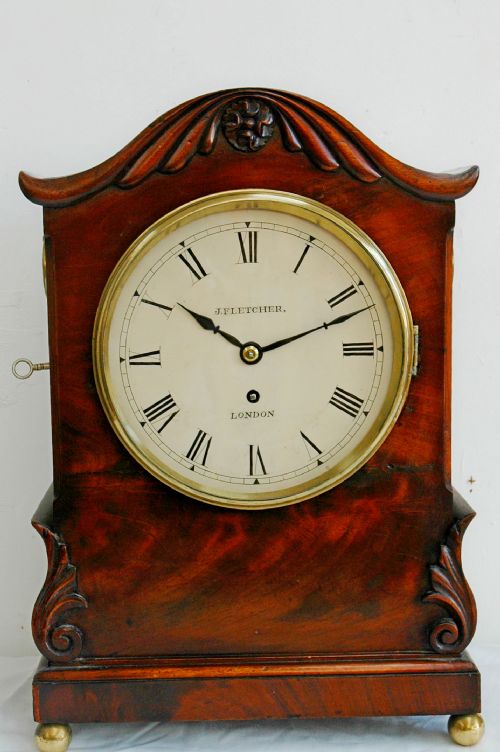
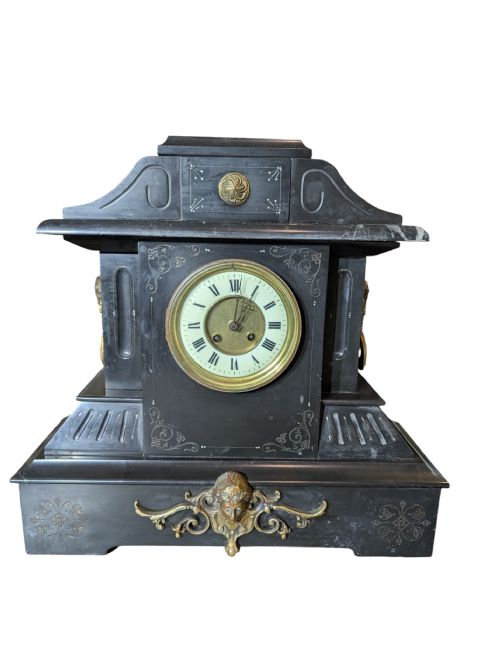


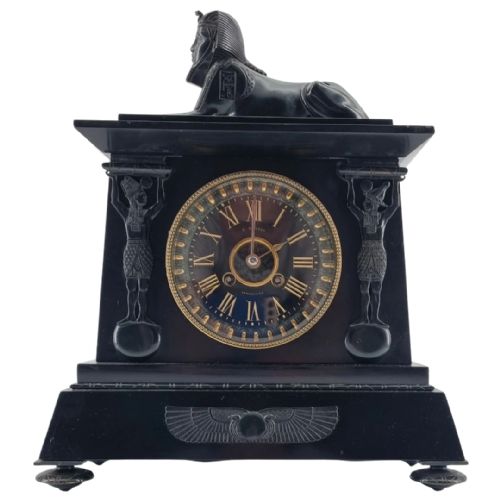


Roman Numeral Shelf Clock
A roman numeral shelf clock sits with quiet authority, marking hours in wood, marble, and brass.
Roman Numeral Shelf Clock
A roman numeral shelf clock encompasses mantel clocks, bracket clocks, and carriage clocks designed for domestic display on furniture surfaces. The examples encountered here span the Victorian, Edwardian, and Regency periods, alongside specific nineteenth-century iterations.
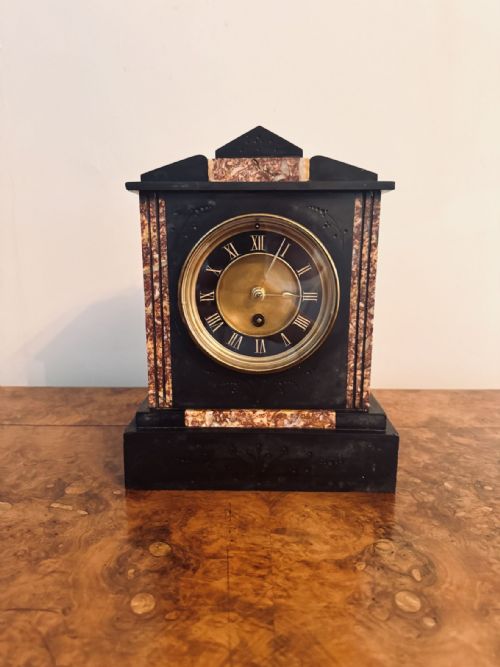
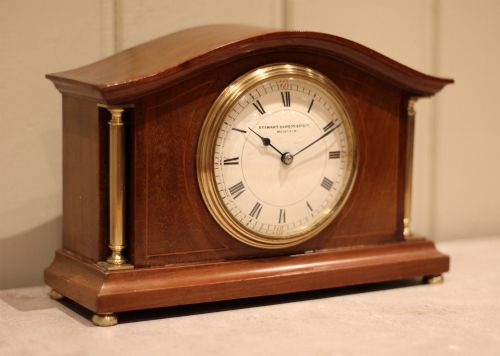
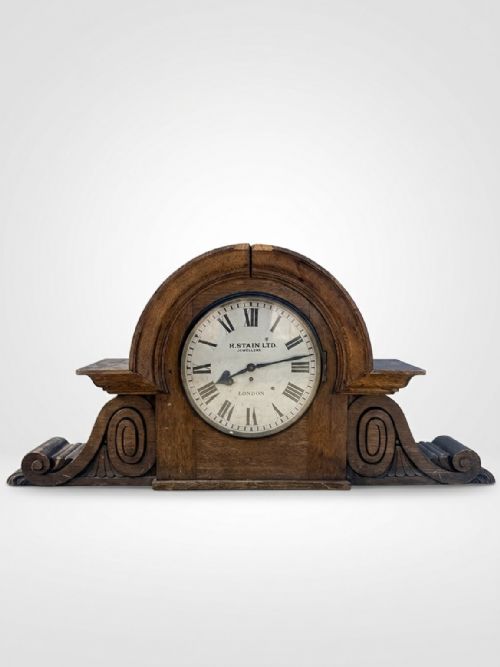
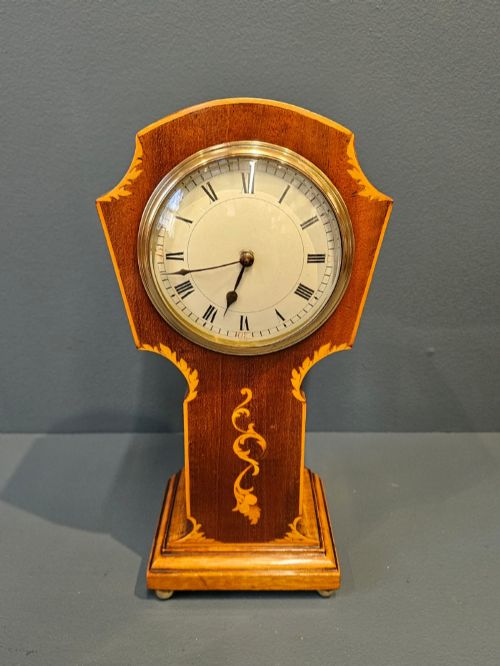
Makers housed these timepieces in architectural marble, inlaid mahogany, walnut, rosewood, oak, brass cases, and black slate. Styles range from classical Egyptian Revival to balloon-shaped Edwardian designs and French works.
The dial layout relies uniformly on roman numerals to indicate the hours, anchoring each piece in traditional horological presentation. These items served both a practical domestic purpose and a decorative function in nineteenth and early twentieth-century interiors.
How they were made
Cabinetmakers constructed the wooden housings using timbers such as mahogany, walnut, rosewood, and oak, frequently incorporating decorative marquetry and inlaid details. Stone versions utilised heavy materials like black slate and marble to provide structural stability and a substantial finish.
Metal components involved cast brass for bezels, handles, and dial surrounds, paired with glass panels to protect the face and movement. Enamel dials provided a crisp, legible surface for the painted roman numerals.
Roman Numeral Shelf Clock Retail Price Guide 2026
Typical asking prices for roman numeral shelf clock among the pieces listed under this phrase on Sellingantiques today, from the lower quarter to the upper quarter. They describe what is for sale here now, not the wider market.
Periods represented on this page range from the Regency era through Victorian and Edwardian decades to the early twentieth century.
What varies in quality
The distinction between standard domestic production and superior execution rests upon the choice of timber figure, the precision of stone cutting, and the refinement of the dial. Finer examples display meticulous marquetry, choice mahogany grain, or heavy, polished marble housings.
Named makers and retailers such as Connell of London, Piggin Norwich, D. Munsey of Cambridge, Henry Marc, Jas Whitelaw of Edinburgh, and D Robertson of Perth elevate individual pieces through established workshop standards and signed movements.
Connell of London·Piggin Norwich·D. Munsey of Cambridge·Henry Marc·Jas Whitelaw of Edinburgh·D Robertson of Perth
The Roman Numeral Shelf Clock Glossary
- Mantel clock
- A portable clock designed to sit on the shelf or mantelpiece above a fireplace. These domestic timepieces became widespread during the nineteenth century in various wooden and stone housings.
- Bracket clock
- A type of portable spring-driven clock originally designed to stand on a wall bracket. By the Victorian period, the term applied to substantial table or mantel clocks of high quality.
- Carriage clock
- A small, spring-driven timekeeper equipped with a carrying handle, originally made for travellers. They typically feature brass and glass cases that reveal the interior mechanism.
- Marquetry
- The art of applying pieces of veneer to a structure to form decorative patterns. This technique frequently appeared on Edwardian and Victorian mahogany or rosewood clock cases.
- Ebonised
- Wood treated to imitate ebony through staining or painting. This dark finish was popular on nineteenth-century slate and wooden clock cases.
Roman Numeral Shelf Clock: Frequently Asked Questions
Where should I place a heavy marble clock?
Heavy marble and slate timepieces require a sturdy, level surface such as a sideboard or low mantelpiece to support their substantial weight safely.
Ensure the furniture can bear the load without bowing, as these dense stones add significant mass to the clock body.
How do I wind a mechanical shelf clock?
Mechanical clocks utilise a key inserted into winding holes on the dial to tension the internal springs or lift the weights gently.
Care must be taken not to overwind the movement, stopping as soon as resistance is felt to protect the historical mechanism.
What is a carriage clock?
A carriage clock is a portable timepiece housed in a brass and glass case, featuring a handle on top for travel.
Originating for use on journeys, these pieces combine visible mechanical escapements with compact proportions suitable for desks and shelves.
How do I distinguish Edwardian from Victorian styles?
Victorian clocks often feature heavier proportions, dark slate, architectural marble, or rich rosewood, reflecting mid-nineteenth-century taste.
Edwardian examples frequently lighten the palette with inlaid mahogany, balloon shapes, and more restrained decorative elements characteristic of the early twentieth century.