
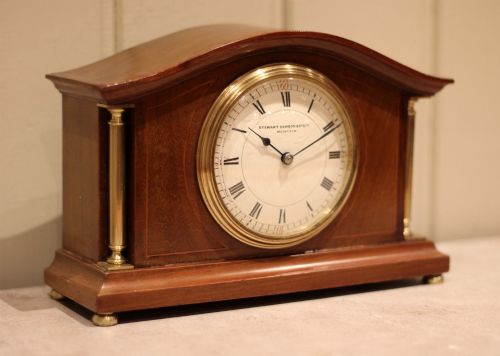
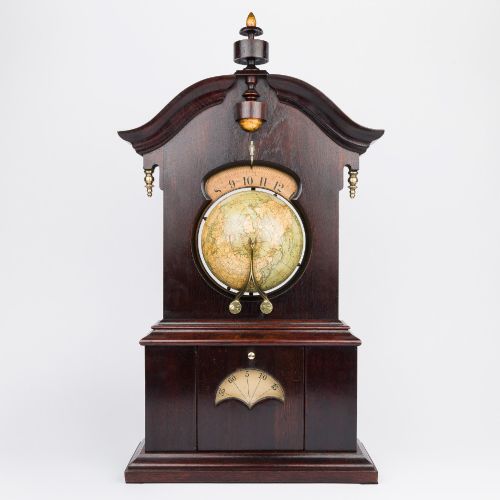
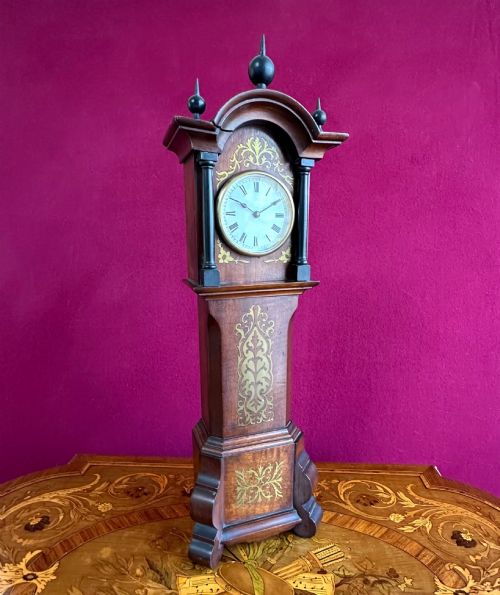

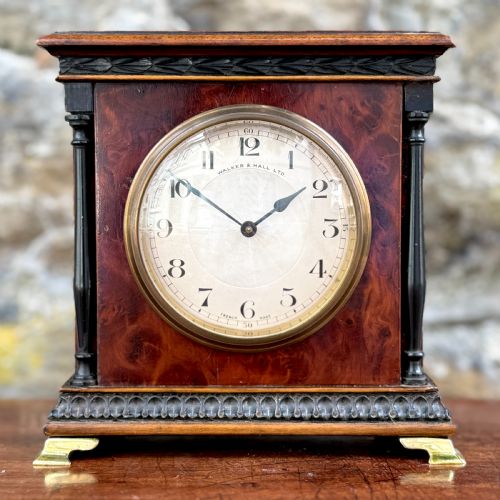



Vintage Desk Clock Mahogany
A vintage desk clock mahogany piece brings warmth and mechanical precision to a study, sitting in a tradition of timber cases and brass movements.
Vintage Desk Clock Mahogany
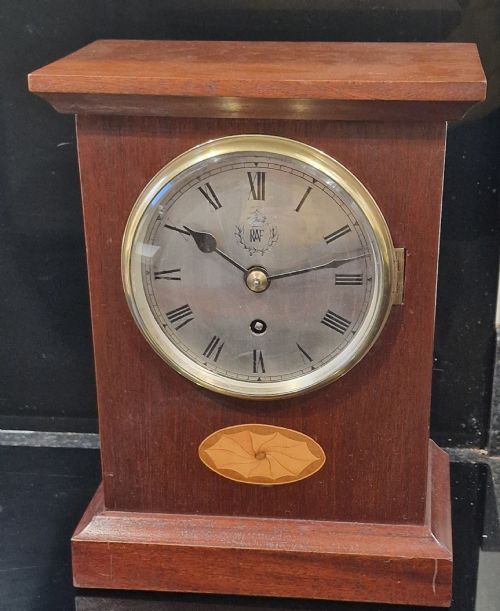
A vintage desk clock mahogany selection encompasses mantel clocks, table clocks, and library clocks housed in wooden casings spanning the nineteenth and twentieth centuries. Buyers seeking these items encounter compact timepieces intended for desks and writing surfaces, constructed during periods such as the Edwardian era, the Regency period, and the early twentieth century.
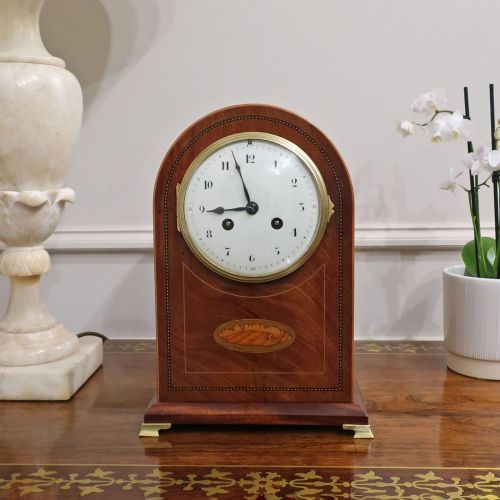
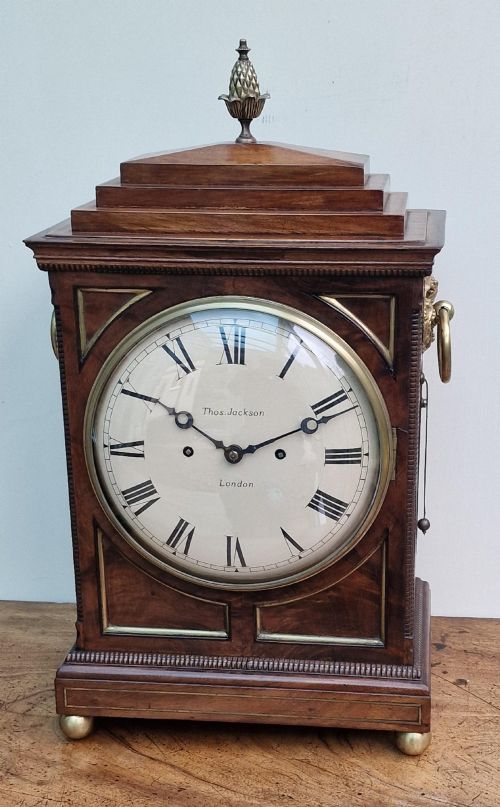
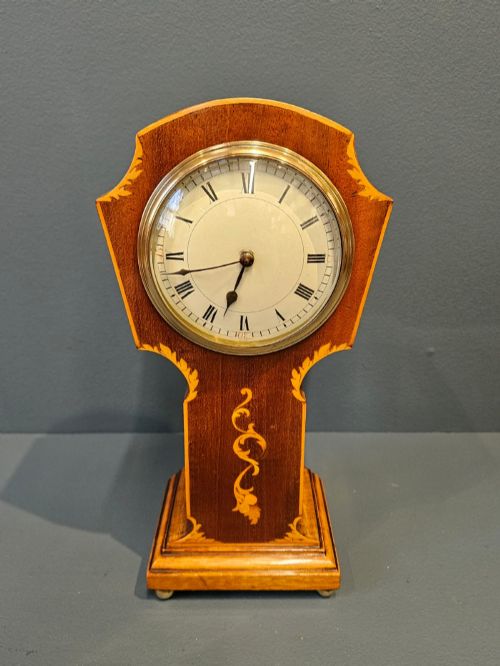
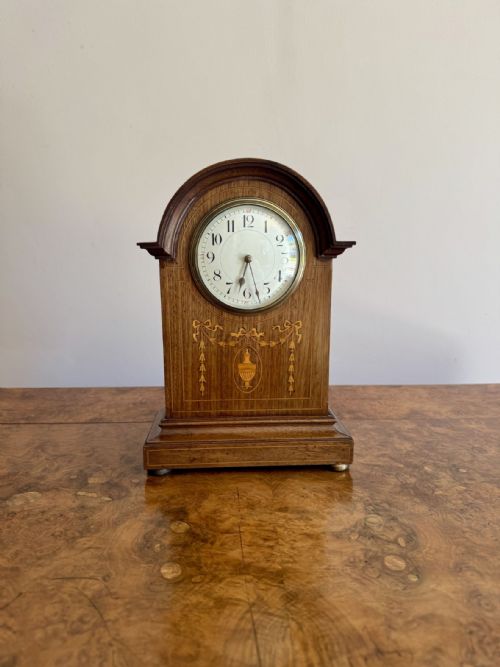
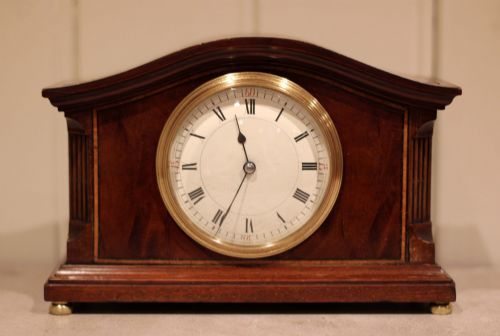
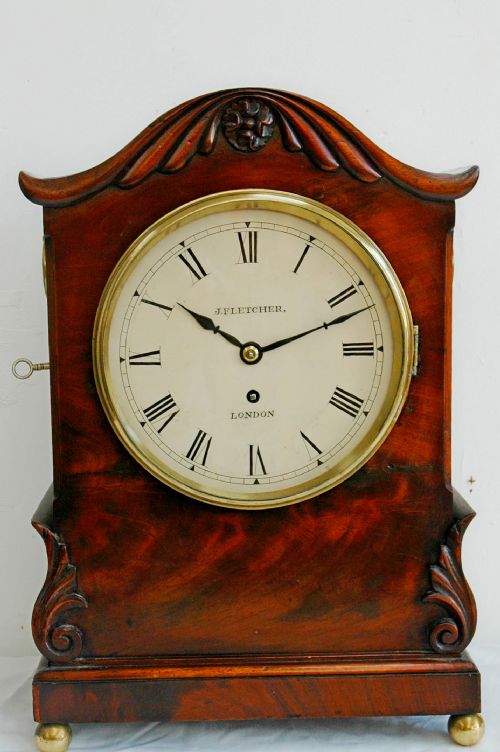
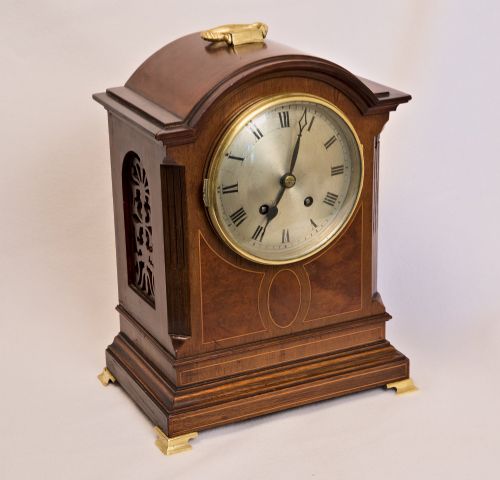
The objects on this page include balloon cases, lancet tops, and bracket clock forms alongside library clocks fitted with fusee movements. Many examples incorporate inlaid details or brass mounts, reflecting the stylistic preferences of Georgian, Victorian, Belle Epoque, and Arts and Crafts makers.
How they were made
Cases are built from solid mahogany or timber veneers, frequently enhanced with boxwood stringing, satinwood, and various wood inlays that accentuate the grain. These wooden housings enclose brass movement plates, wheels, and gears, often protected behind bevelled glass panels.
Dials feature enamel chapter rings with painted or engraved numerals, sometimes paired with serpentine brass hands. Movements range from standard spring-driven timepieces to eight-day striking mechanisms and fusee systems designed for consistent tension.
What varies in quality
The standard of timber selection and cabinetwork dictates much of the distinction between pieces, where finely figured mahogany and precise marquetry separate standard production from superior workshop output. The crispness of brass inlay, the weight of cast bezels, and the proportion of the case outline reflect the original maker's investment in materials.
Mechanical execution forms the other pillar of distinction, visible in the complexity of the movement, such as fusee regulation or striking trains by established makers. The integrity of the dial enamel and the retention of original components further define the standing of an individual clock.
Mappin and Webb·Walker and Hall·Maurice and Marcel Moulin Favre-Bulle·Bush of London·W. Burton·Piggin Norwich·Wilkinson Leicester·Winterhalder and Hofmeier·Hampson and Son·Joseph Jump of London·Dent of London·J.C Vickery of London
The Vintage Desk Clock Mahogany Glossary
- Fusee
- A conical pulley used in spring-driven clocks to maintain equal power as the mainspring unwinds. This mechanism ensures more accurate timekeeping throughout the running period.
- Balloon clock
- A mantel clock featuring a curved, swelling case shape reminiscent of early hot-air balloons. This style gained popularity during the Georgian and Edwardian periods.
- Lancet top
- A clock case design terminating in a pointed, Gothic-arch peak resembling a lancet window. It appears frequently on nineteenth-century table and bracket clocks.
- Bracket clock
- A portable table clock originally designed to sit on a wall bracket to aid projection of sound. Later examples retained the name while resting directly on desks and furniture.
- Chapter ring
- The outer ring on a clock dial that bears the hour numerals. These are commonly made of white enamel or engraved brass.
Vintage Desk Clock Mahogany: Frequently Asked Questions
How do I wind a mahogany desk clock?
Winding requires a matching key inserted into the winding arbor on the dial face, turning gently until resistance indicates full tension.
Care must be taken not to overwind the mainspring, as this can damage the internal gearing.
Where should I place a table clock?
These clocks sit best on stable wooden surfaces such as desks, mantelpieces, or library tables away from direct sunlight and damp environments.
Level placement ensures the pendulum or balance wheel maintains an even beat.
How do fusee clocks differ from standard ones?
A fusee movement incorporates a conical drum and cord or chain to regulate the pull of the mainspring, delivering steady torque as the power diminishes.
Standard spring-driven clocks lack this cone, resulting in a slight drop in power delivery as the spring relaxes.
How do I identify an Edwardian mahogany clock?
Edwardian pieces often display lighter mahogany veneers complemented by delicate boxwood and satinwood stringing, reflecting early twentieth-century tastes.
Proportions tend to be refined, frequently drawing on revived Georgian or Sheraton design motifs.