


Vintage Mahogany Office Desk
A vintage mahogany office desk offers a sturdy workspace with deep grain and classic proportions, suiting a traditional study.
Vintage Mahogany Office Desk
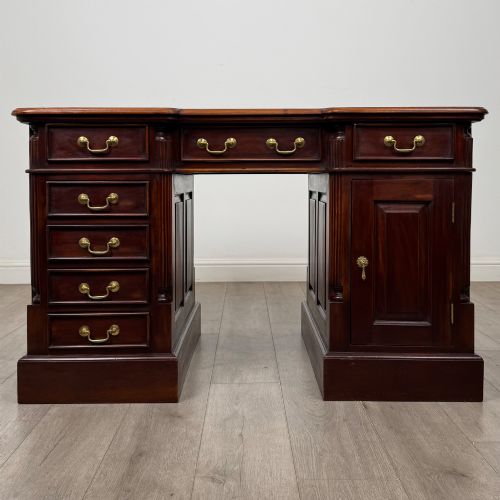
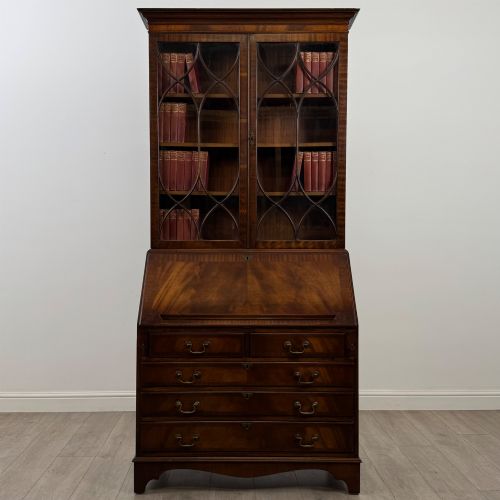
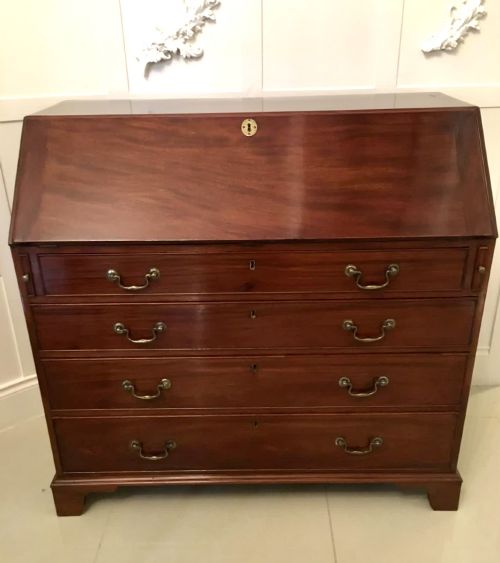
A vintage mahogany office desk is a substantial wooden workstation designed for writing, correspondence, and administrative tasks. The forms on this page span Victorian and Edwardian periods, featuring robust pedestal designs and simpler writing tables.
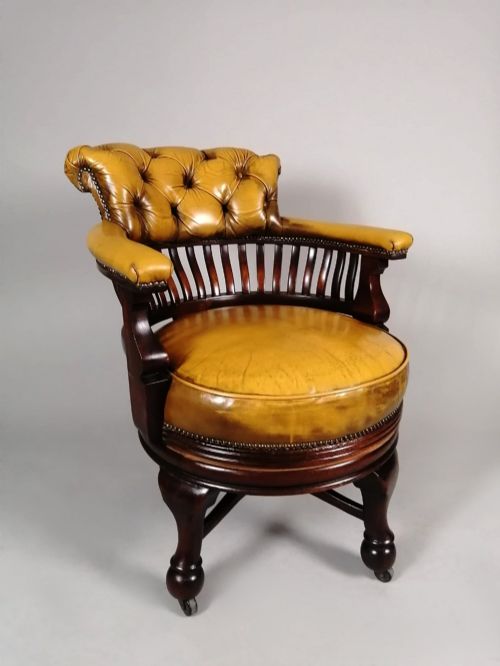
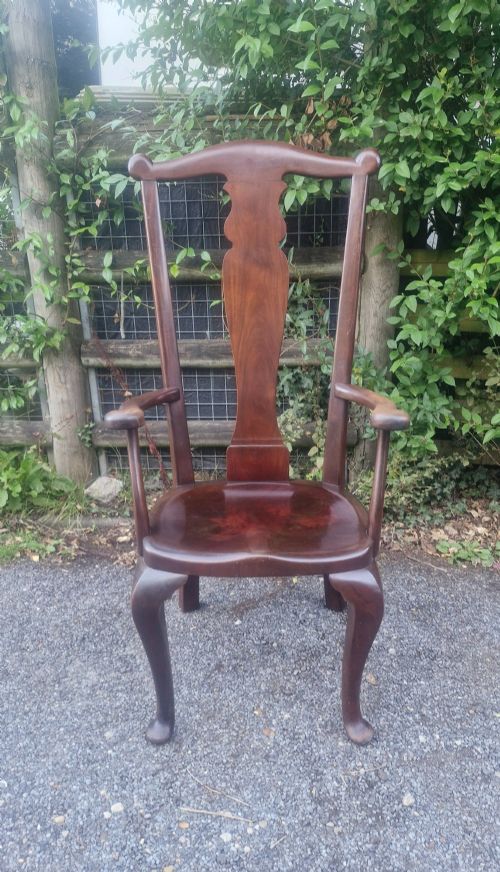
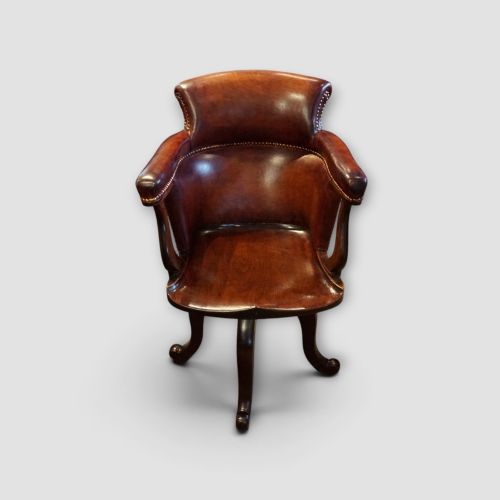
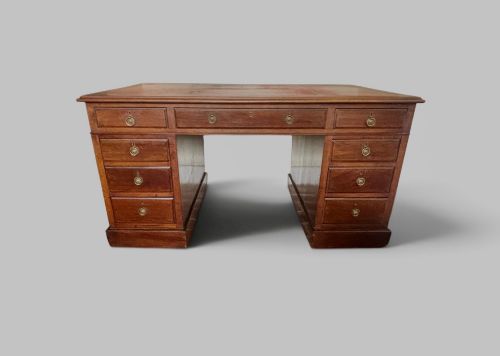
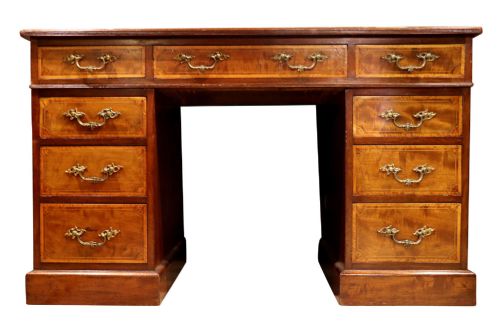
Pedestal desks dominate the selection, offering banks of drawers beneath a main writing surface. Writing tables and partner desks appear frequently, alongside associated seating such as mahogany framed armchairs and revolving desk chairs.
Most examples originate from the nineteenth and early twentieth centuries, drawing on Georgian, Regency, and Chippendale design revivals. Cabinetmakers utilised rich timber figures and traditional construction methods to build furniture intended for heavy daily use.
What varies in quality
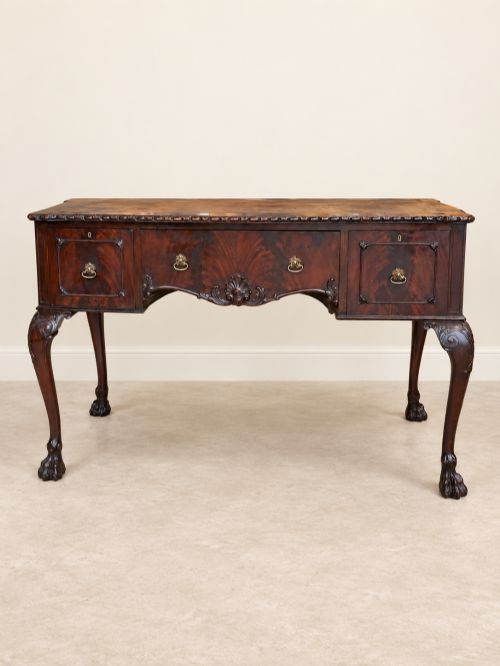
The choice of timber figure significantly alters the character of a desk, ranging from straight-grained mahogany to richly figured flame patterns. The depth of hand-carved details in styles like Chippendale revival reflects the time invested by the cabinetmaker.
Fitted interiors demonstrate superior craftsmanship through compartmentalised stationery drawers, secret compartments, and integrated writing slides. The presence of maker stamps or signatures from established firms adds documented provenance.
Hardware integrity, such as original brass handles and working locks with matching keys, distinguishes retained originality from later replacements. The quality of secondary timbers used inside drawers indicates the overall standard of manufacture.
Object forms span pedestal desks, writing tables, cylinder desks, and revolving desk chairs.
Trollope & sons·Edwards & Roberts·James Mein of Kelso·Hobbs & Co.·Holland & Sons
The Vintage Mahogany Office Desk Glossary
- Pedestal desk
- A heavy freestanding desk comprising two supporting pedestals of drawers with a central connecting section.
- Partners desk
- A large double-sided desk designed for two people to work opposite one another simultaneously.
- Writing table
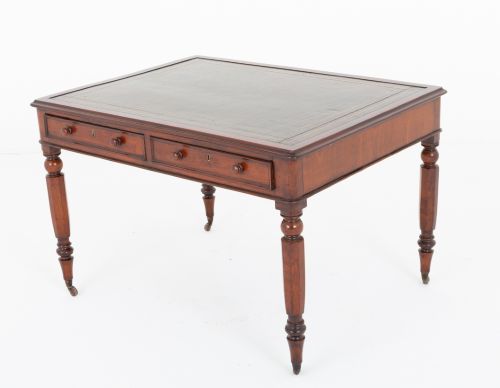
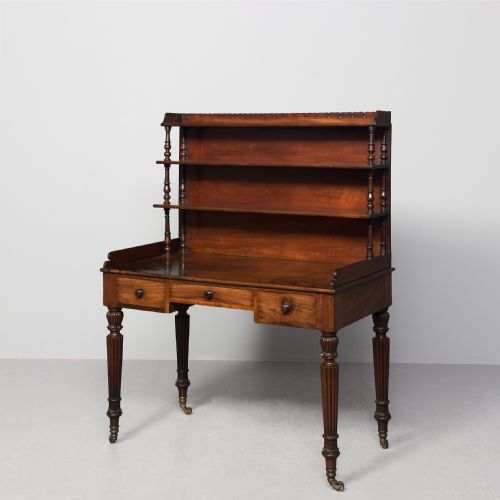
- A freestanding table with one or more drawers beneath the top, lacking the heavy pedestal banks of a standard office desk.
- Cylinder desk
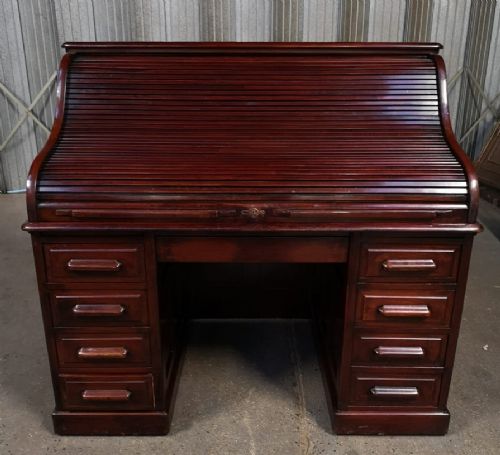
- A desk featuring a quarter-cylinder rolling wooden shutter that conceals the writing surface and interior pigeonholes.
- Kneehole desk
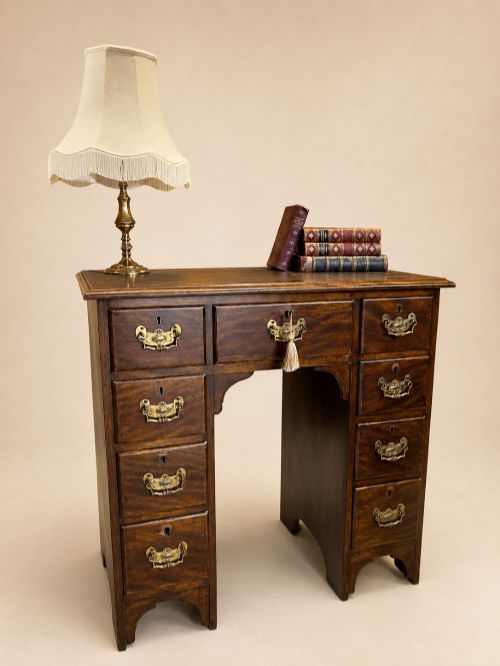
- A compact desk with a central recess for the user's legs, flanked by single or double columns of drawers.
- Partnership
- Refers to desks built with matching drawer configurations on both the front and back elevations.
Vintage Mahogany Office Desk: Frequently Asked Questions
How do I identify a Victorian pedestal desk?
Victorian pedestal desks typically feature substantial mahogany construction with hand-dovetailed drawer linings and turned wooden knobs or brass drop handles. They often include a tooled leather inset on the top surface.
Closer inspection reveals the use of secondary timbers like deal or oak inside the drawers, alongside characteristic nineteenth-century locking mechanisms stamped by makers of the era.
What is the difference between a writing table and a pedestal desk?
A writing table stands on four legs with one or more shallow drawers beneath the top edge, offering an open and lighter appearance. A pedestal desk replaces the legs with two solid banks of drawers reaching down to the floor.
Pedestal variants provide significantly more storage capacity and a heavier architectural presence suitable for formal studies, whereas writing tables suit smaller rooms.
Are cylinder desks practical for daily computer use?
Cylinder desks provide a concealed workspace where the rolling tambour shutter closes completely to hide papers and stationery. The interior contains pigeonholes and small drawers originally built for manual correspondence.
Modern users must measure the depth of the pull-out writing slide and the interior knee clearance carefully to ensure adequate space for contemporary technology.
How should I care for a mahogany desk surface?
Mahogany surfaces benefit from regular dusting with a soft, dry cloth to prevent abrasive particles from settling into the grain. Periodic application of traditional beeswax helps maintain the lustre of the polished wood without building up heavy chemical residues.
Placing leather-topped desks away from direct sunlight prevents the coloured hide from fading and drying out over time.