



Victorian Revival Partners Desk
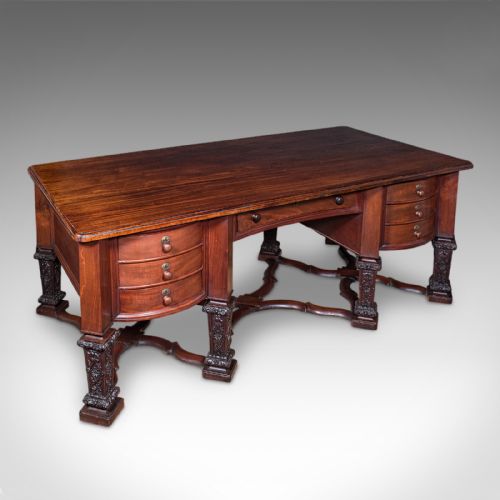
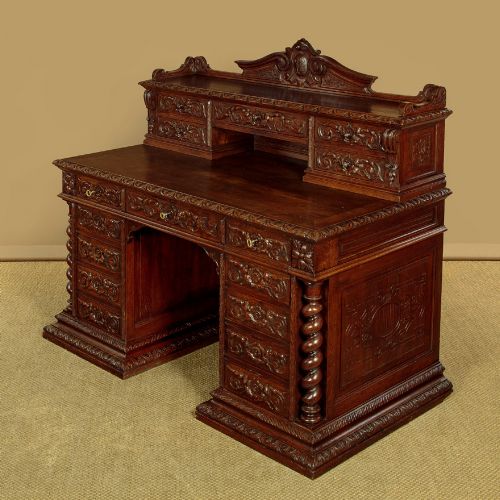
A victorian revival partners desk is a substantial double-sided workspace built for two people to face each other across pedestal drawers.
Victorian Revival Partners Desk
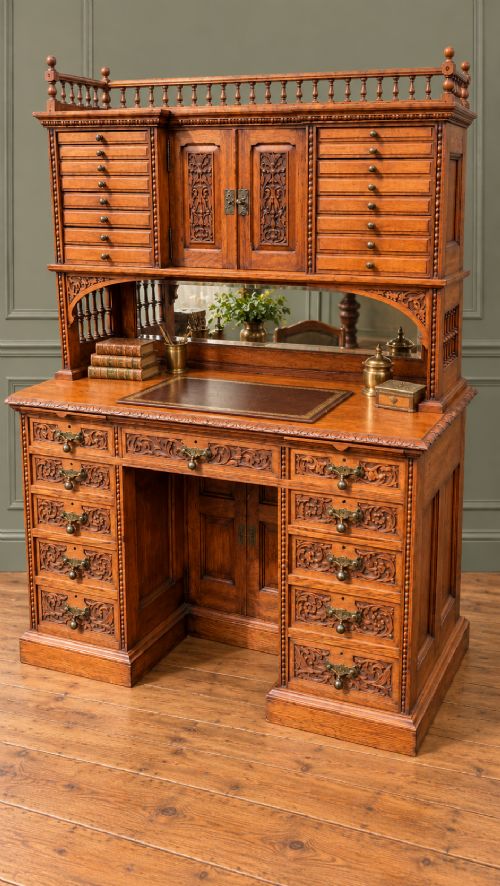
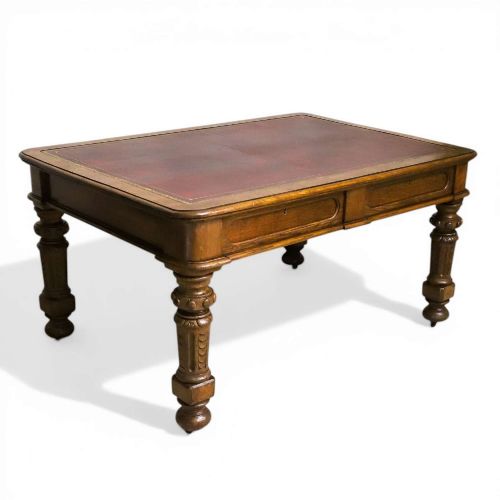
A victorian revival partners desk brings together substantial double-sided workspace forms and revival design movements across the nineteenth century and later periods. The examples found here take the shape of kneehole desks, library tables, and pedestal desks designed to stand free in the room rather than against a wall.
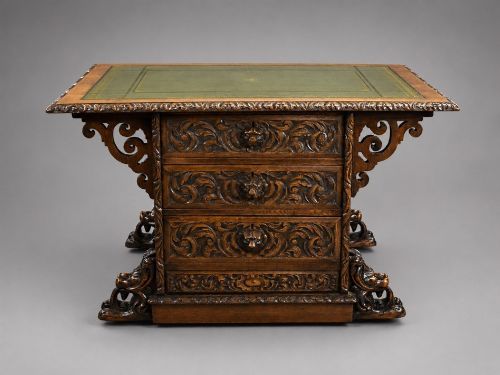
The aesthetic vocabulary draws heavily from historical revivals, encompassing Gothic, Chippendale, Louis XIV, Louis XV, and Renaissance styles applied to robust forms. Oak and mahogany provide the primary structural carcasses, complemented by specific surfaces and mounts.
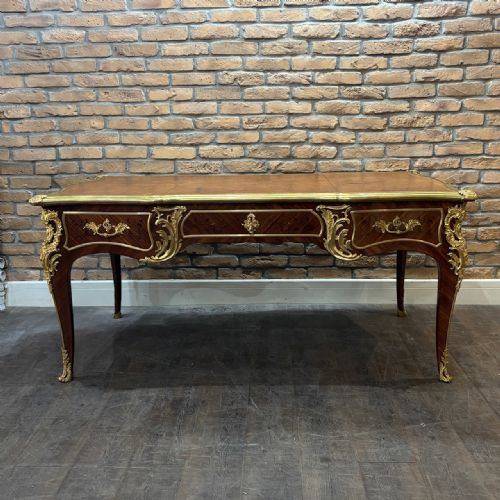
Buyers encounter pieces ranging from straightforward nineteenth-century oak examples to heavily carved mahogany interpretations and ebonised pieces with ormolu mounts. These large double-sided tables served administrative and clerical roles in libraries and offices where two individuals needed independent storage and writing space.
Quality factors in construction and design
The standard of timber selection and the complexity of the carving separate standard workshop production from exceptional pieces. Figured mahogany and burr walnut demand superior cabinetmaking skill to stabilise veneers across large surfaces without splitting.
The integration of double-sided functionality requires precision joinery so that drawers operate smoothly from both faces of the pedestal. Decorative hardware, from cast brass handles to chased ormolu mounts, indicates the level of investment in the original commission.
Victorian Revival Partners Desk Retail Price Guide 2026
Typical asking prices for victorian revival partners desk among the pieces listed under this phrase on Sellingantiques today, from the lower quarter to the upper quarter. They describe what is for sale here now, not the wider market.
Burr walnut veneers hide complex natural wood knots that look surprisingly like miniature landscape paintings.
The Victorian Revival Partners Desk Glossary
- Partners desk
- A large double-sided writing table featuring drawers and cupboards on both faces so two people can work opposite each other. These desks traditionally stood in the centre of libraries or boardrooms.
- Pedestal desk
- A heavy writing table supported by two upright stacks of drawers with a central kneehole space. They provide substantial enclosed storage beneath the main writing surface.
- Ormolu
- Gilded bronze mounts applied to furniture for decorative enrichment. These metallic details highlight corners, drawer edges, and friezes on revival pieces.
- Kneehole desk
- A compact or full-sized writing table with a central recess for the user's legs flanked by banks of drawers. They offer a neat footprint while maintaining generous storage.
Victorian Revival Partners Desk: Frequently Asked Questions
Can a partners desk float in the middle of a room?
These pieces are specifically engineered to stand free in an open space because both sides feature finished drawer fronts and panelled modesty boards. They do not require a wall to anchor them.
Positioning the desk away from walls allows unobstructed access to the drawers and writing surfaces from opposite directions, fulfilling its original purpose.
How do I care for the leather writing surface?
Leather inserts require gentle dusting and occasional conditioning with appropriate leather balms to prevent drying and cracking over time. Avoid harsh chemical cleaners that can strip the original dyed finish.
Protecting the hide from direct sunlight prevents fading and preserves the tactile quality of the writing plane.
What distinguishes Gothic revival from Chippendale revival desks?
Gothic revival pieces utilise pointed arches, heavy chamfering, and medieval-inspired tracery carved directly into the solid oak framework. The overall impression is architectural and severe.
Chippendale revival examples lean towards eighteenth-century mahogany traditions, often displaying carved cabriole legs, serpentine fronts, and elaborate foliage motifs.
How do pedestal desks differ from library tables?
Pedestal desks incorporate enclosed banks of drawers beneath the writing surface, providing substantial fixed storage on both sides. They offer a heavier, more compartmentalised silhouette.
Library tables rely on simpler trestle or leg supports with occasional frieze drawers, prioritising an open under-desk space over banks of vertical storage.