
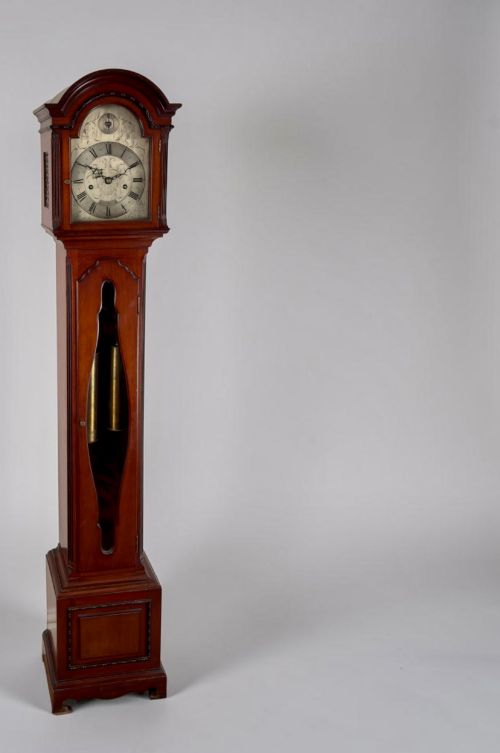
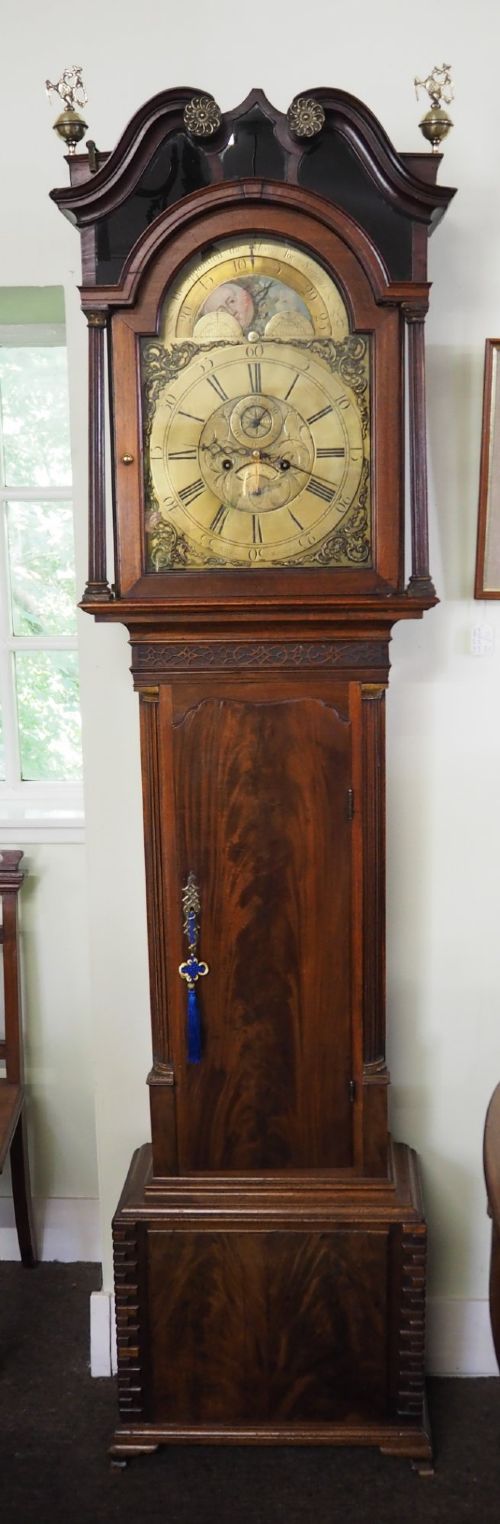
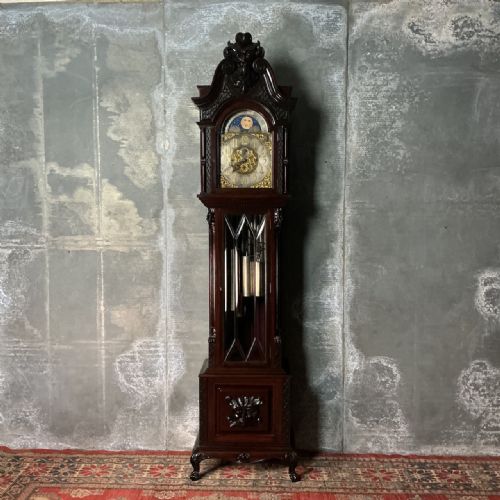
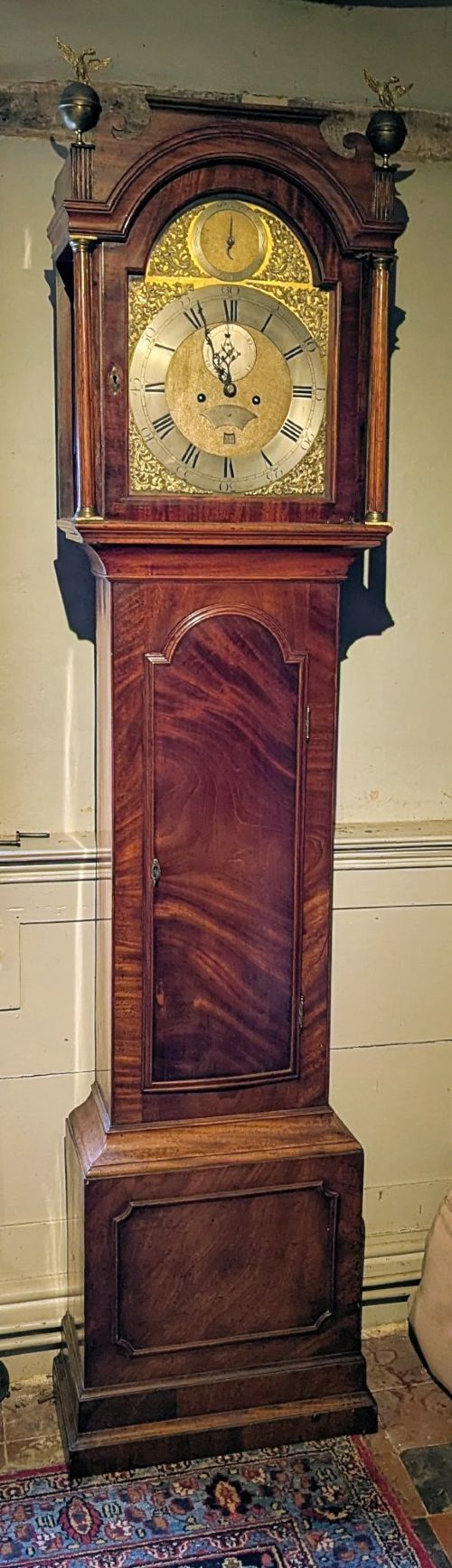
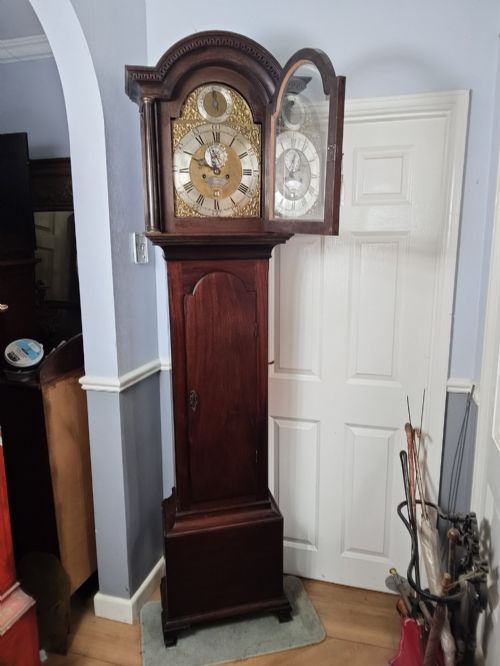
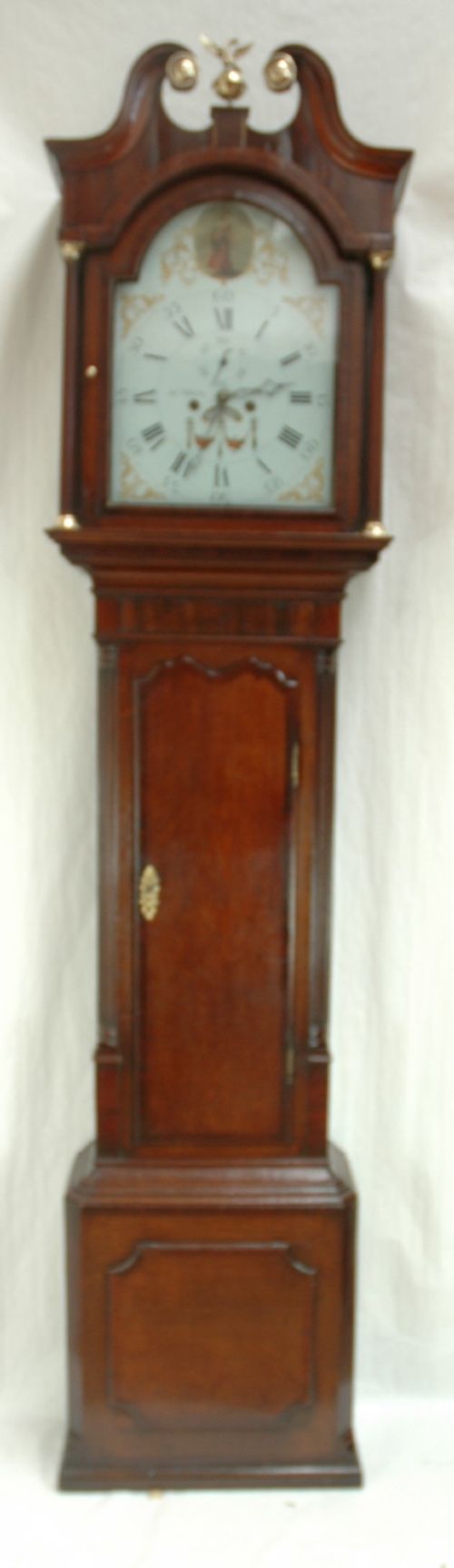
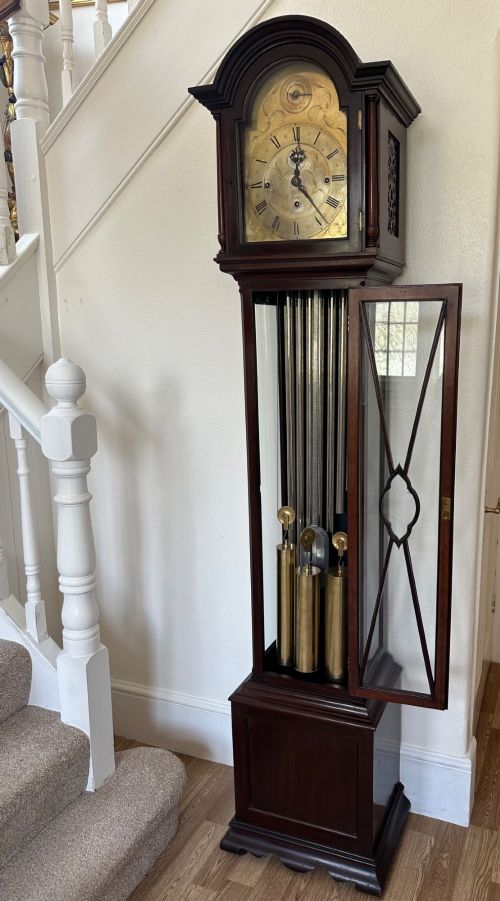
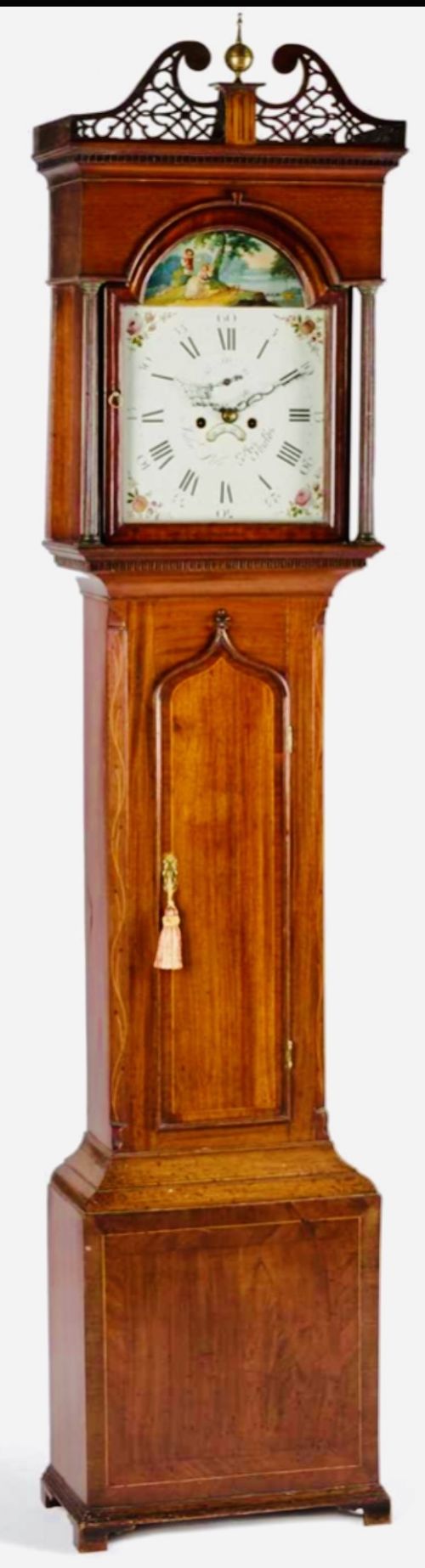
Vintage Mahogany Floor Clock
A vintage mahogany floor clock brings the steady pulse of ticking time and fine cabinetmaking into a room.
Vintage Mahogany Floor Clock
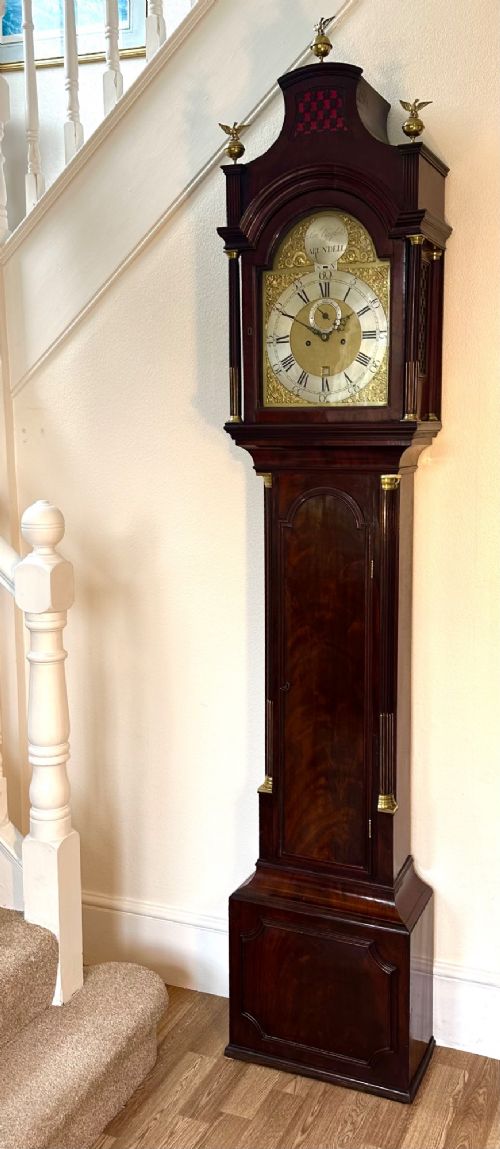
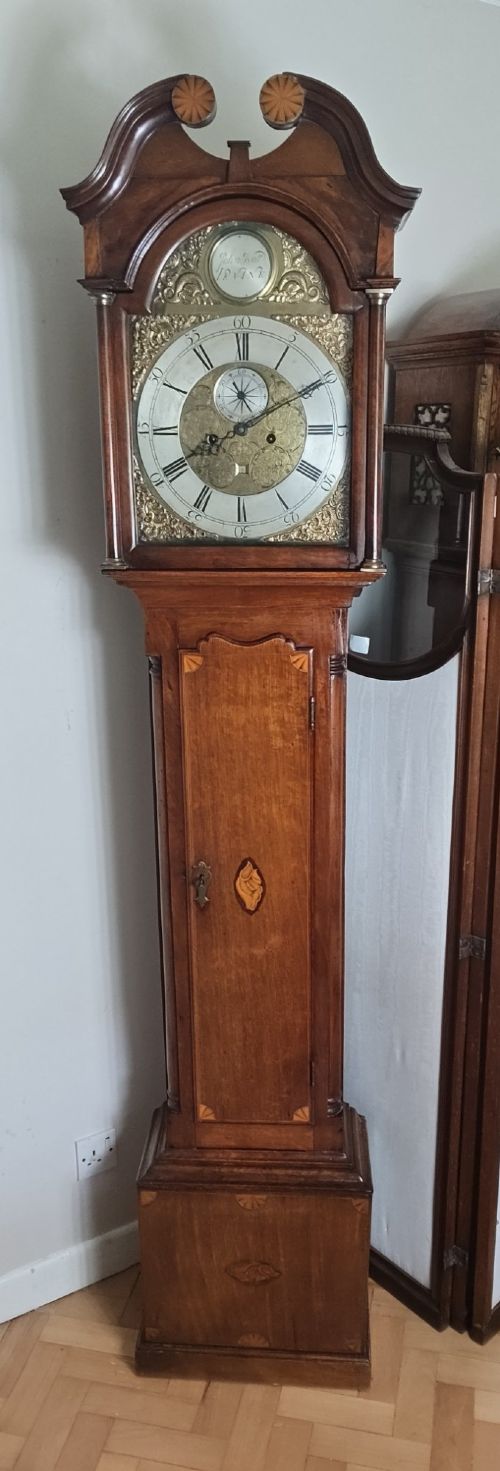
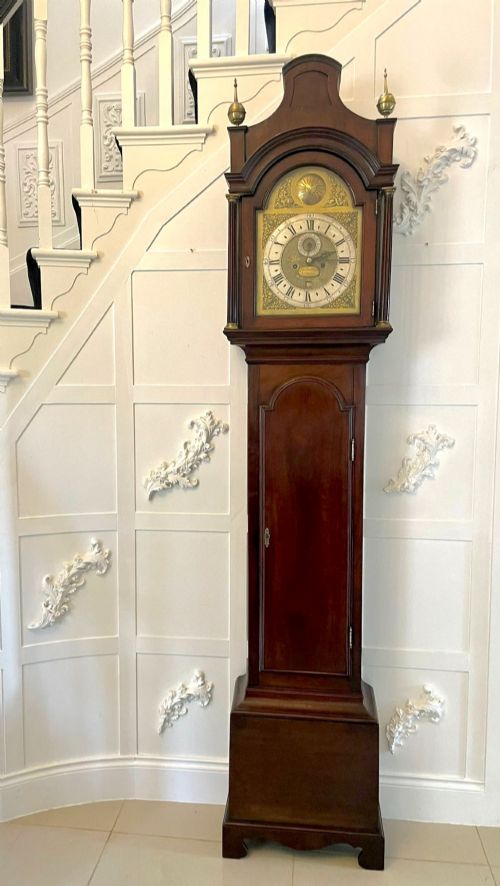
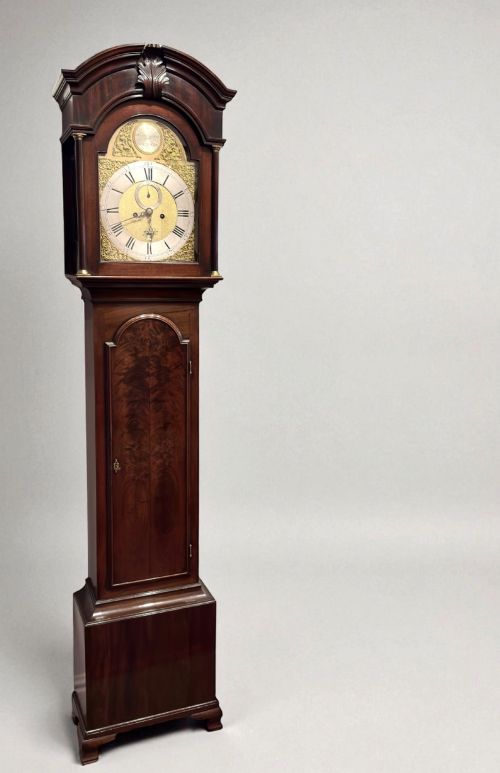
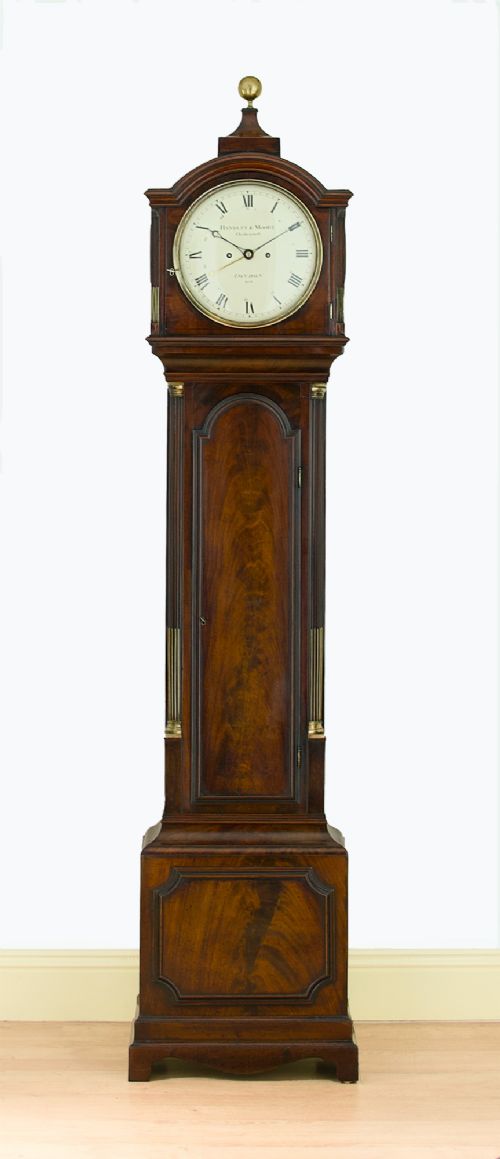
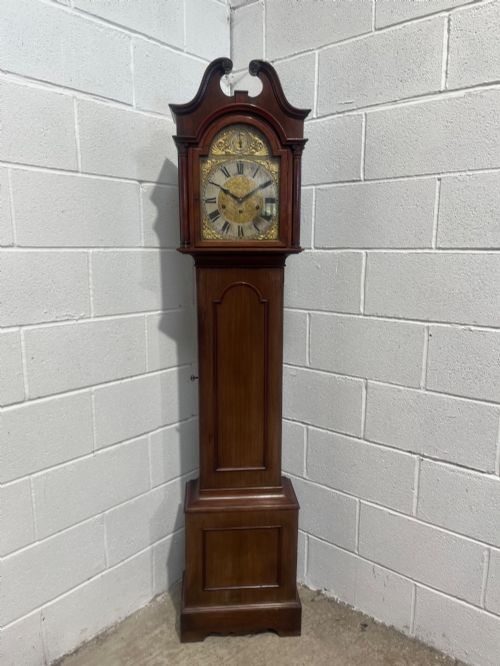
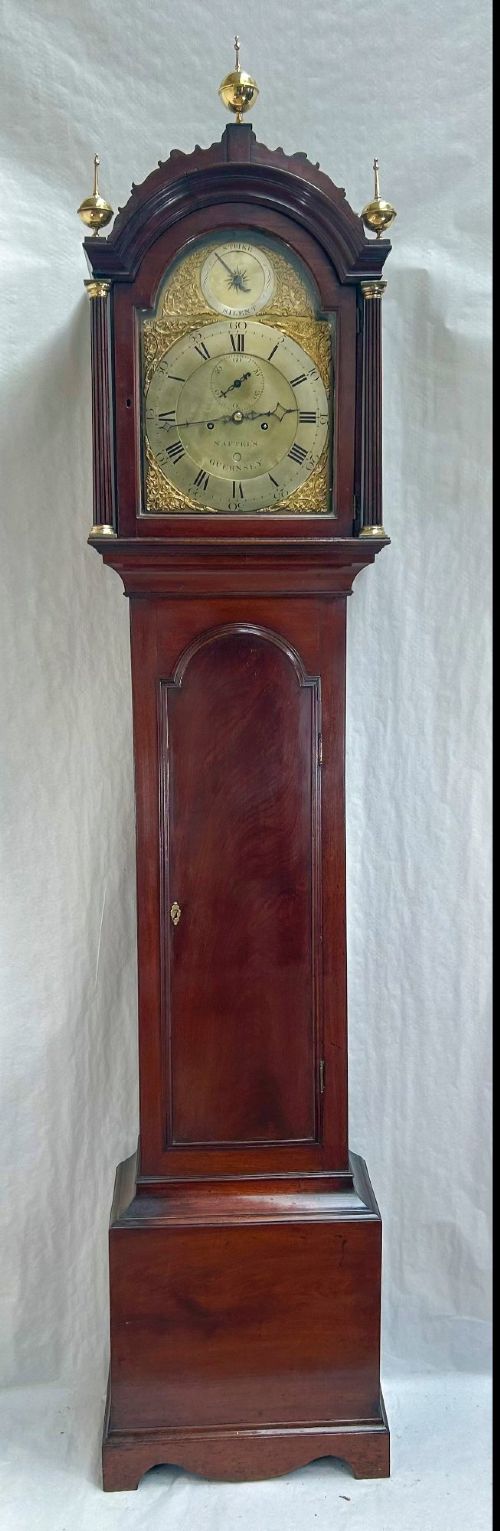
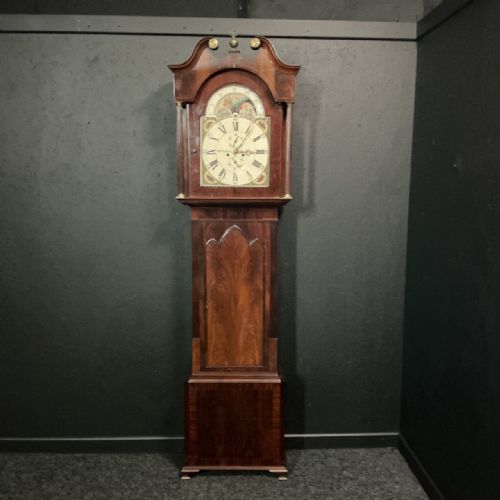
A vintage mahogany floor clock is a tall, weight-driven timekeeper housed in a wooden case, commonly known as a longcase or grandfather clock. These instruments measure time through the controlled swing of a pendulum suspended within the trunk, protected by a glazed door.
The selection ranges from robust Georgian and Regency examples to Edwardian and later reproductions or smaller granddaughter and grandmother clocks. Most pieces encountered here combine functional mechanical movements with tall timber housings built to stand directly upon the floor.
Materials and construction
Internal mechanisms rely on complex gear trains forged from steel and brass, driven by suspended weights or springs. Cases typically incorporate glass panels within the hood to display the dial and face while protecting the delicate hands and numerals from dust.
Listings feature mahogany, oak, brass, glass, steel, enamel, and satinwood across Georgian, Victorian, and Edwardian periods.
Evaluating craftsmanship
Quality separates plain utility timepieces from exceptional cabinetwork through the precision of the wood figuration and the sophistication of the internal movement. Superior examples exhibit intricate marquetry, balanced proportions across the hood, trunk, and base, and signed dials by known makers.
The tier of a clock also rests on the complexity of its striking mechanism, whether operating on simple bells, gongs, or musical tubular chimes. Better movements maintain time reliably and show refined hand-engraving upon the brass dial plates.
Charles Shuckburgh, London·Gordon of Aberdeen·Gillett & Johnston of Croydon·Handley & Moore, London·George Hallifax Of Doncaster·Edward Shepley of Manchester·Charles Dowsett Of Canterbury·John Denbigh, Merton Park
The Vintage Mahogany Floor Clock Glossary
- Longcase clock
- A tall pendulum clock enclosed in a wooden case resting on the floor. This term is often interchanged with grandfather clock.
- Grandmother clock
- A smaller, more compact version of the traditional longcase clock, typically produced during the Edwardian period.
- Flame mahogany
- A decorative wood veneer displaying a distinctive flame-like grain pattern, achieved by cutting across the branch forks of the tree.
- Moonphase
- A specialised dial mechanism that tracks the lunar cycle alongside standard hours and minutes.
- Three train
- A mechanical movement configuration designed to drive timekeeping, striking, and chiming functions independently.
Vintage Mahogany Floor Clock: Frequently Asked Questions
How do I wind a floor clock?
Winding requires using a specialised crank key inserted into the winding holes on the dial face to slowly draw the internal weights back to the top. Care must be taken not to over-wind the mechanism.
Different movements require attention either weekly or at longer intervals depending on the gear train configuration and whether the clock utilises weights or springs.
What is the difference between a grandfather and grandmother clock?
A grandfather clock is the standard full-sized tallcase clock, while a grandmother clock is a notably smaller version standing lower to the ground. These smaller variants became particularly popular during the Edwardian era.
Both serve the same mechanical function but cater to different ceiling heights and interior proportions.
Can these clocks still keep accurate time?
Properly serviced mechanical movements can maintain reliable time, though minor adjustments to the pendulum bob are often necessary to account for seasonal temperature shifts. Professional calibration ensures the escapement functions correctly.
Regular oiling and leveling against the wall are essential to keep the beat even and prevent the clock from gaining or losing minutes.
How do I identify the period of a mahogany case?
Period identification relies on observing the architectural details of the hood, the choice of timber veneer, and the style of the brass dial. Georgian pieces often feature simpler arched faces and solid timber construction, whereas Edwardian examples may show extensive marquetry inlay.
Signatures inscribed directly onto the brass or enamel dial provide the most reliable clue to the workshop of origin.