


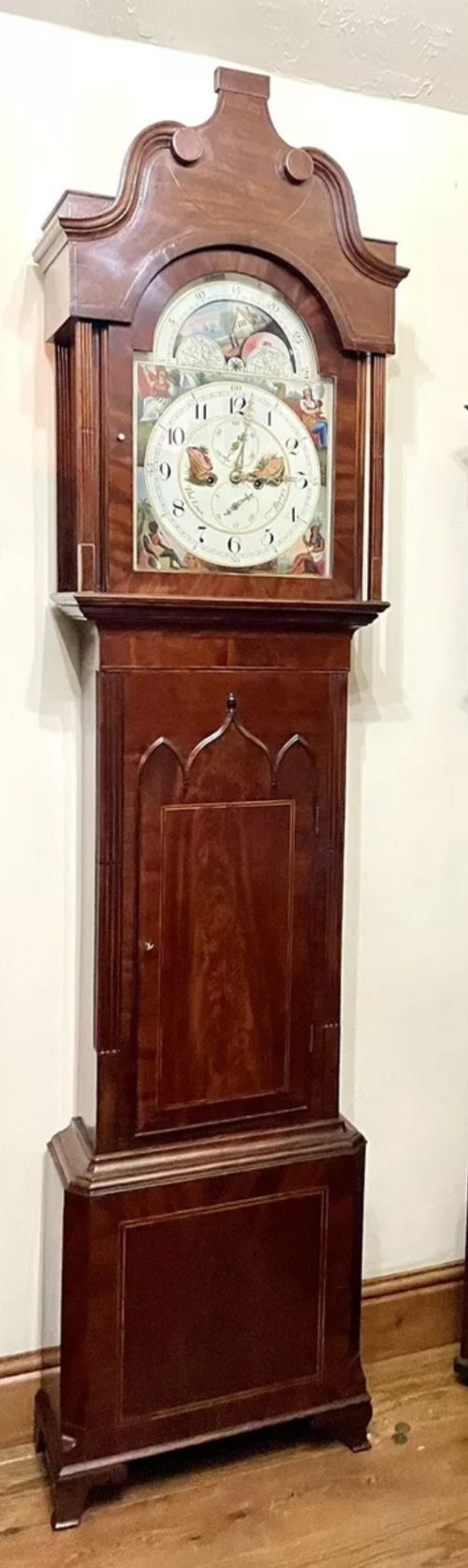

Inlaid Mahogany Floor Clock
An inlaid mahogany floor clock brings the steady tick of centuries into a room through rich timber and careful detail.
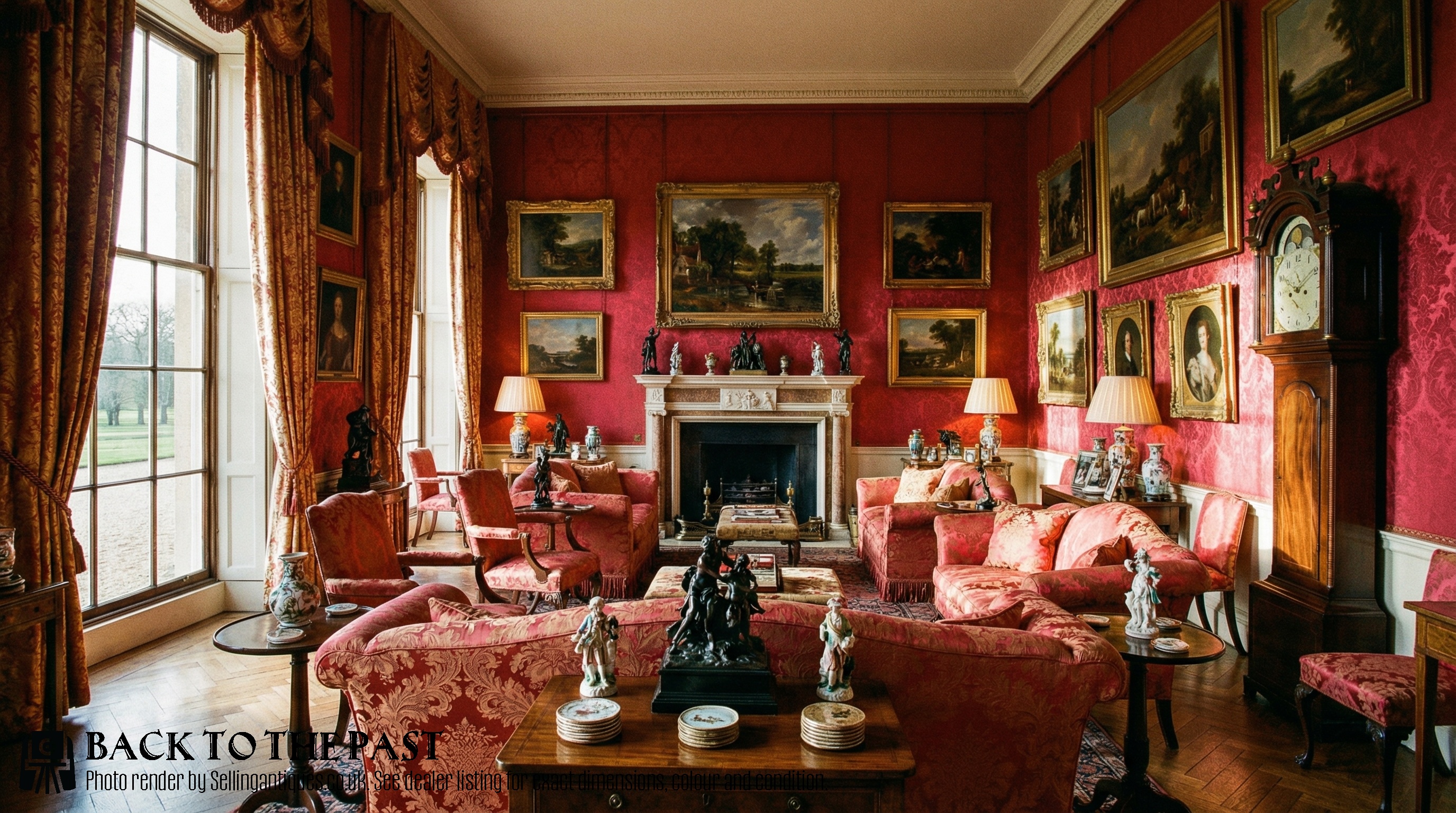
Inlaid Mahogany Floor Clock
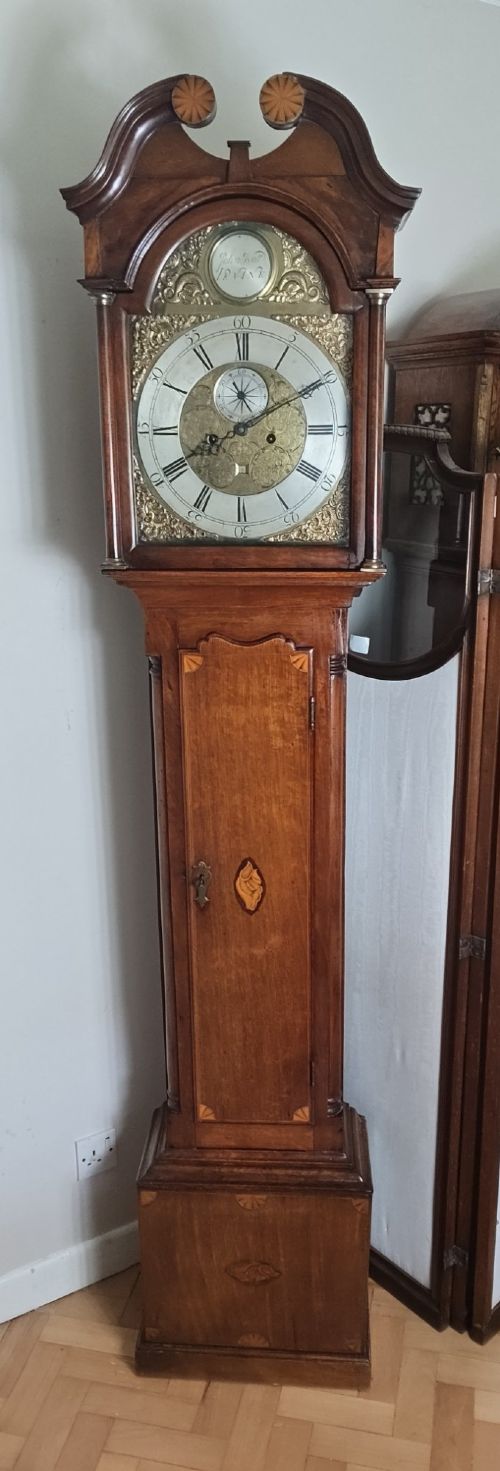
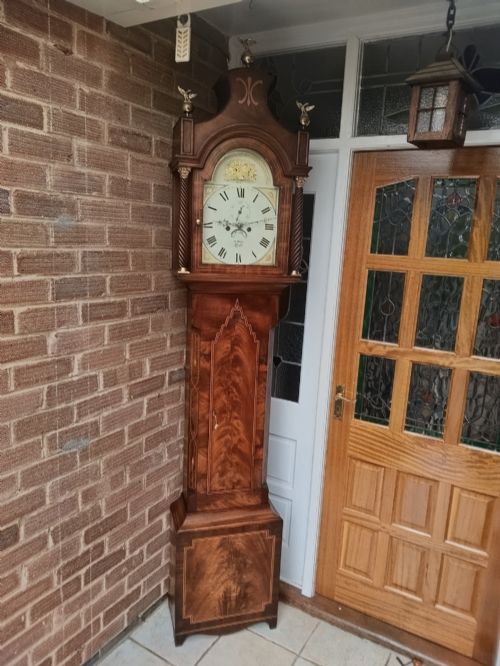
An inlaid mahogany floor clock stands tall in a room, combining architectural cabinet work with precise horology. These pieces measure time through swinging pendulums and falling weights housed within timber cases.
Most examples on this page date from the Georgian period through to the Edwardian era, spanning the eighteenth, nineteenth, and early twentieth centuries. The listings include traditional longcase clocks, grandfathers, and smaller grandmother variants.
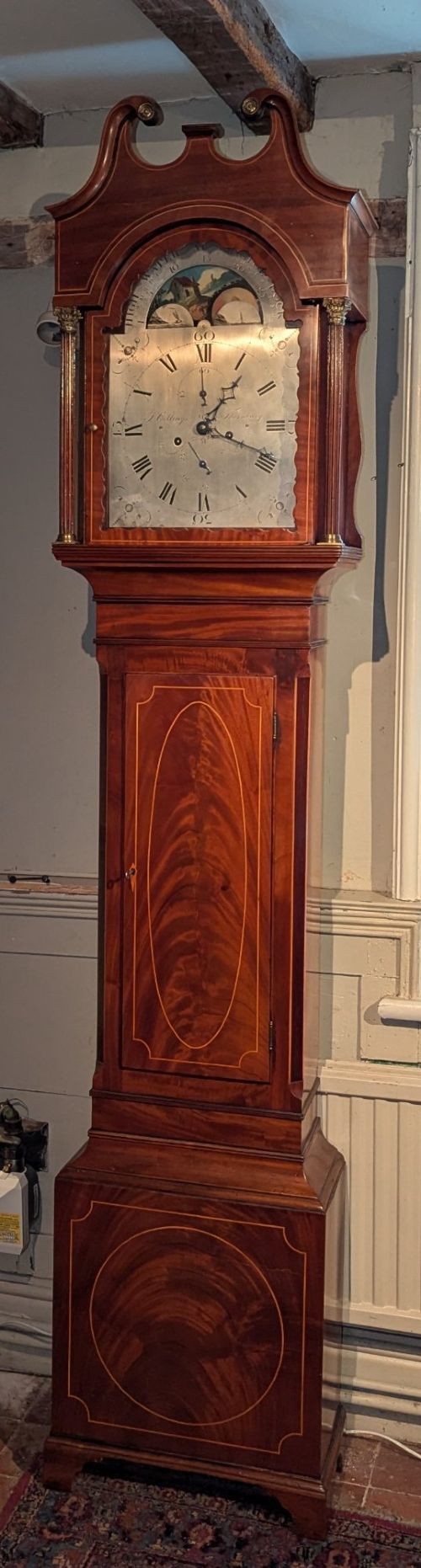
Regional makers from London to Scotland and the Channel Islands contributed distinct dial work and cabinet proportions. Buyers encounter both simple brass dial faces and complex painted moon phase indicators.
What varies in quality
Quality rests in the harmony between the cabinet maker's joinery and the horologist's movement. Finer pieces demonstrate precise marquetry and crisp satinwood inlay that remains flush with the surrounding mahogany timber.
The sophistication of the movement dictates the upper tier of pieces, particularly those with musical chimes, moon phases, or alarm mechanisms. Signed dials from notable makers establish a stronger provenance than unsigned workshop pieces.
Several makers fitted tidal dials and moon phases, proving that past owners needed to track the sea as much as the hour.
John Denbigh·David Morice·Thomas Lees·Thomas De Gruchy·Furnival Oldham·William Smith·R Lawson·Edward Glase·Edward Renouf·Joseph Lum·Sam Robson·Iames Richards
The Inlaid Mahogany Floor Clock Glossary
- Longcase clock
- A tall pendulum clock enclosed in a wooden case standing directly on the floor. This term is often interchanged with grandfather clock.
- Moon phase
- A dial mechanism tracking the lunar cycle through a rotating painted disc behind the clock face. This complication added both utility and visual interest to the dial.
- Marquetry
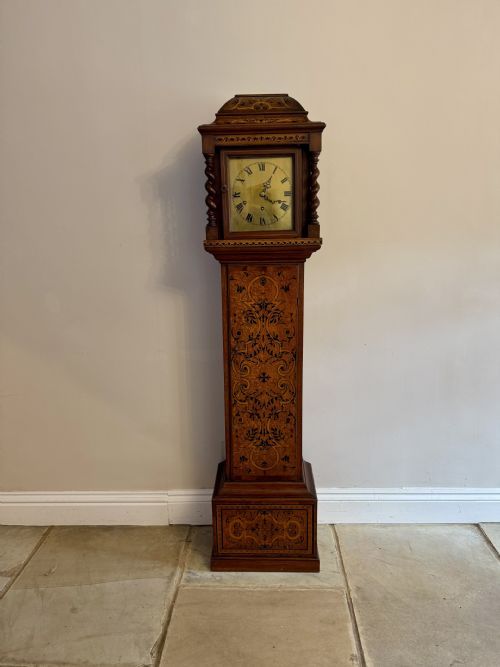
- Decorative inlay work using various coloured woods to form pictorial patterns on the clock case. Artisans fitted these veneer pieces meticulously into the primary mahogany surface.
- Paterae
- Small circular decorative motifs carved or inlaid into furniture surfaces during the Georgian and Regency periods. They frequently appear on the swan neck pediments of tall clocks.
- Flame mahogany
- Timber cut from the fork of the mahogany tree to produce a distinctive flickering flame-like grain pattern. Cabinet makers reserved this highly figured wood for prominent display areas on clock doors.
Inlaid Mahogany Floor Clock: Frequently Asked Questions
How do I wind an eight day clock?
An eight day clock requires winding approximately once a week using a matching crank key on the dial face. Care must be taken not to overwind the weights or springs.
Most movements use two key holes to power the timekeeping and the striking train separately. Regular servicing by a horologist keeps the brass and steel gears running smoothly.
What is the difference between a grandfather and grandmother clock?
Grandfather clocks are the standard full-sized tallcase clocks standing over six feet tall. They were built to house long pendulums and heavy weights.
Grandmother clocks are smaller, more slender versions produced later, particularly during the Edwardian period. They fit into lower ceilings and tighter spaces while retaining traditional mechanical movements.
How do I date a mahogany longcase clock?
Dating relies on a combination of cabinet style, wood selection, and the signature of the maker inscribed on the dial. Georgian pieces display different proportions and architectural pediments compared to later Edwardian examples.
Secondary woods inside the case and the style of the brass dial corners also provide clues to the decade of manufacture. Signed dials allow researchers to cross-reference active working dates of regional clockmakers.
Where should I place a floor clock in my home?
A floor clock requires a stable, level floor away from direct sunlight and strong temperature fluctuations. Exterior walls are often avoided if dampness affects the wood and movement.
Securing the tall wooden case to the wall using discreet brackets prevents tipping, especially in homes with children or pets. Proper placement ensures the pendulum swings evenly without interference.