

Vintage Mahogany Drop Leaf Table
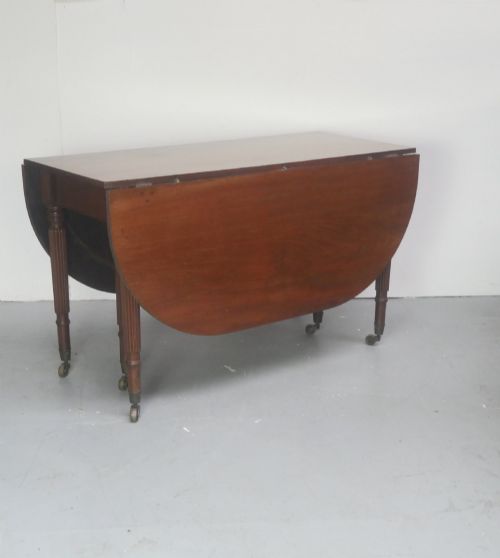
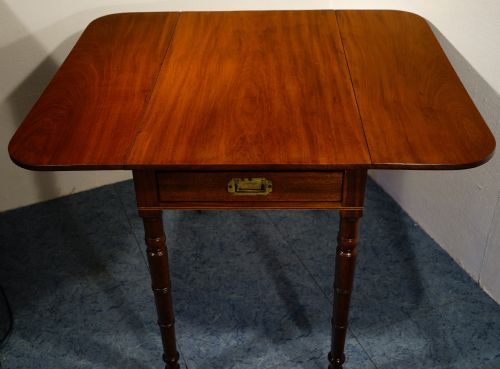
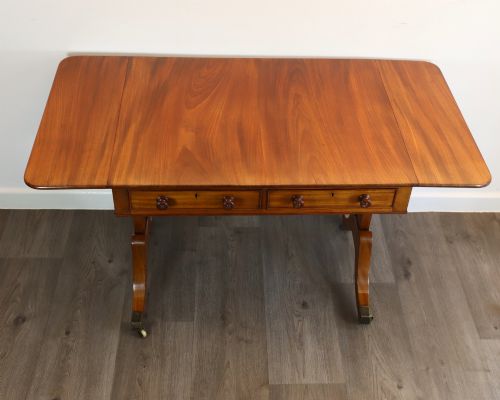
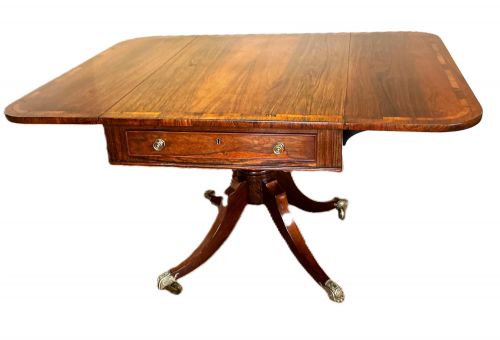
A vintage mahogany drop leaf table offers folding flexibility and rich timber grain, moving easily from a compact surface to a dining board.
Vintage Mahogany Drop Leaf Table
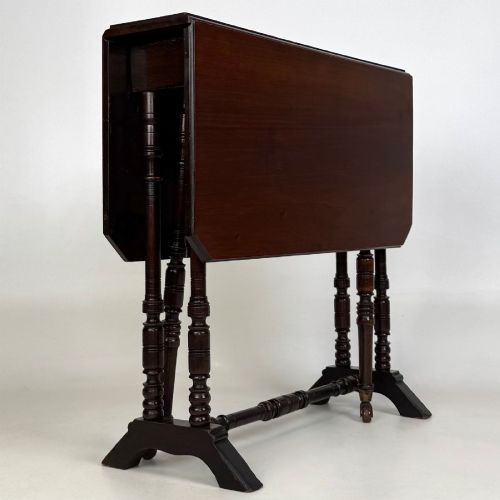
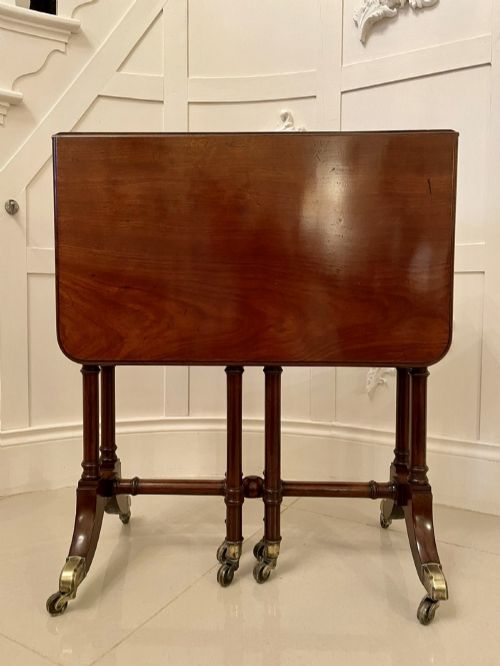
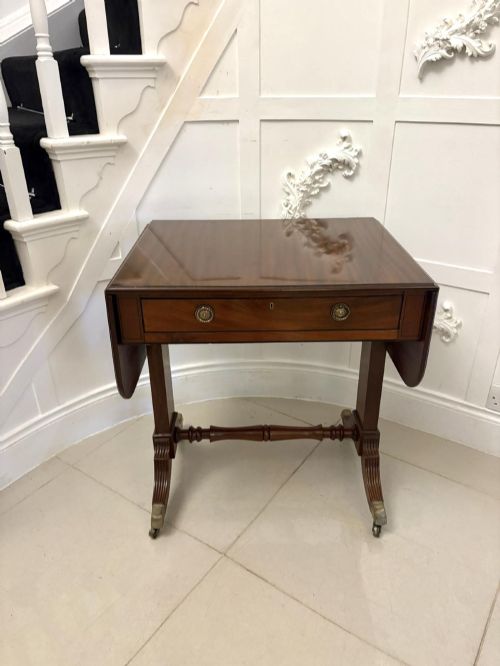
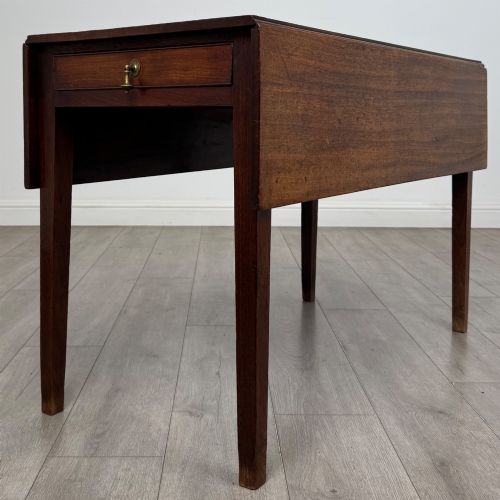
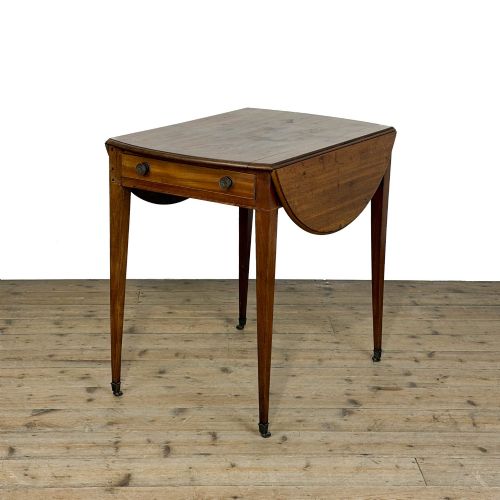
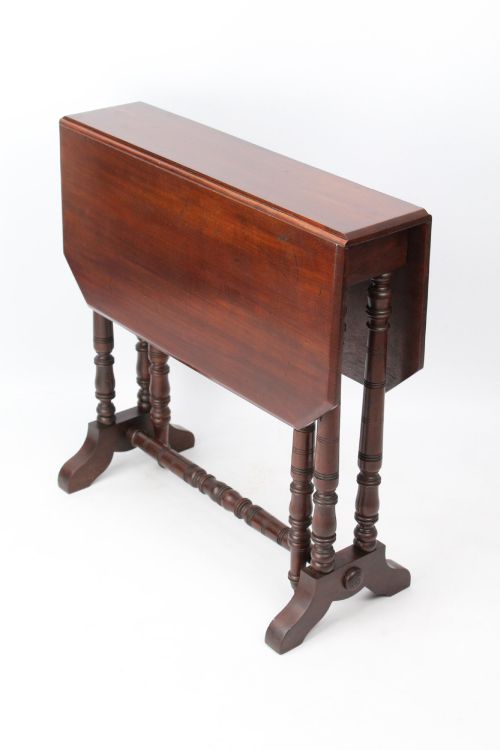
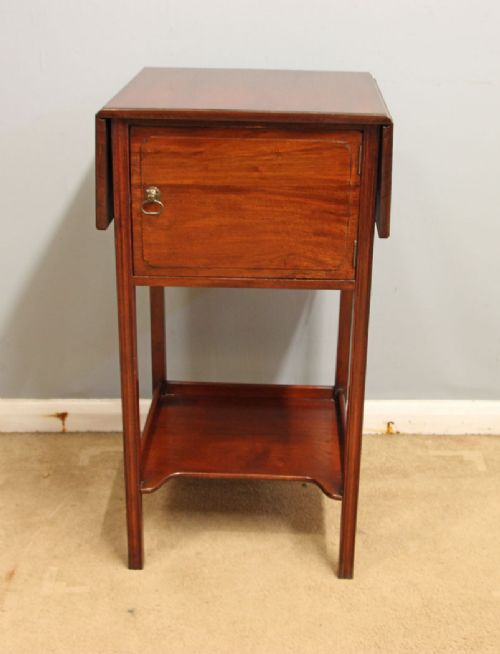
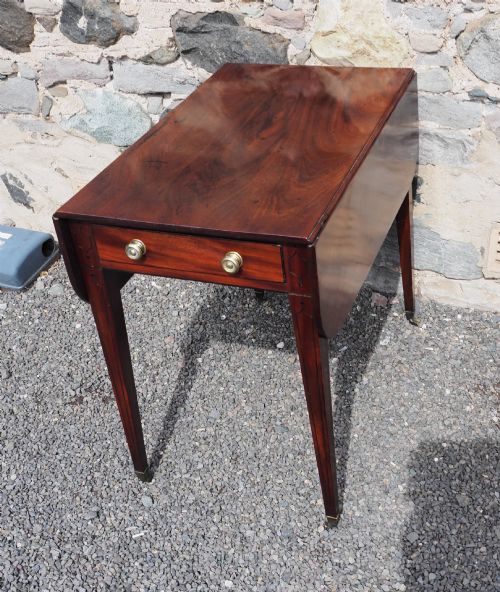
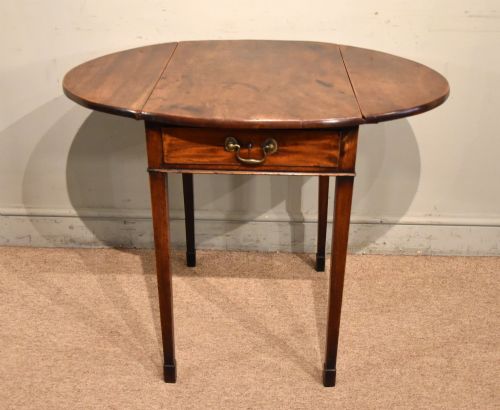
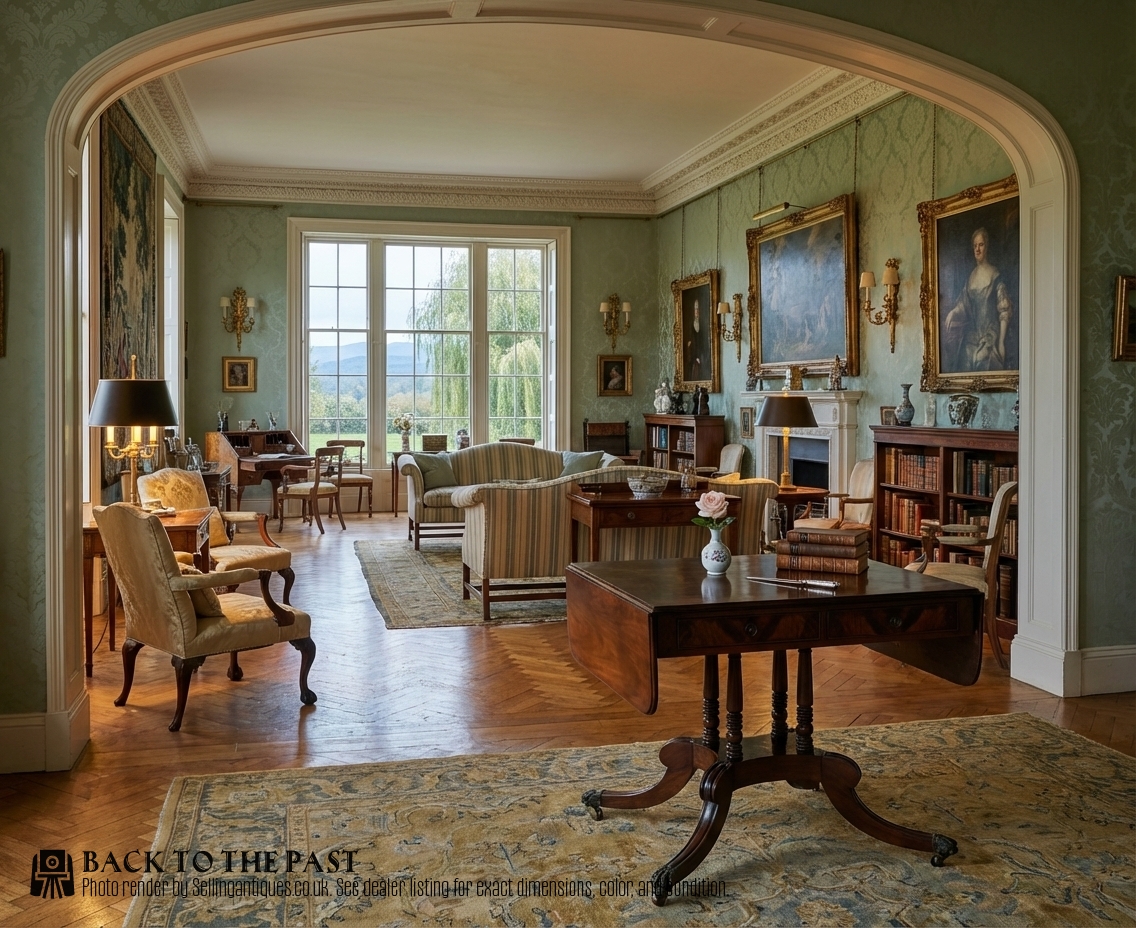
A vintage mahogany drop leaf table provides a versatile surface that expands when flaps are raised and drops away when floor space is needed. Buyers searching this phrase encounter forms ranging from small Pembroke and Sutherland tables to large dining and gateleg variants.
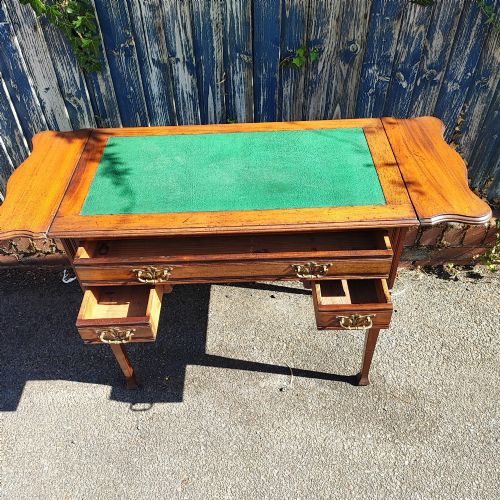
The material palette is predominantly mahogany, often enriched with brass castors, boxwood stringing, or satinwood inlay. Pieces span several centuries, including Georgian, Regency, Victorian, and Edwardian eras, reflecting changing domestic requirements for tea, work, and dining.
Makers produced these tables as functional furniture for drawing rooms, parlours, and dining spaces. The folding mechanisms rely on gatelegs, hinged brackets, or Pembroke flaps supported by pivoting wooden arms.
How they were made
Cabinetmakers constructed these tables using solid mahogany or dense mahogany veneers laid over secondary framing timbers. Workshops frequently incorporated satinwood and boxwood inlay to create geometric banding or central motifs on table tops.
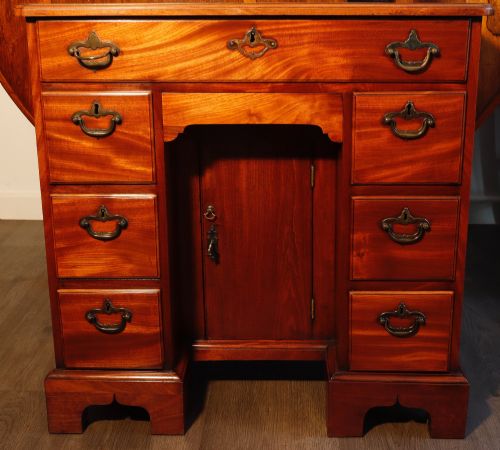
Hardware such as brass castors, hinges, and drop handles provided mobility and operational strength to folding leaves. Joints were typically joined using traditional mortise and tenon construction to withstand the daily movement of the drop leaves.
Listings feature mahogany, satinwood, boxwood, and brass across Georgian, Victorian, and Edwardian periods.
What varies in quality
The distinction between standard domestic pieces and superior examples rests on the choice of timber and the precision of the cabinetwork. Figured mahogany with deep, natural chatoyancy marks the better examples, whilst simpler constructions utilise plain timber boards.
Refinement in secondary details, such as finely executed string inlay, solid brass fittings, and smooth hinge operation, separates standard workshop output from exceptional furniture. The stability of the frame when the leaves are fully extended also indicates higher manufacturing standards.
Andrew Thomson And Sons
The Vintage Mahogany Drop Leaf Table Glossary
- Pembroke table
- A small rectangular table featuring two hinged drop flaps on opposing sides, frequently fitted with one or more small drawers.
- Sutherland table
- A narrow table type with exceptionally slender drop leaves supported by swing legs, designed to fold down completely flat.
- Gateleg table
- A table with hinged legs that swing outward like a gate to support the drop leaves when raised.
- Satinwood inlay
- A contrasting golden-yellow wood inserted into the mahogany surface to form decorative borders or patterns.
- Boxwood stringing
- A thin line of pale wood inlaid into channels cut into the darker mahogany top or legs for visual definition.
Vintage Mahogany Drop Leaf Table: Frequently Asked Questions
How do I use a drop leaf table daily?
Raise the hinged flaps when you need extra surface area for dining, writing, or serving tea. Drop the leaves down again to tuck the table compactly against a wall or in a corner when floor space is restricted.
Ensure any supporting swing legs or pivoting brackets are securely positioned beneath the leaves before placing items on top. Treat the polished timber surface with care by using coasters and avoiding excessive moisture.
How can I tell a Georgian table from an Edwardian one?
Georgian tables, dating from the eighteenth and early nineteenth centuries, often display heavier proportions, dense figured mahogany, and restrained classical lines. Cabinetmakers of this era relied on structural joinery and subtle carving rather than surface decoration.
Edwardian pieces, made around nineteen hundred, frequently exhibit lighter framing, decorative satinwood inlay, and revival styles influenced by earlier periods. They tend to incorporate factory-made brass fittings and lighter secondary timbers.
Are these tables suitable for small apartments?
These tables adapt well to restricted spaces because their folding leaves allow you to alter their footprint instantly. You can keep both leaves dropped for everyday clearance and raise one or both when hosting guests.
Their narrow profile when closed means they fit easily into hallways, living rooms, or bedrooms as side or occasional tables. The variety of sizes available ensures you can find a scale that matches your room dimensions.