





Vintage Mahogany Dining Suite
A vintage mahogany dining suite brings solid timber and traditional design to the table.
Vintage Mahogany Dining Suite
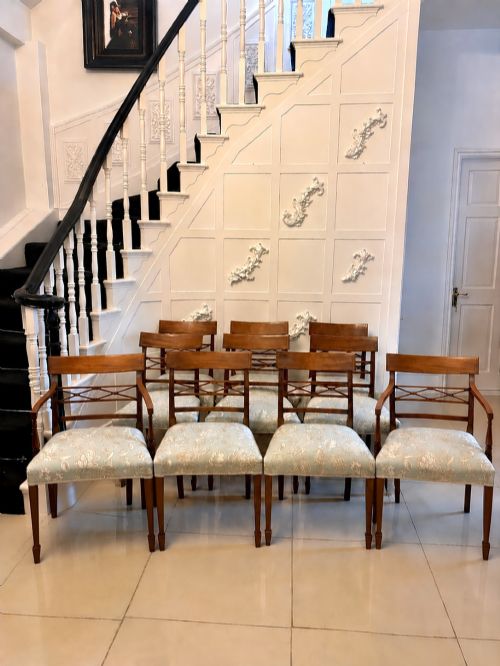
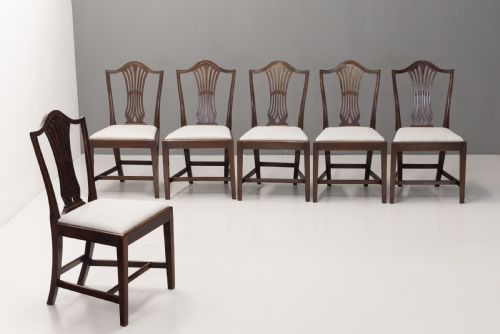
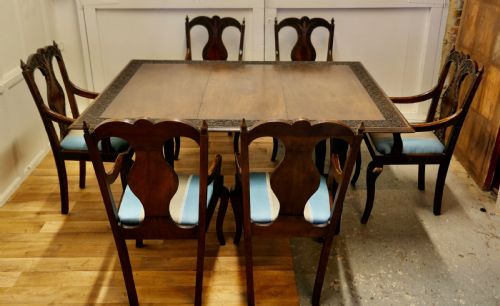
A vintage mahogany dining suite comprises matched seating and tables made from timber, often seen in Edwardian and Georgian revival styles. When buyers search for a vintage mahogany dining suite, they encounter sets of chairs and tables dating from the nineteenth and early twentieth centuries.
The selections range from modest four-chair sets to larger dining suites featuring carver armchairs and matching settees. Many pieces incorporate decorative details such as string inlay, satinwood, and marquetry.
Craftsmen built these dining suites using durable hardwoods like mahogany and walnut, styled after earlier Georgian, Chippendale, and Hepplewhite designs. Buyers frequently find Edwardian interpretations and revival pieces designed for formal dining rooms.
How they were made
Cabinetmakers constructed these dining suites primarily using solid mahogany and walnut timbers, valued for their strength and rich grain. Carpenters shaped chair frames and table supports through traditional joinery methods, ensuring structural stability for daily use.
Surface decoration often involved intricate marquetry and satinwood string inlay, contrasting lighter wood veneers against the darker mahogany base. Upholstered elements utilised traditional stuffing materials and fabrics, while some later or restored suites incorporated modern leather.
Vintage Mahogany Dining Suite Retail Price Guide 2026
Typical asking prices for vintage mahogany dining suite among the pieces listed under this phrase on Sellingantiques today, from the lower quarter to the upper quarter. They describe what is for sale here now, not the wider market.
What varies in quality
The standard of a vintage mahogany dining suite depends heavily on the precision of the cabinetwork and the execution of carved details. Finer sets display crisp lines in the Chippendale or Hepplewhite revival styles, with seamless joints and carefully matched timber grains.
Inlay work also distinguishes finer suites, where delicate satinwood stringing remains intact and flush with the surrounding mahogany surface. The selection of solid timber over inferior secondary woods dictates the longevity and visual weight of the suite.
Shoolbred
The Vintage Mahogany Dining Suite Glossary
- Mahogany
- A durable tropical hardwood known for its deep reddish-brown colour and fine grain. It serves as the primary structural material for most traditional dining furniture.
- Marquetry Inlay
- Decorative patterns formed by fitting contrasting veneer pieces into the wood surface. This technique creates intricate pictorial or geometric designs on tabletops and chair backs.
- Carver Armchair
- A dining chair featuring supportive armrests, traditionally placed at the head of the table. These chairs often accompany larger sets of side chairs.
- Satinwood
- A pale, lustrous timber used for contrasting stringing and decorative inlays on darker mahogany furniture. It adds brightness and detail to Edwardian and revival pieces.
- Georgian Revival
- A design movement that reinterprets eighteenth-century furniture forms. Suites in this style emulate the proportions and ornamentation favored during the Georgian era.
Vintage Mahogany Dining Suite: Frequently Asked Questions
How many chairs come in a typical dining suite?
Dining suites vary widely in size, ranging from smaller sets of four salon chairs to substantial groupings of ten or more. Many standard configurations include six side chairs alongside a pair of carver armchairs.
Buyers should verify the exact composition of each set, as additions or partial restorations frequently alter the original number of matching seats.
What is the difference between Georgian style and revival pieces?
Georgian style furniture dates directly from the eighteenth century, reflecting the original proportions and cabinetmaking techniques of the period. Revival pieces are later interpretations, often constructed during the Edwardian era, that emulate those earlier aesthetic standards.
While both share visual similarities in mahogany timber and classical motifs, revival suites generally date from the late nineteenth or early twentieth century.
How should I care for mahogany dining furniture?
Maintenance involves dusting regularly with a soft, dry cloth and avoiding placement near direct heat sources or strong sunlight. These precautions protect the polished mahogany finish and prevent the timber from drying out.
Conditioning the wood periodically with appropriate furniture wax helps preserve the natural sheen and protects the inlaid decorative elements.
Can I mix carver chairs with standard dining chairs?
Carver armchairs traditionally sit at the head and foot of a dining table, while armless side chairs line the sides. Many vintage suites include a matched pair of carvers specifically designed to complement the side seating.
Mixing these styles maintains visual harmony while providing added comfort for hosts at either end of the table.