


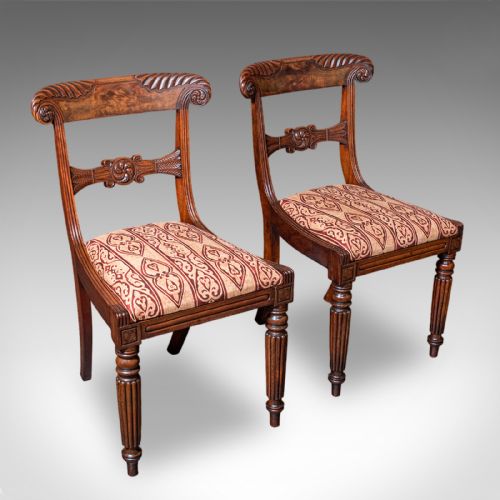
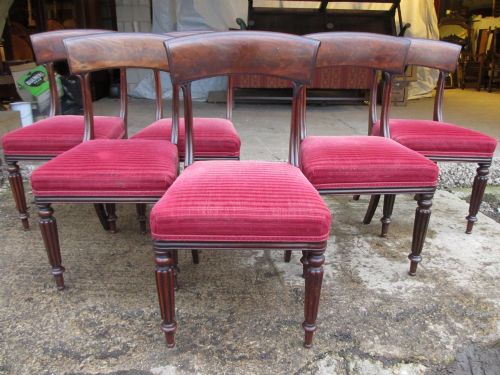
Carved Mahogany Dining Seats
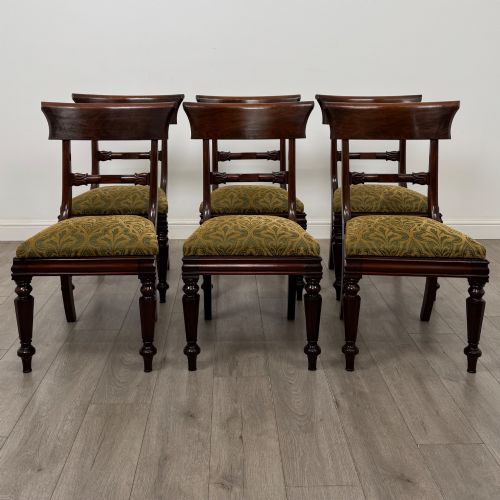
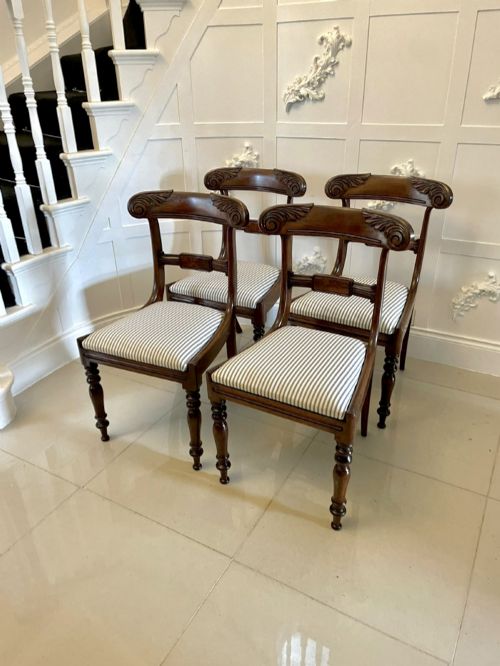
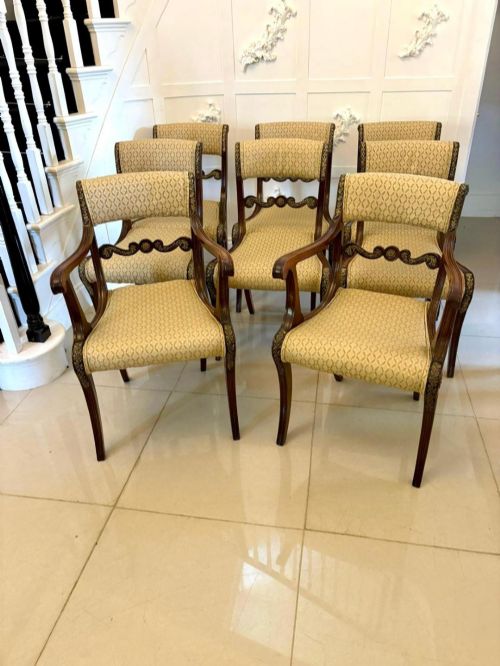
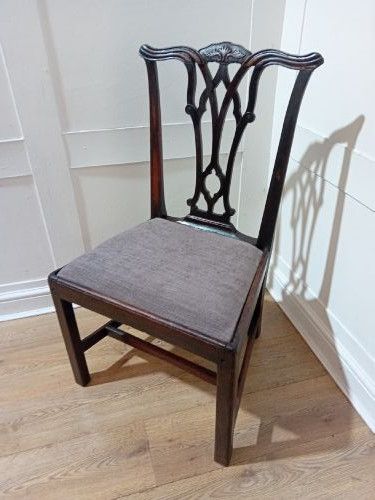
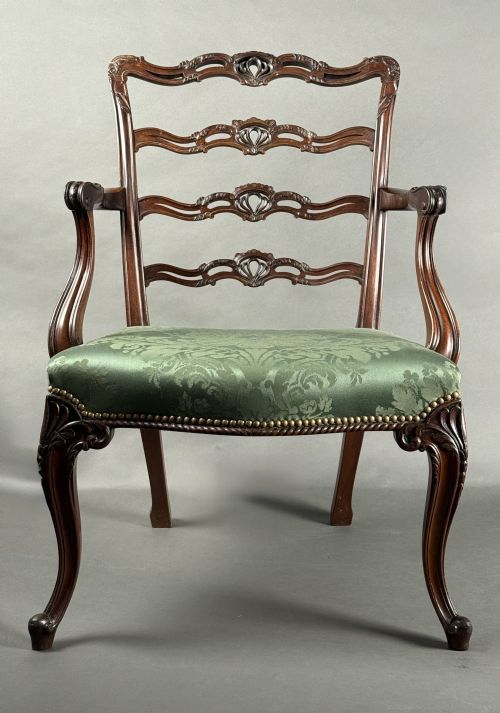
These carved mahogany dining seats span the Georgian, Regency and Victorian periods, offering solid timber frames shaped for the dining room.
Carved Mahogany Dining Seats
Carved mahogany dining seats comprise dining chairs, armchairs, side chairs and hall chairs fashioned from mahogany across the eighteenth, nineteenth and twentieth centuries. Buyers encounter single chairs, pairs and larger sets intended for formal dining tables.
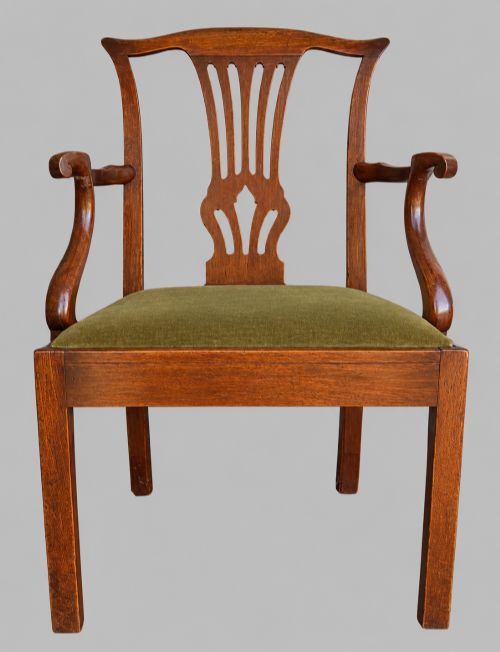
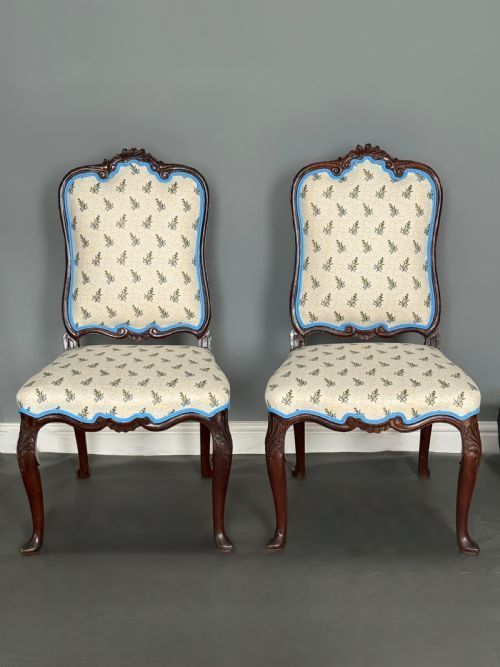
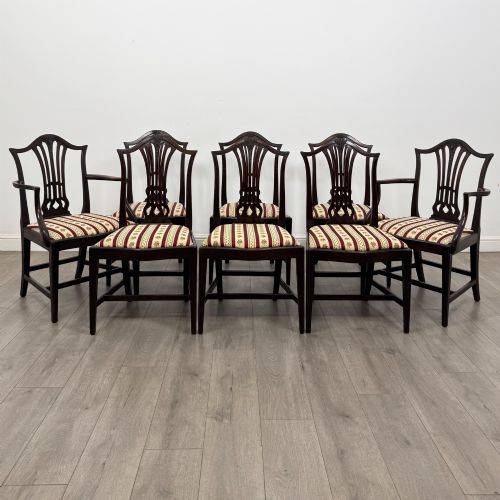
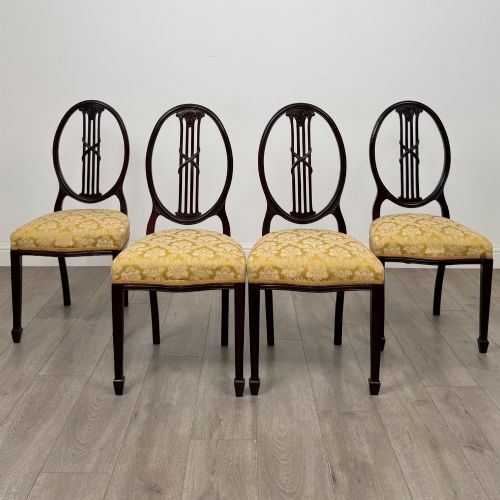
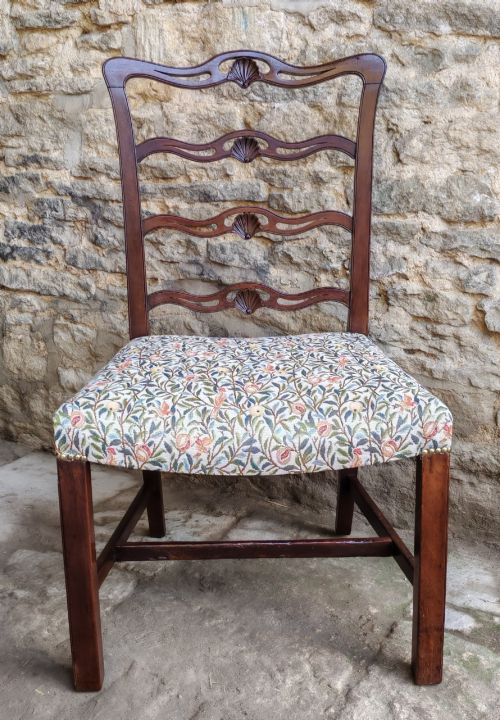
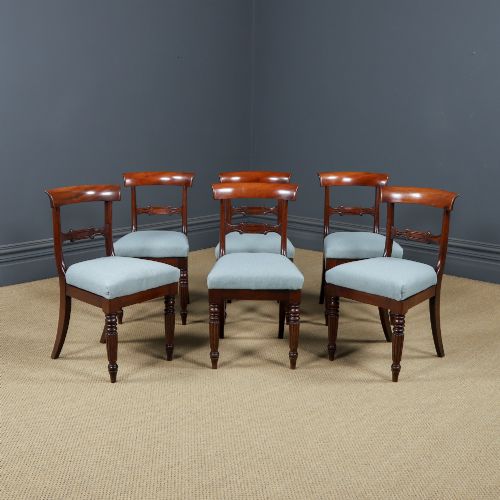
The styles range from George III and Regency designs to William IV, Victorian balloon backs and later Chippendale and Hepplewhite revivals. Many pieces incorporate carved details such as shield backs, ladder backs and bar backs.
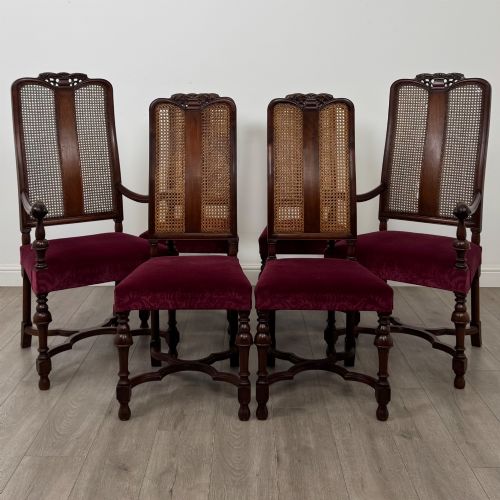
Originating largely from English, Scottish and Dutch workshops, these seating options include standard side chairs alongside elbow chairs and carvers designed for the heads of the table.
How they were made
Cabinetmakers utilised solid mahogany, shaping frames through joinery methods suited to load-bearing chair construction. Turning, reeding and carving were applied directly to the timber to form legs, rails and backrests.
Seats incorporate upholstery materials such as leather, fabric, velvet and textiles fitted over padded foundations or drop-in frames. Brass inlays and hardware appear on specific Regency and later pieces to accent the wood grain.
Carved Mahogany Dining Seats Retail Price Guide 2026
Typical asking prices for carved mahogany dining seats among the pieces listed under this phrase on Sellingantiques today, from the lower quarter to the upper quarter. They describe what is for sale here now, not the wider market.
The listings span eight distinct periods from the eighteenth century through the twentieth century, featuring mahogany paired with leather, brass, velvet and textile upholstery.
What varies in quality
Quality rests in the crispness of the timber carving and the architectural proportion of the frame. Superior sets maintain matching grain patterns and robust structural joinery across every chair in the group.
The integrity of the original wood surfaces and the standard of period upholstery work distinguish standard production from exhibition grade pieces.
Warings·Gillows·Maple and Co
The Carved Mahogany Dining Seats Glossary
- Bar back
- A horizontal wooden rail across the backrest, frequently carved and reeded in William IV and Regency examples. It provides lower back support while displaying the figured mahogany grain.
- Balloon back
- A rounded, oval-shaped backrest introduced during the Victorian era. The curved top rail flows continuously down into the seat rails.
- Carver
- An armchair designed to match a set of dining side chairs, usually placed at the head of the table. These seats include elbow rests integrated into the frame.
- Reeded
- A decorative moulding formed of parallel convex strips carved directly into wooden legs or rails. This technique adds linear texture to Regency and William IV furniture.
Carved Mahogany Dining Seats: Frequently Asked Questions
How do I care for antique mahogany dining chairs?
Maintain stable indoor humidity and avoid direct sunlight to protect the timber and polish from drying out. Clean the mahogany surfaces using a soft, dry cloth without harsh chemical sprays.
Condition the leather or fabric upholstery according to its specific textile type using appropriate conservation methods. Check structural joints periodically to ensure the chair frames remain stable during regular use.
Can I mix single chairs with carvers?
Dining sets historically combined a majority of side chairs with a pair of matching armchairs, known as carvers, positioned at the table ends. This arrangement provides comfortable seating for hosts while maintaining visual unity through shared timber and carving styles.
Ensure that the seat height and overall proportions match when pairing individual chairs together. Matching the period and mahogany tone maintains a cohesive appearance around the dining table.
What is the difference between Georgian and Victorian styles?
Georgian seating from the eighteenth century typically displays restrained classical proportions, clean lines and architectural splats in designs associated with Chippendale or Hepplewhite. Mahogany tones from this era often exhibit a rich depth developed over centuries.
Victorian pieces from the mid-nineteenth century favour bolder, more exuberant curves such as balloon backs and heavier carved cabriole legs. These later seats frequently incorporate plush overstuffed upholstery and darker finishes.
Are these chairs suitable for daily use?
Solid mahogany frames provide the structural strength necessary for everyday dining when the joinery is sound. Many sets have survived centuries of use because the dense hardwood resists heavy wear.
Inspect the stability of the legs and back joints before regular placement at a dining table. Professional conservation can secure loose joints without altering the antique fabric of the chair.