

Vintage Mahogany Clothes Press
A vintage mahogany clothes press offers deep storage and rich timber grain, bridging the practical needs of a bedroom with traditional cabinet making.
Vintage Mahogany Clothes Press
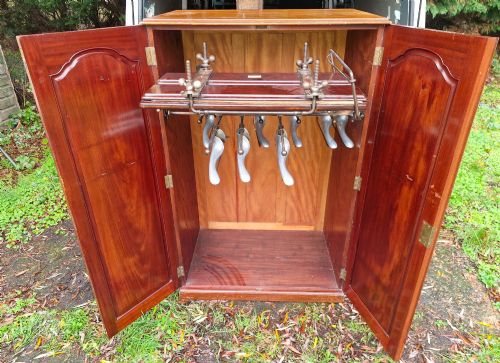
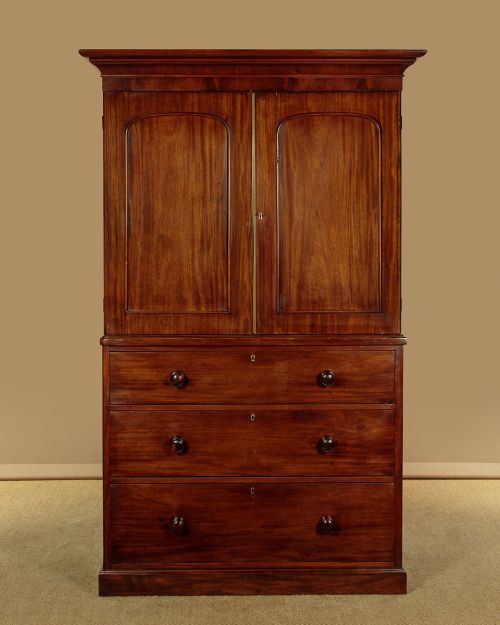
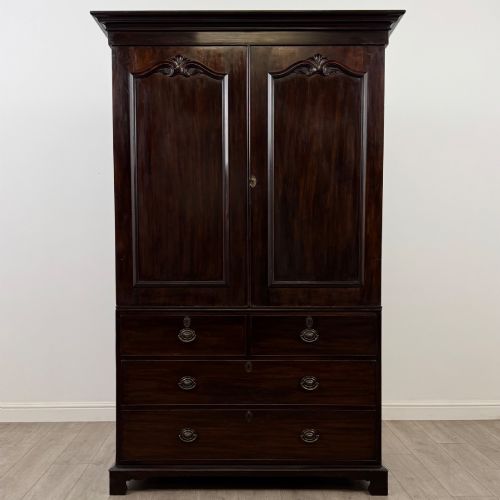
When you search for a vintage mahogany clothes press, you are looking at substantial case furniture designed to store linens and garments. These pieces combine upper cupboard sections with lower banks of drawers, originating across the Georgian, Victorian and Edwardian periods.
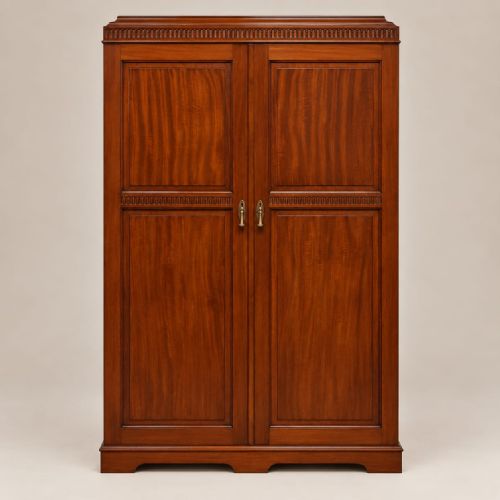
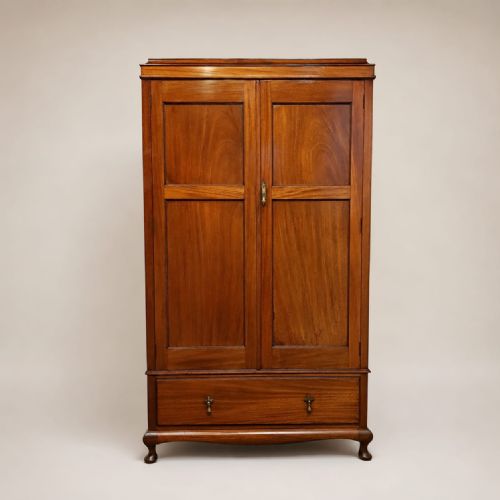
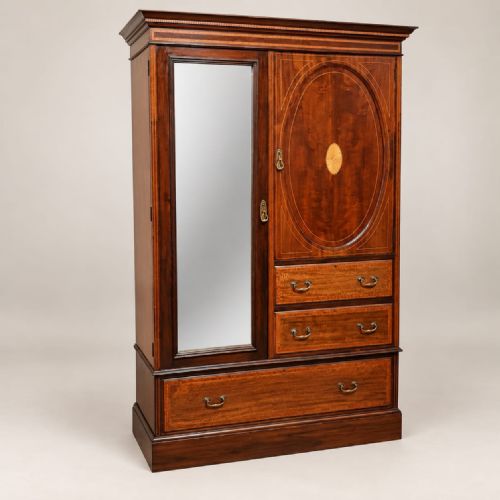
You are most likely to meet Edwardian and 19th-century examples on this page, often built as double or triple wardrobes and linen presses. They range from formal George III constructions to later compactum layouts and inlaid combination pieces.
The form evolved from utilitarian housekeepers' cupboards into decorative bedroom furniture, retaining deep internal sliding trays or hanging space behind panelled doors. Cabinet makers utilised the natural scale of these wardrobes to display well-figured timber.
How they were made
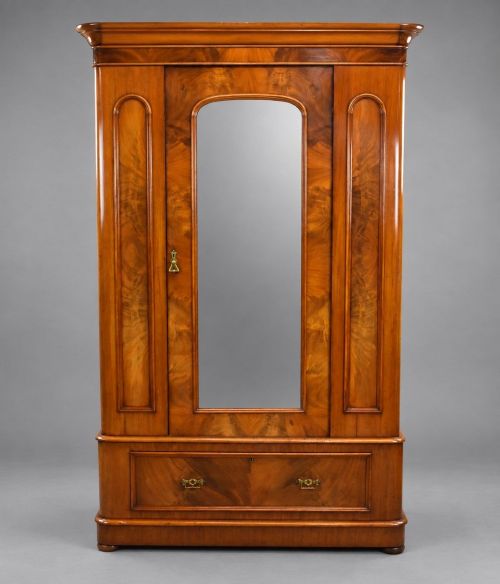
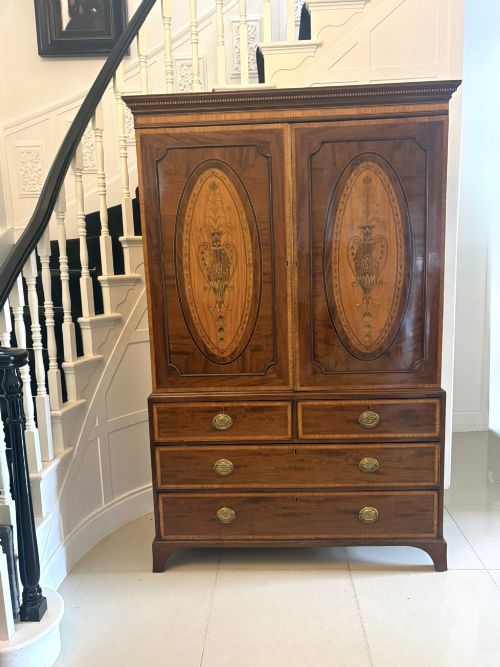
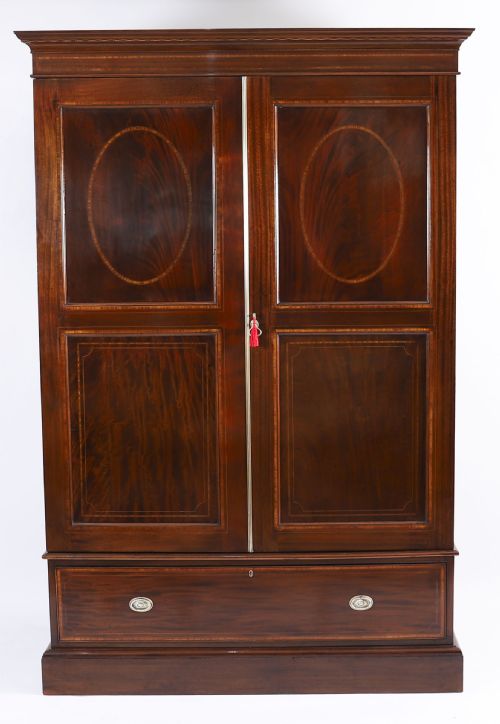
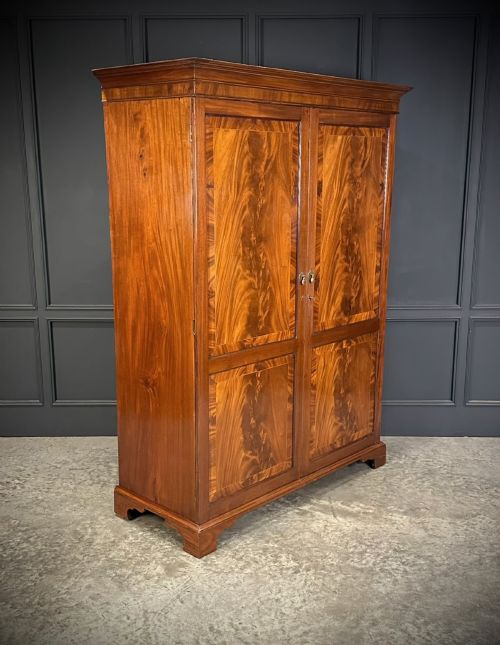
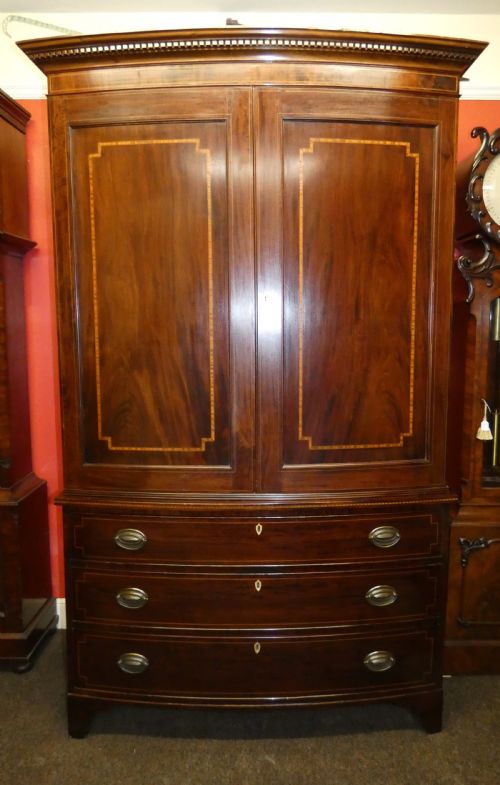
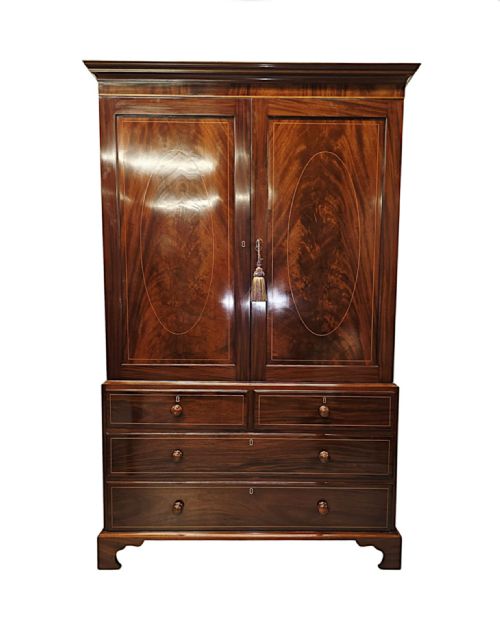
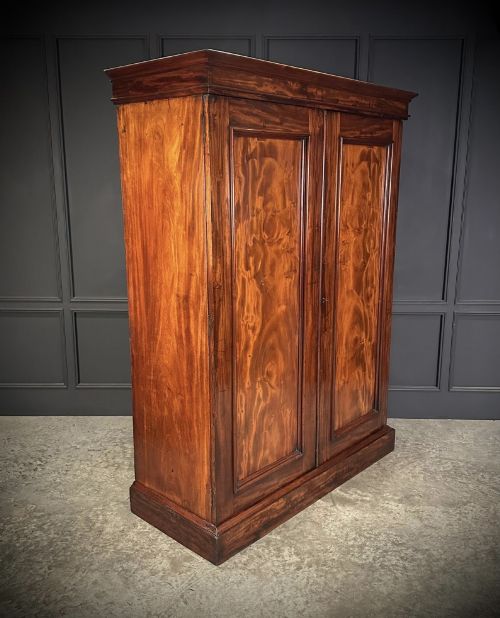
Craftsmen built these presses using solid mahogany frames combined with flame mahogany veneer to create rich, rippling grain patterns across the primary surfaces. Secondary timbers such as oak provided structural stability for internal drawers and partitions.
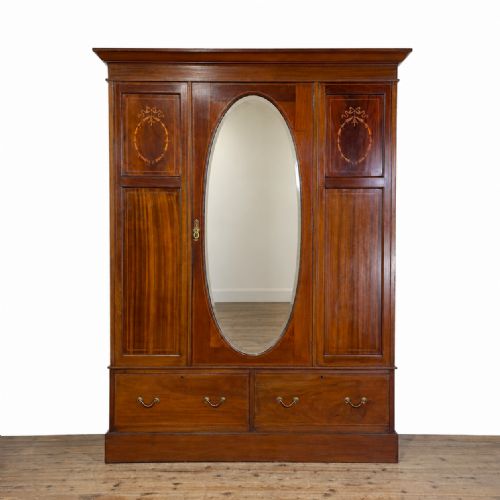
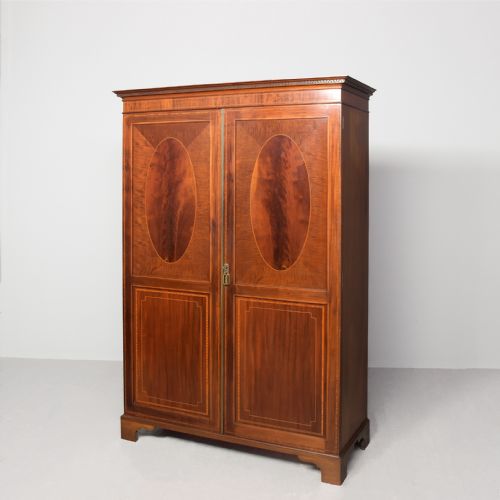
Satinwood inlay and contrasting stringing were frequently applied to enrich the façades of Edwardian and Georgian pieces, adding linear geometric detail. Brass hardware, including drop handles and escutcheons, completed the functional construction of doors and drawers.
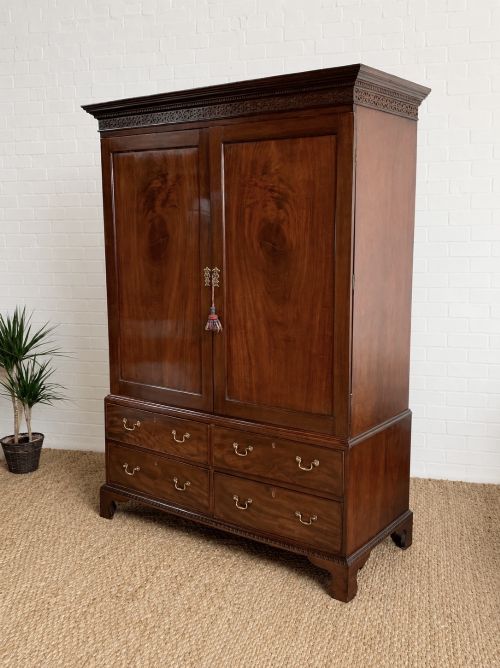
Heavier cornices often featured blind fretwork or moulded detailing, while later Edwardian workshops introduced bevelled mirror glass into door panels to reflect light within the bedroom.
Vintage Mahogany Clothes Press Retail Price Guide 2026
Typical asking prices for vintage mahogany clothes press among the pieces listed under this phrase on Sellingantiques today, from the lower quarter to the upper quarter. They describe what is for sale here now, not the wider market.
Listings feature mahogany, satinwood inlay, mirror glass and brass hardware across Georgian, Victorian and Edwardian periods.
What varies in quality
The grade of timber selected for the outer doors and drawer fronts dictates much of the visual hierarchy among these presses. Richly figured flame mahogany or carefully matched veneer panels separate superior workshop output from plain, utility-grade timber.
The refinement of internal joinery, from dovetailed drawer construction to the smooth operation of linen slides, marks the distinction in craftsmanship. Exterior elements such as crisp satinwood inlay, well-executed cornices and substantial brass mounts demonstrate the ambition of the original maker.
maples & co·Druce & Co.·Heals
The Vintage Mahogany Clothes Press Glossary
- Compactum wardrobe
- A multi-compartment wardrobe that combines hanging space, sliding trays and drawers within a single unified piece of furniture. It provides varied storage options for different types of garments.
- Flame mahogany veneer
- A prized cut of timber taken from the fork of the mahogany tree where the branch meets the trunk. This slicing method produces a distinctive, flickering flame-like pattern across large surface areas.
- Linen press
- A tall cupboard traditionally used for storing household linen on internal sliding trays rather than hanging rails. The lower section typically incorporates a chest of drawers.
- Blind fretwork
- Carved decorative ornamentation applied to a flat surface in a repeating geometric or interlaced pattern. It is often found along the cornice of 18th-century and revival pieces.
- Satinwood inlay
- Contrasting light-coloured exotic wood inserted into recesses cut into the darker mahogany surface. This technique creates delicate borders and decorative motifs typical of late 18th-century and Edwardian furniture.
Vintage Mahogany Clothes Press: Frequently Asked Questions
How do I tell periods apart?
Georgian examples often display architectural proportions, bracket feet and restrained mahogany grain with subtle stringing. Edwardian pieces frequently incorporate satinwood inlay, mirror glass panels and lighter structural framing.
Victorian and William IV presses tend to show heavier proportions, deep flame mahogany veneers and prominent carved mouldings. Examining the internal secondary timbers and construction methods helps confirm the exact era.
Are these pieces easy to dismantle?
Many large wardrobes and linen presses were constructed to be taken apart for transport and installation in upper rooms. Original knockdown bolts and numbered internal panels allow the cornice, base, and side sections to separate safely.
Checking the internal assembly reveals whether a piece was built as a permanent fixed unit or a modular wardrobe. Professional installation is often recommended due to the heavy timber and mirror glass.
How do I care for mahogany?
Mahogany benefits from stable indoor humidity and protection from direct sunlight to preserve its deep colour and finish. Regular dusting with a dry, soft cloth maintains the natural lustre of the polished wood.
Avoiding silicone-based polishes ensures the traditional wax or French polished surface remains breathable. Occasional application of quality beeswax helps nourish the vintage timber over time.