

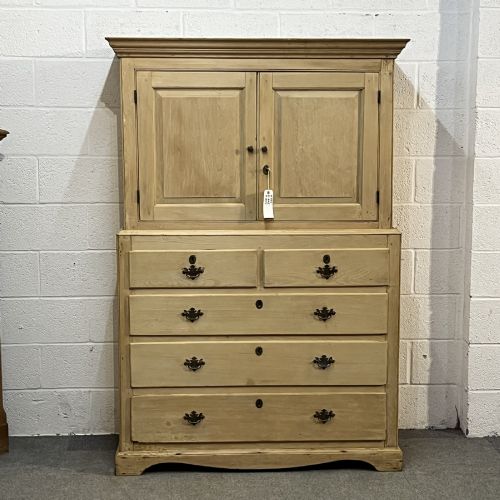
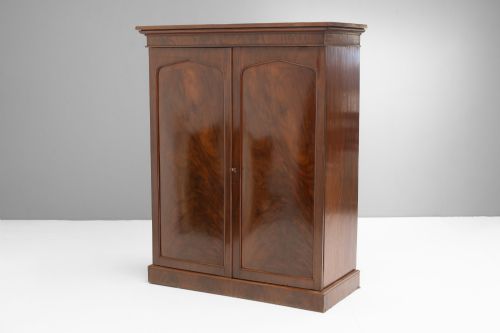
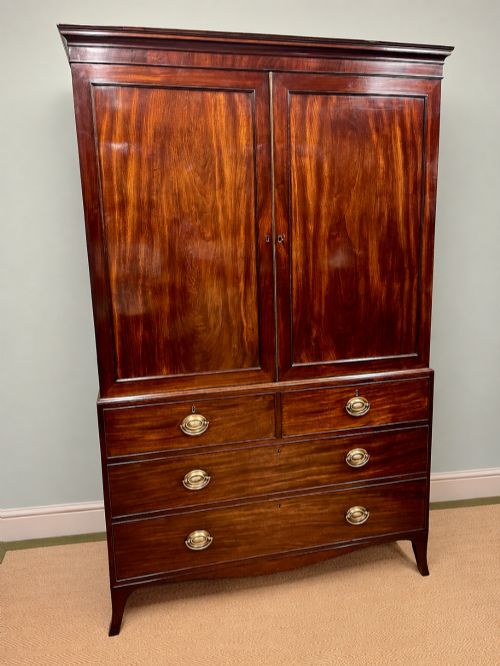
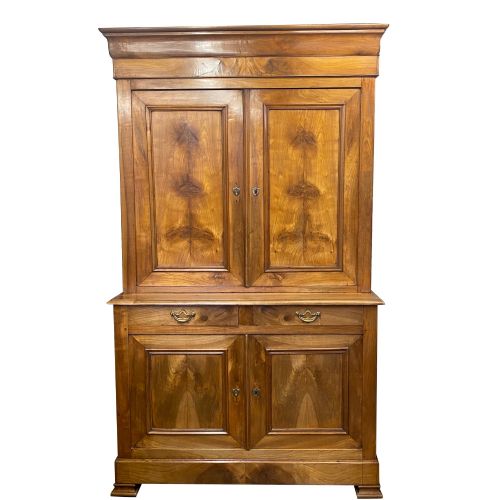
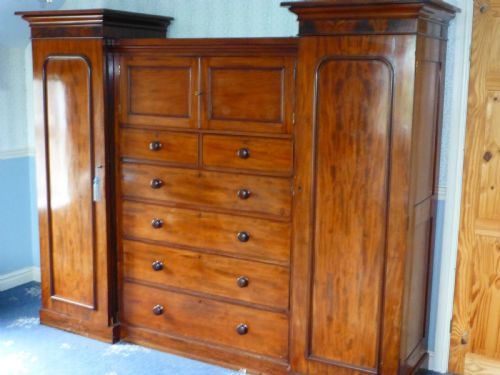


Nineteenth Century Linen Press
A nineteenth century linen press is a substantial piece for storing textiles, combining hanging space or sliding trays behind panelled doors with a chest base.
Nineteenth Century Linen Press
A nineteenth century linen press serves as a primary storage solution for household garments and bedding, taking various forms from architectural mahogany cabinets to painted pine country cupboards. The phrase encompasses pieces built during the 19th Century, alongside related iterations from the Victorian period, Regency era, and occasionally earlier or later workshops.
Buyers meet numerous variations on this page, including traditional two-part linen presses, breakfront combination compactums, housekeeper's cupboards, and tall wardrobes with fitted interior sliding trays. Woods range from rich flame mahogany and burr walnut to solid cherry, pine, oak, and birch, reflecting both urban cabinet-making and regional vernacular traditions.
Origins span English workshops, Scottish makers, French provincial centres, and Scandinavian country makers, each bringing distinct regional proportions and decorative schemes to the form. Certain examples feature glass doors, brass campaign handles, gilt bronze mounts, or painted surfaces rather than polished wood finishes.
Materials and construction methods
Cabinet-makers constructed nineteenth century linen presses primarily using solid and veneered timbers such as mahogany, oak, pine, and walnut, often applying flame mahogany or rosewood crossbanding to principal exterior surfaces. Timber selection governed both the structural integrity of the large carcase and the visual impact of the front elevation.
Joinery techniques combined traditional frame and panel construction for the large upper and lower doors with dovetail joints for internal sliding trays and drawer boxes. Brass hardware, glass panes, and occasionally ormolu or gilt bronze mounts completed the assembly, securing heavy doors and internal fittings.
Nineteenth Century Linen Press Retail Price Guide 2026
Typical asking prices for nineteenth century linen press among the pieces listed under this phrase on Sellingantiques today, from the lower quarter to the upper quarter. They describe what is for sale here now, not the wider market.
Materials documented across the inventory include mahogany, flame mahogany, oak, pine, birch, walnut, burr walnut, glass, and paint.
Distinguishing quality in the selection
Quality separates pieces through the grade of timber selected for the carcase and the precision of the cabinet-maker's joinery, particularly in veneered surfaces and crossbanded borders. Superior examples exhibit carefully matched grain patterns across large doors and drawers, maintaining structural stability over centuries of use.
Gillows
The Nineteenth Century Linen Press Glossary
- Linen press
- A large storage furniture piece comprising an upper cupboard section enclosed by doors, traditionally housing sliding trays for folded textiles, positioned above a chest base with drawers.
- Compactum
- A fitted wardrobe or combination cabinet designed to compartmentalise various types of clothing within a single multi-door or breakfront structure.
- Crossbanding
- A decorative border technique where thin strips of veneer are laid perpendicular to the grain of the primary panel surface.
- Breakfront
- A piece of furniture where the central section projects forward from the flanking outer sections, creating an architectural profile.
Nineteenth Century Linen Press: Frequently Asked Questions
What is inside a nineteenth century linen press?
Most examples contain horizontal wooden sliding trays behind the upper doors, designed for stacking folded linen and garments without the creases caused by hanging.
The lower section typically incorporates a chest of drawers, while some variants substitute these trays with full-length hanging space for coats and dresses.
How do I tell a Regency press from a Victorian one?
Regency pieces often display cleaner architectural lines, classical proportions, and brass inlay or select mahogany veneers influenced by classical styles.
Victorian iterations tend to be heavier in scale, sometimes utilising bolder mouldings, burr walnut veneers, or more elaborate breakfront configurations.
Can I dismantle a linen press for moving?
Many traditional linen presses were constructed in two distinct sections, separating the upper cupboard from the lower drawer base for ease of transport.
Larger breakfront and combination pieces require careful dismantling of the cornice, doors, and internal fitments by someone experienced in antique furniture assembly.
Where should I place a large linen press?
These substantial pieces require a wall with sufficient depth and ceiling height, particularly given the clearance needed to open large upper and lower doors.
menjaga stable humidity levels away from direct heat sources helps preserve the mahogany, oak, or walnut timbers and prevents veneer movement.