
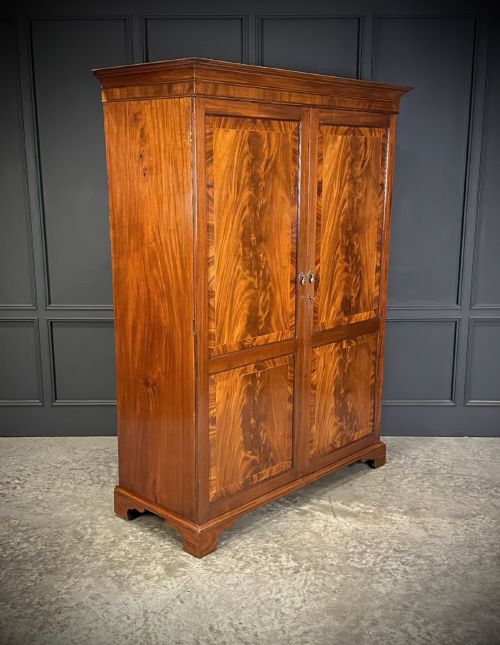
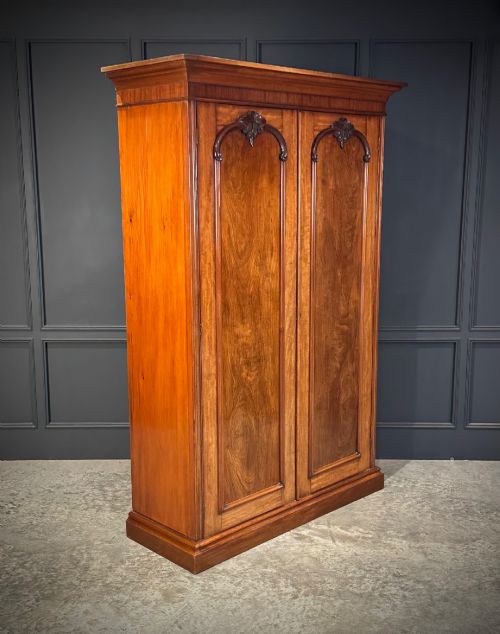
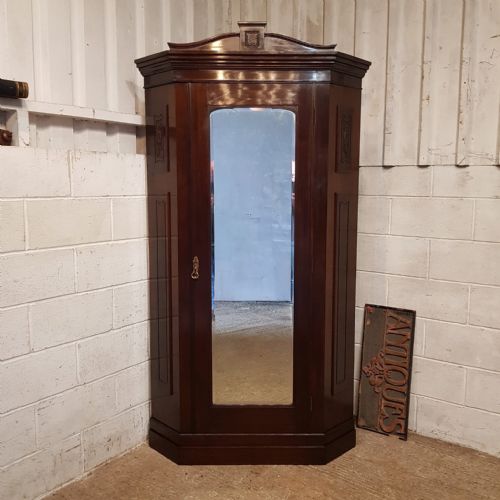
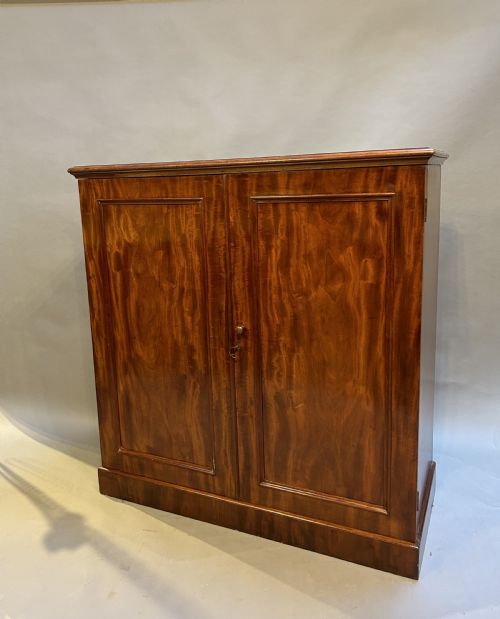
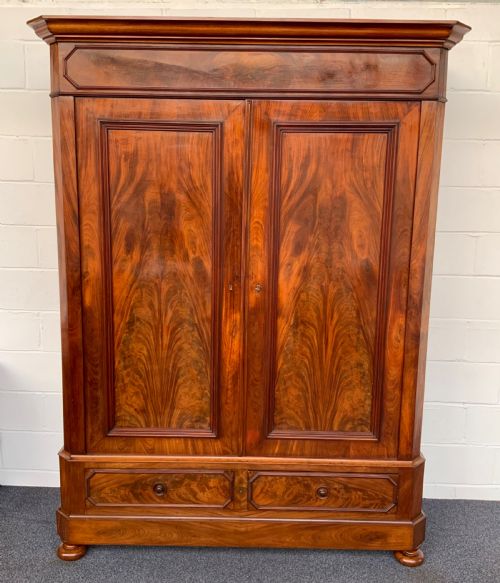

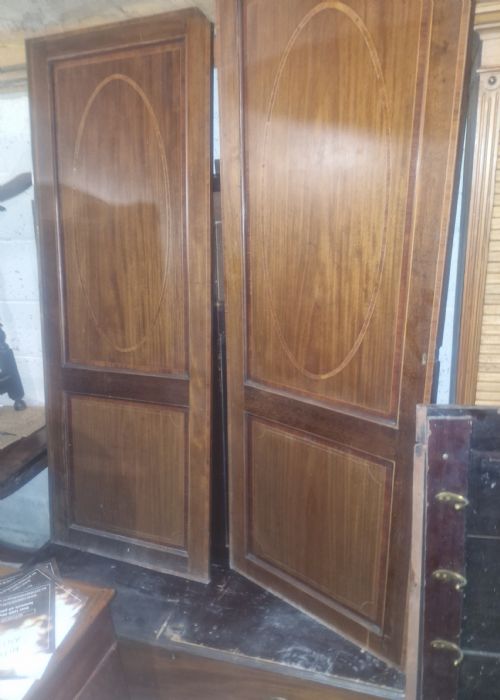


Mahogany Fitted Cupboard
When you search for a mahogany fitted cupboard, you are looking at substantial storage furniture built to organise everything from linens to estate papers.
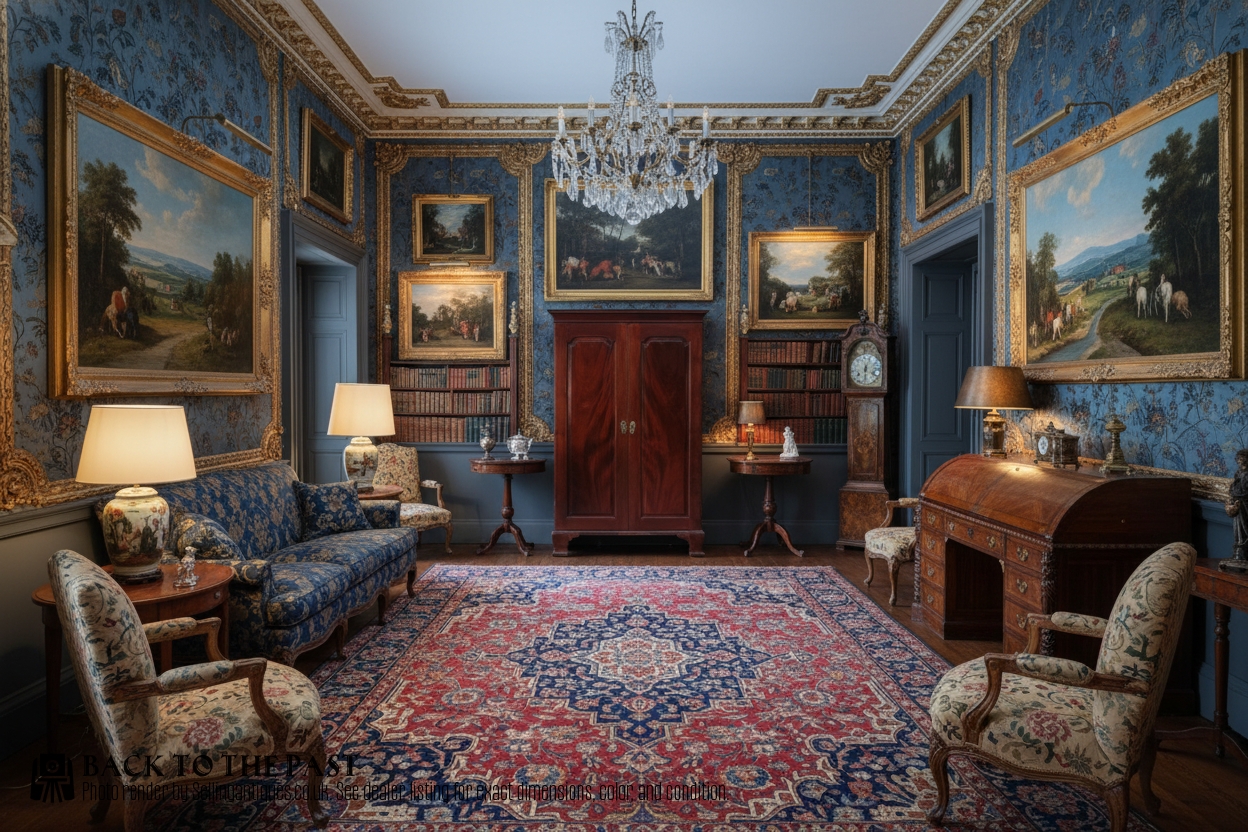
Mahogany Fitted Cupboard
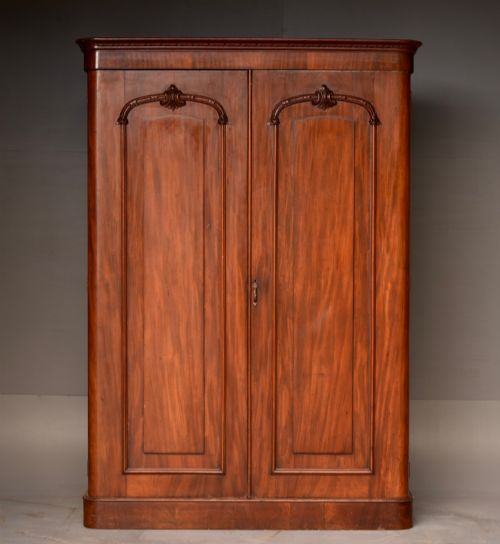
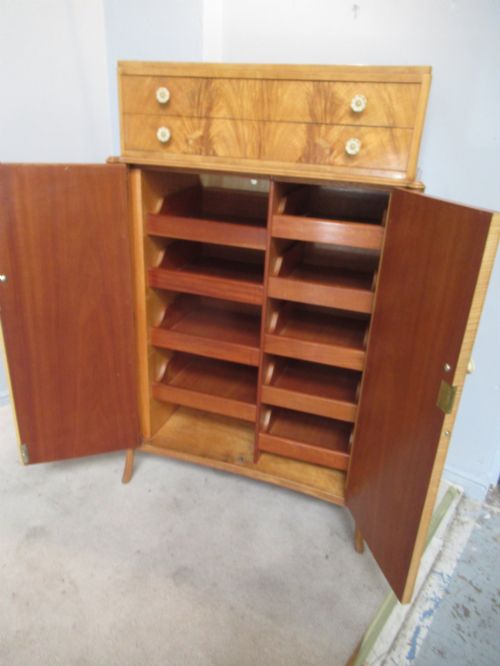
A mahogany fitted cupboard encompasses practical storage furniture designed with internal shelves, drawers, or hanging space. You will frequently encounter wardrobe forms, linen presses, compactums, and office cupboards on this page.
The selection spans periods from the eighteenth century through the Georgian, Victorian, and Edwardian eras. Pieces often originate from domestic, estate, or commercial settings, each built for specific interior organisation.
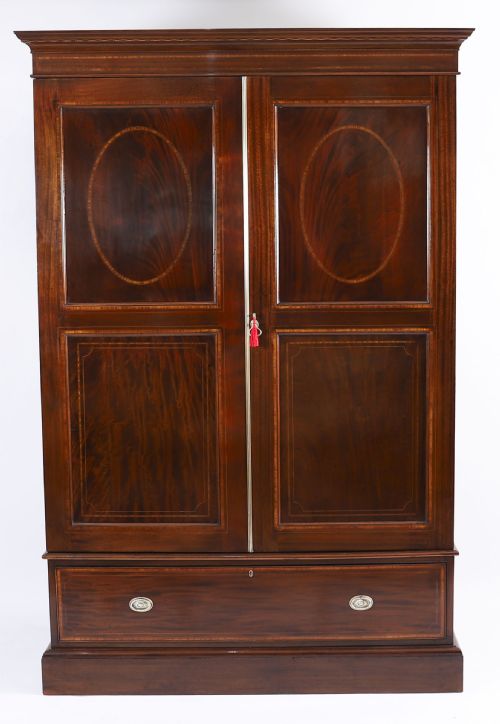
Makers and retailers such as Maples and Co, Edwards & Roberts, and Howard & Son appear among the larger Victorian and Edwardian examples. These pieces combine external timber presence with carefully planned internal compartments.
How they were made
Cabinet makers used solid mahogany alongside flame mahogany veneer and curl mahogany to build carcasses and doors. Secondary timbers such as maple and satinwood often line the internal drawers and slides.
Brass hardware, glass panels, and embossed leather appear on specific functional forms like military campaign cabinets, bookcases, and secretaire desks. Joinery relies on traditional dovetail construction for internal drawers and solid frame-and-panel doors.
Materials span solid mahogany, flame mahogany veneer, satinwood, maple, brass hardware, and embossed leather.
What varies in quality
The sophistication of the internal fitting dictates much of the distinction between standard and superior pieces. Estate cabinets and compactums with numerous specialised drawers, secretaire sections, and original brass fittings represent the more developed end of the range.
Timber selection and veneer matching across large breakfront surfaces create visual hierarchy. The depth of figure in flame mahogany and the preservation of original stamped maker marks or paper labels elevate a piece above simpler utilitarian storage.
Maples and Co·Edwards & Roberts·Howard & Son·Goodhall Lamb and Heighway·Gillows
The Mahogany Fitted Cupboard Glossary
- Compactum
- A multi-functional wardrobe combining hanging space, shelves, and internal drawers. These large pieces maximise storage within a single footprint.
- Linen press
- A tall cupboard featuring sliding trays or drawers in the upper section for folded textiles, positioned above a base of deeper drawers.
- Flame mahogany
- Timber cut from the fork of the mahogany tree to produce a dramatic, flickering flame-like grain pattern. Cabinet makers used this veneer on prominent surfaces.
- Secretaire
- A cabinet or chest incorporating a pull-down writing flap that conceals small drawers and pigeonholes. It merges desk functionality with enclosed cupboard storage.
- Breakfront
- A piece of furniture where the central section projects forward from the flanking wings. This architectural arrangement creates depth and shadow across large wardrobes and bookcases.
Mahogany Fitted Cupboard: Frequently Asked Questions
What is a compactum wardrobe?
A compactum is a large multi-functional storage piece that combines hanging wardrobes with linen slides and internal chest drawers. They appeared frequently during the Victorian and Edwardian periods to provide complete bedroom organisation in one unit.
These pieces use internal dividers to separate different types of garments and accessories. They suit rooms requiring high-capacity storage without adding multiple separate items.
How do I identify a linen press?
A linen press consists of an upper cabinet enclosed by doors that contains pull-out wooden trays, sitting above a chest of drawers base. Georgian and Victorian examples used these sliding trays to keep folded textiles flat and accessible.
Over time, many of these presses had their internal trays removed to allow modern clothes hangers inside. Finding one with its original interior trays intact preserves its historic function.
Where were estate cabinets used?
Estate cabinets and office cupboards served administrative functions in large nineteenth-century houses, institutions, and legal offices. They housed documents, ledgers, specimen collections, and household records.
These pieces feature deeply fitted interiors with numerous small drawers, letter slots, or pigeonholes. Their robust construction reflects daily working use rather than domestic display.
How do I care for mahogany veneer?
Mahogany furniture requires stable indoor humidity and protection from direct sunlight to prevent the timber and veneer from drying out or fading. Regular dusting with a soft, dry cloth maintains the polished surface without moisture damage.
Avoid placing these cupboards near direct heat sources which can cause old glues behind flame mahogany veneers to loosen. Natural wax finishes benefit from occasional gentle feeding using traditional beeswax.