


Vintage Low Seat
These vintage low seat designs span stools, nursing chairs, and low armchairs built for comfort and fireside repose.
Vintage Low Seat
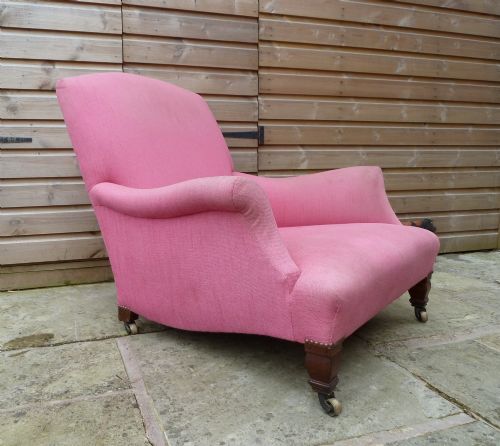
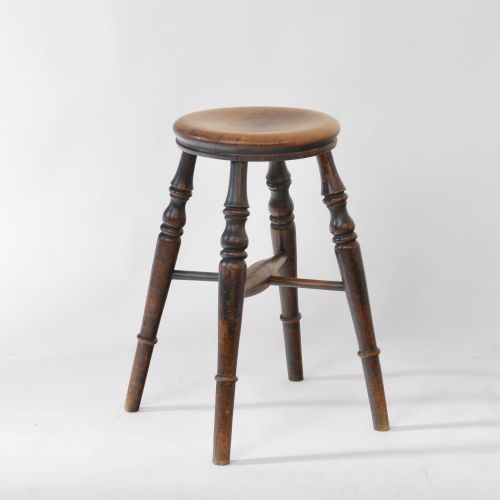
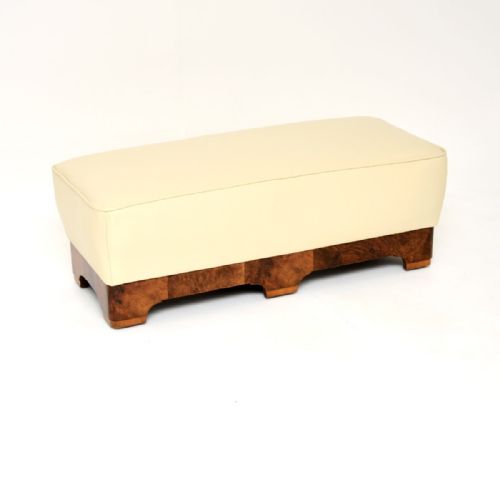
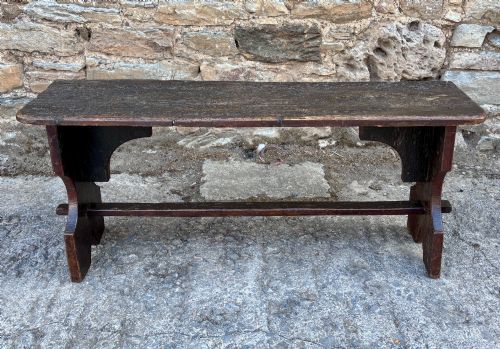
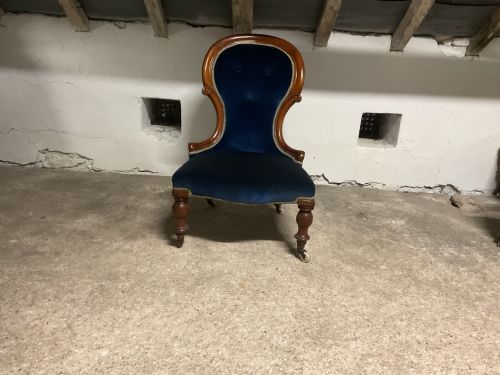
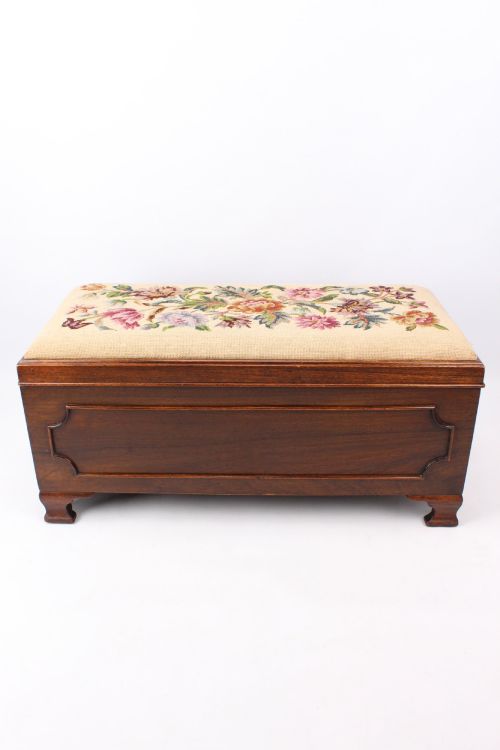
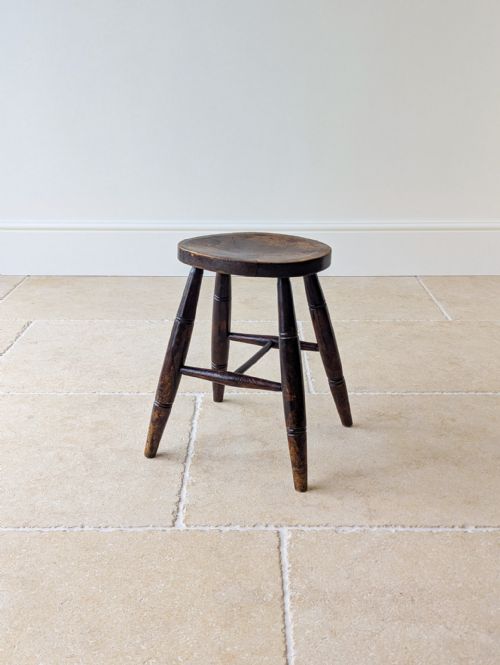
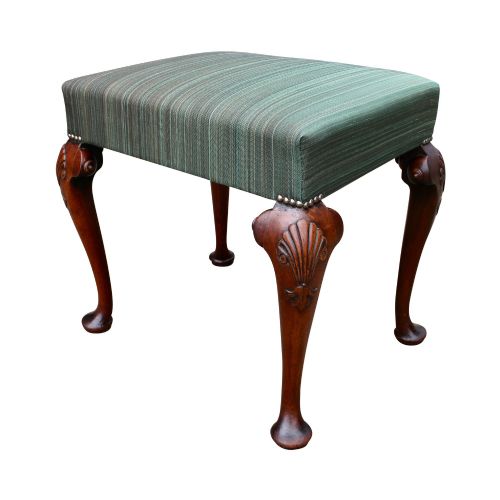
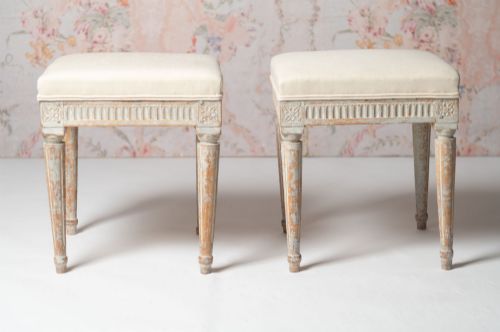
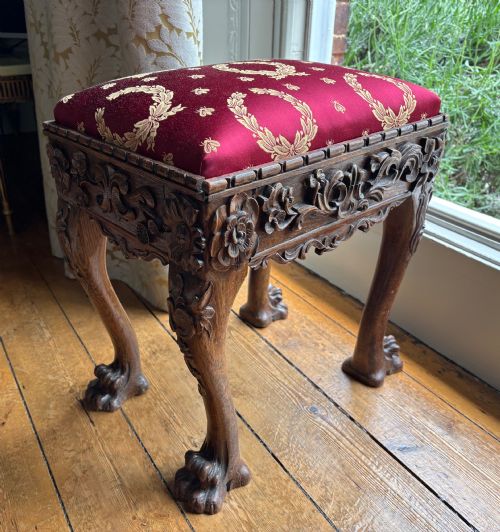
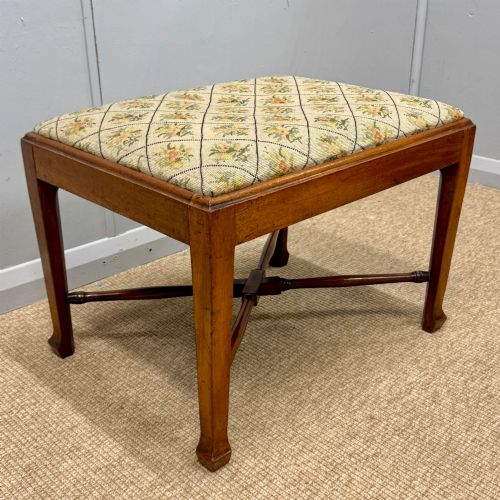
A vintage low seat encompasses diverse forms ranging from 18th century hearth stools and 19th century milking stools to Victorian nursing chairs and Art Deco armchairs. Buyers find pieces designed with lower centre of gravity for domestic tasks, dressing, or fireside seating.
Origins stretch across English country houses, Scottish estates, and European workshops, incorporating styles from Queen Anne revivals to rustic country minimalism.
Materials and construction
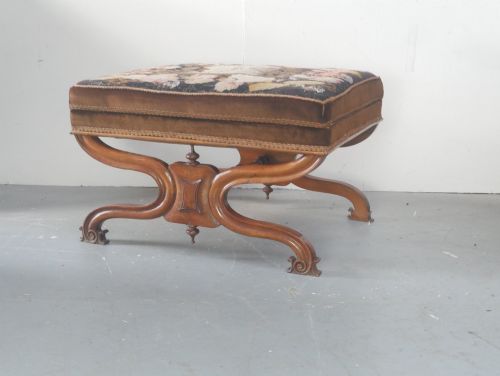
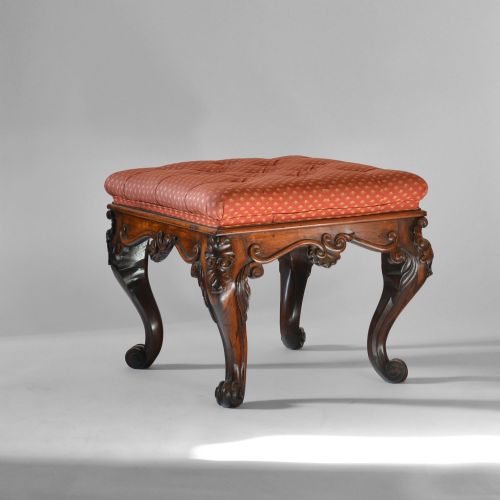
Frames rely heavily on hardwoods like mahogany, walnut, oak, sycamore, and beech, joined with traditional methods to support low seating platforms. Rosewood and burr walnut appear in more decorative pieces alongside carved details and turned legs.
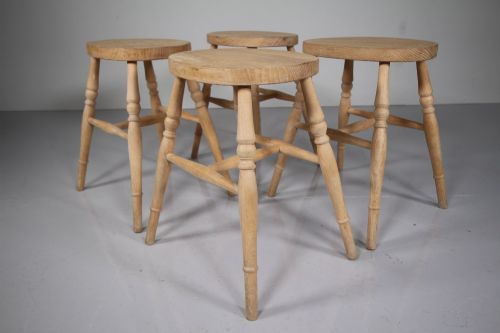
Upholstery incorporates traditional stuffing and springs covered in fabric, leather, velvet, or needlework, while simpler vernacular versions utilise solid timber planks, cane, or rush.
Listings feature periods from the 18th century through the 1930s, utilising materials including oak, walnut, mahogany, brass, and velvet.
Markers of quality
Quality reveals itself in the integrity of the timber frame, the choice of secondary woods, and the finesse of any carved ornament or turning. Finer pieces demonstrate precise joinery and balanced proportions, whether in a formal walnut dressing stool or an upholstered armchair.
The condition of original finishes, such as ochre or green paint on vernacular pieces, and the survival of period textiles or rush seating heavily influence the character of the item.
Liberty Morris And Co·Harry And Lou Epstein
The Vintage Low Seat Glossary
- Nursing chair
- A low-seated Victorian chair designed without arms to allow women to sit comfortably while wearing voluminous dresses. They often feature upholstered backs and short legs.
- Milking stool
- A simple, sturdy three-legged or one-legged vernacular stool used for agricultural tasks. These pieces highlight utilitarian woodworking from various European regions.
- Rush seat
- A seating surface woven from dried marsh rushes twisted into cords. This technique appears frequently on traditional country chairs and stools.
- Hearth stool
- A low, broad stool placed near the fireplace. Early examples date to the eighteenth century and provide stable, low seating.
- Cross stretcher
- Wooden rails connecting the legs of a stool or chair near the base for added stability. They often feature structural turnings characteristic of their period.
Vintage Low Seat: Frequently Asked Questions
What defines a vintage low seat?
A vintage low seat refers to furniture designed with a reduced height for specific domestic tasks or fireside comfort. This category unites diverse forms such as nursing chairs, milking stools, and low armchairs.
These pieces prioritise a low centre of gravity, making them practical for dressing tables, hearths, or casual seating areas.
How were nursing chairs used historically?
Victorian nursing chairs served primarily in bedrooms and nurseries. Their low height and armless design accommodated the heavy crinolines and bustles worn by women.
Over time, they evolved into decorative bedroom seating upholstered in velvet or needlework.
How do I care for antique wood and upholstery?
Maintain timber frames by dusting with a dry cloth and occasionally applying appropriate wax polish. Avoid placing antique wood in direct sunlight or near heat sources.
Protect original upholstery and rush seating by limiting heavy wear and professional cleaning when necessary.
What periods are represented in these seats?
The available pieces span from the eighteenth century through the nineteenth century, including Victorian and Edwardian eras, up to Art Deco designs from the 1930s.
Each period brings distinct stylistic influences, from Queen Anne revivals to vernacular rustic minimalism.