




Walnut X Frame Stool
A walnut x frame stool brings robust architectural poise and versatile seating to a room, rooted in centuries of classical revival design.
Walnut X Frame Stool
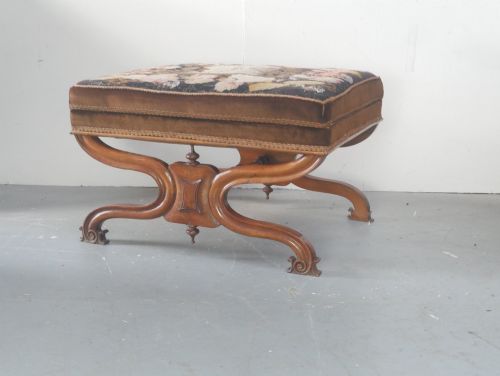
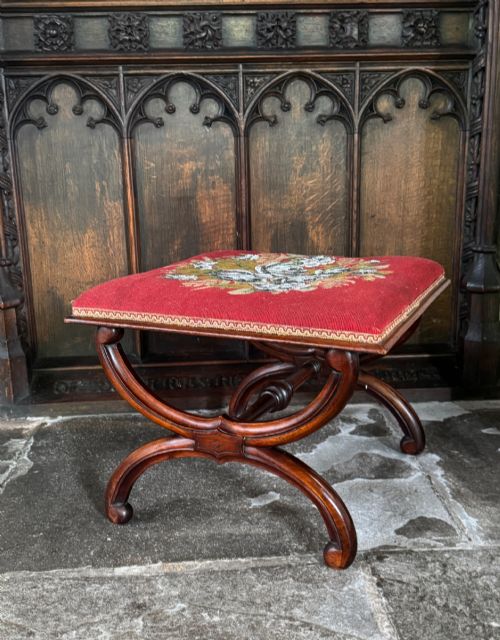
A walnut x frame stool is an architectural seating form built around crossed stretcher supports, frequently encountered in nineteenth century Victorian pieces. These furnishings appear as compact footstools, dressing stools, window seats, and larger window stools designed for grander interiors.
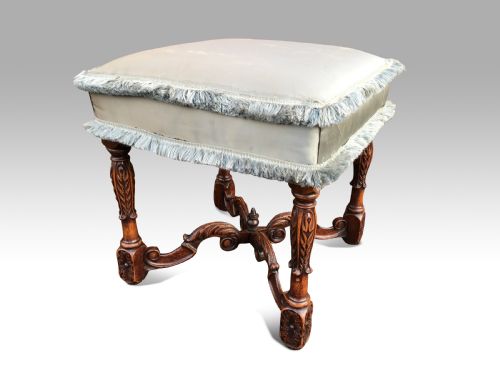
Makers drew upon diverse historical inspirations, producing items styled in the Scottish Baronial, William and Mary Revival, Renaissance, and Queen Anne manners. The cross frame construction offers inherent structural stability while maintaining an elegant silhouette drawn from ancient curule chairs.
Materials and construction
The primary structural timber is walnut, selected for its rich grain and capacity to hold crisp, deep carvings along the frame. Artisans employed spiral turning, bobbin work, and sculptural elements such as carved hunting dog heads to embellish the wooden legs.
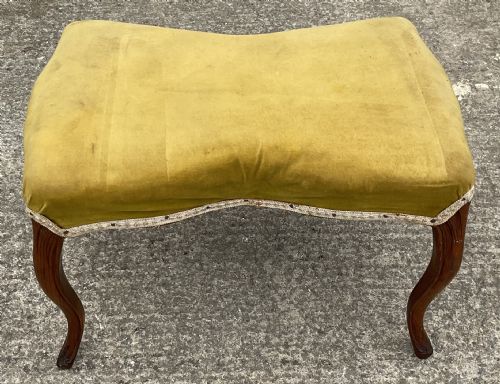
Seats are upholstered in textiles including velvet, tapestry, fabric, leather, wool, and intricate beadwork or needlepoint. Brass fittings occasionally accent the assembly, particularly on adjustable or hinged mechanisms found on duet and piano music seats.
Walnut X Frame Stool Retail Price Guide 2026
Typical asking prices for walnut x frame stool among the pieces listed under this phrase on Sellingantiques today, from the lower quarter to the upper quarter. They describe what is for sale here now, not the wider market.
Some Victorian window stools incorporate carved hunting dog heads peering out from the cross frame joints.
Judging the work
Quality rests upon the crispness of the timber carving and the architectural proportion of the intersecting stretchers. Examples with deeply sculpted details or figural elements demonstrate a higher level of workshop execution than plain turned frames.
The integrity of the frame joints and the retention of period textiles or appropriate traditional upholstery dictate the standing of an individual piece. Substantial scale and matched pairs elevate certain window seats and footstools above standard domestic output.
The Walnut X Frame Stool Glossary
- X-frame
- A structural furniture base formed by intersecting diagonal timbers that create a curule or scissor shape. This ancient form provides robust weight distribution beneath the seat.
- Curule stool
- An ancient Roman magistrate seat design featuring crossed legs, which served as the structural archetype for later revival furniture. These forms emphasise linear tension and symmetry.
- Scottish Baronial
- A nineteenth century architectural and decorative style incorporating heavy, rugged forms and motifs drawn from northern castles. Stools in this manner often display robust carving and substantial timber dimensions.
- Needlepoint
- Hand-stitched canvas work utilising wool or silk yarn to create dense geometric or floral patterns. This textile technique frequently appears on nineteenth century footstool covers.
- Prie-Dieu
- A devotional chair or low stool designed for kneeling during prayer, occasionally built with an upholstered top rail or padded seat. These pieces share the turned walnut framing common to domestic seating.
Walnut X Frame Stool: Frequently Asked Questions
Where should I place an x frame stool?
These stools sit comfortably at the foot of a bed, beneath a window as a low seat, or beside a fireplace as an occasional perch. Their compact footprint allows them to slide easily beneath tables or serve as movable seating in a library.
Larger scaled versions also function effectively as impromptu coffee tables or ottomans when paired with a rigid tray. Their sculptural legs ensure they command visual interest even when tucked into an empty corner.
How do I identify a Victorian walnut stool?
Nineteenth century examples typically exhibit dense, dark walnut timber combined with characteristic revival styles such as William and Mary or Renaissance motifs. Look for machine-milled components alongside hand-finished joints typical of the period.
Turned bobbin supports, spiral carved legs, and traditional horsehair stuffing beneath velvet or needlepoint upholstery point firmly toward the Victorian era. The presence of beadwork and brass hardware further supports a nineteenth century attribution.
Are these stools comfortable for daily sitting?
Most examples provide firm support due to traditional upholstery methods utilising webbing, springs, and dense padding. Dressing stools and piano seats were built for extended periods of seated activity.
Footstools and lower window seats are intentionally shallow and firm, designed primarily to support the feet or provide brief seating. Their primary strength remains their decorative presence rather than deep lounge comfort.
How do I care for antique walnut wood?
Maintain the timber by dusting regularly with a dry, soft cloth and avoiding placement near direct heat sources or strong sunlight. Excessive warmth causes walnut to dry out and split along the grain.
Apply a neutral beeswax polish sparingly to nourish the surface and preserve the natural sheen of the wood. Avoid modern silicone sprays, which can penetrate the pores and damage the historic finish.