


Vintage Leather Reading Chair
A vintage leather reading chair offers deep comfort and structural integrity, bringing historic character into a study or library.
Vintage Leather Reading Chair
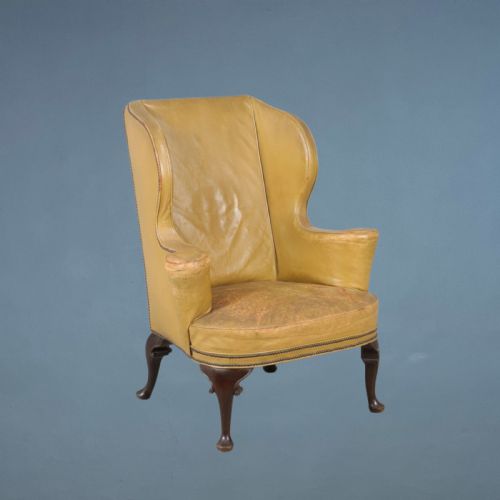
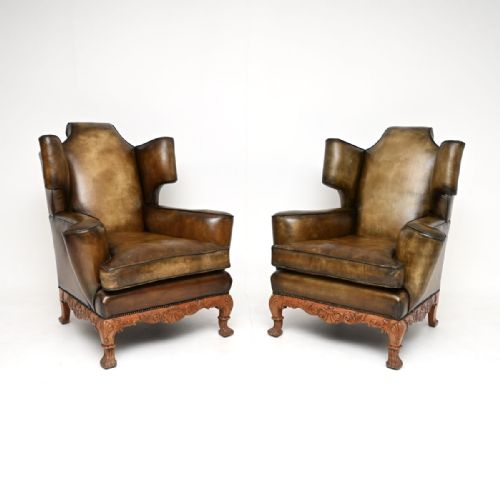
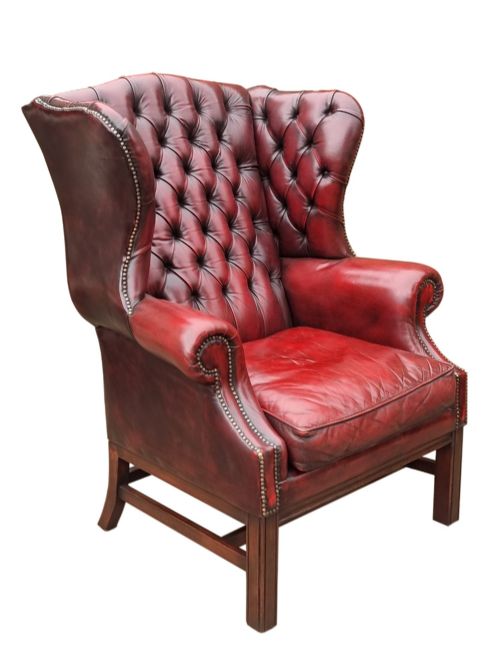
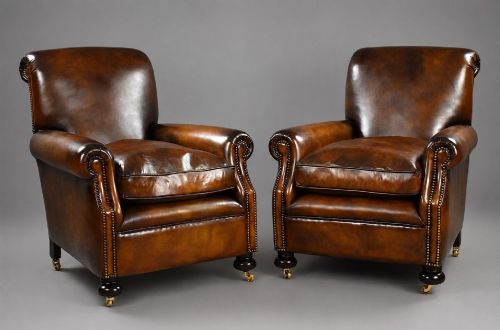
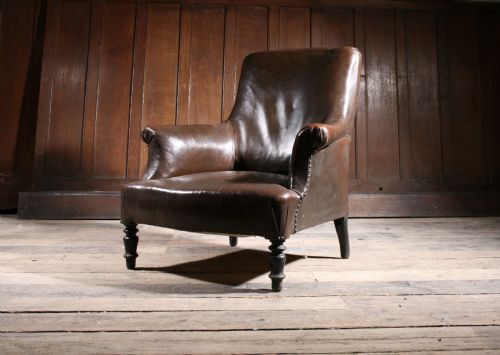
A vintage leather reading chair encompasses large library armchairs, wingbacks, club chairs, and bergères built across the eighteenth, nineteenth, and early twentieth centuries. These forms are designed for prolonged seated comfort, featuring supportive backs, generous proportions, and upholstered or padded armrests.
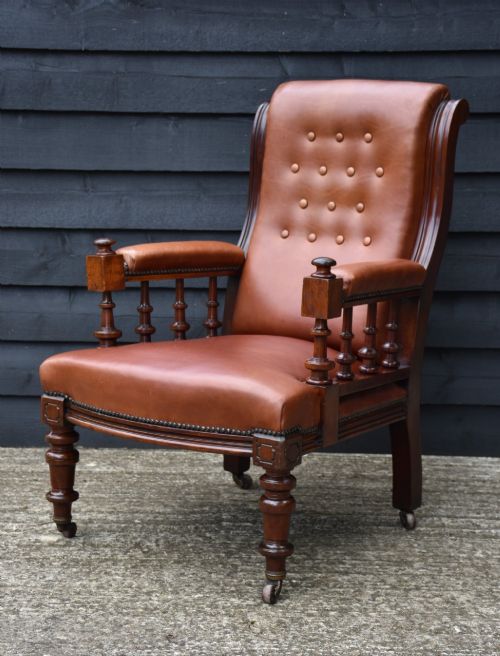
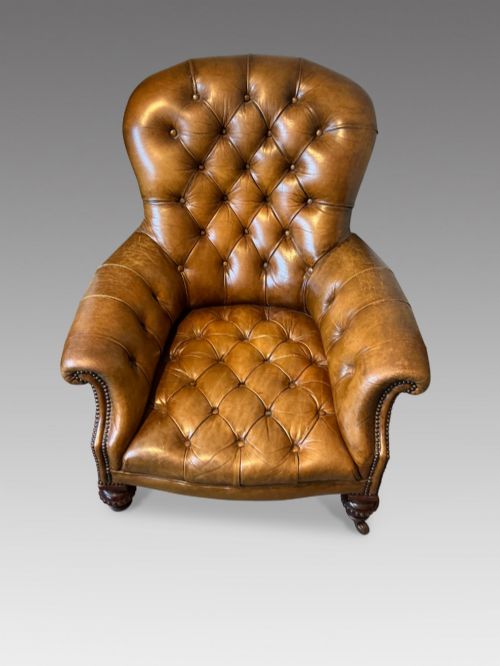
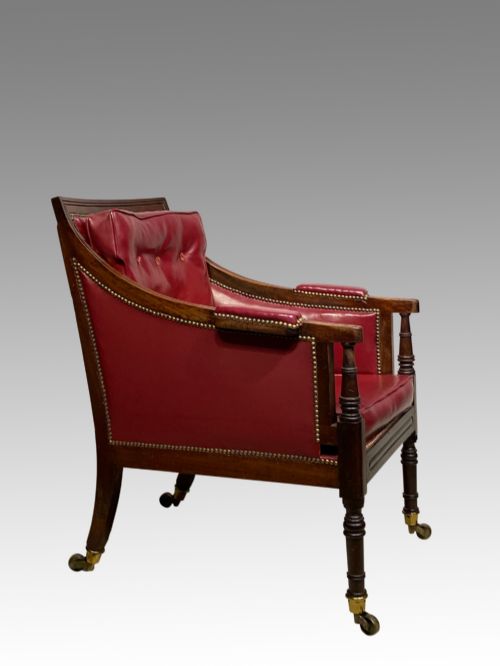
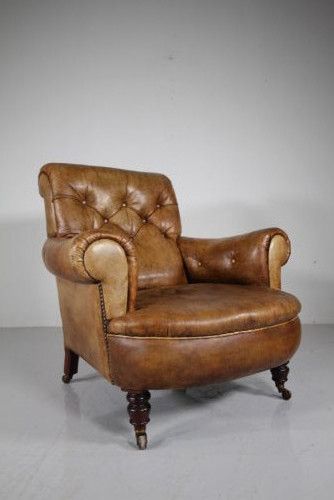
The versions most commonly met on this page span the Victorian and Edwardian eras alongside Georgian designs, constructed primarily as sturdy library or club seats. Mahogany and oak frame these pieces, paired with hide or red, brown, and tan leather upholstery.
Armchairs, accent chairs, and desk chairs dominate the selection, often combining sturdy hardwood frames with buttoned or hand-dyed leather upholstery. Pieces range from straightforward club chairs to elaborate wingbacks with carved woodwork.
Materials and construction
Frames rely on durable hardwoods such as mahogany, oak, and walnut, frequently joined with traditional cabinetry techniques to support heavy daily use. Caned panels occasionally appear alongside solid timber components in library bergère designs.
Upholstery utilises traditional leather hides, often hand-dyed or buttoned across the seat backs and cushions, secured with brass detailing where appropriate. Structural support is reinforced with internal webbing and padding beneath the leather surface.
Vintage Leather Reading Chair Retail Price Guide 2026
Typical asking prices for vintage leather reading chair among the pieces listed under this phrase on Sellingantiques today, from the lower quarter to the upper quarter. They describe what is for sale here now, not the wider market.
Several armchairs incorporate nineteenth-century reclining mechanisms or adjustable angles, built for Victorians who took their reading posture very seriously indeed.
Distinctions in quality
The distinction between standard examples and top-tier pieces rests on the depth of the timber carving, the choice of dense hardwood frames like mahogany, and the integrity of the original hide. Master carvers applied detailed blind fretwork or structural mouldings that elevate the presence of library armchairs.
Superior execution shows in the proportional balance of the wingback or club frame and the seamless integration of leather upholstery with the underlying woodwork. Untouched patination on the leather surface distinguishes pieces that have aged gracefully through use.
The Vintage Leather Reading Chair Glossary
- Wingback
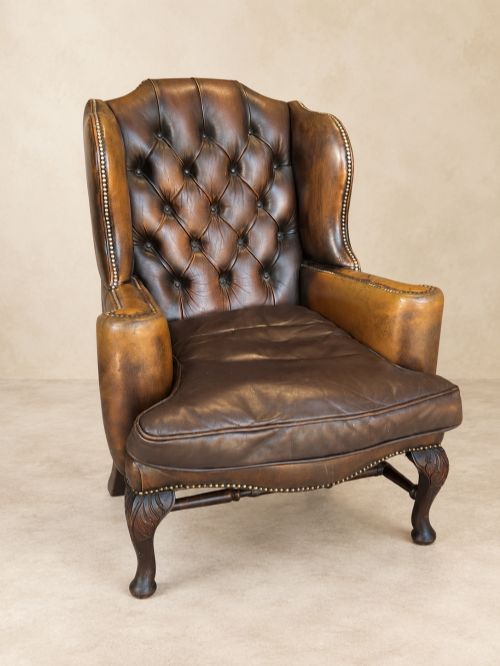
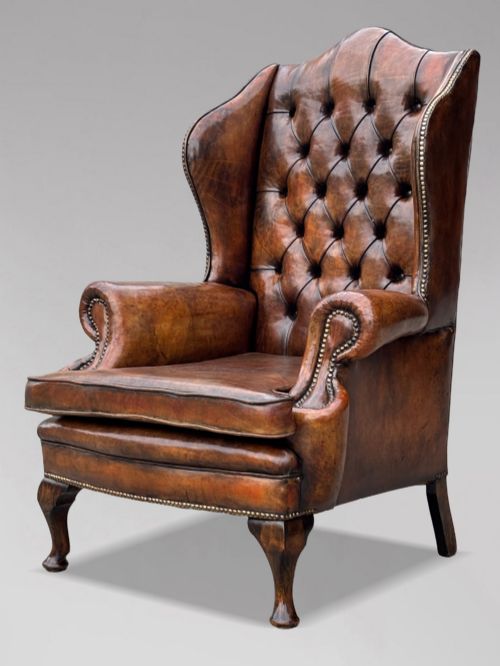
- An armchair with side panels or wings designed to shield the sitter from drafts and retain heat from a fireplace. These panels form an integral part of the upper upholstered frame.
- Bergère
- An enclosed upholstered armchair with wooden framing visible around the sides and back, often incorporating cane work. This French-inspired form gained popularity in British libraries.
- Gainsborough
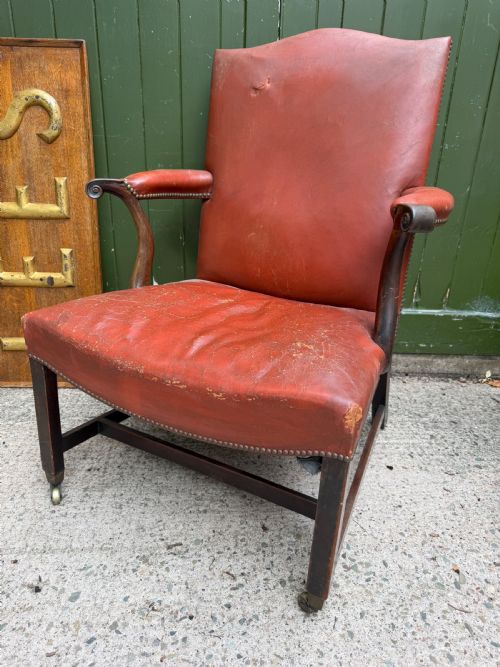
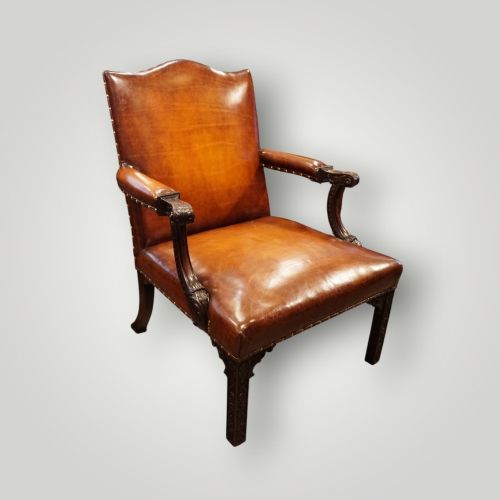
- A wide, low-seated library armchair with open padded arms, square mahogany legs, and upholstered leather back and seat. It emerged during the Georgian period for domestic study use.
- Club chair
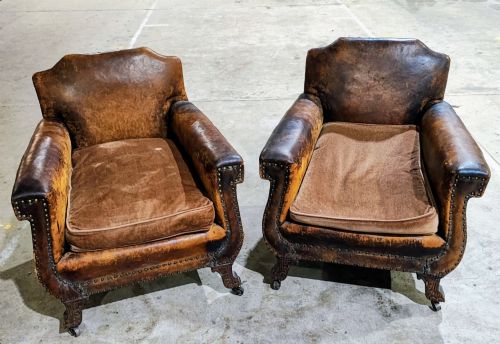
- A deep, heavily upholstered armchair designed for comfortable lounging, traditionally wrapped in dark or tan leather. The style prioritises plush padding over exposed wooden framing.
- Caned
- Woven rattan material used for chair panels or seat bases to provide lightweight flexibility. It frequently appears alongside mahogany frames in library seating.
Vintage Leather Reading Chair: Frequently Asked Questions
How do I identify a Victorian reading chair?
Victorian examples typically feature heavier walnut or mahogany frames with darker wood tones and denser proportions. Buttoned leather upholstery and carved wooden supports are common characteristics of this nineteenth-century period.
Look closely at the joinery and timber grain to determine the era, as Victorian makers often utilised robust oak and mahogany constructions designed for heavy library use.
What is the difference between a club chair and a wingback?
A club chair provides a deep, low-slung seat with thick padding and fully upholstered arms, built strictly for relaxed lounging. A wingback incorporates high backrests with protective side panels designed to block drafts.
While both utilise leather upholstery, their silhouettes serve different aesthetic and functional purposes within a reading space.
Can I use a library chair at a modern desk?
Many vintage reading chairs, particularly compact armchairs and desk chairs from the nineteenth century, fit standard desk heights. However, vintage seat heights and fixed depths vary compared to modern ergonomic office furniture.
Checking the specific dimensions of seat height and arm clearance ensures comfortable placement at a modern writing table.
How should I care for vintage leather upholstery?
Vintage leather benefits from gentle cleaning using damp cloths and occasional specialist leather conditioners to maintain flexibility. Avoiding direct sunlight and intense heat sources prevents the hide from drying out.
Allowing the natural patina to breathe preserves the historical character and texture developed over decades of use.