




Vintage Leather Ottoman Bench
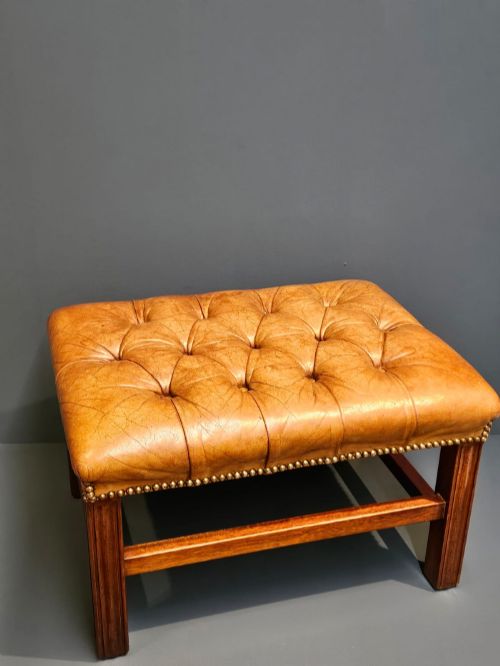
A vintage leather ottoman bench brings character and deep comfort to a room, grounding your seating with seasoned hides and solid timber frames.
Vintage Leather Ottoman Bench
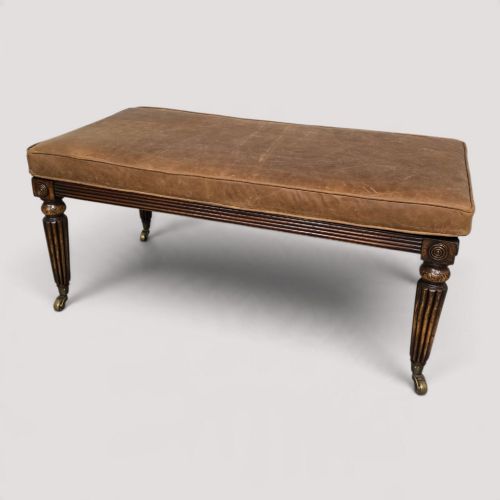
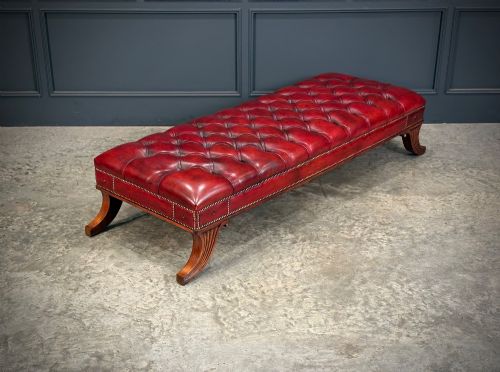
A vintage leather ottoman bench serves as a versatile anchor for a traditional room, functioning equally well as a low table or a footrest. When you search for a vintage leather ottoman bench, you encounter low forms that stretch from compact Edwardian and Art Deco stools to expansive Victorian and nineteenth-century country house examples.
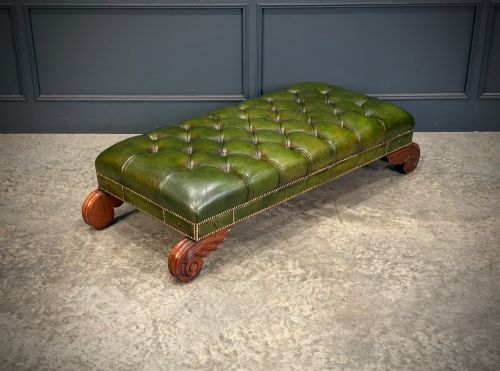
The materials and styles span centuries of British craftsmanship, taking shape as buttoned upholstery over sturdy mahogany, walnut, oak, and birch frames. You meet pieces finished in hand-dyed leathers, paired with carved details like lion heads or executed in clean modernist lines.
The selection on this page leans heavily toward nineteenth-century proportions and 1930s modernist forms. These low seats offer a robust surface that absorbs daily use while developing a deeper patina over the decades.
How they were made
Makers built these pieces using dense hardwoods such as mahogany, oak, walnut, and birch for the structural frames. Artisans then applied traditional upholstery methods, securing hides over padded foundations often finished with buttoning.
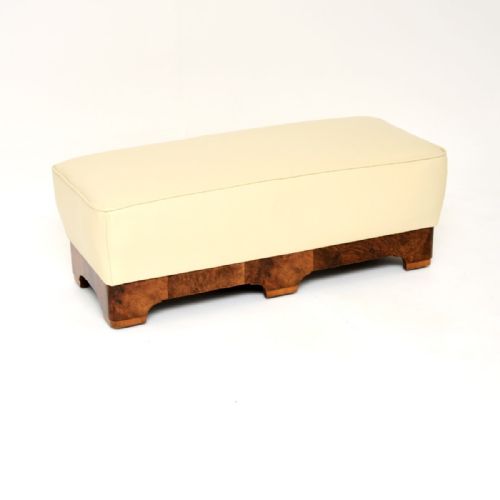
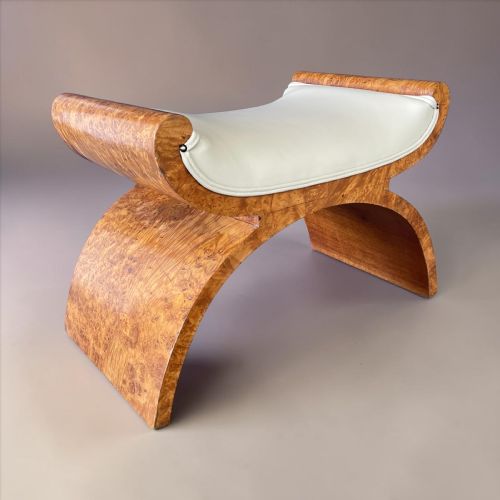
Surface treatments range from plain polished timber to elaborate carved details like lions' heads and painted finishes. Selected examples incorporate burr walnut and birds eye maple veneers into the framing, highlighting the grain alongside the leather top.
Vintage Leather Ottoman Bench Retail Price Guide 2026
Typical asking prices for vintage leather ottoman bench among the pieces listed under this phrase on Sellingantiques today, from the lower quarter to the upper quarter. They describe what is for sale here now, not the wider market.
Some Edwardian ottomans feature carved lions' heads keeping a watchful eye over your floorboards.
What varies in quality
The distinction between standard examples and exceptional ones rests in the selection of the timber and the depth of the hide's finish. Pieces utilising burr walnut or birds eye maple veneers show greater ambition in their cabinetwork than plain hardwood frames.
Proportion and scale also dictate distinction, particularly in large country house ottomans where substantial dimensions require precise joinery to remain stable. The handling of buttoning and hand-dyed colouration on the leather surface distinguishes workshop execution.
Harry and Lou Epstein
The Vintage Leather Ottoman Bench Glossary
- Ottoman
- A low upholstered seat or bench without arms or a back, frequently used as a footrest or makeshift table. These pieces often feature hinged lids for storage inside the frame.
- Buttoned leather
- An upholstery technique where depressions are created in the leather using tufting buttons pulled tight into the stuffing. This method secures the padding evenly across the top.
- Burr walnut
- A highly figured wood grain obtained from the wart-like growths on walnut trees. Cabinetmakers prize this timber for its complex, swirling patterns.
- Hand-dyed leather
- Hide treated with colourants applied by hand rather than through factory immersion. This process allows for subtle variations in shade and tone.
- Birds eye maple
- A figured timber marked by small swirls that resemble tiny eyes in the grain. Makers used this veneer to add decorative contrast to modernist and period furniture.
Vintage Leather Ottoman Bench: Frequently Asked Questions
How do I use an ottoman bench in a living room?
Place an ottoman bench in the centre of your seating arrangement to serve as a footrest or an informal coffee table. A sturdy leather top easily supports a tray while offering extra seating when guests arrive.
Larger nineteenth-century examples work well in spacious rooms, whereas compact Art Deco stools fit neatly into smaller spaces. Ensure you leave enough clearance around the edges for comfortable movement.
What is the difference between an ottoman and a footstool?
An ottoman typically offers a larger, broader surface than a standard footstool and frequently includes internal storage beneath a hinged lid. Many period pieces share overlapping functions as both seats and low tables.
Footstools tend to be more compact and focus entirely on supporting the feet. Both forms rely on durable leather upholstery and timber frames to withstand daily pressure.
How do I care for vintage leather upholstery?
Keep vintage leather clean by dusting it regularly with a dry cloth and avoiding direct exposure to strong sunlight. Occasional conditioning helps maintain the suppleness of older hides without altering their finish.
Protect the surface from sharp objects and excessive moisture to preserve the hand-dyed patina. Natural wear adds character to these pieces as long as the leather receives basic nourishment.
How can I tell the period of a leather ottoman?
Examine the timber frame and decorative motifs to determine the era of manufacture. Regency and Victorian pieces often feature heavy buttoning, mahogany, or carved details, while 1930s examples display burr walnut or birds eye maple veneers.
Construction details like joinery methods and hardware also indicate the likely decades of origin. Comparing the overall silhouette against documented styles helps confirm the period.