


Victorian Leather Ottoman
A victorian leather ottoman brings rich texture and enduring utility to a room, offering a sturdy seat that doubles as storage or a low table.
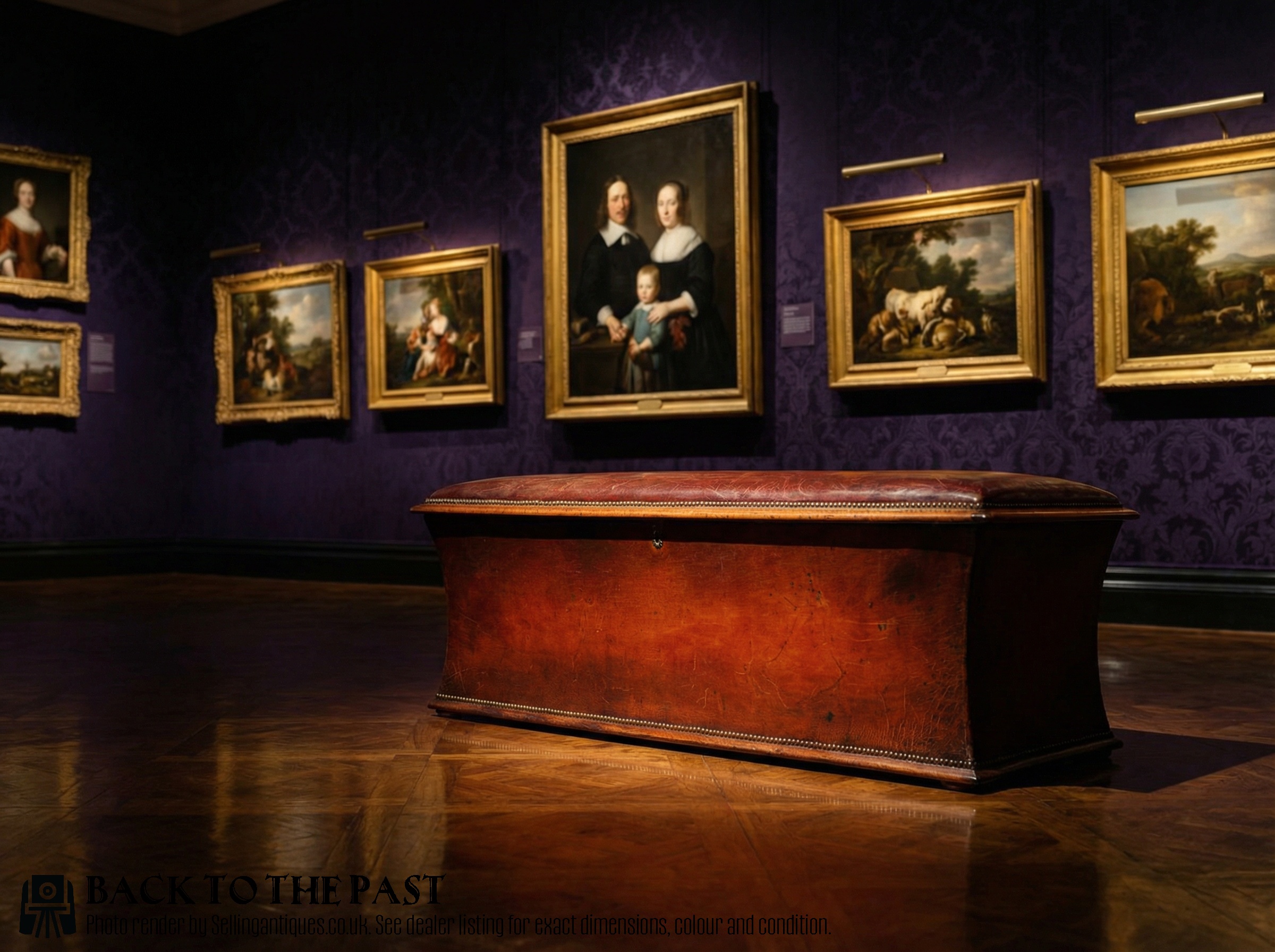
Victorian Leather Ottoman
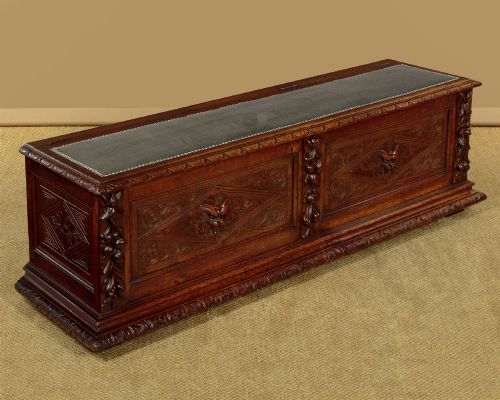
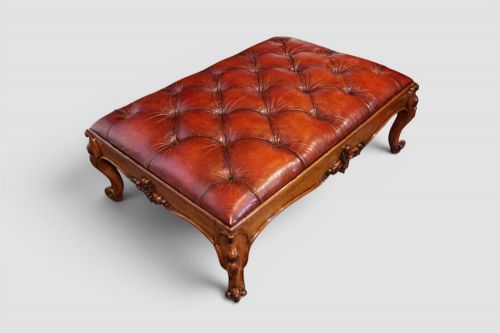
A victorian leather ottoman encompasses low footstools, deep storage boxes, and large library centre stools designed for comfortable resting or seating. The versions you are most likely to meet on this page date from the nineteenth century, built with generous proportions and upholstered tops.
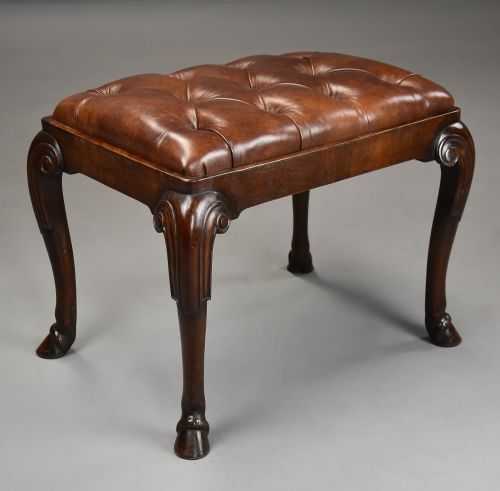
Makers of the period produced these forms in mahogany, walnut, oak, and birch, often pairing carved wooden frames with supple hides. Many examples feature buttoned upholstery and low cabriole legs, reflecting the traditional English country house aesthetic of the era.
How they were made
Craftsmen built the structural frames from hardwoods such as mahogany, walnut, oak, and birch, utilising traditional joinery to ensure stability under heavy daily use. Turning, carving, and cabriole shaping defined the wooden legs and bases.
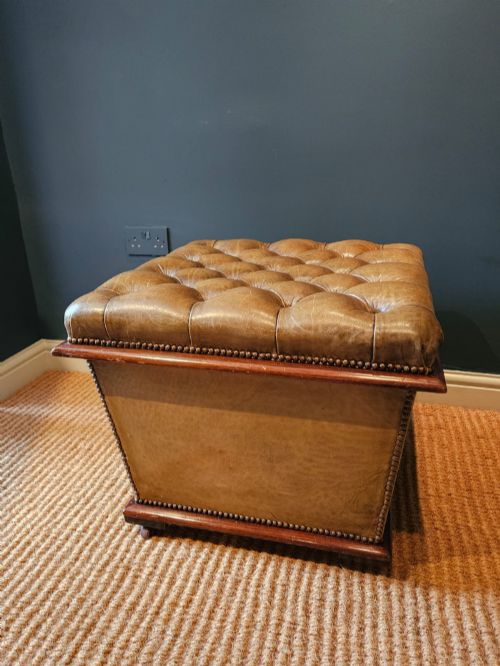
The top surfaces combined durable leather upholstery with deep buttoning techniques over padded interiors, secured by brass tack detailing along the borders.
Listings feature woods including mahogany, walnut, oak, birch, and rosewood, paired with buttoned leather upholstery across various footstool and box forms.
What varies in quality
The distinction between standard pieces and exceptional ones rests in the depth of the timber carving, the choice of dense hardwoods like rosewood or walnut, and the balance of the proportions. Superior examples often display substantial dimensions and refined leg shaping, such as crisp cabriole or X-frame supports.
The integrity of the leather upholstery and the precision of the buttoning also dictate the grade of the piece, with hand-dyed hides showing richer patination and wear over time.
James Shoolbred
The Victorian Leather Ottoman Glossary
- Buttoned
- An upholstery technique where depressions are created across the surface using tightly pulled threads or twine, often secured with leather buttons. This method keeps the internal padding evenly distributed.
- Cabriole
- A furniture leg that curves outward in a convex arc before tapering inward in a concave sweep to a foot. It draws inspiration from animal limbs and appeared frequently on high-style Victorian seating.
- Ottoman
- A low, upholstered seat or footstool without a back or arms, sometimes constructed with an internal compartment for storage. They served versatile functions in libraries, drawing rooms, and bedrooms.
- Camphorwood
- A fragrant Asian timber occasionally utilised for interior linings or secondary box structures to repel insects. It provided a stable carcass for lidded storage forms.
- Gout stool
- An adjustable footrest designed to elevate a sufferer's foot at a comfortable angle. These metamorphic pieces often feature mechanical ratchets for altering the height.
Victorian Leather Ottoman: Frequently Asked Questions
How were victorian leather ottomans originally used?
These pieces served as comfortable footrests, auxiliary seats in libraries and drawing rooms, and low tables for resting books or trays. Lidded box variants also functioned as blanket chests or discreet storage compartments for textiles.
In larger country houses, substantial centre stools accommodated multiple people at once, anchoring conversational seating arrangements in spacious rooms.
How do I care for antique leather upholstery?
Keep the leather nourished with appropriate conservation waxes or balms to prevent the hide from drying and cracking over time. Avoid placing the piece in direct sunlight or near strong heat sources.
Dust the buttoned crevices regularly with a soft brush to prevent grit accumulation in the folds of the upholstery.
How can I tell a Victorian piece from a Regency one?
Regency pieces generally exhibit neoclassical restraint, featuring darker rosewood timbers, simpler geometric lines, and brass inlay or mounts. Victorian designs tend to be heavier and more exuberant, incorporating carved mahogany frames, cabriole legs, and deep buttoning.
Examining the secondary woods and construction methods inside storage compartments can also help clarify the manufacturing era.
Can I use an ottoman as a coffee table?
A sturdy leather-topped ottoman makes an excellent alternative to a traditional wooden coffee table, providing a resilient surface that tolerates everyday domestic use. Adding a solid tray on top creates a stable area for glasses and cups.
The cushioned surface also softens the overall look of a living room while remaining practical for resting feet.