


Antique Leather Coffee Table
An antique leather coffee table brings tactile depth and rich patination to a room, drawing on centuries of converted trunks, campaign pieces and upholstered stools.
Antique Leather Coffee Table
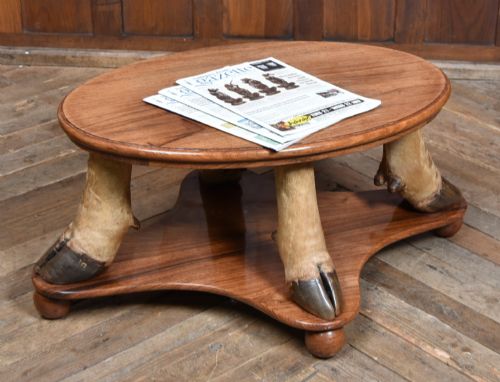
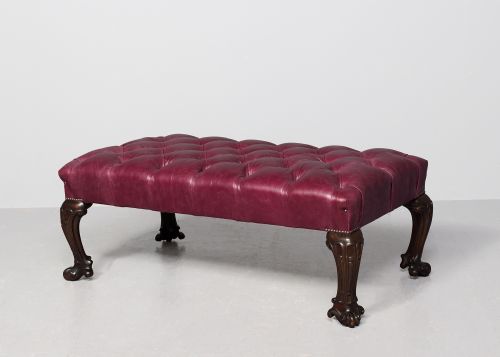
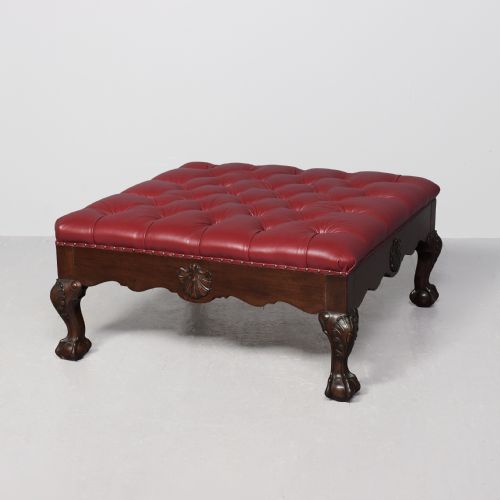
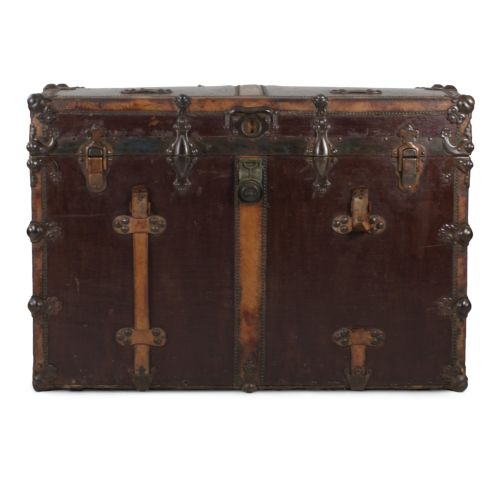
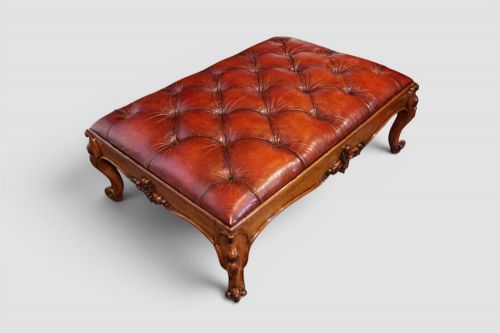
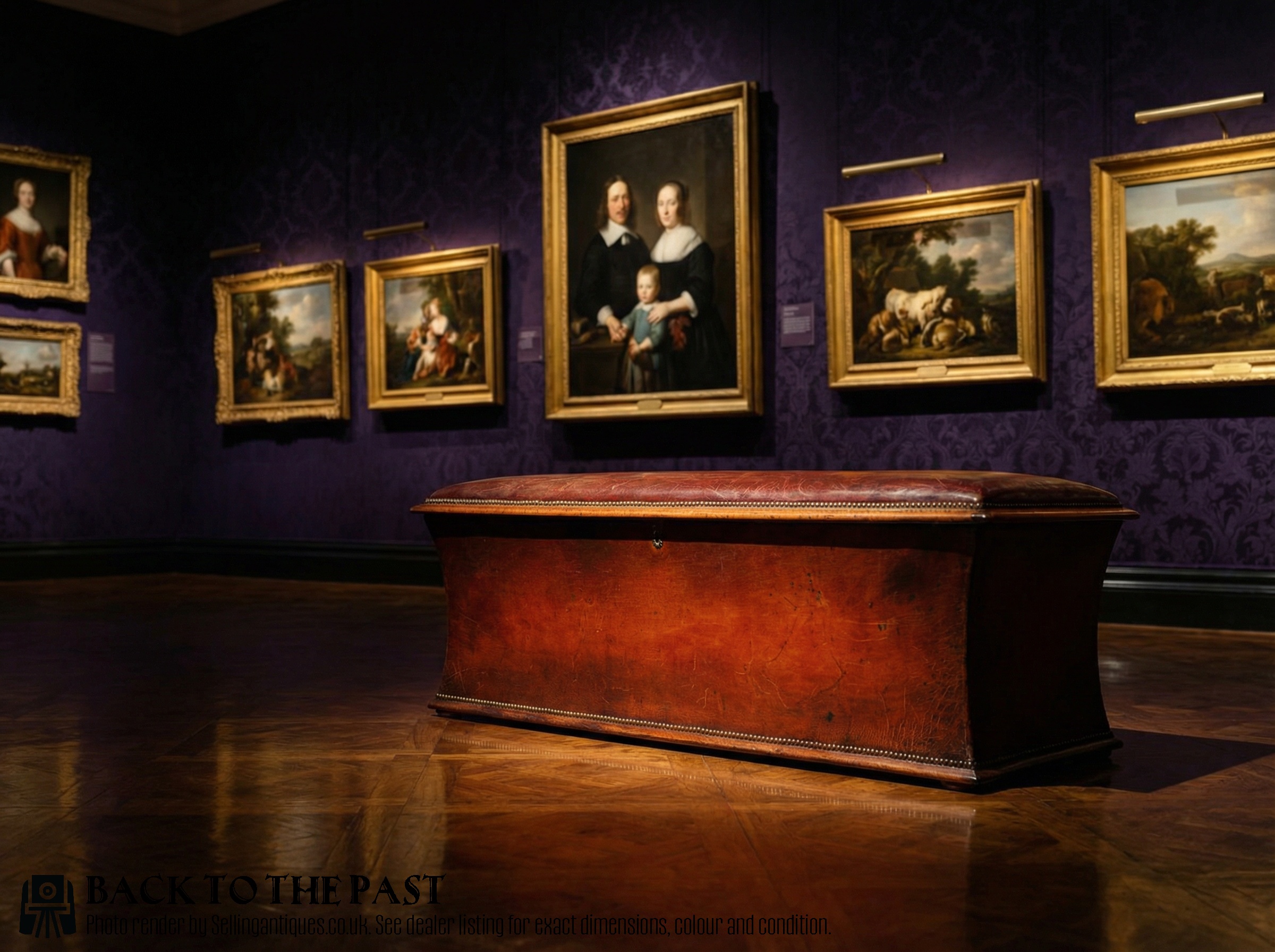
When searching for an antique leather coffee table, buyers encounter a diverse selection of adapted forms rather than items originally made for this purpose. The listings demonstrate that many pieces begin life as Victorian buttoned footstools, campaign chests, luggage trunks or low centre tables.
Mahogany and walnut frame these tables, paired with hides ranging from deep red and burgundy to black and golden tones. Stools and ottomans featuring deep buttoning appear frequently, alongside timber tables inset with leather writing surfaces.
Origins span the nineteenth century through to the early twentieth century, incorporating Victorian, Edwardian and Regency styles. Buyers often meet low stools and chests modified to serve modern seating and surface heights.
Materials and Construction
Construction relies on solid hardwoods such as mahogany, oak and walnut, chosen for structural stability in table frames and storage pieces. Leather hides, sometimes hand-dyed or embossed, are stretched over padding for stools or inset into wooden channels for table tops.
Metal hardware plays an essential role, particularly brass binding, iron braces and locks found on travel trunks and campaign furniture. Canvas and pig skin also appear on luggage conversions, secured with tacks and corner plates.
Materials across the listings include mahogany, walnut, oak, brass, iron, canvas and pig skin paired with various leathers.
Evaluating Quality and Character
Quality rests in the natural ageing of the hide and the integrity of the underlying timber frame. Hand-dyed leathers with rich patination and minimal modern intervention command attention, showing genuine wear from travel or domestic use.
The refinement of the woodwork distinguishes pieces, from simple oak planks to finely carved mahogany frames in the Chippendale or Regency styles. Original brass fittings, working locks and sound structural joinery elevate a piece above simpler domestic adaptations.
Aux Etats Unis
The Antique Leather Coffee Table Glossary
- Campaign furniture
- Portable pieces made for military officers on active service, typically featuring recessed brass handles and corner brackets. These items use sturdy timbers like mahogany to withstand transport.
- Buttoning
- An upholstery technique where twine is pulled through padding and secured with buttons to create a diamond pattern. This method provides firm support on Victorian stools and ottomans.
- Steamer trunk
- A luggage chest designed to fit in ocean liner cabins, usually featuring a flat or slightly rounded top. They utilise wood, metal banding and leather bindings.
- Drum table
- A circular library or centre table with a deep skirt containing drawers, often standing on a central pillar with tripod legs. Adapted versions serve as low coffee tables.
- Patina
- The surface sheen and colour acquired by leather and wood through age, handling and regular polishing. It serves as a primary indicator of historical depth.
Antique Leather Coffee Table: Frequently Asked Questions
Are antique leather coffee tables actually original tables?
Most examples began life as something else, such as footstools, travel trunks, ottomans or centre tables. Craftsmen adapt these historic pieces to modern coffee table heights.
This conversion process preserves durable materials while making nineteenth-century luggage and seating practical for contemporary living spaces.
How do I care for antique leather tops?
Leather requires gentle cleaning with a soft, dry cloth and occasional treatment with specialist conservation waxes or balms to prevent drying. Avoid placing them in direct sunlight or near heat sources.
Keeping the hide nourished maintains its suppleness and preserves the natural patina developed over decades.
What periods do these tables come from?
The available pieces span the nineteenth and early twentieth centuries, encompassing Victorian, Edwardian, Regency and Georgian styles. Many reflect the robust construction methods of the 1880s to 1920s.
Design influences range from traditional English cabinet-making to campaign and campaign-style military pieces.
Can I use a converted trunk as storage?
Trunks and chests retain their internal compartments or hollow spaces, making them suitable for storing blankets, books or living room items. Many feature original brass locks and hinged lids.
This dual function combines surface utility with concealed storage within a historic decorative object.