

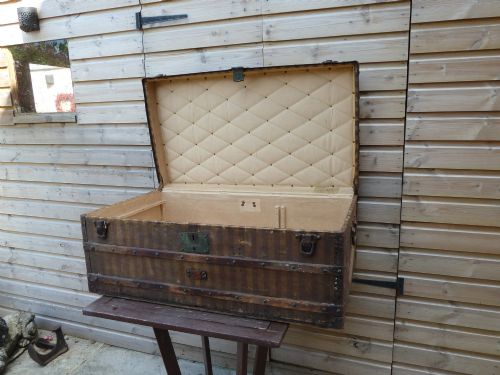
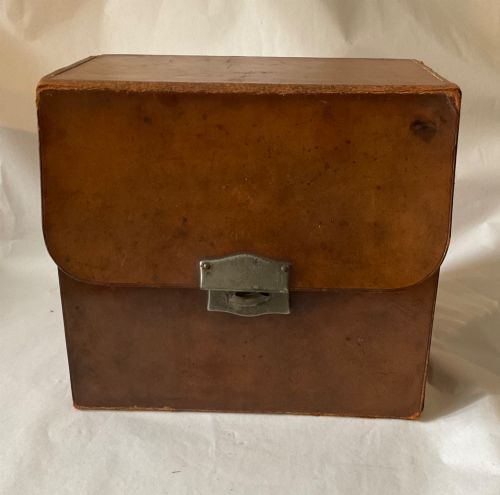
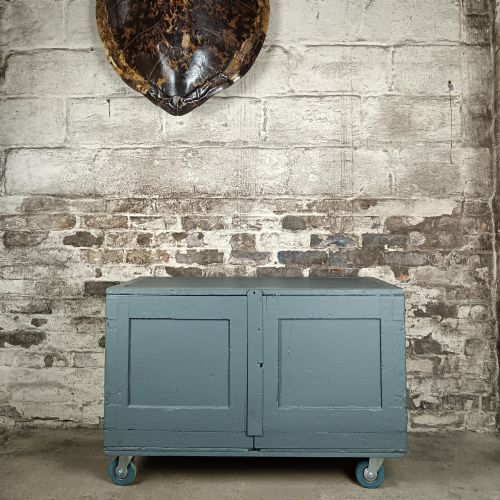
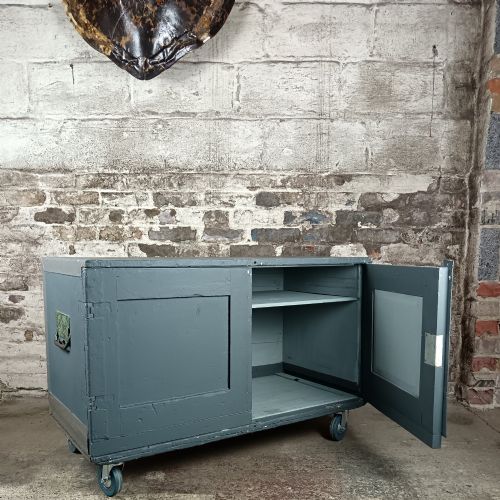
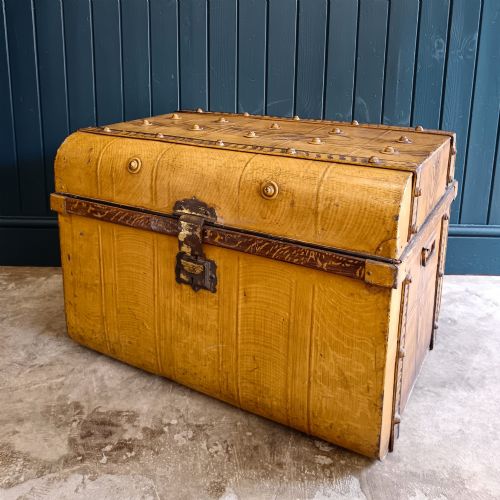
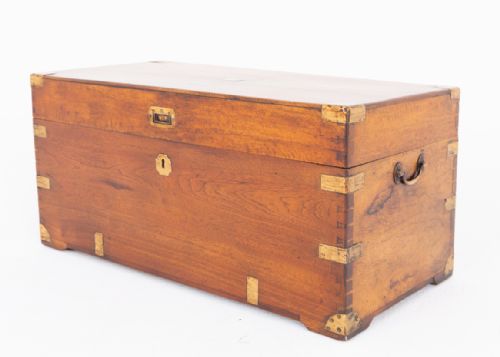
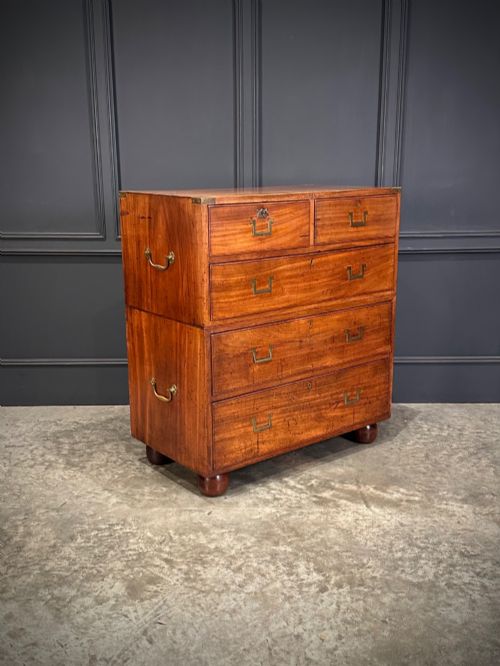
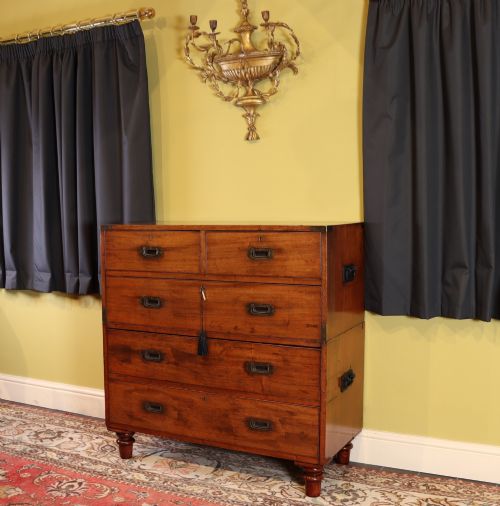
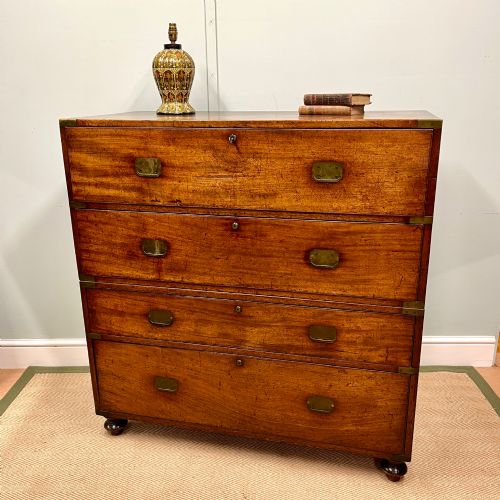

19th Century Travelling Chest
A 19th century travelling chest provides sturdy portable storage designed for officers, merchants, and travellers on the move.
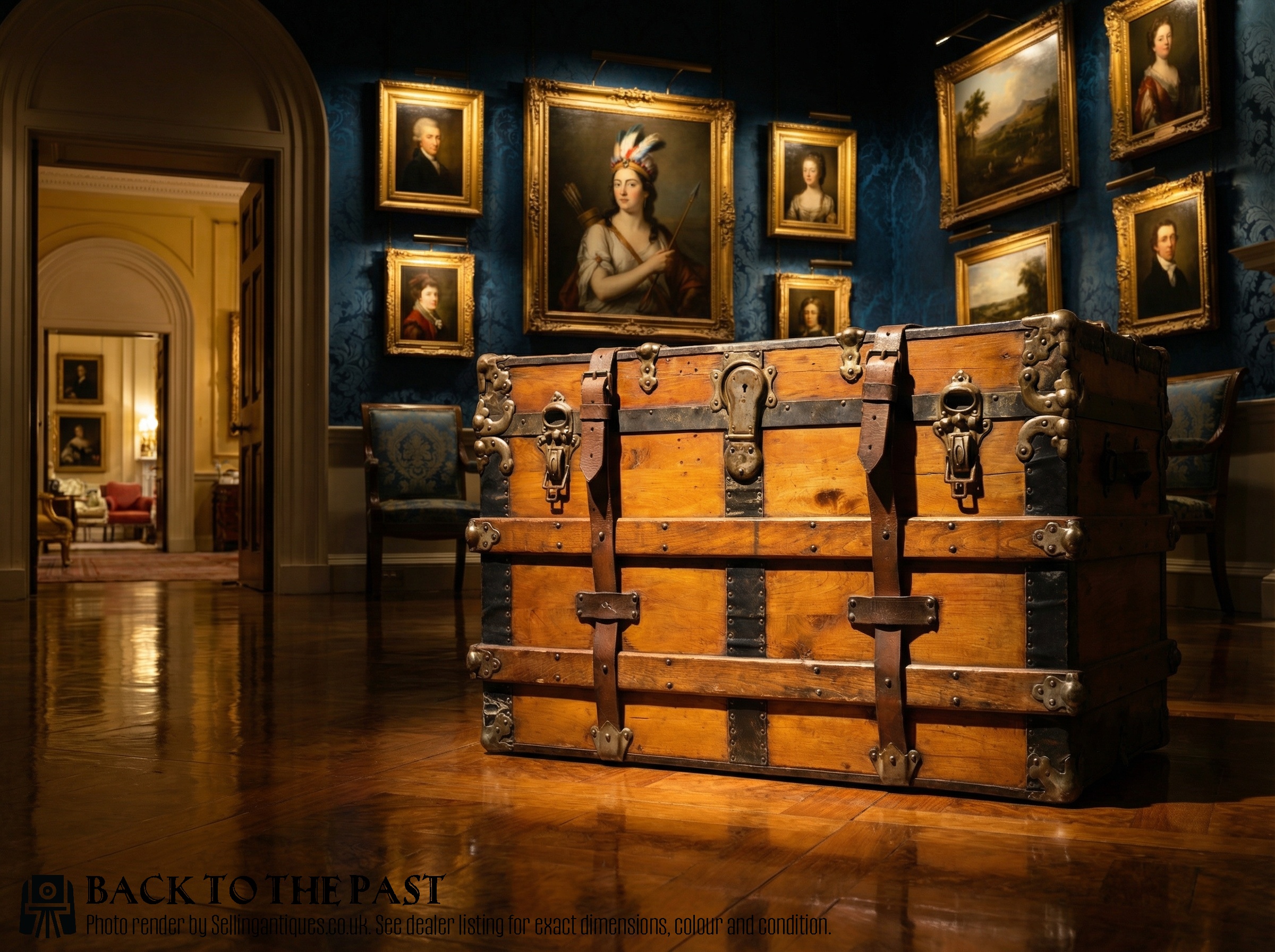
19th Century Travelling Chest
A 19th century travelling chest encompasses robust trunks, campaign chests of drawers, and fitted apothecary boxes built for transit during the Georgian, Regency, and Victorian eras. These pieces originate from military service, colonial administration, and maritime journeys across the globe.
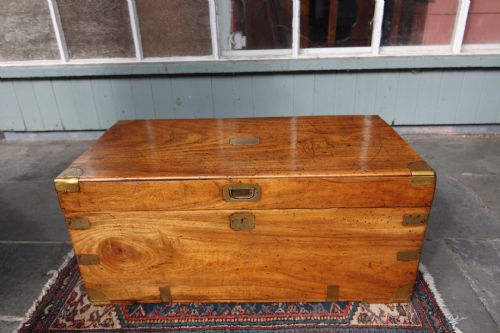
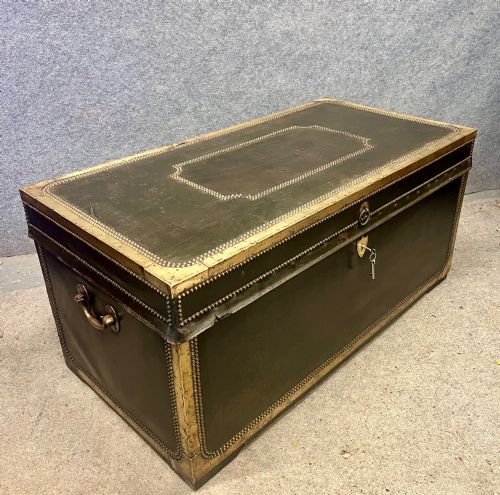
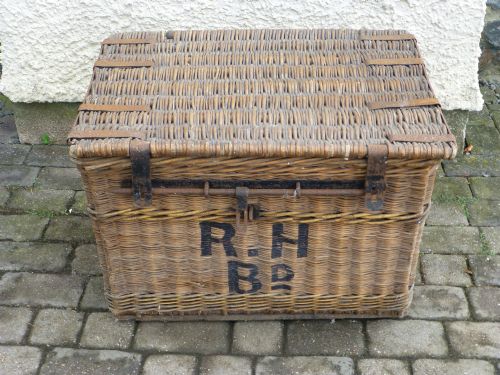
The inventory on this page relies heavily on campaign styles alongside utilitarian leather, canvas, and metal bound trunks intended to withstand rough handling. Buyers frequently encounter camphor wood, mahogany, and teak examples designed to resist insects and humidity during long voyages.
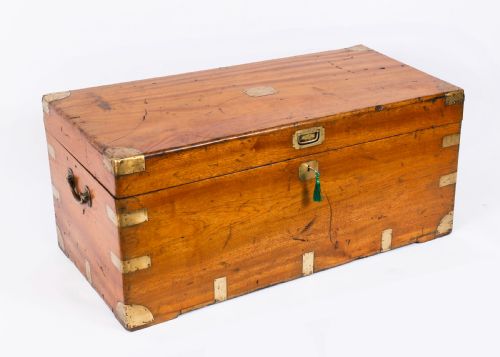
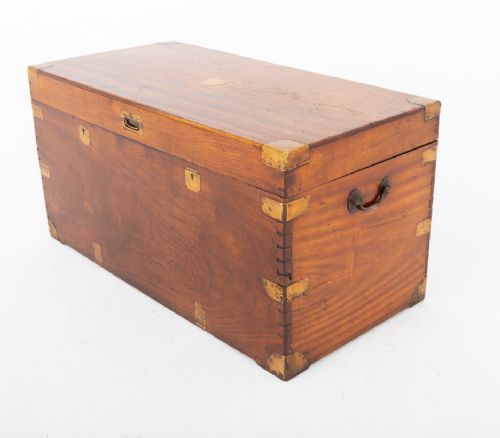
Form follows function closely, resulting in items that split into sections for easier transport or open to reveal fitted compartments, secret drawers, and glass bottles. Teak and camphor wood chests often display recessed brass handles and corner brackets to protect the timber during relocation.
How they were made
Cabinetmakers utilised dense timbers such as camphor wood, mahogany, teak, and oak to construct a 19th century travelling chest that could endure moisture and heavy impacts. Metal reinforcement came from brass binding, iron straps, and zinc linings that added structural rigidity.
Protection and waterproofing were achieved through the application of leather, hide, canvas, and painted finishes over wooden carcases. Fastenings relied on flush brass hardware, recessed drop handles, and robust locks designed to prevent snagging during transport.
The selection includes utilitarian packing cases, shipping line trunks, and refined modular campaign chests.
What varies in quality
Construction standards differ between standard transport packing cases and bespoke officer pieces equipped with secret compartments and fitted interiors by named makers. The precision of the joinery and the integration of flush hardware dictate the refinement of each piece.
Material selection creates a clear distinction, ranging from utility pine and painted metal to finely figured mahogany, teak, and camphor wood paired with substantial brass detailing. Original internal fittings, including glass bottles and velvet linings, elevate the completeness of surviving examples.
Samuel Pratt·S. W. Silver & Co·Elkington·Drew & Sons·Louis Vuitton
The 19th Century Travelling Chest Glossary
- Campaign chest
- A modular chest of drawers built in two or more stacking sections with recessed brass handles for military transport.
- Camphor wood
- An aromatic timber prized for its resistance to insects and moisture, commonly used in maritime furniture.
- Apothecary case
- A portable box or chest fitted with internal compartments and glass bottles for carrying medicines.
- Secretarie chest
- A chest of drawers featuring a pull-out writing drawer with a fitted writing surface and small compartments.
- Coaching trunk
- A sturdy luggage chest designed to strap to the roof or boot of a horse-drawn coach.
19th Century Travelling Chest: Frequently Asked Questions
What is a campaign chest?
A campaign chest is a portable piece of furniture built in sections so military officers could pack and transport their belongings during active service.
These chests feature flush brass corners and recessed handles to prevent catching and damage while moving across rugged terrain.
Why use camphor wood?
Camphor wood naturally repels insects and resists high humidity, making it ideal for chests travelling on ships and through tropical regions.
The aromatic quality of the timber also kept stored garments smelling fresh during long voyages.
How were these chests transported?
Travelling trunks and chests were strapped to the roofs of stagecoaches, loaded onto railway carriages, or stowed in the holds of steamships.
Many examples were built as two-part stacking units or packing cases specifically designed for handling by freight handlers.
Are interiors usually fitted?
Many trunks and chests feature simple open storage, while others contain elaborate fitted interiors with compartments, trays, and small drawers.
Some specialised boxes retain original glass bottles or secret compartments designed for valuables and documents.