


Vintage Leaded Glass Panel
A vintage leaded glass panel brings colour and historic light into a room, joining small glass sections with lead cames to form pictorial or geometric designs.
Vintage Leaded Glass Panel
A vintage leaded glass panel consists of individual glass pieces held together by lead strips, often forming architectural salvage or window elements. These objects appear in forms ranging from standalone firescreens to fitted cabinet doors and church or shop windows.
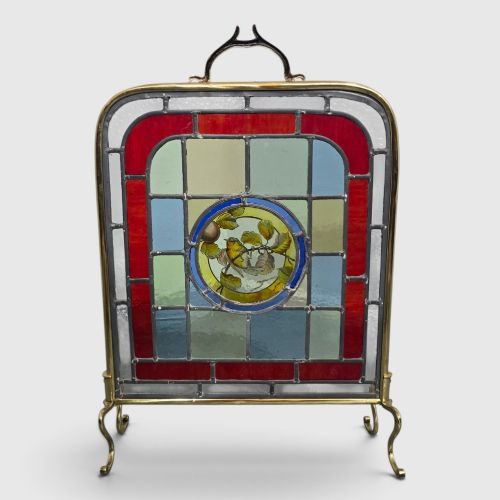
The versions most common on this page date from the Victorian and Edwardian eras through to the 1930s, encompassing Arts and Crafts and Art Nouveau aesthetics. Many incorporate hand-painted pictorial elements such as countryside scenes, birds, and figures.
Makers utilised various housings, mounting leaded panels within timber frames of oak or brass stands. Buyers select these panels to introduce historical character and filtered daylight into domestic interiors.
How they were made
Craftsmen assembled these panels by cutting glass to shape, occasionally painting details onto the surface before firing, and joining the pieces with flexible lead cames soldered at the joints. Timber frames in oak or brass surrounds provided structural support for architectural placement.
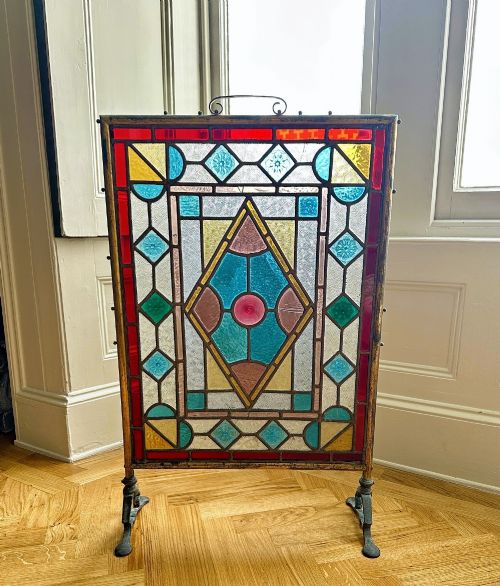
Designers incorporated specialty elements like bullseyes, amber glass, and textured panes alongside standard stained and cut glass. Iron stands and timber cabinetry integrated the glass panels into functional furnishings like firescreens and bookcases.
Several panels feature surprising inhabitants, from Dutch children and lifespas to parrots, foxes, and birds in flight.
What varies in quality
The artistic ambition of the painted and stained glass design dictates the visual impact of the piece, ranging from simple geometric panes to intricate hand-painted countryside scenes and bird motifs. The complexity of the leadwork and the inclusion of specialised components like bullseyes elevate the execution.
The integrity of the surrounding materials, whether an oak cabinet, a brass screen frame, or timber window joinery, influences the overall coherence of the object. Complete sets, such as pairs or multi-section windows, demonstrate a higher degree of original preservation.
The Vintage Leaded Glass Panel Glossary
- Came
- A slender channel of lead, zinc, or brass used to hold pieces of glass together in a window or panel. These strips form the structural grid of the design.
- Bullseye
- A circular distortion in blown glass showing a central pontil mark, frequently utilised in panels to add texture and catch the light.
- Architectural salvage
- Building components rescued from demolition or alteration, including windows, panels, and doors reused in interior decoration.
- Firescreen
- A decorative freestanding screen placed in front of a fireplace when not in use, often incorporating a framed glass panel.
- Stained glass
- Glass coloured by the addition of metallic salts during its manufacture, or subsequently painted and fired in a kiln.
Vintage Leaded Glass Panel: Frequently Asked Questions
How do I hang a vintage leaded glass panel?
Most panels arrive within their original timber frames or structural surrounds, which simplifies wall mounting or placement in front of a light source. Secure brackets or hanging chains should support the weight of the frame rather than the leaded glass itself.
For panels intended as architectural inserts, professional installation ensures the lead came structure remains stable and does not sag over time.
Were these panels always used as windows?
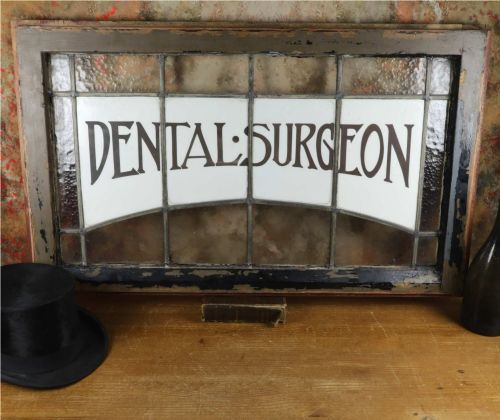
While many originated as exterior or interior windows in domestic and religious buildings, others were built specifically for commercial shop fronts or dental surgeries. Makers also mounted them into firescreens, cabinet doors, and bookcases.
This versatility means panels often appear outside their original architectural context as decorative room dividers or wall art.
What periods do these panels come from?
The listings span the late nineteenth century through the Victorian, Edwardian, and Art Deco periods, extending into the 1930s. Stylistic markers such as floral motifs indicate an Arts and Crafts or Art Nouveau origin.
Earlier examples often feature religious or traditional scenes, while later pieces adopt simpler geometric or pictorial designs.
How do I clean and care for leaded glass?
Gentle dusting with a soft cloth preserves the painted surfaces and fragile lead cames without causing structural stress. Moisture should be kept away from soldered joints and hand-painted areas to prevent degradation.
Harsh chemical cleaners must be avoided, as they can damage both the glass paint and the surrounding timber or brass frames.