
Vintage Lead Crystal
These vintage lead crystal pieces bring genuine weight, deep refraction and traditional craftsmanship to table settings and displays.
Vintage Lead Crystal
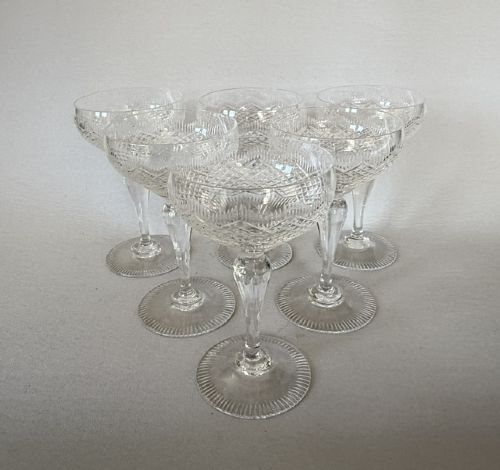
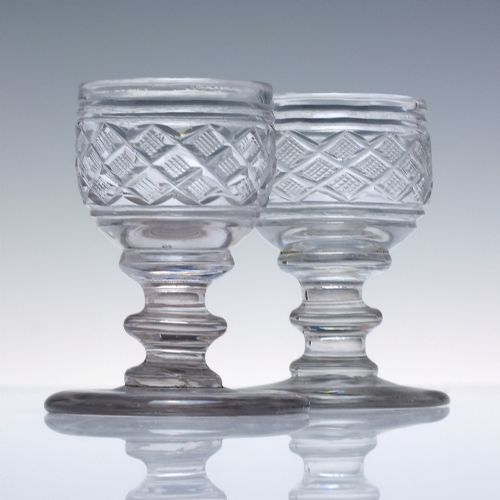
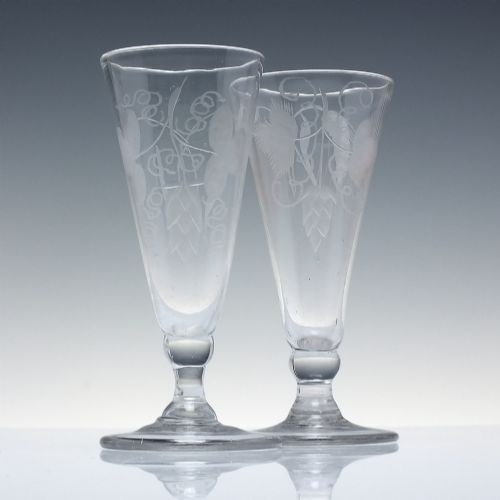
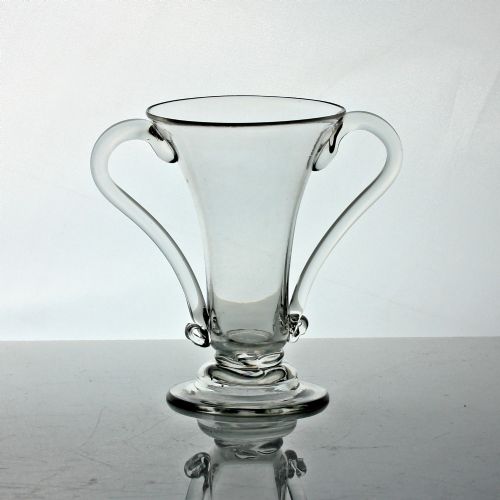
When buyers search for vintage lead crystal, they encounter glassware spanning the eighteenth century through the mid-twentieth century, including Georgian, Victorian, Edwardian and Art Deco eras.
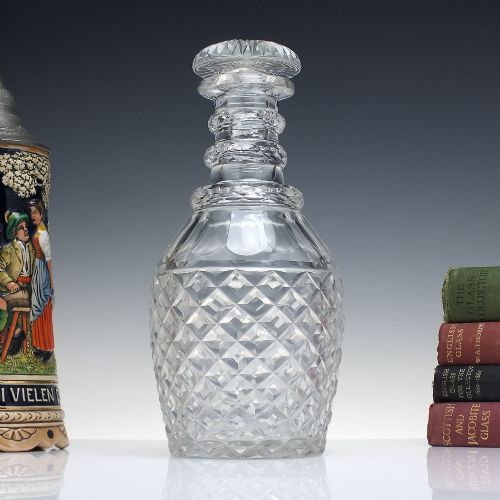
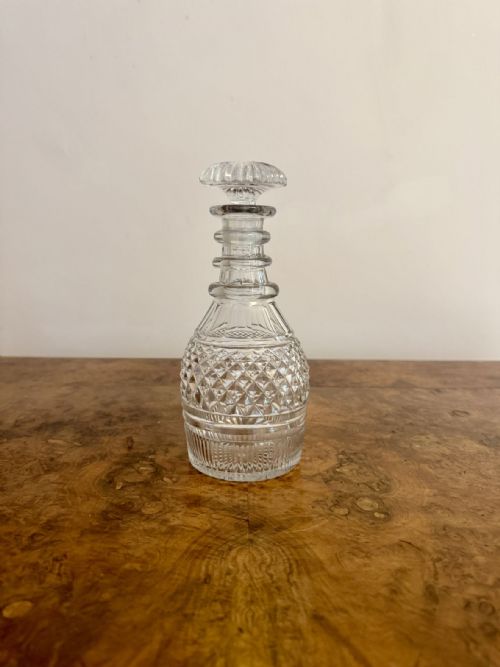
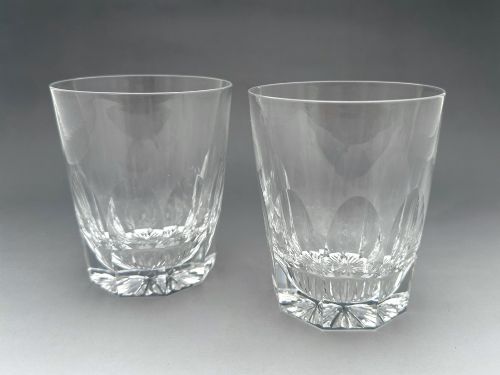
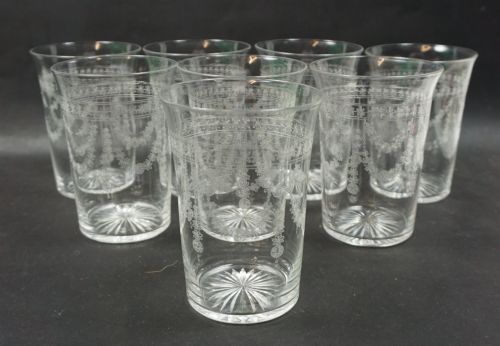
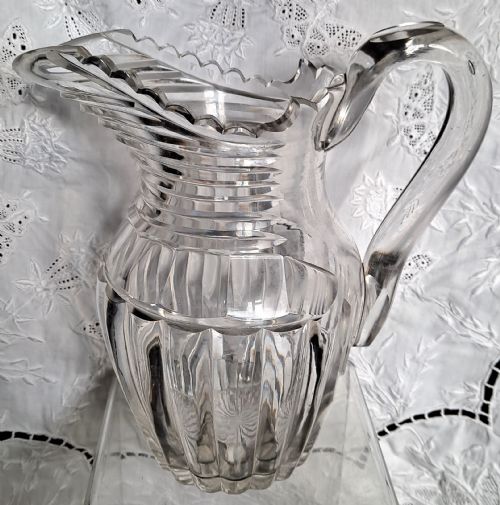
The selections on this page centre on practical and decorative objects, ranging from heavy decanters, water jugs and wine glasses to table lamps, vases and champagne coupes.
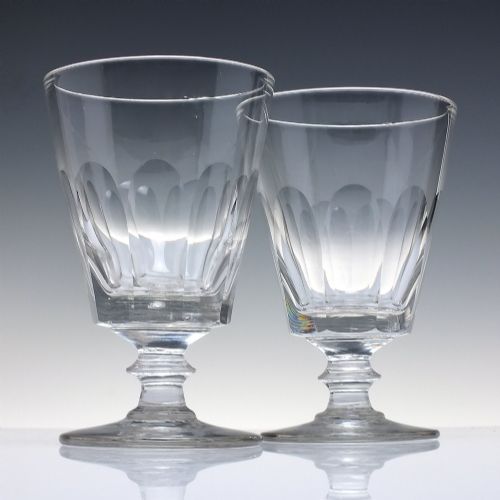
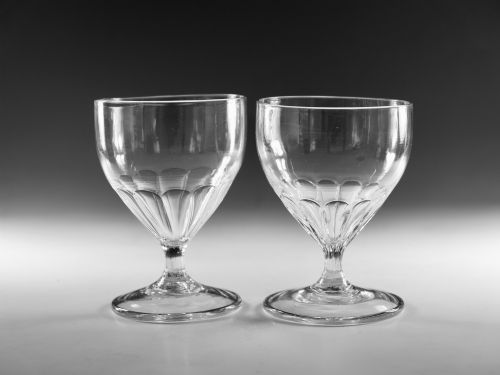
English and continental origins dominate, with nineteenth-century rummers and Georgian drinking vessels appearing alongside Belgian coloured overlay glass from the 1930s.
What varies in quality
The standard of vintage lead crystal rests on the crispness of the cutting, the weight of the metal and the clarity of the material without heavy clouding.
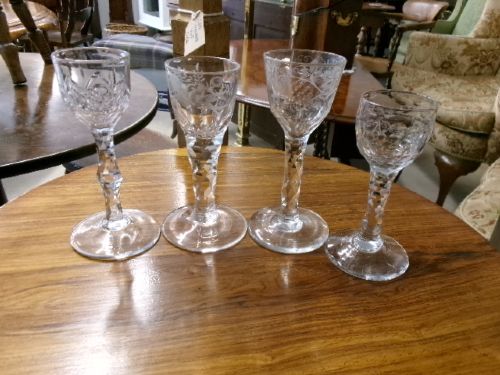
Finely executed optical effects, such as air twists, ribbing and precise facet cuts on stems and bases, separate standard production from superior examples.
Val St Lambert·Charles Graffart·Joseph Simon
The Vintage Lead Crystal Glossary
- Rummer
- A large, sturdy drinking glass popular in the eighteenth and nineteenth centuries, often used for ale, wine or punch. These vessels typically feature short stems and capacious bowls.
- Flint glass
- An early British term for clear, high-quality glass containing lead oxide, developed to improve brilliance and weight. It forms the basis of many traditional crystal items.
- Overlay
- A technique where a layer of coloured glass is cased over clear crystal before being cut away to reveal the contrasting base metal beneath. This method creates striking two-tone decorative effects.
- Air twist
- An internal spiral thread of tiny air bubbles trapped within the stem of a drinking glass during manufacture. This decorative feature signals eighteenth-century glasshouse skill.
- Prism cut
- A linear geometric surface cutting style designed to break light into spectral colours. It appears frequently on the necks of decanters and the bodies of heavy jugs.
Vintage Lead Crystal: Frequently Asked Questions
How do I identify Georgian lead crystal?
Georgian pieces often display pontil marks on the base where the glassblower's rod was detached. The metal frequently contains small trapped air bubbles and minor surface irregularities unique to manual production.
Older items also rely on simpler, heavier forms such as rummers, plain stems or facet cuts rather than machine-pressed uniformity.
What is the difference between lead crystal and clear glass?
Lead crystal incorporates lead oxide into the molten batch, which increases the density, softness for cutting, and overall refractive index. This composition gives the material a heavier feel and brighter sparkle than standard soda-lime glass.
Objects made from lead crystal also produce a resonant ring when gently tapped.
How should I clean vintage decanters?
Wash vintage decanters by hand in warm water with mild detergent, avoiding sudden temperature changes that can crack aged glass. A soft bottle brush helps reach interior residue safely.
Allow the vessel to air dry upside down on a padded surface to prevent moisture spots.
Can I use antique drinking glasses daily?
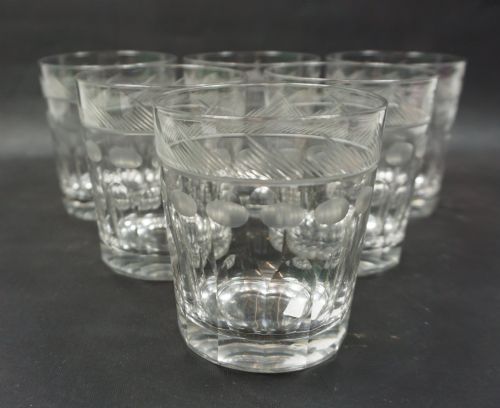
Many sturdy nineteenth-century rummers and tumblers remain durable enough for occasional functional use. Hand washing protects the delicate rims and engraved surface details from dishwasher heat and harsh detergents.
Fragile eighteenth-century stems with air twists are better reserved for display and careful handling.